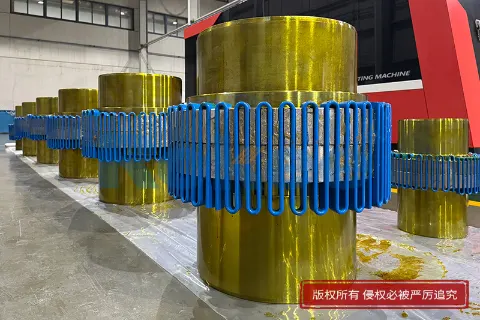
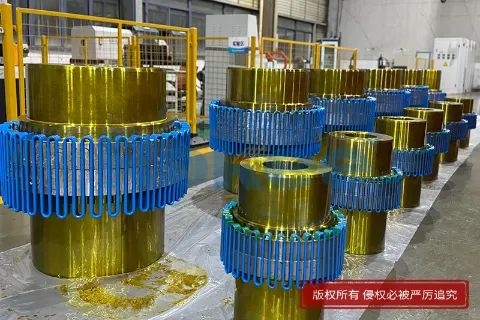
A serpentine spring coupling is a flexible shaft connecting device used to transmit torque between two rotating shafts. It relies on specially shaped spring elements to achieve flexible connection, which can accommodate relative displacement between connected shafts while transferring rotary power. This grid flexible coupling strikes a balance between torsional flexibility and load-carrying capacity, and it is widely adopted in power transmission systems that require cushioning for impact loads. Unlike rigid couplings that maintain fixed alignment strictly, it allows controlled elastic deformation during operation to mitigate adverse effects from misalignment and load fluctuation.
Classification and Common Types
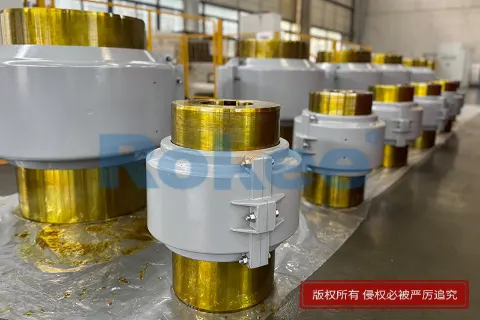
Grid couplings can be divided into several categories according to structural layout and assembly style. One major grouping covers the basic enclosed type, where the spring parts are housed inside a protective cover. Another common category is the split cover version, which facilitates on-site inspection and component replacement without full disassembly of adjacent equipment. There are also designs built for high-speed rotation and heavy-duty torque transmission, with adjusted tooth profiles and spring dimensions to match different load levels.
Common model series follow structural differentiation rather than standardized marking rules. Some models feature symmetrical tooth arrangements for bidirectional torque transfer, while others adopt an asymmetrical tooth structure optimized for unidirectional rotation. Compact models are developed for limited installation space, and extended versions are available when a larger distance between shaft ends is required.
Structural Composition and Materials
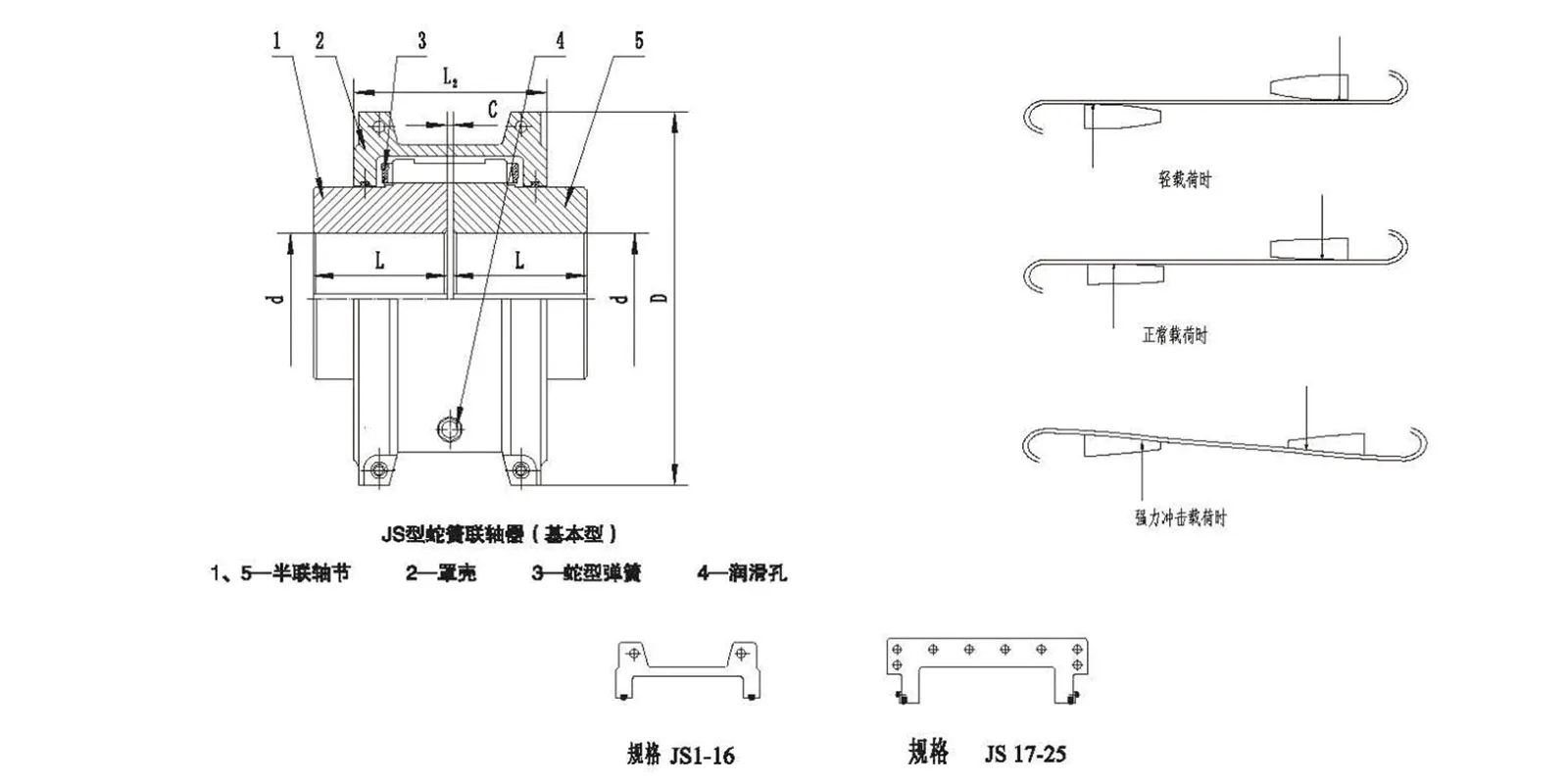
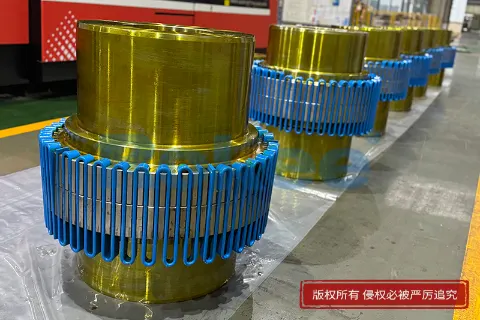
The core components of a Grid Flex coupling include two half-coupling hubs with curved teeth, one or more serpentine spring strips, and a protective cover. The curved teeth on the hubs interlock with the wave-shaped contour of the serpentine spring. The protective cover serves to retain lubricant and block dust, debris and splashing contaminants. Some assemblies also include gaskets to seal the cover joint and prevent lubricant leakage.
The serpentine spring is typically made of high-performance spring steel, selected for good fatigue resistance and elastic stability under repeated cyclic loads. The snake spring coupling hubs are usually manufactured from cast or forged steel, providing sufficient rigidity to avoid tooth deformation under rated torque. The protective cover can be made of cast metal or engineered composite materials depending on working conditions. Sealing gaskets use oil-resistant elastic materials compatible with commonly used lubricants.
Working Principle
Torque transmission depends on the engagement between the curved teeth of the two hubs and the serpentine spring. When one hub rotates, the tooth surface pushes the serpentine spring, and the spring further transfers force to the teeth of the opposite hub to drive the second shaft into synchronous rotation.
When misalignment, shock load or torque fluctuation occurs, the serpentine spring deforms elastically along its curved profile. This elastic deformation absorbs impact energy and compensates for radial, angular and axial displacement between shafts. After the transient load disappears, the spring returns to its original shape. The contact position between the spring and the tooth surfaces shifts slightly under varying torque, which distributes contact pressure evenly and reduces localized wear.
Features and Advantages
This flexible grid coupling type combines high torque transmission capability with good damping performance. It can effectively buffer sudden impact loads and suppress torsional vibration in transmission chains. The elastic spring element permits moderate multi-directional misalignment, lowering the precision requirement for shaft alignment during installation.
It demonstrates stable performance under alternating loads and has a long service life when properly lubricated. The dismountable spring design makes worn spring elements replaceable separately, without replacing the whole coupling hub. Its torsional stiffness changes gradually with load, avoiding sudden stiffness transitions seen in many other flexible couplings. In addition, its compact structure saves installation space compared with some large-sized flexible transmission parts.
Applicable Conditions and Application Industries
Grid spring coupling is suitable for transmission systems with frequent start-stop operations, periodic impact loads and fluctuating torque. It works well under continuous rotation and medium to high rotating speeds, as long as the operating temperature stays within the range acceptable for its spring material and lubricant. It is not ideal for environments with strong corrosive media that can erode spring steel rapidly, or for scenarios requiring extremely precise angular synchronization with zero torsional deflection.
Typical application fields include material conveying equipment, mixing and stirring machinery, fans and blowers, pumps, and general industrial reduction drive systems. It is also used in rolling equipment, crushers and other heavy-duty machinery where shock loads frequently emerge.
Installation and Commissioning Key Points
Before installation, all components should be checked to remove burrs, machining residues and foreign particles. The shaft holes of the two hubs need to match the connected shafts properly. After mounting the hubs onto the respective shafts, preliminary alignment should be carried out to keep misalignment within the allowable range. Excessive misalignment will lead to accelerated spring fatigue and abnormal heating.
The serpentine spring is placed into the tooth grooves after hub alignment. Lubricant is added before closing the protective cover, and the cover sealing parts need to be fitted correctly. After assembly, manual rotation is performed to verify smooth movement without jamming or abnormal friction. Commissioning starts with no-load operation for a period to check for unusual noise, vibration or temperature rise. Load can be applied gradually only after no-load operation shows normal conditions. Real-time vibration and temperature should be monitored during the initial loaded running phase.
Selection and Customization
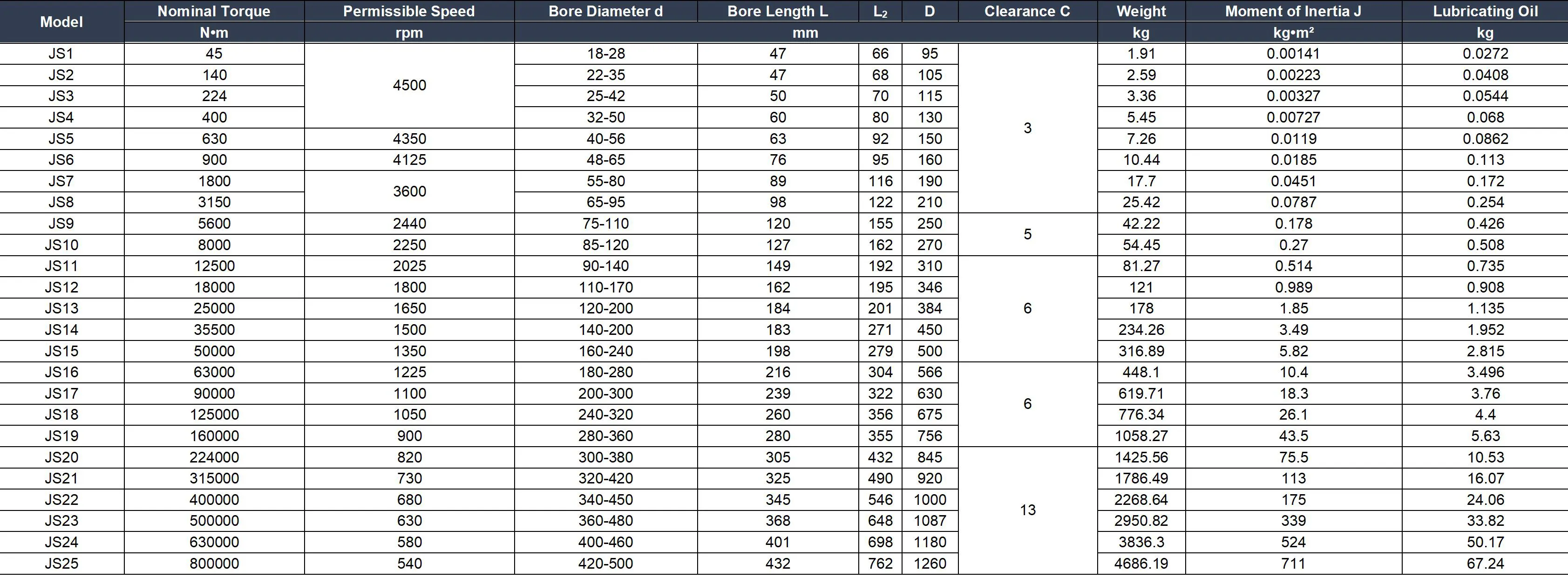
Selection starts with confirming the required transmitted torque, rotating speed, shaft diameter and allowable space for installation. The actual working load should take impact and overload factors into account rather than only using the steady-state torque value. The magnitude of expected shaft misalignment and ambient working environment also influence the final choice.
Customization can be done for special application demands. Adjustments include modifying hub bore size and keyway form, changing the cover structure for special sealing requirements, adjusting spring parameters to alter torsional stiffness, and redesigning the overall dimension to fit narrow installation space. Custom solutions are also available for special ambient temperature or non-standard mounting arrangements.
Operation and Maintenance
Regular maintenance focuses mainly on lubrication condition inspection. The lubricant inside the cover will degrade gradually under cyclic load and temperature change, so scheduled replenishment and replacement are necessary. Operators should check running noise, vibration amplitude and surface temperature during routine patrol. Abnormal noise often indicates insufficient lubrication, excessive misalignment or spring damage.
The serpentine spring is the main wearing part. If fatigue cracks, permanent deformation or surface pitting are found on the spring, replacement should be arranged promptly. The tooth surfaces of hubs also need periodic inspection for wear. When the equipment undergoes overhaul, the sealing gaskets are recommended to be renewed to maintain sealing integrity. Records of maintenance time, lubricant replacement and part inspection help track component status and avoid unexpected failure during production.