Elastomeric Couplings
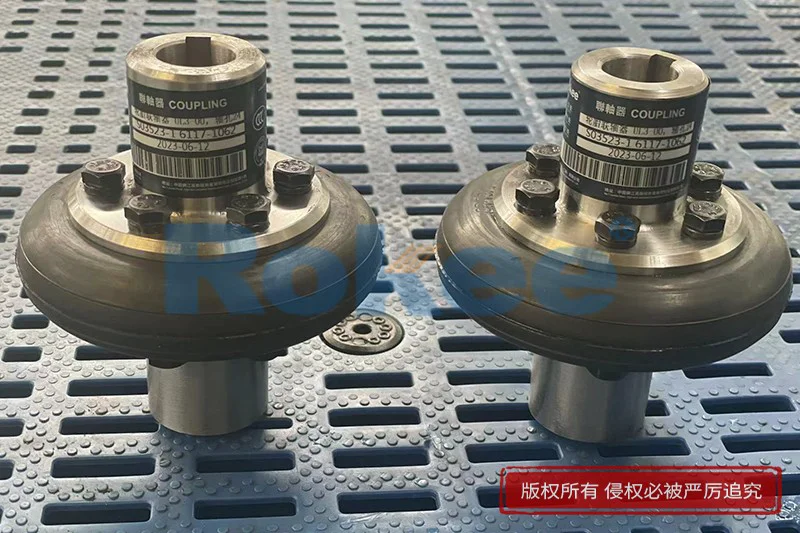
High-performance elastomeric couplings. Flexible urethane & rubber inserts, low maintenance, long service life. Custom sizes available for industrial power transmission. Rokee is a elastomeric couplings supplier in China. We support custom orders and offer direct factory sales, providing reliable products with flexible solutions for global clients.
Elastomeric couplings are flexible shaft connectors that transmit torque via deformable elastic inserts between metal hubs. They compensate for radial, angular and axial misalignment, absorb shock and damp vibration without lubrication. Common types include jaw, sleeve, tyre and disc styles with varied elastomer materials. Widely used for pumps, fans, conveyors and general processing machinery, they demand proper alignment during installation and regular inspection of elastomer ageing or damage. Selection considers torque, speed, misalignment and ambient conditions.
Elastomeric couplings are flexible connecting components used to transmit torque between two rotating shafts while accommodating misalignment and mitigating dynamic loads. They serve as a mechanical link that bridges driving and driven equipment, separating vibration and shock transfer across the connected system. Unlike rigid coupling designs, they rely on deformable elastic elements to deliver flexibility during operation. These couplings are widely adopted as a simple and reliable solution for general and medium-duty power transmission systems, balancing transmission efficiency and protection for adjacent machinery components.
Classification and Common Types
Elastomeric couplings can be grouped according to the structural arrangement of their elastic inserts. One major category is the jaw type, which uses block-shaped elastomer elements fitted between interlocking lobes on two hub halves. Another common style is the sleeve type, featuring a continuous tubular elastomer component sandwiched between metal hubs. Ring-type and disc-type elastomeric couplings use segmented or single-piece elastic discs clamped by hub flanges. There are also tire-style variants that employ a curved annular rubber body to connect the shaft hubs.
Typical configurations include jaw couplings, sleeve elastomer couplings, tyre couplings, and elastomer disc couplings. Each type differs in allowable misalignment capacity, torsional stiffness, and damping performance to match different operational requirements.
Structural Composition and Materials
A standard elastomeric coupling mainly consists of two metal hubs and one or multiple elastomeric inserts. The hubs are machined with bore openings for shaft mounting, and they feature engagement profiles to hold the elastic parts. The elastomeric insert is the core functional part that provides flexibility and damping.
Hub materials are commonly high-strength cast metal or carbon steel, selected for good rigidity and wear resistance. The elastomeric elements are manufactured from elastic polymer compounds. Different polymer formulations produce varied hardness, resistance to temperature change, and resistance to oil and chemical media. Some elastomer grades offer improved resistance to ageing, while others maintain stable elasticity under repeated cyclic deformation. Auxiliary components may include fasteners for flange-style constructions.
Working Principle
Torque is transmitted mechanically from the driving hub to the elastomeric element, then onward to the driven hub. When the connected shafts exhibit axial, radial, or angular misalignment, the elastomer undergoes controlled elastic deformation to compensate for the offset. Under sudden load fluctuations or shock impacts, the elastic material deforms temporarily to absorb peak energy and reduce shock waves propagating along the shaft line.
When the load returns to normal, the elastomer rebounds to its original shape. The torsional flexibility of the insert also changes the torsional natural frequency of the whole transmission system, helping avoid destructive resonance within the normal operating speed range. The metal hubs remain rigid relative to the shafts, so positioning force is transferred through the resilient intermediate member.
Features and Advantages
Elastomeric couplings provide combined capabilities of misalignment compensation and vibration damping in a compact assembly. They require no lubrication during normal service, which cuts auxiliary maintenance work. The elastic insert can be replaced independently without removing the connected driving or driven equipment in many designs, simplifying part renewal.
These couplings generate low noise during rotation and tolerate moderate installation offset without imposing high bending stress on shafts and bearings. They can isolate some of the vibration generated by prime movers or process loads. Most versions have relatively low mass and a simple layout, supporting easy integration into confined equipment spaces. Compared with many metallic flexible couplings, they deliver superior shock absorption under intermittent impact loads.
Limitations exist as well: the elastomer has a limited operating temperature window and can degrade under prolonged contact with certain solvents. Torsional stiffness changes with temperature and load magnitude, which must be considered for precision dynamic systems.
Applicable Conditions and Industry Sectors
Elastomeric couplings fit steady or moderately fluctuating torque conditions with low to medium rotational speeds. They work well for systems where minor shaft misalignment is unavoidable after installation, and where shock load buffering is required. Continuous operation with excessive misalignment, extreme high temperature, or strong corrosive fluid exposure is not suitable for standard elastomer formulations.
Common application areas include pumping systems, fan and blower assemblies, conveyor drives, general gearbox connections, and light to medium processing machinery. They are also used in compressor auxiliary drives, packaging equipment, and material handling machinery. Where precise angular positioning is the primary requirement, other coupling types are usually preferred.
Installation and Commissioning Guidelines
Before installation, inspect hubs and elastomer elements for cracks, surface damage or permanent deformation. Clean shaft surfaces and coupling bore surfaces to remove debris and residual oil. The hubs are fitted onto the respective shafts and secured by locking hardware. Alignment adjustment is performed to keep shaft offset within the allowable range for the coupling design. Excessive misalignment will accelerate wear of the elastomer insert and shorten service life.
After assembly, manually rotate the connected shaft train to confirm free rotation without binding or abnormal friction. Run the system under no-load conditions first and check for unusual noise or heating. Gradually apply working load and monitor the coupling region for vibration changes. Final checks should verify that fasteners remain tightened after the initial running-in period.
Selection and Customisation
Basic selection starts with confirming the operating torque, rotational speed, shaft diameter sizes, and the type of load pattern. The required allowance for misalignment and the ambient operating environment are also key factors. The elastomer material grade is chosen according to surrounding temperature and exposure to oil or chemical substances.
Customisation options cover different bore sizes and keyway configurations to match non-standard shaft dimensions. Adjustments can be made to elastomer hardness for higher or lower torsional damping. Special protective surface treatments for metal hubs can be supplied for demanding ambient environments. Modifications to hub profile geometry are available for space-restricted installations. The final selection should balance transmission capacity, flexibility level and expected service life.
Operation and Maintenance
Routine maintenance mainly relies on regular visual inspection. Check the elastomer component for cracking, swelling, hardening, tearing or permanent distortion at scheduled intervals. Monitor abnormal vibration, rising local temperature or unusual noise during running, which are typical signs of elastomer deterioration or excessive misalignment.
If damage to the elastic insert is identified, replace it promptly. Do not continue operating a coupling with failed elastomer parts, as this may transfer overload forces to connected bearings and gears. Avoid prolonged exposure of the elastomer to direct heat sources, strong chemicals or ultraviolet radiation where possible. Record operating conditions and replacement cycles to establish a suitable inspection interval. Hubs can remain in service as long as bore surfaces and engagement profiles stay free of severe wear.