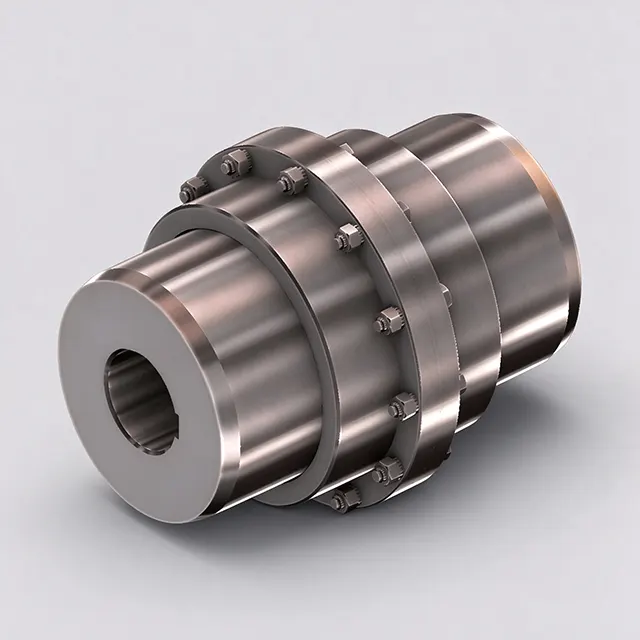
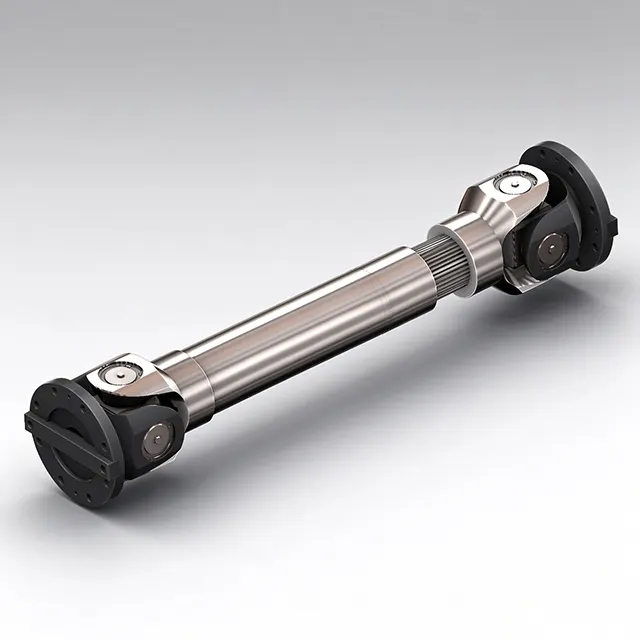
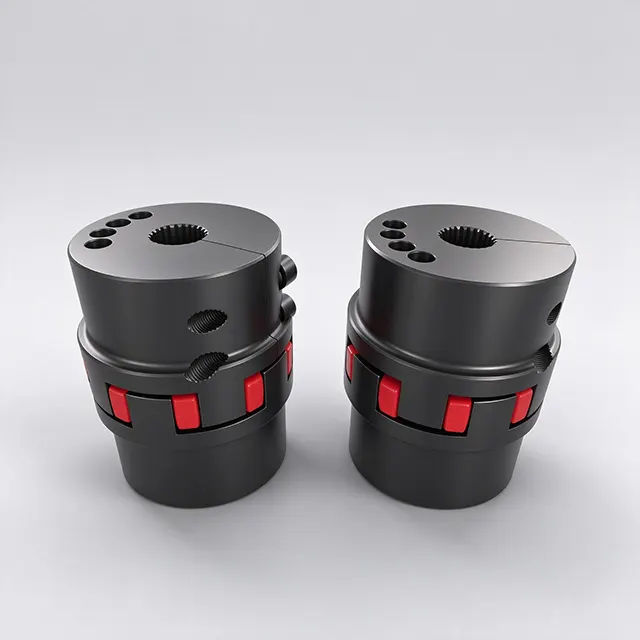
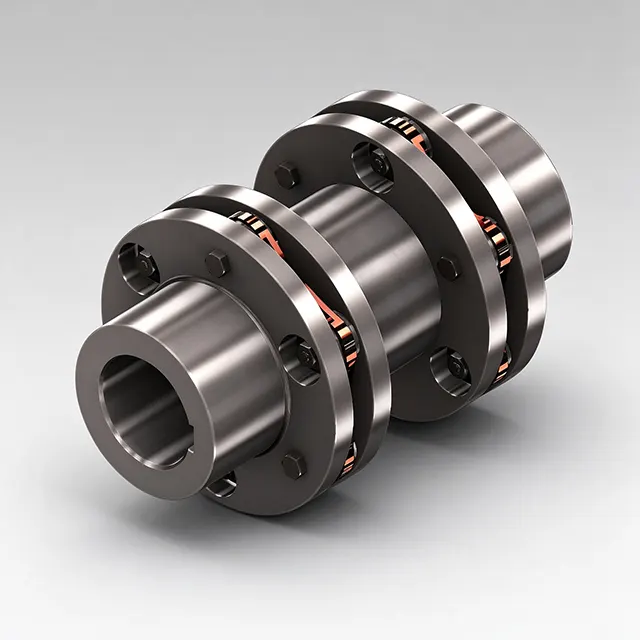
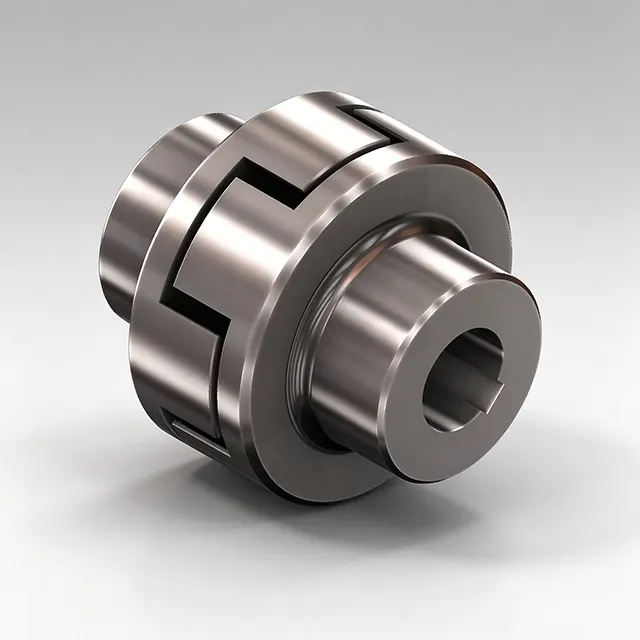
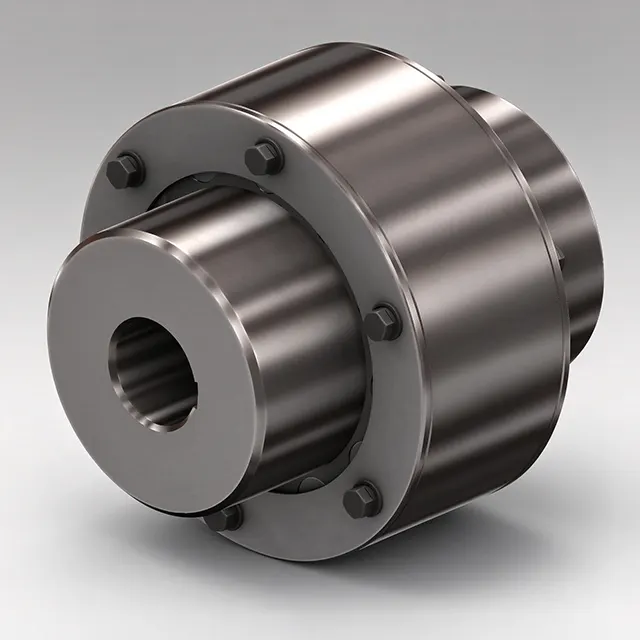
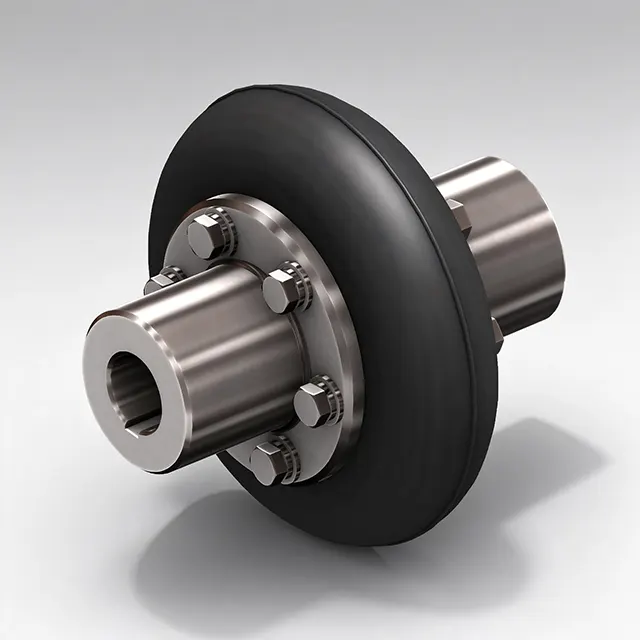
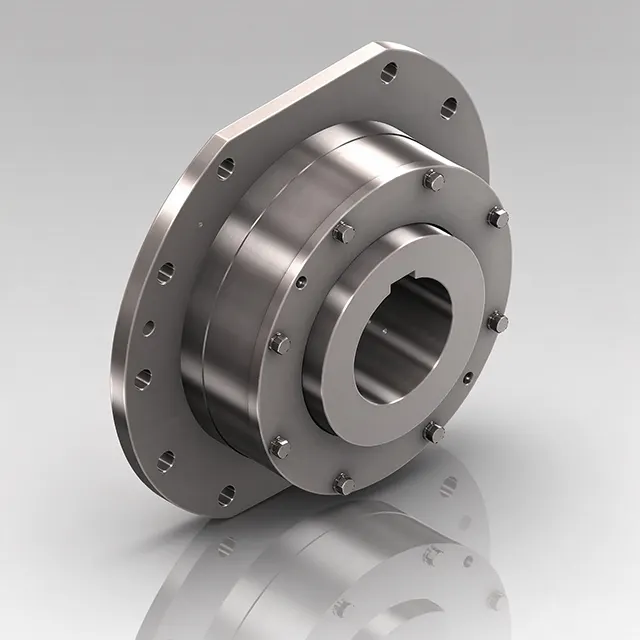
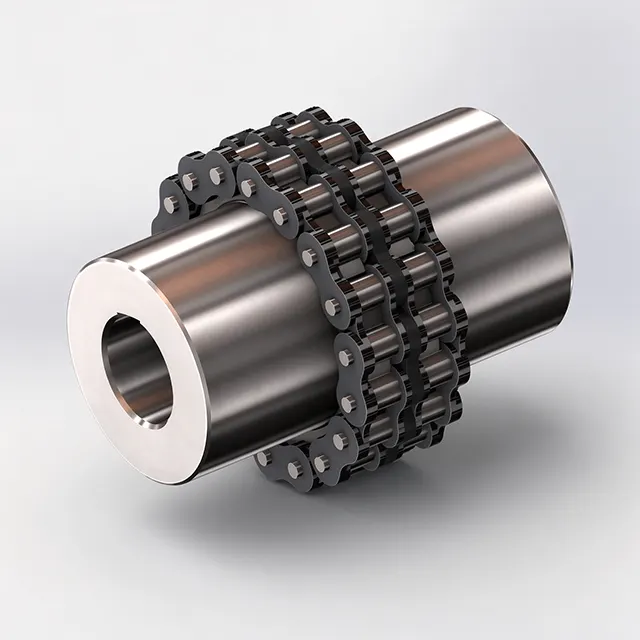
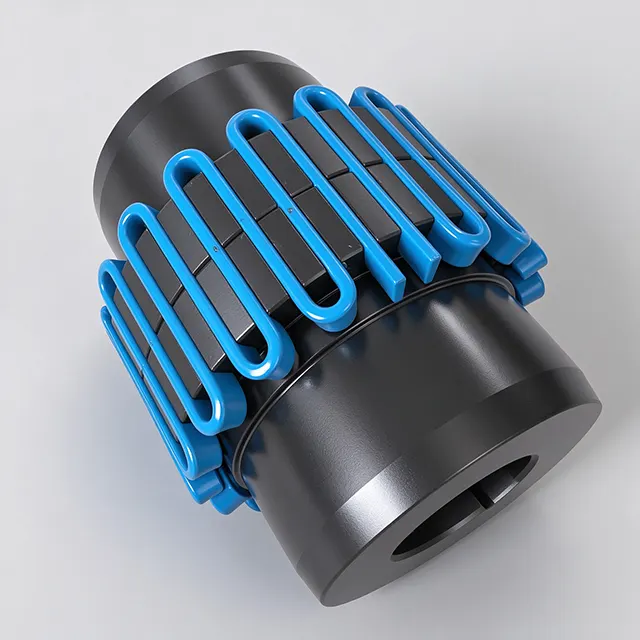
A precision coupling serves as a mechanical connecting component that links two rotating shafts to transmit torque while accommodating minor misalignment between them. Differing from ordinary couplings, it is engineered to maintain high rotational accuracy during operation, minimizing backlash and rotational deviation. It acts as a flexible bridge in motion transmission chains, balancing rigid power transfer and controlled compensation for positional errors. It is widely adopted in motion systems where consistent transmission precision is a core requirement.
Structural Composition and Materials
The basic structure of a precision coupling generally consists of two shaft hubs and an intermediate elastic or transmitting element. The hubs are designed for secure clamping or keyed connection with the driving and driven shafts. The intermediate element is the core functional part that delivers flexibility and torsion transfer.
Common materials for hubs include high-strength aluminum alloy, stainless steel and alloy steel. Aluminum alloy offers low inertia and good machinability, stainless steel brings corrosion resistance, and alloy steel provides superior load-bearing capacity. Intermediate elements can be made of stainless steel foil, engineered polymer, or composite elastic materials. Material selection is determined by load type, rotating speed, environmental conditions and the required degree of flexibility.
Working Principle
When the driving shaft rotates, torque is transferred through the hub and intermediate element to the driven shaft, achieving synchronous rotation. The intermediate element can produce controlled elastic deformation to absorb three main types of misalignment: radial offset, angular deviation and axial displacement.
Within the allowable deformation range, the coupling keeps torsional stiffness stable. Elastic deformation dissipates small vibration and shock, while excessive deformation is restricted by structural limits to avoid loss of rotation accuracy. Backlash is eliminated or kept extremely low by tight assembly and continuous structural contact, so the output motion can closely follow the input rotation during forward and reverse operation.
Features and Advantages
High torsional stiffness and negligible backlash are the most prominent merits, ensuring high repeatability of positioning in bidirectional motion. The compact overall structure takes up limited installation space and keeps low rotational inertia, which supports fast acceleration and deceleration cycles.
Good misalignment compensation reduces additional bending stress on connected shafts and bearings, extending the service life of adjacent components. Many types deliver smooth transmission with low vibration and noise. Most versions allow convenient shaft connection without complex assembly preparation. Compared with rigid connecting schemes, precision couplings lower the assembly tolerance requirements for shaft alignment while preserving transmission accuracy.
Applicable Working Conditions and Application Industries
They are suitable for systems requiring precise angular transmission, frequent forward-reverse rotation and high-speed intermittent movement. The operating environment should be controlled to avoid sustained exposure to strong corrosive media, extreme temperature ranges that exceed material tolerance, or heavy particulate contamination without protection.
Typical scenarios include motion control systems with light to medium torque loads. Major application fields cover automated processing equipment, inspection and measuring instruments, digital control motion platforms, semiconductor handling equipment, printing and converting machinery, and laboratory precision test benches. They are also used in small power transmission units of automated logistics and robotic joint auxiliary transmission structures.
Installation and Commissioning Points
Before installation, the shaft surface should be cleaned to remove grease, burrs and debris, and the matching diameter of shafts must match the coupling bore specification. The two shafts need preliminary alignment to reduce initial misalignment, as excessive offset beyond the compensation capacity will cause early fatigue failure.
For clamp-style hubs, tightening screws should be fastened evenly following the recommended sequence to achieve uniform clamping force and prevent shaft slipping or local stress concentration. After assembly, manually rotate the transmission system to check for jamming, abnormal friction or unsmooth rotation. In commissioning, low-speed trial operation is carried out first to verify running status, then speed and load are gradually raised to the working level. Real-time observation is needed for abnormal vibration or temperature rise.
Selection and Customization
Key parameters for selection include transmitted torque range, maximum rotating speed, allowable misalignment values, torsional stiffness requirement, bore size and overall dimension limits. Users need to distinguish continuous torque and peak impact torque, and reserve a proper safety margin for dynamic load conditions.
Standard products cover most common specifications, while customized solutions are available for special demands. Customizable items involve special bore shapes, modified overall length, non-standard material combinations, surface treatment for special environments, and adjusted stiffness to match specific vibration suppression targets. Custom design is based on the boundary conditions of the whole transmission system to avoid mismatched performance.
Operation and Maintenance
Routine maintenance mainly consists of regular visual inspection and running condition monitoring. Check for signs of fatigue such as cracks, permanent deformation of the elastic element, loosening of clamping screws and slipping traces between hub and shaft.
Periodically recheck the tightening torque of fasteners after long-time cyclic operation. Keep the coupling area clean; wipe away accumulated dust and oil contamination. If obvious vibration, abnormal noise or positioning accuracy decline appears during operation, stop the equipment for inspection. Replace components once fatigue damage is found. Under normal working conditions, precision couplings do not require lubrication, and lubricants may even degrade the performance of elastic intermediate materials.
https://www.rokeecoupling.net/shaft-couplings/precision-couplings.html