Brake Disc Type Plum Blossom Coupling
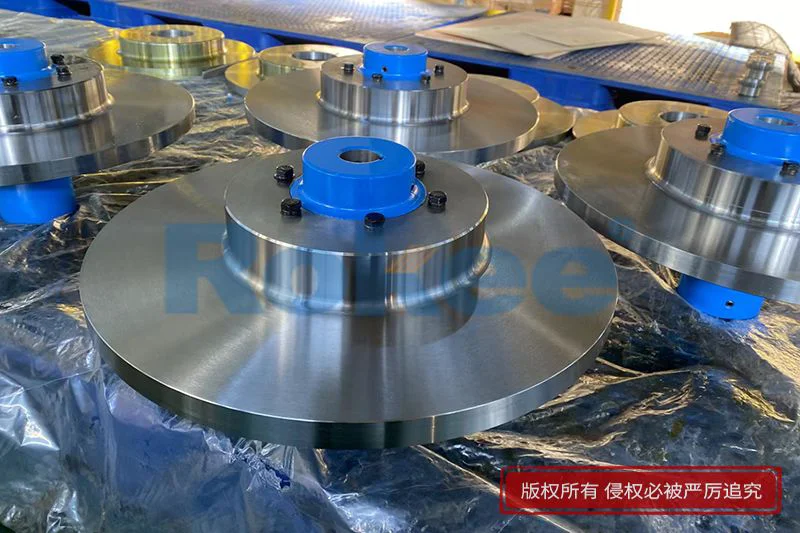
Brake Disc Type Plum Blossom Coupling, integrated flexible jaw coupling with brake disc. Shock absorption, misalignment compensation, no lubrication. Ideal for hoist, crane & frequent start-stop drive systems. Custom bore & torque available from f Rokee is a brake disc type plum blossom coupling supplier in China. We support custom orders and offer direct factory sales, providing reliable products with flexible solutions for global clients.
The brake disc type plum blossom coupling is a flexible transmission component integrating plum blossom coupling and brake disc structure. It transmits torque via two half hubs and an elastic plum blossom insert that compensates for shaft misalignment and absorbs shocks. The integrated brake disc cooperates with brake calipers to achieve deceleration and stopping. Featuring compact layout, low rotational inertia and easy assembly, it suits medium-torque systems with frequent start-stop and braking. It is widely used in conveying, lifting, packaging and automated machinery with regular inspection needed for the elastic insert and friction disc surface.
-
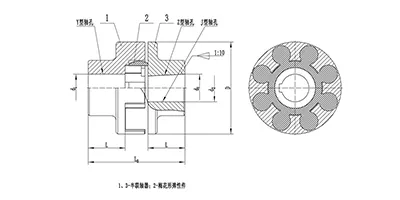
LM Plum Blossom Coupling
Basic Standard
LM/ML plum coupling is a basic standard jaw coupling, simple structure, easy installation and maintenance, good vibration damping performance. -
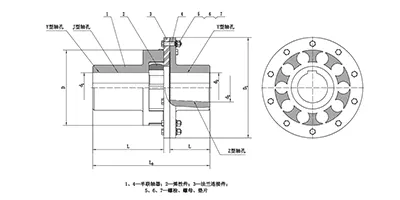
LMD Plum Blossom Coupling
Single flange
The LMD/MLZ single flange plum coupling is equipped with a transition connection. The elastic spider can be replaced without axial movement of the coupling halves. -
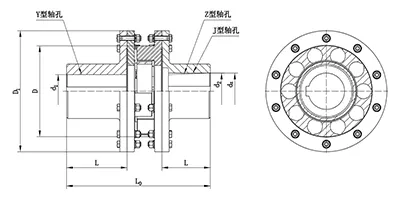
LMS Plum Blossom Coupling
Double flange
The LMS/MLS plum coupling adopts double transition flange connection. The elastic spider can be replaced without axial movement of the coupling halves. -
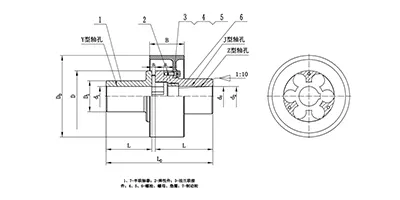
LMZ-I Plum Blossom Coupling
Split type with brake wheel
The LMZ‑I/MLL-I plum coupling adopts a split brake wheel design, suitable for braking applications. -
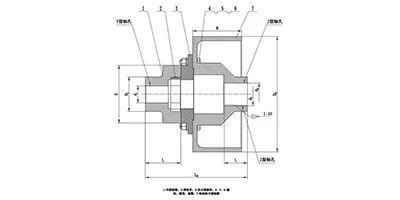
LMZ-II Plum Blossom Coupling
Integrated type with brake wheel
The LMZ‑II/MLL-II plum coupling adopts an integrated brake wheel design and is suitable for braking applications. -
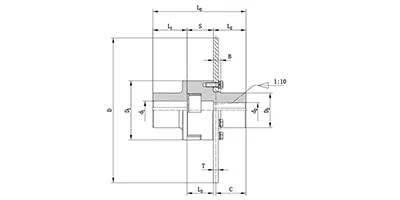
LMPK Plum Blossom Coupling
split construction with brake disc
The LMPK/MLPK plum coupling adopts a split brake disc design, suitable for braking occasions. The elastic element can be replaced without axially moving the coupling half.
The brake disc type plum blossom coupling is a flexible connecting component that integrates the basic structural characteristics of the plum blossom coupling with an integrated brake disc layout. It is designed to transmit torque between two rotating shafts while reserving a matching installation space for braking assemblies. Different from conventional plum blossom couplings, this product adds a disc-shaped brake structure on one side of the coupling body, so torque transmission and braking response can be realized on the same connection unit. It serves as a compact combined solution for power transmission and deceleration control in rotary drive systems, avoiding the complicated layout caused by separately arranging a coupling and an independent brake disc. This coupling can accommodate moderate misalignment between connected shafts and deliver stable torque output under cyclic and variable load conditions.
Structural Composition and Materials
The assembly mainly consists of four core parts: two half coupling hubs, an elastic plum blossom buffer insert, an integrated brake disc, and fastening connecting pieces. The two half hubs are the main force-bearing parts for shaft mounting and torque transfer, with matched tooth-shaped concave grooves on the opposite end faces to clamp the plum blossom elastic insert. The plum blossom insert sits between the tooth profiles of the two hubs and forms the flexible buffering medium of the whole coupling. The brake disc extends radially from one half coupling as a single integrated structure or a fixedly assembled disc body, with a smooth friction working surface for cooperating with brake caliper components.
For material selection, the half coupling hubs and brake disc are usually made of high-strength alloy structural materials with good rigidity and wear resistance. The plum blossom elastic insert adopts polymer elastic materials with excellent shock absorption and fatigue resistance, which can absorb instantaneous impact loads during operation. Fastening components are selected for stable clamping performance and resistance to loosening under continuous vibration. Material collocation balances structural strength, friction stability of the braking surface, and elastic buffering capacity.
Working Principle
When the drive shaft rotates, torque is transmitted to the half coupling on the driving side, and the tooth profile of the driving hub squeezes the plum blossom elastic insert. The insert then transfers torque to the tooth profile of the driven half hub and further drives the load shaft to rotate. The elastic insert undergoes tiny elastic deformation during the transmission process, which compensates for radial, angular and axial misalignment existing between the two connected shafts.
When braking action is required, the external brake caliper clamps the outer friction surface of the integrated brake disc. Friction force generated on the disc surface produces braking torque to slow down or stop the rotation of the coupling and the connected rotating equipment. The elastic insert still maintains the flexible connection state during the braking process, buffering the impact force brought by sudden deceleration and preventing rigid impact damage to the driving and driven shafts. Torque transmission and braking action work on the same rotating assembly without interfering with each other within the allowable load range.
Features and Advantages
First of all, the integrated design saves installation space. It combines the torque transmission function of plum blossom coupling and the matching mounting function of brake disc, simplifying the overall structure of the drive chain and reducing the number of connecting parts. Secondly, the elastic insert provides outstanding damping performance, effectively weakening vibration and impact generated during startup, load fluctuation and braking, and protecting bearings, reducers and other precision parts in the transmission system.
This coupling has convenient disassembly and assembly. The elastic insert can be replaced independently without moving the driving and driven equipment axially for a large distance. The friction surface of the brake disc has good runout control, which ensures stable and smooth braking effect. It can maintain stable transmission performance under forward and reverse alternating rotation conditions. In addition, the whole structure has a compact outline and low rotational inertia, which helps to obtain fast response speed in frequent start-stop and frequent braking occasions. Compared with separate arrangement of coupling and brake disc, it reduces cumulative installation error and improves the coaxiality of the whole transmission and braking unit.
Applicable Working Conditions and Application Industries
This coupling is suitable for transmission systems with medium torque demand, frequent start-stop and periodic braking requirements. It can work normally under continuous rotating conditions, and can adapt to working conditions with moderate vibration and impact. It is not suitable for long-term operation under heavy overload, strong corrosive media or ultra-high temperature environments that will rapidly degrade the performance of elastic inserts.
It is widely adopted in material conveying equipment, lifting and handling machinery, packaging production lines, printing and processing equipment, as well as general automated production machinery. It is also commonly used in the drive system of small and medium-sized rotating test benches and auxiliary processing equipment, where synchronous control of power transmission and safe braking is required.
Installation and Commissioning Points
Before installation, check the surface quality of the brake disc friction area to ensure there are no obvious scratches, deformation or foreign attachments, and inspect the elastic insert for cracks or aging defects. The two half hubs are installed on the driving shaft and driven shaft respectively, and the coaxiality of the two shafts needs to be adjusted within the allowable deviation range. Excessive misalignment will cause abnormal heating of the elastic insert, accelerated wear and vibration of the brake disc.
After the hub positioning is completed, place the plum blossom elastic insert into the tooth groove, and then complete the clamping and fixing. After preliminary assembly, manually rotate the coupling to confirm that there is no jamming and the elastic insert is evenly stressed. When matching with the brake assembly, adjust the clearance between the brake caliper and the brake disc surface to avoid continuous friction dragging during normal rotation, which will cause abnormal temperature rise of the disc. After static inspection, carry out no-load trial rotation, observe the running vibration and noise state, and recheck the braking action to ensure the braking response is stable without obvious jitter. Fine adjustment of coaxiality and brake clearance can be carried out according to the actual running state.
Selection and Customization
The main basis for selection includes the rated transmission torque of the system, the maximum instantaneous torque under startup and braking, the working rotating speed, the allowable shaft misalignment, the installation size of the shaft ends, and the required outer diameter and thickness of the brake disc. It is necessary to reserve a proper safety margin for torque parameters considering frequent braking and impact load. The structural size of the brake disc should match the matched brake caliper.
Customization can be carried out according to actual use requirements. The dimensional parameters of the brake disc, such as outer diameter, friction surface width and thickness, can be adjusted to adapt to different braking torque requirements. The inner hole size and keyway form of the half hubs can be customized to fit different shaft structures. Different elastic insert materials can be selected for special ambient temperature or anti-aging requirements. The surface treatment mode of the metal parts can also be adjusted to improve the environmental adaptability of the coupling.
Operation and Maintenance
Regular routine inspection is required during service. Check the running vibration and noise of the coupling periodically, monitor the surface temperature of the brake disc, and observe whether the elastic insert has extrusion deformation, cracking or aging hardening. The friction surface of the brake disc should be kept clean, and oil stains, dust and abrasive particles should be removed in time to prevent abnormal wear of the friction surface and unstable braking performance.
The elastic insert is a wearing part and should be replaced in time once obvious fatigue damage appears. When replacing the insert, the coaxiality of the shafts needs to be reconfirmed. Check the fastening state of all connecting pieces regularly to prevent loosening caused by long-term vibration. If obvious runout or surface wear of the brake disc is found, corresponding trimming or replacement should be arranged. Avoid long-term overload operation and frequent emergency braking beyond the design capacity, so as to extend the service life of the coupling and maintain the stability of transmission and braking performance.