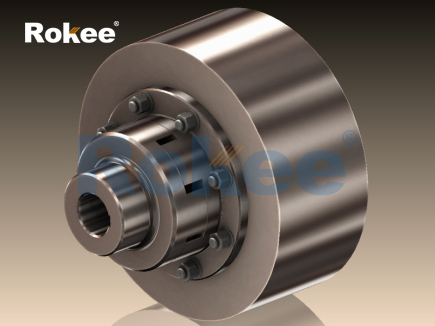
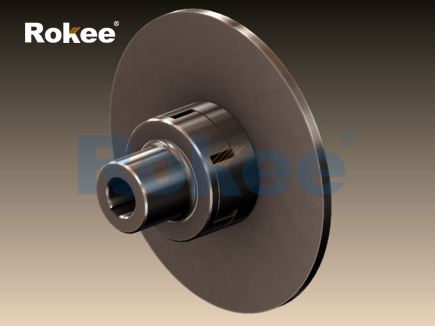
In the intricate ecosystem of industrial mechanical transmission systems, the rational selection of connecting components directly determines the operational stability, service life, and comprehensive efficiency of entire mechanical equipment. Among various flexible coupling types, curved jaw coupling stands out as a reliable and versatile transmission component, widely applied in general industrial machinery, automated production lines, and medium-duty power transmission scenarios. Its unique curved tooth profile design distinguishes it from conventional straight jaw couplings, endowing it with superior deformation coordination capacity and load-bearing stability during long-term mechanical operation.

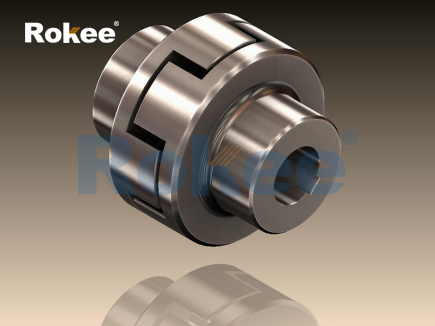
The basic structural composition of curved jaw coupling follows a simple and practical modular design logic, consisting of two symmetrical metal hub bodies and an elastic intermediate buffer element. The outer edge of each hub is processed with evenly distributed curved jaw teeth, and the smooth arc-shaped tooth surface is the most prominent morphological feature different from traditional straight tooth structures. The curved contour of the jaws is precisely calculated based on mechanical kinematics principles, which can evenly disperse contact stress during torque transmission. The two hubs are arranged oppositely with staggered jaw teeth, and the elastic buffer element is embedded in the gap between adjacent curved jaws to form a complete force transmission structure. The hub parts are usually made of high-strength carbon steel or alloy steel materials that undergo forging and heat treatment processes. These materials possess excellent structural rigidity and fatigue resistance, effectively resisting shear force and torsional load generated during high-speed rotation. The intermediate elastic element is commonly fabricated from polymer elastic materials with high toughness and compression resistance, which can produce controllable elastic deformation under external force to achieve flexible connection between driving and driven shafts.
The working mechanism of curved jaw coupling relies on the synergistic effect of mechanical engagement and elastic deformation to realize torque transmission and mechanical vibration attenuation. During the operation of mechanical equipment, the driving shaft drives one hub to rotate synchronously, and the curved jaws push the embedded elastic element. The elastic element then transmits the driving force to the jaw teeth of the other hub, thereby driving the driven shaft to rotate and complete the power transmission process. Benefiting from the arc-shaped contact surface of the curved jaws, the contact area between the metal jaws and the elastic element changes gently during force transmission. Unlike straight jaw couplings that form sharp stress concentration points at right-angle edges, the curved structure enables gradual transfer of contact pressure, avoiding instantaneous extreme stress on local areas of the elastic element. When the transmission system generates axial deviation, radial displacement, or angular deflection due to installation errors, equipment vibration, or thermal expansion of components, the elastic element can produce micro elastic deformation in multiple directions. This deformation effectively compensates for shaft body misalignment, reducing additional mechanical load between connected shafts and lowering the friction loss of rotating parts. In addition, the elastic medium can absorb vibration waves and impact energy generated during equipment startup, shutdown, and load fluctuation, realizing buffer damping and smoothing the torque transmission curve.
Curved jaw coupling possesses multiple inherent performance advantages that make it adaptable to complex and diverse industrial operating environments. First of all, it has excellent misalignment compensation capability. The optimized curved tooth structure provides larger deformation space for the elastic element, allowing it to tolerate moderate axial movement, radial offset, and angular deflection between two connected shafts. This characteristic reduces the assembly precision requirement in the equipment installation stage and lowers the mechanical failure rate caused by installation deviation in subsequent operation. Secondly, the coupling exhibits outstanding vibration reduction and noise reduction performance. The polymer elastic material can effectively isolate high-frequency vibration generated by mechanical operation, prevent vibration from propagating along the transmission shaft to various components of the equipment, and weaken friction collision noise between metal structures. In continuous operating industrial equipment, this vibration suppression effect can significantly improve the overall operating stability of the mechanical system. Thirdly, the curved jaw structure optimizes the stress distribution state. The arc-shaped tooth surface fits closely with the elastic element, eliminating sharp stress concentration areas, slowing down the aging and wear rate of the elastic medium, and extending the overall service life of the coupling. Moreover, the overall structure of curved jaw coupling is compact with a small axial and radial occupied space, which is suitable for mechanical equipment with limited installation space. Its simple assembly structure also facilitates daily disassembly, inspection, and component replacement without the need for complex professional tools.
In terms of load adaptation, curved jaw coupling is more suitable for medium and low torque transmission scenarios with frequent startup and fluctuating loads. It maintains stable transmission efficiency under continuous cyclic load conditions, and the elastic element can withstand repeated compression and rebound deformation without permanent structural damage. However, it is necessary to clarify the application limitations of this coupling type. Excessively high instantaneous impact load may cause irreversible compression deformation of the elastic element, and long-term extreme high-speed rotation will accelerate material aging of the buffer medium. Therefore, it is not applicable to heavy-duty machinery with ultra-high torque or high-precision ultra-high-speed transmission equipment. In terms of environmental adaptability, conventional curved jaw couplings can operate stably in conventional indoor industrial environments with moderate temperature and low humidity. Special modified elastic materials can endow the coupling with certain cold resistance, heat resistance, and oil resistance, enabling it to adapt to humid workshops, light oil pollution environments, and seasonal temperature fluctuation conditions. Nevertheless, it should avoid long-term exposure to strong corrosive gas environments and high-dust enclosed spaces, as corrosive substances will erode the elastic medium and metal hub surfaces, and excessive dust will accumulate in the tooth gap to increase transmission friction.
Standardized installation and commissioning processes are crucial to give full play to the performance advantages of curved jaw coupling. Before installation, staff need to check the surface flatness of the hub, the integrity of the curved tooth contour, and the uniformity of the elastic element texture to exclude components with cracks, depressions, and material aging defects. The surface of the connecting shaft should be polished to remove burrs and rust spots to ensure smooth assembly. During the installation process, the two hubs need to be sleeved on the driving shaft and driven shaft respectively, and the clamping fasteners should be evenly tightened to prevent shaft slipping caused by uneven fastening force. The staggered meshing state of the curved jaws must be ensured, and the elastic element should be completely embedded in the tooth gap without deflection or extrusion deviation. After the preliminary assembly is completed, a level gauge and dial indicator are used to detect the coaxiality of the two shafts, and the installation position is fine-tuned to control the misalignment within the allowable range of the product design. After installation, idle rotation test should be carried out. The equipment runs without load for a certain period to observe whether there is abnormal vibration, friction noise, or local temperature rise, and potential assembly hidden dangers are eliminated in a timely manner.
During long-term service, curved jaw couplings inevitably suffer from performance degradation and component wear due to mechanical fatigue and environmental erosion. Common failure forms include permanent deformation of elastic elements, surface wear of curved jaws, fastener loosening, and shaft hole matching clearance increase. The excessive compression deformation of the elastic element is usually caused by long-term overload operation or frequent strong impact load. The deformed medium cannot recover its original elastic state, which reduces the vibration damping effect and misalignment compensation ability. The surface wear of curved jaws mostly stems from long-term friction between metal tooth surfaces and elastic materials, as well as abrasive wear caused by external dust impurities. After the tooth surface is worn, the contact fit accuracy decreases, resulting in unstable torque transmission and increased mechanical vibration. Fastener loosening is related to equipment vibration and insufficient fastening torque during installation; continuous loosening will cause relative displacement between the hub and the shaft body, inducing transmission failure. The increase of shaft hole matching clearance is caused by long-term alternating load, which leads to gradual wear of the inner wall of the hub shaft hole and affects the connection stability of the transmission system.
Scientific daily maintenance and regular inspection can effectively delay the aging rate of curved jaw couplings and reduce equipment downtime losses. In daily operation management, the surface cleanliness of the coupling should be maintained regularly, and accumulated dust, oil stains, and sundries in the tooth gap should be removed to avoid abrasive friction between impurities and components. For equipment operating in humid environments, anti-rust lubricant can be evenly coated on the outer surface of the metal hub to isolate moisture and prevent surface oxidation and corrosion. Regular inspection cycles should be formulated according to the equipment operating intensity. For machinery operating continuously for a long time, the fastening state of fasteners needs to be checked every fixed cycle to ensure stable clamping force. The aging degree of the elastic element should be focused on during inspection; if cracks, hardening, or permanent deformation appear, the buffer medium should be replaced in a timely manner to avoid sudden failure during equipment operation. When replacing components, it is necessary to select elastic elements with consistent material hardness and dimensional parameters to ensure the coordination of overall transmission performance. In addition, the operating temperature of the coupling should be monitored during equipment operation. Abnormal local temperature rise usually indicates excessive friction or overload operation, and the operating load should be adjusted timely for maintenance.
With the continuous upgrading of modern industrial manufacturing technology, curved jaw couplings have been continuously optimized in structural design and material application, further expanding their industrial application scope. At present, this type of coupling is widely used in light and medium industrial fields such as food processing machinery, packaging and printing equipment, logistics conveying machinery, and general automation transmission equipment. In food processing machinery, its excellent vibration damping performance ensures the stable operation of precision processing components and avoids product quality defects caused by mechanical jitter. In packaging and printing equipment, the compact structural design adapts to the dense layout of automated production lines, realizing stable power transmission between multiple transmission shafts. In logistics conveying machinery, the coupling can cope with frequent startup and stop working conditions, resisting impact load generated by material transportation and improving the continuity of conveying operation. In addition, it also has applicable value in small-sized water pump units, fan equipment, and mechanical transmission systems of civil engineering auxiliary facilities, providing basic guarantee for the stable operation of conventional mechanical equipment.
Compared with other common flexible coupling types, curved jaw coupling maintains a balanced level in terms of manufacturing cost, structural complexity, and use stability. Diaphragm couplings have higher transmission precision but complex processing technology and high manufacturing cost, making them more suitable for high-end precision transmission fields. Spring couplings have strong overload resistance but large structural volume and high wear rate of elastic components. Curved jaw couplings integrate the advantages of simple structure, convenient maintenance, and moderate compensation performance, achieving an optimal balance between use performance and application cost in general industrial scenarios. Although it has limitations in ultra-high precision transmission and heavy-duty extreme load environments, it is irreplaceable in civilian industrial machinery and medium-duty transmission systems due to its high cost performance and strong environmental adaptability.
In conclusion, curved jaw coupling, as a mature and reliable flexible transmission component, relies on its unique curved jaw structure and elastic buffer design to realize efficient torque transmission, misalignment compensation, and vibration damping functions. Its simple structure, convenient installation and maintenance, and wide environmental adaptability make it occupy an important position in the field of general industrial transmission. In the process of mechanical design and equipment selection, it is necessary to comprehensively determine the applicability of the coupling based on actual working conditions such as equipment load characteristics, operating frequency, and installation space. Standardized installation, scientific maintenance, and reasonable service load control can maximize the service life and operating efficiency of curved jaw couplings. With the continuous development of industrial machinery towards automation and compactness, the optimization space of curved jaw couplings in material modification and structural iteration will be further expanded, providing more stable and economical basic connection solutions for modern industrial transmission systems.
pu sandwich panel line,pu sandwich panel machine,sandwich panel machine
« Curved Jaw Couplings » Latest Update Date: May 9, 2026
https://www.rokeecoupling.net/tags/curved-jaw-couplings.html