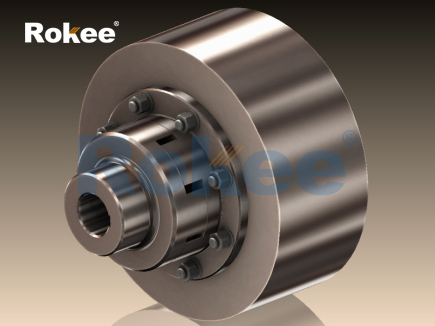
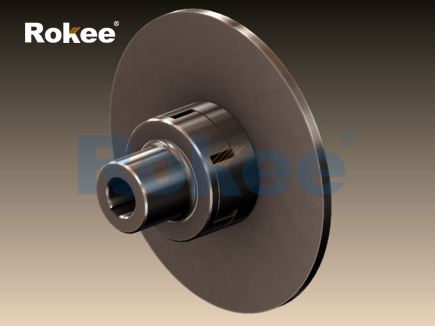
In the intricate mechanical transmission systems that underpin modern industrial operation, various coupling components serve as indispensable connecting units for adjacent rotating shafts, enabling the stable transmission of torque between driving and driven equipment. Among numerous coupling types, jaw couplings stand out as one of the most widely adopted flexible transmission components due to their ingenious structural design, balanced mechanical properties, and remarkable environmental adaptability. Composed of simple mechanical parts without complex transmission structures, jaw couplings can effectively connect two coaxial rotating shafts while mitigating the adverse effects generated during mechanical operation. Their unique combination of metal rigid components and elastic intermediate parts endows them with dual characteristics of rigid torque transmission and flexible vibration absorption, making them applicable to diverse industrial scenarios ranging from light-duty precision transmission to medium-load mechanical operation.

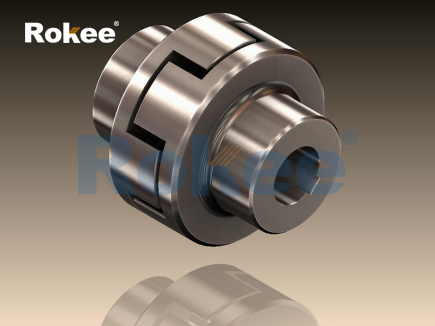
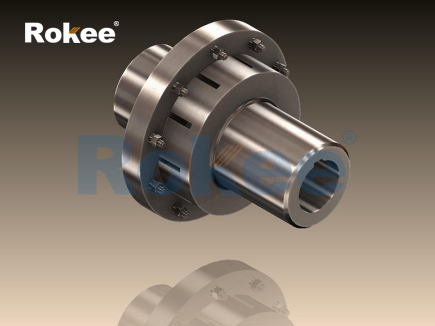
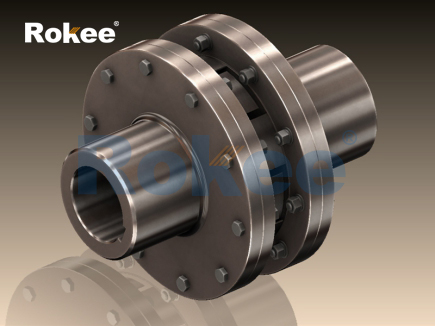
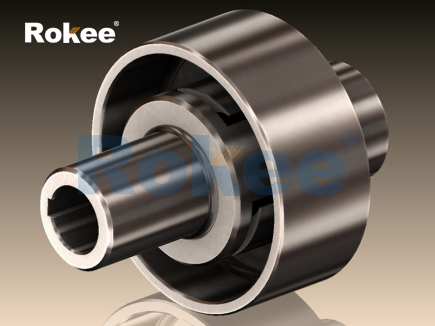
The basic structural composition of jaw couplings follows a concise and practical design concept, and the overall assembly mainly consists of two metallic jaw hubs and an elastic intermediate buffer element. The two hubs are usually manufactured from high-strength metal materials with excellent rigidity and wear resistance, and the outer circumference of each hub is processed with protruding jaw-shaped teeth distributed in an equiangular arrangement. The protruding jaws of the two hubs are arranged in a staggered manner during assembly, forming uniform gaps between adjacent jaws to accommodate the elastic buffer element. The intermediate elastic component, commonly designed as an integral elastomer with petal-shaped or block-shaped protrusions, is embedded in the gaps between the staggered jaws of the two hubs. This embedded assembly mode enables the elastic element to make close contact with the inner side of each jaw, realizing the flexible connection between the two metal hubs. In terms of connection methods between the hub and the rotating shaft, jaw couplings adopt mature assembly structures such as key connection, interference fit, and clamping connection. The key connection relies on the cooperation between flat keys and key grooves to transmit torque, featuring simple processing and convenient assembly; interference fit uses the elastic deformation of metal materials to form tight contact between the hub hole and the shaft surface, generating stable friction to avoid relative sliding during operation; clamping connection adopts a split hub structure, which achieves flexible assembly and disassembly through the locking force of fasteners, without requiring high-precision matching of shaft diameter and hub hole. All structural designs of jaw couplings prioritize assembly simplicity and operational stability, and the absence of complex transmission accessories reduces the failure probability of mechanical movement, laying a solid structural foundation for long-term stable operation in industrial environments.
The excellent industrial applicability of jaw couplings stems from their comprehensive and balanced mechanical performance, which covers torque transmission capacity, misalignment compensation capability, vibration damping effect, and environmental adaptability. In terms of torque transmission, the metal jaws bear the main torsional load during operation, and the uniformly distributed jaw structure can disperse torque stress effectively, avoiding local stress concentration that may cause component damage. The integral elastic element can appropriately buffer instantaneous impact torque generated by equipment startup, shutdown, and load mutation, preventing rigid torque from directly acting on the shaft system and reducing fatigue wear of rotating parts. Regarding misalignment compensation, jaw couplings can simultaneously adapt to axial, radial, and angular misalignment within a reasonable range. Axial misalignment compensation relies on the elastic deformation of the intermediate elastomer to adapt to the small axial displacement of the rotating shaft caused by thermal expansion and mechanical movement; radial misalignment is offset by the lateral deformation of the elastic element when the two shafts deviate radially; angular misalignment is buffered through the torsional deformation of the elastomer when the shafts have tiny deflection angles. Although the misalignment compensation range of jaw couplings is not comparable to that of specialized high-compensation couplings, it can fully meet the installation errors and operational displacement requirements of conventional mechanical equipment. In terms of vibration and noise reduction, the polymer elastic material has excellent damping characteristics, which can absorb high-frequency vibration generated by mechanical operation and isolate vibration transmission between the driving end and the driven end. Meanwhile, the flexible contact between the elastomer and metal jaws eliminates rigid collision friction, effectively lowering mechanical operating noise. In addition, the overall structural rigidity of jaw couplings ensures high transmission efficiency, with negligible power loss during torque transmission, which conforms to the energy-saving operation requirements of modern mechanical systems.
Based on structural differences, material selection, and functional characteristics, jaw couplings can be divided into multiple classification types to adapt to differentiated industrial working conditions. According to the structural form of elastic elements, the most common classification includes solid elastomer jaw couplings and split elastomer jaw couplings. Solid elastomers are integrally molded with high elasticity, featuring compact structure and strong torsional rigidity, suitable for stable working conditions with low impact load and constant rotating speed. Split elastic elements are composed of multiple independent elastic blocks, which can be individually replaced after local wear, reducing maintenance costs and improving component replacement efficiency, making them ideal for mechanical equipment with frequent startup and load fluctuation. Classified by hub connection structure, jaw couplings are divided into key-connected type, interference-fit type, and clamping type. Key-connected jaw couplings have low processing cost and wide applicability, commonly used in general industrial transmission equipment with low assembly precision requirements; interference-fit products have high coaxiality after assembly, no relative sliding during high-speed operation, and are suitable for medium and high-speed rotating mechanical systems; clamping jaw couplings have simple assembly and disassembly processes, without damaging the shaft surface, and are widely applied in equipment requiring frequent debugging and shaft replacement. In accordance with the difference in metal hub materials, the classification covers cast iron, carbon steel, and alloy steel jaw couplings. Cast iron hubs have low production cost and good vibration absorption, suitable for low-load and low-speed conventional equipment; carbon steel hubs have enhanced mechanical strength and wear resistance, capable of withstanding medium impact loads; alloy steel hubs undergo special heat treatment processes to achieve high hardness and tensile strength, adapting to harsh working conditions with heavy loads and complex stress. Furthermore, based on the shape of elastic elements, there are petal-shaped, rectangular, and circular jaw couplings, and the difference in shape directly affects the deformation range and stress distribution of elastic components, matching different torque transmission requirements.
Diverse classification forms and balanced mechanical properties enable jaw couplings to be applied in numerous industrial fields, covering light-duty precision transmission, medium-load mechanical operation, and conventional automated production equipment. In the mechanical processing industry, jaw couplings are commonly installed on transmission shafts of machine tools, grinding machines, and cutting equipment. The vibration damping performance can reduce processing vibration, improve workpiece processing accuracy, and the compact structure adapts to the limited installation space of precision processing equipment. In the field of logistics and conveying machinery, various belt conveyors, screw conveyors, and lifting equipment adopt jaw couplings to connect driving motors and transmission rollers. Their excellent impact resistance can buffer the instantaneous load generated by material transportation, ensuring stable operation of conveying systems. In fluid transmission equipment such as water pumps and fans, jaw couplings effectively isolate the vibration generated by the rotating impeller, preventing vibration from spreading to the motor and fixed support, reducing equipment operation fatigue and extending the service life of rotating components. In addition, jaw couplings are also widely used in agricultural machinery, packaging equipment, and light industrial machinery. For small and medium-sized power transmission systems with simple working conditions, low operation noise, and stable load changes, jaw couplings can always achieve reliable connection and torque transmission effects.
Despite the prominent application advantages in conventional industrial scenarios, jaw couplings have inherent usage limitations determined by their structural and material characteristics. The intermediate elastic element is mostly made of polymer materials such as polyurethane and rubber. These elastic materials are prone to aging, hardening, and deformation in high-temperature, low-temperature, or strong chemical corrosion environments, which will reduce vibration damping performance and even cause elastic element fracture in severe cases. Therefore, jaw couplings are not suitable for extreme working conditions with drastic temperature changes or corrosive media. In terms of load bearing capacity, limited by the structural strength of staggered jaws and the mechanical properties of elastic elements, jaw couplings cannot withstand ultra-heavy loads and continuous strong impact, making them unable to adapt to heavy industrial equipment such as large metallurgical machinery and mining crushers. Meanwhile, the elastic elements will gradually wear after long-term high-speed operation, leading to increased coaxial deviation of the shaft system and reduced transmission stability, requiring regular inspection and replacement of wearing parts. Compared with rigid couplings and high-precision diaphragm couplings, jaw couplings have lower torsional rigidity and positioning accuracy, so they are not applicable to ultra-high-speed rotating equipment and precision transmission systems with extremely strict coaxiality requirements.
In conclusion, jaw couplings represent a mature and reliable flexible coupling type in the mechanical transmission field. Their simple and compact structure reduces production and maintenance costs, while the combination of metal hubs and elastic elements endows them with vibration damping, misalignment compensation, and impact buffering capabilities. Different classification types formed by structural and material differences meet the transmission demands of diverse working conditions, covering most conventional medium and light-load mechanical equipment. Although restricted by material characteristics and structural design, jaw couplings have unavoidable limitations in extreme environments, heavy loads, and high-precision transmission scenarios, their comprehensive cost performance and operational stability remain irreplaceable in general industrial production. With the continuous upgrading of polymer elastic materials and metal processing technology, the temperature resistance, wear resistance, and load-bearing capacity of jaw couplings are being continuously optimized. In the future, this classic coupling component will still maintain a wide application range in the industrial field, providing stable and efficient connection guarantees for various mechanical transmission systems. In actual industrial selection, mechanical designers need to comprehensively consider operating temperature, load characteristics, rotating speed, and installation space, selecting the appropriate type of jaw coupling and formulating a reasonable maintenance cycle to maximize its service value and ensure the long-term stable operation of mechanical equipment.
pu sandwich panel line,pu sandwich panel machine,sandwich panel machine
« Jaw Couplings » Latest Update Date: May 9, 2026
https://www.rokeecoupling.net/tags/jaw-couplings.html