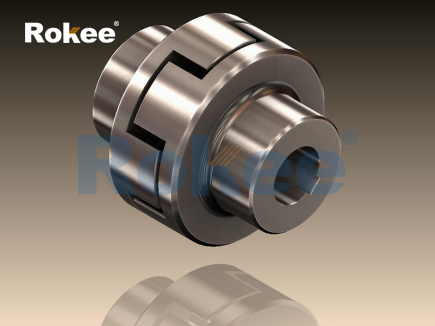
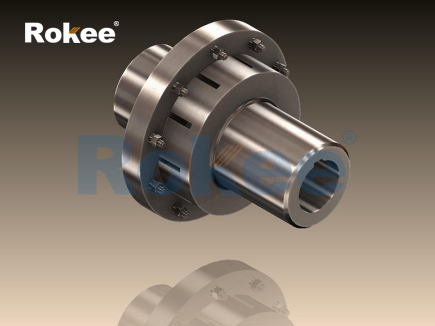
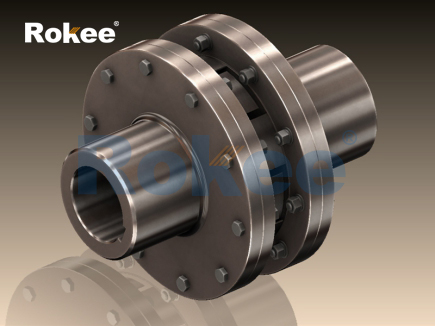
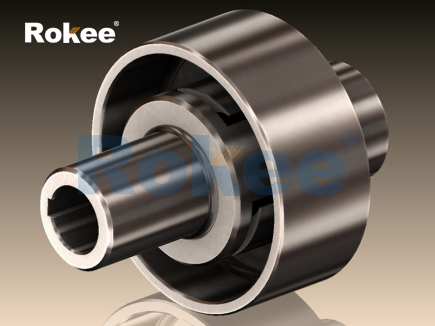
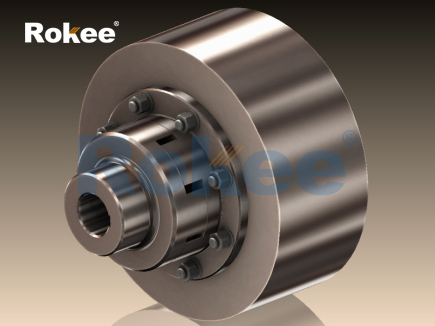
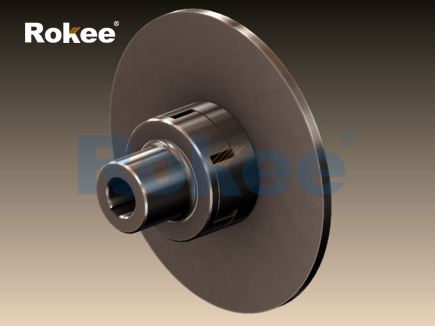
Plum Coupling With Brake Disc
Rokee is a well-known Plum Coupling supplier from china, the page show cases of Plum Coupling With Brake Disc, provide customized services based on user's drawings, and supporting exports.
In modern industrial transmission systems, the rational combination of connecting components and braking components determines the overall operational stability and safety of mechanical equipment. The integration design of plum coupling with brake disc has gradually become a mainstream configuration in medium and low-speed transmission machinery, relying on its compact structural layout, excellent vibration buffering performance and reliable braking coordination capability. This combined structure organically integrates the flexible connection function of plum coupling and the kinetic energy control function of brake disc, realizing synchronous coordination of power transmission and motion deceleration in a limited installation space. Different from independent transmission and braking structures, this integrated assembly effectively simplifies the mechanical layout, reduces intermediate transmission links, and lowers the failure probability of auxiliary connecting parts, which is highly suitable for industrial equipment that requires frequent start-stop, positive and negative rotation as well as intermittent operation. With the continuous upgrading of industrial manufacturing standards, the matching technology of plum coupling and brake disc has been continuously optimized in structural design, material selection and processing technology, adapting to increasingly complex working conditions such as heavy load, dust interference and temperature fluctuation, and providing stable basic support for the long-term operation of various mechanical transmission systems.
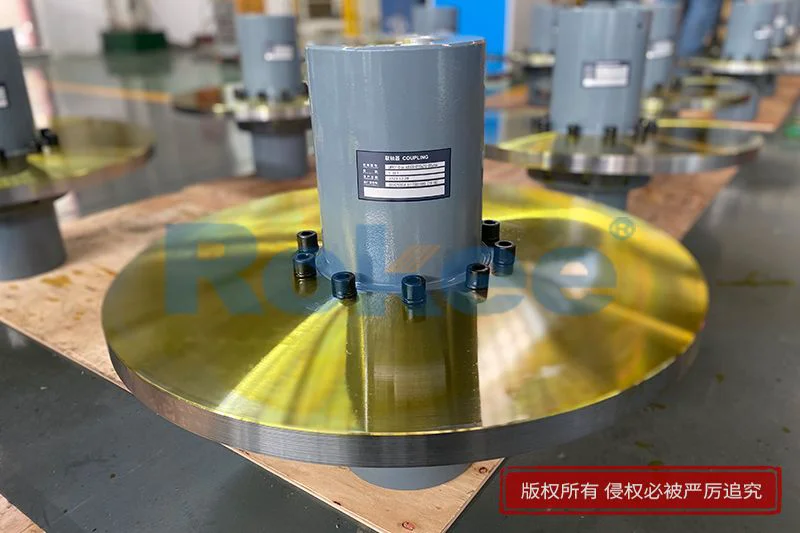
The basic composition of plum coupling with brake disc follows the minimalist mechanical design concept, and the overall structure is composed of three core parts: plum elastic coupling assembly, integral brake disc and fixed connecting accessories. The plum coupling mainly consists of two half couplings and an elastic plum spacer. The symmetrically arranged half couplings are respectively installed on the driving shaft and driven shaft, and the protruding claw structures on the half couplings are staggered and embedded to form a closed assembly space. The elastic spacer made of high-molecular polymer materials is clamped between the claws, which can rely on its own elastic deformation to absorb vibration and offset minor axis deviation during operation. The brake disc is fixed on the outer side of one half coupling in an integrated casting or bolt fastening mode, and the disc surface is smooth and flat with uniform thickness to ensure stable friction contact with the braking executing component. All connecting accessories such as fastening bolts and positioning sleeves adopt high-precision machining technology to ensure the coaxiality of the coupling and the brake disc after assembly, avoiding additional vibration and abrasion caused by assembly deviation. The internal structure does not contain complex transmission gears and multi-stage connecting components, and the simple mechanical layout not only reduces the weight of the whole assembly but also creates convenient conditions for daily inspection and maintenance.
The working mechanism of plum coupling with brake disc can be divided into two cooperative stages: power transmission and braking deceleration. In the normal power transmission stage, the driving shaft drives the active half coupling to rotate synchronously, and the torque is stably transmitted to the driven half coupling through the extrusion force between the claws and the elastic spacer. The elastic deformation of the spacer can buffer the instantaneous torque fluctuation generated during equipment start-up and operation, weaken the vibration amplitude in the transmission process, and reduce the rigid impact between shaft parts. At this stage, the brake disc rotates synchronously with the coupling at a constant speed, and there is no friction contact with the external braking component, maintaining a low-resistance operating state. When the equipment needs deceleration, stop or position locking, the external braking component applies uniform clamping pressure to the two sides of the brake disc. The friction force generated by the contact surface converts the rotational kinetic energy of the brake disc into thermal energy, and the braking torque acts on the coupling and the transmission shaft synchronously. The flexible characteristics of the plum coupling can offset the tiny vibration generated in the braking process, avoid rigid torsion between the driving and driven shafts, and prevent structural damage such as shaft breakage and component cracking caused by instantaneous braking impact. The whole working process realizes seamless switching between power transmission and motion braking, and the two mechanical structures restrict and cooperate with each other to ensure the controllability of the equipment operating state.
Compared with other combined transmission and braking structures, plum coupling with brake disc has prominent comprehensive performance advantages in structural applicability and operational reliability. First of all, it has excellent deviation compensation ability. The elastic spacer of the plum coupling can adapt to tiny axial, radial and angular deviations generated by installation errors and mechanical vibration, effectively solving the shaft jamming and abnormal abrasion problems caused by poor coaxiality of the transmission shaft. Secondly, the vibration and noise reduction effect is outstanding. The polymer elastic material has good damping performance, which can absorb most of the mechanical vibration generated during start-stop switching and load changes, reduce the resonance phenomenon of the transmission system, and keep the operating noise of the equipment at a low level. In terms of braking coordination, the brake disc is tightly fixed with the coupling, and the synchronous rotation accuracy is high. The braking response delay caused by intermediate transmission links is eliminated, so the braking action is more sensitive and accurate. In addition, the compact structural design saves installation space, which is especially suitable for mechanical equipment with limited internal assembly space. The number of internal components is small, and the failure points are relatively concentrated, making it easier for staff to locate faults during daily maintenance. The overall manufacturing cost is controlled at a moderate level, with high cost performance, which is convenient for large-scale popularization and application in general industrial machinery.
This combined structure is widely applied in various industrial scenarios that require stable transmission and frequent braking. In light and medium-duty conveying machinery, it is used for the transmission connection of conveyor rollers. The buffering performance of the coupling reduces the impact of material transportation on the transmission shaft, and the brake disc can realize rapid stop of the conveyor to prevent material accumulation and overflow. In automated processing equipment such as packaging machinery and printing machinery, the precise braking and positioning function ensures the accurate alignment of processing stations, and the flexible connection avoids displacement deviation of mechanical parts caused by vibration. In lifting and handling machinery, the assembly bears moderate heavy load torque. The stable friction braking of the brake disc ensures the safety of goods during lifting and lowering, and the damping performance of the coupling weakens the shaking of the equipment during load lifting. In addition, it also has good adaptability in textile machinery, chemical mixing equipment and small metallurgical processing machinery. Even in harsh working environments with dust and slight humidity, the sealed assembly structure can prevent external impurities from entering the friction contact surface and the coupling gap, maintaining long-term stable working performance.
Material selection is the core factor affecting the service life and operating quality of plum coupling with brake disc. The half couplings are usually made of high-strength carbon steel or alloy steel after integral forging and heat treatment. The processed parts have high structural rigidity, strong compression resistance and torsion resistance, and are not easy to deform under long-term torque load. The brake disc mostly adopts cast iron with uniform texture and good thermal conductivity. The dense metal structure improves the friction resistance of the disc surface, and the excellent thermal conductivity can quickly dissipate the heat generated by friction braking, avoiding structural deformation and performance degradation of the brake disc caused by high-temperature accumulation. The elastic spacer is made of polyurethane or rubber composite materials. By adjusting the material hardness and elasticity formula, it can balance the torque transmission efficiency and vibration buffering effect. The elastic spacer with moderate hardness can not only ensure no obvious torsional deformation during torque transmission, but also absorb impact vibration in the start-stop process. All metal connecting surfaces are treated with anti-rust and anti-corrosion processes such as galvanizing and oil sealing, which slows down the oxidation corrosion rate of metal parts and enhances the environmental adaptability of the whole assembly.
In the long-term operation process, plum coupling with brake disc will be affected by load fluctuation, friction wear and environmental factors, leading to natural aging and performance attenuation of components. The most common wear part is the elastic spacer. Long-term repeated extrusion and vibration will cause elastic fatigue of the polymer material, resulting in permanent deformation, cracking and hardness reduction. The aging spacer will weaken the vibration buffering effect and increase the vibration amplitude of the transmission system. The brake disc will produce uniform friction loss on the surface after long-term contact with the braking component. Excessive wear will reduce the disc thickness, affect the braking friction coefficient, and lead to prolonged braking distance. In addition, the fastening bolts are prone to loose thread under continuous mechanical vibration, and the assembly gap increases after loosening, which destroys the coaxiality of the coupling and the brake disc, inducing abnormal vibration and noise. Dust accumulation and moisture erosion will also cause slight rust on the metal surface of the coupling, increasing the friction resistance between internal components.
Scientific daily maintenance and regular inspection can effectively extend the service life of plum coupling with brake disc and maintain stable working performance. In the daily inspection process, staff need to regularly observe the operating state of the assembly, check whether there is abnormal vibration and irregular noise during equipment operation, and judge whether the elastic spacer is aging and damaged by vibration amplitude. It is necessary to regularly clean the dust and sundries on the surface of the brake disc to ensure the flatness of the friction contact surface and avoid scratches on the disc surface caused by hard impurities. The fastening state of all connecting bolts should be checked periodically, and the loose bolts should be tightened in time to keep the assembly gap within the standard range. For the elastic spacer with obvious deformation and cracking, it should be replaced in time to avoid the failure of vibration buffering function. After long-term high-intensity operation, the thickness of the brake disc should be measured. When the wear degree exceeds the safe range, the brake disc needs to be replaced to ensure the braking stability. In addition, the working temperature of the assembly should be controlled during operation. Continuous high-load braking will cause excessive temperature rise of the brake disc, and intermittent braking operation can be adopted to realize natural heat dissipation and reduce thermal fatigue loss of materials.
With the continuous progress of industrial mechanical optimization technology, the structural design and processing technology of plum coupling with brake disc are also constantly innovating and upgrading. In terms of structural optimization, the curved transition design is adopted for the claw of the coupling to reduce the stress concentration at the contact position between the claw and the elastic spacer, slowing down the wear speed of the spacer. The back of the brake disc is designed with heat dissipation grooves to expand the heat dissipation area, accelerate air circulation, and improve the high-temperature resistance of the brake disc. In terms of material upgrading, new composite elastic materials are applied to the spacer, which has stronger aging resistance and fatigue resistance and can adapt to higher frequency start-stop working conditions. The surface of the brake disc is treated with wear-resistant coating to improve the surface hardness, reduce friction loss, and prolong the maintenance cycle. In terms of intelligent matching, some improved assemblies are equipped with simple vibration and temperature sensing components, which can monitor the operating state of the coupling and the temperature change of the brake disc in real time, providing data support for equipment maintenance and fault early warning.
In the field of general industrial transmission, plum coupling with brake disc has irreplaceable application value due to its simple structure, reliable performance and low maintenance cost. It perfectly balances the two core requirements of power transmission and motion braking, solves many practical problems such as complex layout, poor coordination and easy damage of traditional separated transmission and braking structures. Through reasonable material selection, standardized assembly and scientific maintenance management, the assembly can maintain stable working performance in various complex working environments and meet the operation needs of different types of mechanical equipment. In the future, with the in-depth development of lightweight, high-temperature resistance and intelligent monitoring technology, the comprehensive performance of plum coupling with brake disc will be further improved. It will continue to be widely used in more industrial fields, provide efficient and safe basic component support for modern mechanical transmission systems, and contribute to the stable and efficient operation of industrial production lines.
With excellent quality, we have been continuously providing many coupling products of various categories and uses complying with multiple standards and a full range of services, from the product selection to final installation and operation, for the industry fields of ferrous metallurgy, nuclear power, gas turbine, wind power, ropeway construction, lifting transportation, general equipment, etc.
pu sandwich panel line,pu sandwich panel machine,sandwich panel machine
« Plum Coupling With Brake Disc » Latest Update Date: May 9, 2026
https://www.rokeecoupling.net/cases/plum-coupling-with-brake-disc.html