Star Couplings
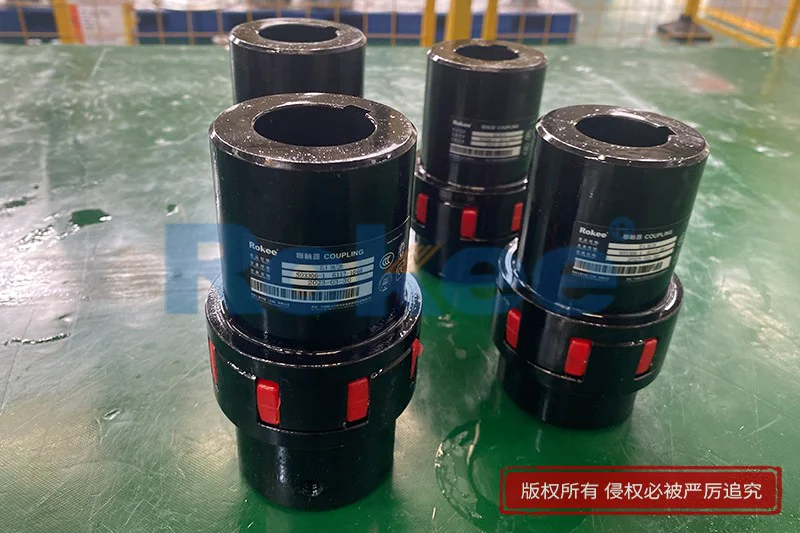
Star Couplings: flexible shaft couplings for torque transmission. Dampen vibration & compensate misalignment. PU/rubber inserts, reliable for pumps, motors & industrial drives. Rokee is a star couplings supplier in China. We support custom orders and offer direct factory sales, providing reliable products with flexible solutions for global clients.
Star couplings are a common type of flexible shaft coupling designed to transmit torque between two aligned rotating shafts while accommodating minor misalignment. They belong to the elastomeric coupling family and are widely adopted for general power transmission tasks. The core design concept relies on an elastic insert with a star-shaped profile, which sits between two hub halves to form a continuous torque transfer path. This configuration balances basic torsional flexibility and structural simplicity, making it a practical choice for many low-to-medium power transmission setups.
-
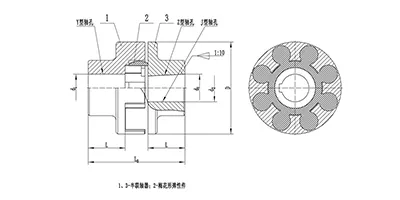
LM Plum Blossom Coupling
Basic Standard
LM/ML plum coupling is a basic standard jaw coupling, simple structure, easy installation and maintenance, good vibration damping performance. -
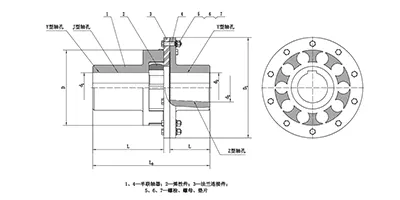
LMD Plum Blossom Coupling
Single flange
The LMD/MLZ single flange plum coupling is equipped with a transition connection. The elastic spider can be replaced without axial movement of the coupling halves. -
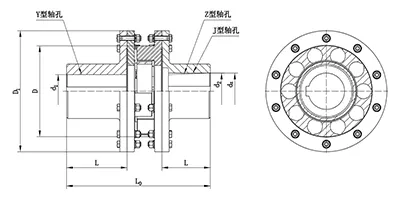
LMS Plum Blossom Coupling
Double flange
The LMS/MLS plum coupling adopts double transition flange connection. The elastic spider can be replaced without axial movement of the coupling halves. -
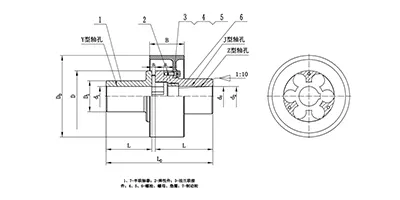
LMZ-I Plum Blossom Coupling
Split type with brake wheel
The LMZ‑I/MLL-I plum coupling adopts a split brake wheel design, suitable for braking applications. -
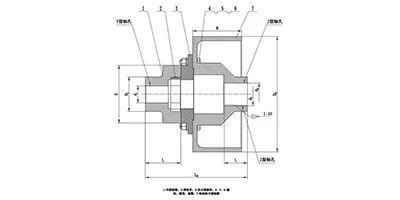
LMZ-II Plum Blossom Coupling
Integrated type with brake wheel
The LMZ‑II/MLL-II plum coupling adopts an integrated brake wheel design and is suitable for braking applications. -
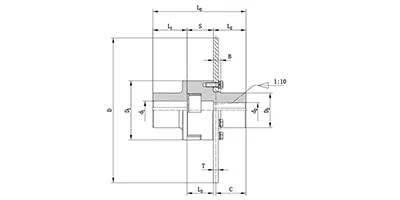
LMPK Plum Blossom Coupling
split construction with brake disc
The LMPK/MLPK plum coupling adopts a split brake disc design, suitable for braking occasions. The elastic element can be replaced without axially moving the coupling half.
Structural Composition and Materials
A star coupling assembly mainly consists of two metallic hubs and one star-shaped elastic insert. The hubs feature matching curved tooth pockets that interlock with the lobes of the star insert during assembly. The hubs are typically made of carbon steel or alloy steel, and their surfaces can be treated to improve wear resistance and anti-corrosion performance. The star insert is the flexible component, commonly produced from elastomer materials. Different elastomer formulations bring varied hardness, damping capacity and temperature tolerance. No fasteners are required to clamp the insert between hubs in most standard designs, and the insert is held in place by the engagement of lobes and hub pockets.
Working Principle
When power is transmitted, rotational torque passes from the driving hub to the star-shaped elastomer insert, and then to the driven hub. The curved lobes of the elastic insert deform slightly under load. This controlled elastic deformation allows the coupling to compensate for small amounts of radial, axial and angular misalignment between the connected shafts. The elastomer also absorbs torsional vibration and cushions sudden load shocks during operation. Under steady running conditions, the insert remains engaged with both hubs, maintaining stable torque transmission without slipping. When overload occurs beyond the elastic limit of the insert, the elastomer may deform excessively or fail, which can protect connected equipment from severe damage.
Features and Advantages
Star couplings offer a compact overall structure with small installation dimensions and low weight. They are easy to assemble and disassemble without moving the connected equipment over a large distance. The elastomeric insert provides good vibration damping and noise reduction effects during operation. The coupling delivers zero backlash in normal working conditions, which suits applications requiring stable rotational output. Replacement of the elastic insert can be completed quickly, without removing the hubs from the shafts. The design allows for relatively low moment of inertia, suitable for equipment with frequent start-stop and variable speed cycles. Compared with many other flexible couplings, it has a cost-effective basic structure and fewer wearing metal parts.
Applicable Working Conditions and Industries
This type of coupling is suitable for working scenarios with low to medium torque and moderate rotating speed. It can tolerate minor shaft misalignment but is not intended for systems with large misalignment or heavy impact loads. Continuous operation temperature range depends on the selected elastomer material. It performs well in clean or lightly dusty environments and should be kept away from long-term contact with oils, solvents and strong corrosive media. Typical application fields include conveying machinery, fan and blower equipment, pump units, packaging machinery, machine tool auxiliary drives, and general automation transmission systems. It is also used in small and medium power gear drives and agitator equipment.
Installation and Commissioning Key Points
Before installation, inspect hubs and the star insert for cracks, deformation or surface damage. Clean shaft surfaces and hub bores to remove dirt and burrs. Mount the two hubs onto the driving and driven shafts respectively, and adjust the axial gap between the end faces of the two hubs according to the structural requirement to avoid squeezing the insert excessively. Align the two shafts carefully to reduce initial misalignment, as excessive misalignment will shorten the service life of the elastomer insert. Place the star insert into the pocket of one hub first, then move the opposite hub to engage with the lobes of the insert. After installation, rotate the coupling manually to check for jamming or abnormal resistance. During commissioning, run the equipment under no-load condition for a short period and check for abnormal noise, heat generation or vibration. Stop operation immediately if irregular conditions appear and recheck alignment and assembly status.
Selection and Customization
The basic selection starts with calculating the required transmitted torque and considering load fluctuation of the equipment. Operating speed, shaft diameter and available installation space are also essential parameters for matching coupling size. The hardness and material of the star insert are chosen based on vibration demand, ambient temperature and contact medium. Custom options include modified bore sizes, special surface treatments for hubs, non-standard hub lengths and elastomer compounds adapted to special environmental conditions. Customized versions can be adjusted to fit unique installation space constraints or special vibration attenuation requirements. It is necessary to reserve a proper safety margin when selecting to cope with instantaneous peak torque in actual operation.
Operation and Maintenance
Routine maintenance mainly includes regular visual inspection of the star insert. Check whether the elastomer has aging, cracking, permanent deformation or lobe wear. Check hub fit condition and observe abnormal vibration and noise during equipment operation. Replace the elastic insert in time once obvious damage is found, as a failed insert will interrupt torque transmission and may cause secondary damage to hubs. Avoid long-term overload operation and prevent chemical contamination of the elastomer. If the equipment is idle for a long time, avoid prolonged static compression of the insert. Regularly recheck shaft alignment after long running cycles or equipment overhaul. Hubs generally have a long service life under normal conditions and only need replacement when bore surfaces or pocket structures are severely worn.