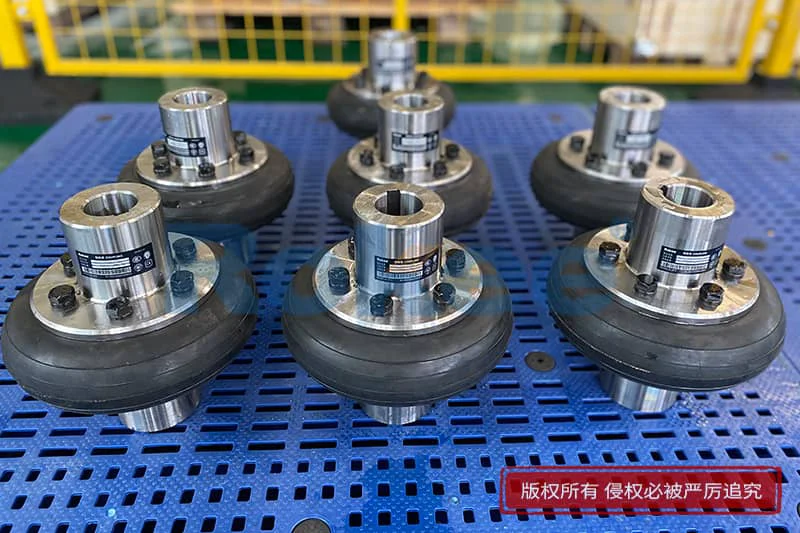
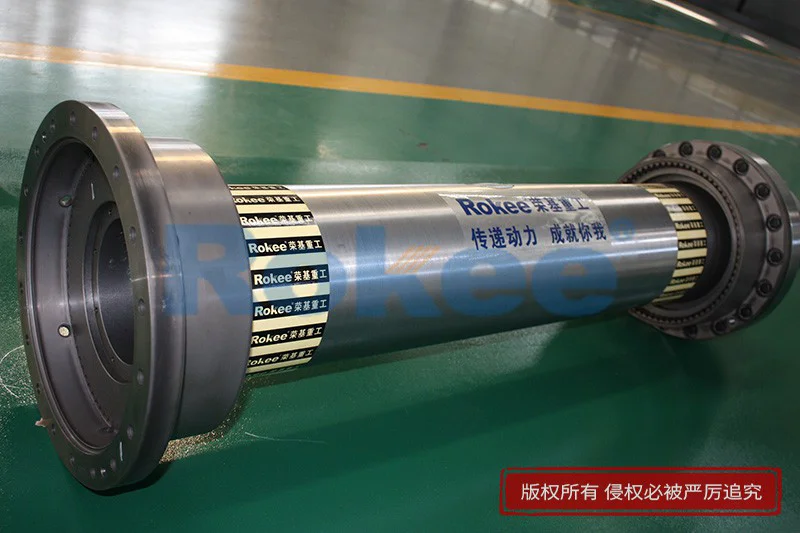
Flanged Coupling
Rokee is a well-known Flanged Coupling supplier from china, the page show cases of Flanged Coupling, provide customized services based on user's drawings, and supporting exports.
Flanged coupling stands as one of the most fundamental and widely utilized mechanical power transmission components in modern engineering systems, serving as a critical interface to connect two coaxial rotating shafts and transfer torque, rotational motion, and mechanical power between driving and driven equipment. Unlike flexible shaft couplings that prioritize misalignment compensation, flanged couplings are defined by their rigid, bolted connection design, which delivers exceptional stability and load-bearing capacity for heavy-duty operational scenarios. At its core, a standard flanged coupling consists of two symmetrical flange hubs, a set of precision-machined fasteners (typically high-strength bolts and nuts), and in some configurations, a centering spigot or alignment ring to ensure precise coaxial positioning of the two connected shafts. Each flange hub is securely mounted to the end of a corresponding shaft, usually via a keyway and key connection that prevents relative rotational slippage between the hub and the shaft, or through clamping mechanisms that eliminate the need for keyways and preserve the structural integrity of the shaft. The mating faces of the two flanges are machined to a smooth, flat finish to maximize contact area and distribute clamping pressure evenly, while evenly spaced bolt holes around the circumference of each flange allow for uniform tightening of fasteners, creating a rigid, monolithic connection between the two shafts once assembled.
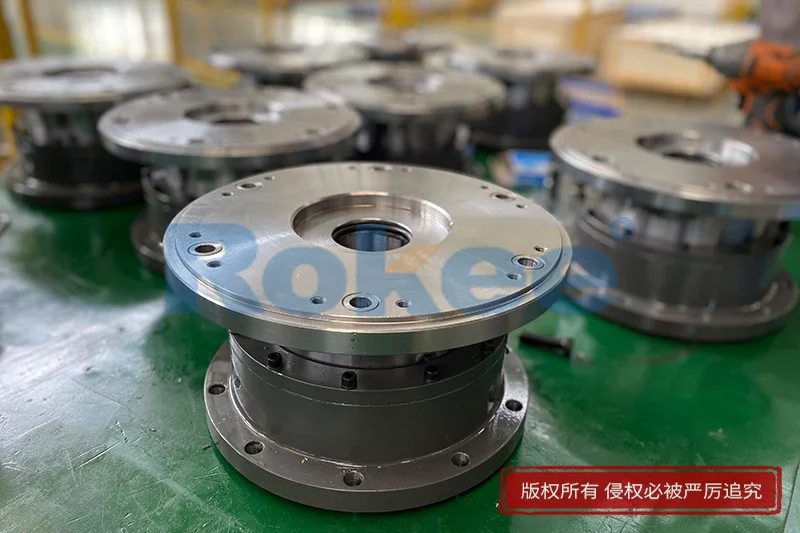
The structural integrity and performance characteristics of flanged couplings are directly shaped by their material composition, manufacturing precision, and design geometry, with these factors collectively determining their torque capacity, fatigue resistance, alignment tolerance, and operational lifespan. Common materials used for flanged couplings include gray cast iron, ductile iron, carbon steel, alloy steel, and in specialized corrosive environments, stainless steel or non-ferrous alloys. Cast iron flanged couplings are favored for their cost-effectiveness, good damping properties, and ease of machining, making them suitable for moderate-load, low-speed applications in stable industrial environments. Carbon steel and alloy steel variants, by contrast, offer significantly higher tensile strength, shear resistance, and fatigue life, enabling them to handle extreme torque loads, high rotational speeds, and dynamic shock loads without deformation or failure. The precision of machining is equally critical: tight tolerances on the flange mating faces, bolt holes, and shaft bores ensure minimal runout and perfect concentricity, which reduces vibration, minimizes wear on bearings and shafts, and prevents the development of harmful radial and axial stresses during operation. One of the defining performance traits of standard flanged couplings is their near-zero flexibility; they are designed to maintain absolute shaft alignment, which means they cannot compensate for radial, angular, or axial misalignment between the two connected shafts. This lack of flexibility makes precise installation alignment mandatory, as even minor misalignment can lead to accelerated wear, increased noise, excessive heat generation, and premature failure of the coupling, shafts, and adjacent equipment components. However, this rigidity also translates to unparalleled torque transmission efficiency, with nearly 100% of the input torque transferred to the driven shaft without energy loss from flexing or deformation, a key advantage for applications requiring consistent, direct power transfer.
Beyond the basic rigid flanged coupling design, there are several distinct classifications of flanged couplings, each engineered to address specific operational requirements, environmental conditions, and installation constraints, with differences primarily lying in structural configuration, protective features, and adaptability to specialized working environments. The most basic category is the unprotected flanged coupling, characterized by fully exposed bolt heads, nuts, and flange edges. This design is the simplest and most cost-effective to manufacture and assemble, with minimal material usage and straightforward machining requirements. Unprotected flanged couplings are ideal for enclosed, controlled industrial environments where there is no risk of accidental contact with moving components, no exposure to dust, debris, or moisture, and where regular maintenance and visual inspection are easily conducted. While they lack external protection, their unobstructed design allows for quick installation, bolt tightening checks, and disassembly for equipment maintenance or replacement, making them a practical choice for stationary machinery in clean, low-hazard settings. In contrast, protected flanged couplings feature a recessed bolt hole design or an integrated protective rim that encloses the bolt heads and nuts within the flange structure, preventing external contaminants from accumulating on the fasteners and reducing the risk of accidental contact with rotating hardware. This protective design enhances durability in harsh operating environments, such as manufacturing facilities with high levels of dust, metal shavings, or moisture, and improves operational safety by eliminating exposed moving parts that could pose a hazard to nearby personnel or equipment. The recessed fastener design also helps maintain consistent clamping force over time, as the bolts and nuts are shielded from corrosion and physical damage, extending the overall service life of the coupling in demanding conditions.
A third specialized classification is the marine flanged coupling, engineered exclusively to withstand the extreme conditions of marine and offshore engineering applications, where exposure to saltwater, high humidity, corrosive electrolytes, and constant vibration is unavoidable. Marine flanged couplings feature a one-piece, integral design where the flange is forged directly with the shaft end, rather than being a separate hub mounted onto the shaft, eliminating potential weak points and ensuring maximum structural strength. The fasteners used in marine flanged couplings are typically tapered, headless bolts that provide a tighter, more secure fit and resist loosening caused by continuous vibration and shaft movement during vessel operation. These couplings are manufactured from corrosion-resistant alloys or coated with protective layers to combat saltwater corrosion and oxidation, critical for maintaining performance in saltwater environments where standard steel components would quickly deteriorate. Additionally, some advanced flanged coupling variants fall into the semi-flexible category, which retains the core flanged design but incorporates small elastic elements or cushioned bushings within the bolt holes to provide limited misalignment compensation and vibration damping. These semi-flexible flanged couplings bridge the gap between rigid flanged designs and fully flexible couplings, offering moderate torque capacity while accommodating minor shaft misalignments that may occur in machinery with slight installation errors or thermal expansion-induced movement. This hybrid design is particularly useful in applications where perfect alignment is difficult to achieve but high torque transmission and structural rigidity are still required.
The performance versatility and structural reliability of flanged couplings make them indispensable across a vast range of industrial sectors, where they fulfill critical power transmission roles in diverse machinery and mechanical systems. In general industrial manufacturing, flanged couplings are extensively used in heavy machinery such as centrifugal pumps, industrial compressors, fans, blowers, conveyors, and gearboxes, where they transfer high torque between electric motors and driven equipment. Their rigid design ensures stable operation in continuous production lines, minimizing downtime and maintaining consistent rotational speed for processes that require precise motion control. In the mining and mineral processing industry, flanged couplings are employed in crushers, mills, and material handling equipment, where their high load-bearing capacity and durability enable them to withstand heavy shock loads, continuous operation, and the abrasive, dusty conditions typical of mining sites. The robust construction of steel flanged couplings in these applications resists deformation and failure under extreme mechanical stress, ensuring reliable performance in the most demanding industrial environments. In marine engineering and shipbuilding, marine-grade flanged couplings are a core component of vessel propulsion systems, connecting the main engine output shaft to the propeller shaft, as well as in auxiliary marine machinery such as onboard pumps, generators, and winches. Their corrosion-resistant design and integral shaft-flange construction are essential for maintaining operational integrity in saltwater environments, where component failure could have severe safety and operational consequences for marine vessels.
Flanged couplings also play a vital role in the energy production sector, including thermal power plants, hydroelectric facilities, and renewable energy systems. In power generation equipment such as steam turbines, gas turbines, and generators, rigid flanged couplings provide the precise alignment and high torque transmission needed to convert mechanical energy into electrical energy efficiently, with zero backlash and minimal energy loss. Their ability to operate reliably at high rotational speeds and under continuous load makes them ideal for the critical, non-stop operation required in power generation facilities. In agricultural machinery, flanged couplings are used in tractors, harvesters, and irrigation equipment, connecting engine shafts to transmission systems and operational components, where their simple design and ease of maintenance make them suitable for field operations where repair and replacement must be quick and straightforward. Additionally, flanged couplings are utilized in construction machinery, such as concrete mixers, excavators, and lifting equipment, where their high load capacity and rigid connection support the heavy, dynamic loads associated with construction site operations. Even in precision engineering applications, smaller-scale flanged couplings are employed in machine tools, rotary presses, and automated manufacturing equipment, where precise shaft alignment and consistent torque transfer are essential for maintaining product accuracy and machining precision.
When selecting a flanged coupling for a specific application, engineers must evaluate multiple key factors to ensure optimal performance and compatibility, including torque requirements, rotational speed, shaft diameter, environmental conditions, alignment feasibility, and maintenance accessibility. The torque rating of the coupling must exceed the maximum operational torque of the equipment to account for transient shock loads and overload conditions, preventing mechanical failure during unexpected stress events. Rotational speed is another critical consideration, as higher speeds require tighter machining tolerances and balanced flanges to minimize vibration and centrifugal force-induced stress. Environmental factors such as temperature extremes, moisture, dust, and corrosion dictate material selection and protective design features; for example, high-temperature industrial environments may require heat-resistant alloy steel couplings, while corrosive chemical plants demand stainless steel or coated flanged couplings. Installation space constraints also influence coupling selection, as compact flange designs are necessary for equipment with limited axial clearance, while standard-sized flanges are suitable for open, accessible installations. Proper installation practices are equally important: precise shaft alignment using precision measuring tools, uniform bolt tightening following recommended torque sequences, and secure hub-to-shaft fastening are essential to avoid premature wear and ensure long-term performance. Regular maintenance, including visual inspections of fasteners for loosening, checks for wear or corrosion on flange faces, and monitoring of vibration and noise levels during operation, helps extend the service life of flanged couplings and prevents costly unplanned downtime in industrial operations.
In summary, flanged couplings represent a timeless and essential mechanical component, valued for their simple yet robust structure, exceptional torque transmission capacity, and unparalleled reliability in heavy-duty power transmission applications. While they lack the misalignment compensation of flexible couplings, their rigid design makes them the preferred choice for scenarios where precise shaft alignment, maximum power transfer efficiency, and structural stability are non-negotiable. The diverse classifications of flanged couplings—from basic unprotected designs to specialized marine and semi-flexible variants—ensure that there is a suitable configuration for nearly every industrial, marine, agricultural, and energy-related application. As industrial machinery continues to evolve toward higher loads, faster speeds, and more demanding operating conditions, flanged couplings remain a cornerstone of mechanical power transmission, adapting through material advancements and precision engineering to meet the evolving needs of modern engineering systems. Their enduring popularity stems from a unique balance of simplicity, strength, and versatility, making them an irreplaceable component in the global industrial landscape, where reliable shaft connection and power transfer are fundamental to the operation of countless pieces of critical machinery.
With excellent quality, we have been continuously providing many coupling products of various categories and uses complying with multiple standards and a full range of services, from the product selection to final installation and operation, for the industry fields of ferrous metallurgy, nuclear power, gas turbine, wind power, ropeway construction, lifting transportation, general equipment, etc.
pu sandwich panel line,pu sandwich panel machine,sandwich panel machine
« Flanged Coupling » Update Date: 2026/3/25
Other Cases
![Cold-rolling Main Transmission Universal Coupling]() Cold-rolling Main Transmission Universal Coupling
Cold-rolling Main Transmission Universal Coupling![WGP Gear Coupling With Brake Disc]() WGP Gear Coupling With Brake Disc
WGP Gear Coupling With Brake Disc![LLB7 Flexible Tire Coupling]() LLB7 Flexible Tire Coupling
LLB7 Flexible Tire Coupling![Flange Sleeve For Universal Shaft]() Flange Sleeve For Universal Shaft
Flange Sleeve For Universal Shaft![TL Pin Coupling Hub]() TL Pin Coupling Hub
TL Pin Coupling Hub![ROW Universal Joint Shaft With Shaft Sleeve]() ROW Universal Joint Shaft With Shaft Sleeve
ROW Universal Joint Shaft With Shaft Sleeve![Membrane in Steel Laminae Coupling]() Membrane in Steel Laminae Coupling
Membrane in Steel Laminae Coupling![Gear Coupling For Electrical Machinery Plant]() Gear Coupling For Electrical Machinery Plant
Gear Coupling For Electrical Machinery Plant![High-speed & Corrosion-resistant Drum Gear Coupling For Steam Turbine]() High-speed & Corrosion-resistant Drum Gear Coupling For Steam Turbine
High-speed & Corrosion-resistant Drum Gear Coupling For Steam Turbine![Internal and External Teeth Coupling]() Internal and External Teeth Coupling
Internal and External Teeth Coupling