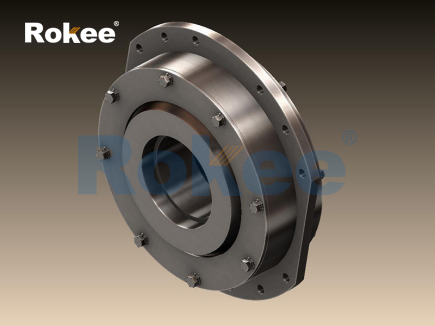
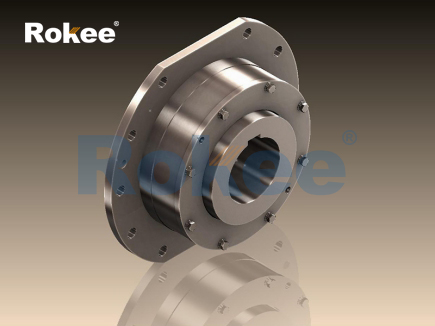
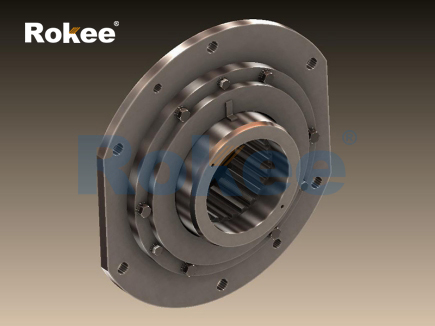
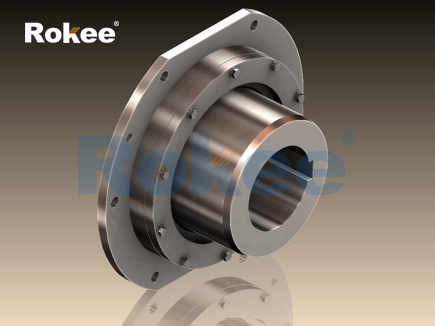
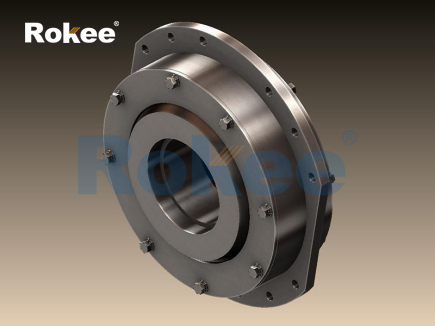
In the complex operating logic of modern mechanical transmission systems, shaft connection components serve as indispensable basic units that determine the operational stability, power transmission efficiency and service life of complete mechanical equipment. Among various types of coupling structures, drum couplings have gradually become a core connecting component widely used in heavy-duty industrial scenarios by virtue of their unique mechanical structure, excellent displacement compensation capability and outstanding load-bearing performance. Different from ordinary flexible couplings with simple structures and rigid couplings with limited deformation tolerance, drum couplings balance structural rigidity and mechanical flexibility perfectly, adapting to harsh working environments such as heavy load, frequent startup, mechanical vibration and axial offset, which makes them irreplaceable in heavy machinery transmission fields.

The basic mechanical structure of drum couplings follows a compact and reasonable integrated design concept, and the overall composition is mainly composed of two half-coupling bodies, an intermediate tooth sleeve, meshing tooth structures and fastening connecting parts. Each component has a clear division of labor and closely cooperates with each other to complete the torque transmission and displacement compensation functions. The half-couplings located at both ends are the main connecting structures for docking with the rotating shafts of mechanical equipment. The outer side of each half-coupling is processed with arc-shaped drum teeth, and the curved tooth profile design is the core structural feature that distinguishes drum couplings from traditional straight-tooth couplings. The intermediate tooth sleeve is equipped with annular inner teeth that match the outer drum teeth, and the precise meshing between inner and outer teeth forms a stable torque transmission channel. All fastening parts are installed at the flange connection position of the half-couplings, which can effectively lock the assembly structure and avoid loosening and displacement during long-term high-intensity operation. The overall structural layout abandons redundant auxiliary components, realizing high integration of mechanical functions while controlling the overall volume, which is convenient for installation in narrow mechanical assembly spaces and meets the compact layout requirements of modern heavy-duty equipment.
The working principle of drum couplings is based on mechanical meshing transmission and elastic micro-deformation compensation. In the operating state, the driving shaft drives the half-coupling on the active side to rotate synchronously, and the torque is stably transmitted to the intermediate tooth sleeve through the meshing contact between the outer drum teeth and the inner teeth. Then the intermediate tooth sleeve drives the half-coupling on the driven side to rotate, realizing the synchronous operation of the driving shaft and the driven shaft. When the mechanical equipment is affected by external factors such as equipment vibration, mechanical wear and installation deviation during operation, certain axial, radial and angular displacement deviations will occur between the two connected rotating shafts. The arc-shaped curved surface of the drum teeth can produce tiny sliding deformation at the meshing contact point. This structural characteristic allows the coupling to actively absorb the displacement deviation of the shaft system without generating additional mechanical stress. Compared with straight-tooth couplings that are prone to stress concentration, the drum tooth design can evenly distribute the contact load on the entire tooth width, reduce local friction and extrusion pressure, and effectively avoid tooth surface wear and structural fatigue damage caused by uneven force. The whole transmission process has smooth mechanical action, low motion resistance and stable torque output, which ensures the continuity and reliability of power transmission.
Material selection determines the mechanical strength and service durability of drum couplings, and most high-performance drum couplings adopt low-alloy steel materials with excellent comprehensive mechanical properties. After strict smelting, forging and heat treatment processes, the materials have high tensile strength, yield strength and impact toughness. The core meshing tooth parts are subjected to carburizing and quenching treatment, which significantly improves the surface hardness of the tooth body. The high-hardness tooth surface can resist abrasive wear and impact friction in long-term meshing, while the inner part of the tooth body maintains good toughness to buffer instantaneous impact load. The metal matrix of the coupling has strong resistance to plastic deformation, which can keep the structural shape stable under long-term heavy torque load and avoid permanent deformation such as tooth body bending and flange warping. In addition, the surface of the coupling is treated with anti-corrosion and anti-rust processes. The dense protective layer can isolate humid air, industrial dust and corrosive media in the working environment, slow down the oxidation corrosion rate of metal materials, and adapt to complex working conditions such as outdoor open-air operation and wet workshops. The scientific material matching and processing technology make the coupling have excellent anti-fatigue performance, and can maintain stable mechanical performance after millions of rotation cycles.
Drum couplings have extremely high environmental adaptability and are widely applied in multiple heavy industrial fields. In the metallurgical industry, they are used for shaft connection of rolling mills, smelting conveying equipment and metal processing machinery. The continuous heavy-load operation state of metallurgical equipment puts forward strict requirements on the load-bearing capacity of couplings, and the high-strength meshing structure of drum couplings can bear continuous large torque to ensure the stable operation of metal rolling and conveying processes. In the mining industry, such couplings are applied to crushing equipment, mining conveyors and underground transportation machinery. The complex terrain and harsh working environment of mining sites lead to frequent vibration and impact of equipment. The displacement compensation and vibration buffering functions of drum couplings can reduce the mechanical loss caused by equipment jitter and prolong the service life of transmission components. In the field of lifting and transportation, they serve for crane winding mechanisms, belt conveyors and heavy-duty traction equipment. The frequent startup, braking and reversing actions of lifting equipment will generate instantaneous impact load, and the flexible meshing structure of drum couplings can absorb impact force and avoid rigid damage to the shaft system.
Besides heavy-duty industrial equipment, drum couplings also show good application value in building materials machinery, chemical industry and power generation equipment. Building materials processing equipment such as cement mixers and stone crushers often operate with mixed materials, and the unbalanced load generated during operation will cause shaft deviation. Drum couplings can automatically compensate for shaft position deviation to keep the transmission system running smoothly. Chemical industrial production equipment usually needs to adapt to high temperature and humid corrosive environments, and the anti-corrosion treatment of drum coupling materials can resist chemical gas erosion and adapt to long-term continuous production requirements. In thermal power and wind power generation equipment, the coupling is used for connecting generator shafts and power transmission shafts. The stable transmission performance ensures the efficient conversion of mechanical energy to electrical energy and reduces energy loss in the transmission process. The diversified application scenarios fully prove that drum couplings have strong industrial compatibility and can meet the differentiated use needs of different industries.
In terms of daily use and maintenance, drum couplings have the advantages of simple maintenance and low operating cost. In the daily operation cycle, the staff only need to regularly check the fastening state of the connecting bolts to prevent structural loosening caused by long-term vibration. It is necessary to regularly supplement lubricating oil to the meshing part of the inner and outer teeth. The lubricating medium can form a uniform oil film on the tooth surface, reduce friction resistance between meshing structures, lower mechanical wear, and also play a role in heat dissipation to avoid structural aging caused by excessive local temperature. During the equipment maintenance interval, the staff can disassemble the coupling along the flange joint surface to clean the internal dust and metal wear debris, check the wear degree of the tooth surface and the elastic deformation state of the structure. For slightly worn tooth surfaces, regular lubrication and maintenance can be adopted to prolong the service life; for severely deformed and worn parts, targeted replacement can be carried out without replacing the whole set of equipment, which reduces the maintenance difficulty and equipment replacement cost. In addition, the compact structural design of the coupling makes the disassembly and assembly process simple, shortens the maintenance cycle of mechanical equipment, and improves the overall operating efficiency of the production line.
Compared with other common types of couplings in the market, drum couplings have prominent comprehensive performance advantages. Rigid couplings have simple structures and low manufacturing costs, but they cannot adapt to shaft displacement deviation. Slight installation error and equipment vibration will cause rigid extrusion of the shaft system, resulting in serious wear of the shaft body and short service life. Ordinary elastic couplings use non-metal elastic elements for buffering, which have good vibration reduction effects, but their load-bearing capacity is limited, and they are easy to age and deform under high temperature and heavy load conditions, making them unsuitable for heavy-duty industrial scenarios. Gear couplings with straight tooth structures have strong load-bearing capacity, but the stress concentration of straight teeth is obvious, the wear speed is fast, and the compensation range of angular displacement is narrow. In contrast, drum couplings integrate the advantages of high load-bearing capacity of gear structures and flexible compensation of curved tooth surfaces. They not only have large allowable displacement deviation range, but also maintain high structural strength and transmission efficiency. The overall performance is more balanced, and the adaptability to complex working conditions is far better than other types of couplings.
With the continuous upgrading of modern industrial manufacturing technology, the production and processing technology of drum couplings is also constantly optimized and innovated. Advanced precision forging technology is adopted in the production process to improve the density of metal materials and reduce internal structural defects. The numerical control machining technology ensures the machining accuracy of tooth profile and flange size, improves the meshing tightness between components, and further reduces transmission backlash. At the same time, combined with finite element mechanical simulation analysis, manufacturers optimize the tooth profile curvature and structural thickness of couplings, reasonably distribute the internal stress of components, and enhance the structural stability under extreme working conditions. In the future development process, drum couplings will develop towards lighter weight, higher precision and stronger environmental adaptability. The optimization of new alloy materials and surface treatment processes will further improve the wear resistance and corrosion resistance of couplings, and the modular structural design will realize the rapid assembly and replacement of components, which is more in line with the efficient and intelligent production needs of modern industry.
As an important basic mechanical component in heavy-duty transmission systems, drum couplings rely on their unique drum tooth structure, excellent displacement compensation capability, stable load-bearing performance and low maintenance cost to occupy an important position in the industrial field. They not only solve the technical problems of shaft vibration, displacement deviation and impact load in the operation of heavy machinery, but also improve the overall operating stability and service life of mechanical equipment, reduce the energy consumption and maintenance cost of industrial production. In the context of the continuous development of heavy industry and the continuous upgrading of mechanical equipment, drum couplings will continue to exert their application advantages. Through continuous technological optimization and performance improvement, they will adapt to more complex and harsh industrial working conditions, provide reliable connection guarantee for the safe and efficient operation of various mechanical equipment, and lay a solid foundation for the stable development of modern industrial transmission systems.
pu sandwich panel line,pu sandwich panel machine,sandwich panel machine
« Drum Couplings » Latest Update Date: May 8, 2026
https://www.rokeecoupling.net/tags/drum-couplings.html