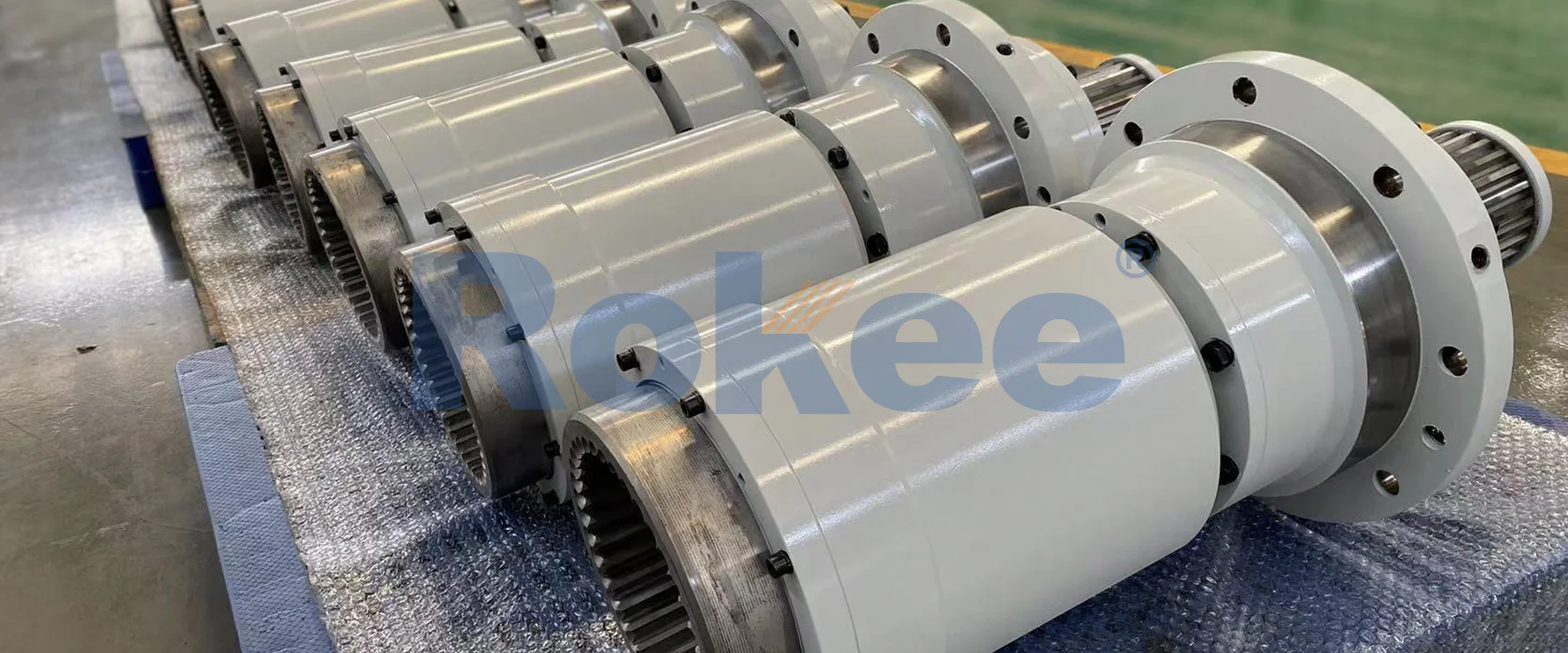
Rokee is a well-known high-quality supplier of Gear Type Couplings and technical services in China, customize gear type couplings according to user drawings, alternatively, if the user provides gear type couplings parameters, we can select the model and design drawings for you, support wholesale and export.
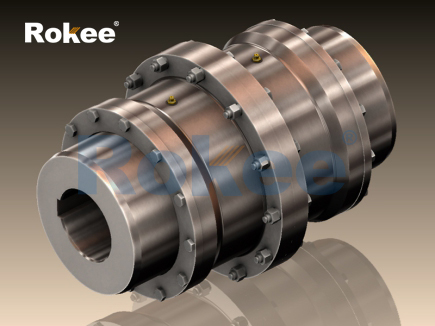
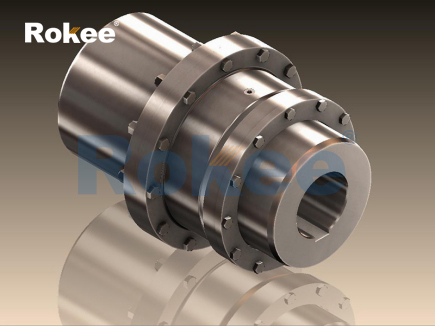
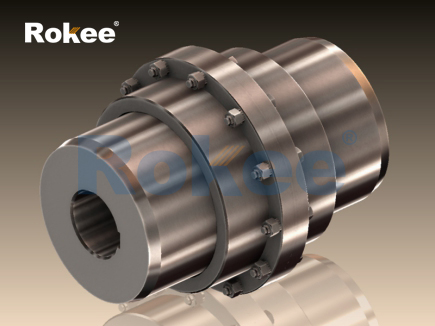
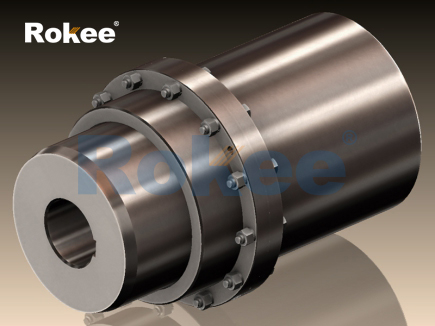
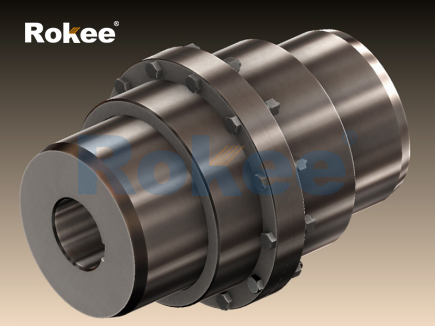
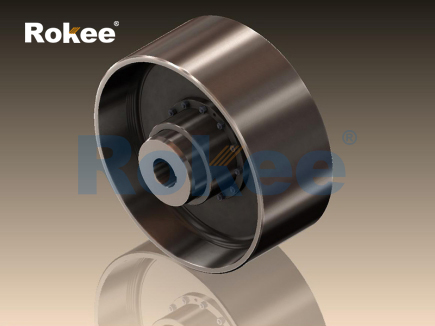
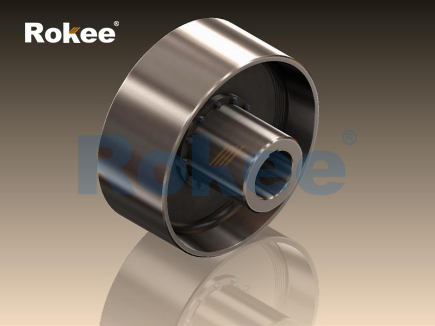
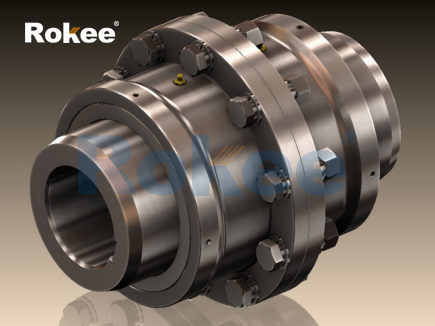
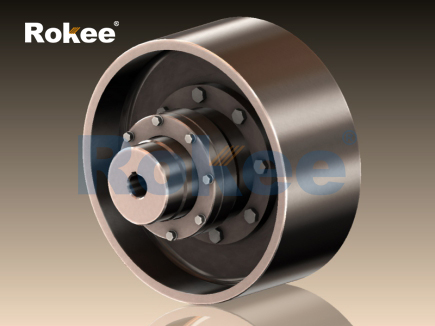
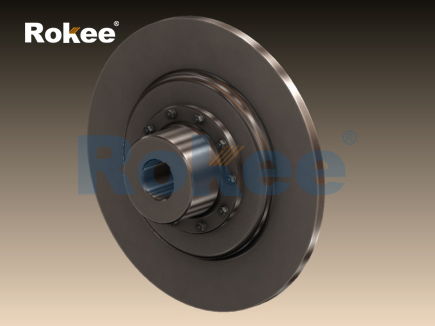
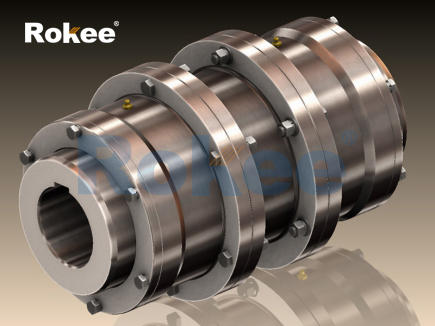
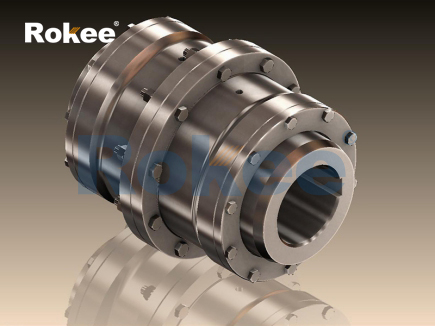

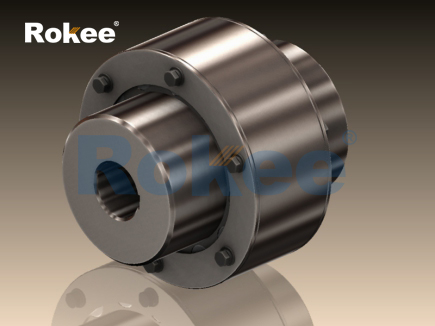
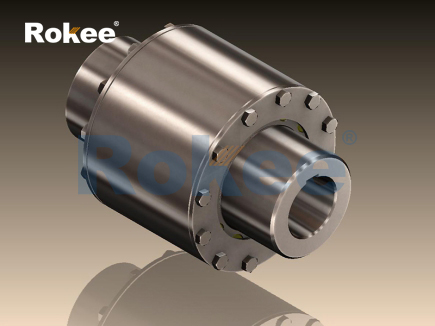
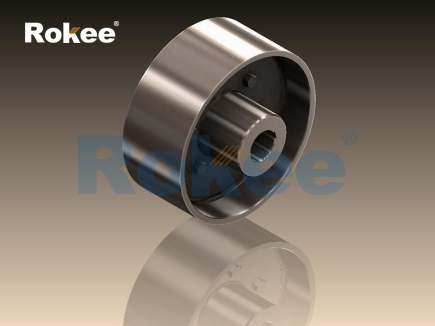

Gear type coupling is a mechanical connection device that transmits torque through the meshing of internal and external gears, and is widely used in various transmission systems. As a type of flexible coupling, a gear coupling consists of an inner ring gear and an outer sleeve gear, which transmit power through precisely meshed gears while allowing for a certain degree of axial, radial, and angular displacement.
The working principle of this coupling is based on the gear meshing principle: when the driving shaft drives the outer gear sleeve to rotate, the teeth of the outer gear sleeve mesh with the teeth of the inner gear ring, transmitting torque to the driven shaft. Due to the appropriate clearance on the tooth side and the use of a special tooth profile design, the coupling can compensate for the relative displacement between the two shafts while transmitting torque.
Modern gear couplings typically consist of the following key components:
Internal gear ring: fixed at the end of the equipment shaft, with an internal gear structure, usually made of high-strength alloy steel, and heat treated to increase the hardness of the gear surface.
External gear sleeve: The sleeve is set outside the inner gear ring, with external teeth that mesh with the inner gear ring. External gear sleeves are usually designed with drum shaped teeth to increase contact area and compensation capability.
Intermediate sleeve: Some structurally complex gear type couplings are equipped with intermediate sleeves, which are used to connect the gear components at both ends.
Sealing device: including oil seals, sealing rings, etc., to prevent lubricating oil leakage and contamination from entering.
Lubrication system: Some large gear type couplings are equipped with a centralized lubrication system to ensure good lubrication of the gear meshing surface.
The gear coupling has several significant technical features:
High torque transmission capability: Due to the simultaneous meshing of multiple teeth, a large amount of torque is transmitted per unit volume, resulting in strong load-bearing capacity.
Good displacement compensation capability: can compensate for axial displacement up to ± 5-15mm, radial displacement 0.4-0.8mm, and angular displacement 0.5 ° -1.5 °.
Vibration damping and buffering performance: Through the damping effect of tooth clearance and lubricating oil, it can absorb some vibrations and impacts.
Long service life: Made of high-quality materials and precision machining, the service life can reach 5-10 years under normal usage conditions.
Easy maintenance: Most gear type couplings use grease lubrication, with a long maintenance cycle and simple maintenance.
According to the structural characteristics and application requirements, gear couplings can be divided into the following main types:
Standard gear type coupling: The most common universal type of coupling, suitable for general industrial transmission applications.
Drum shaped gear type coupling: The outer teeth are designed in a drum shape, which has stronger compensation capability and is suitable for situations requiring large displacement compensation.
Flange type gear type coupling: using flange connection method, easy to install and disassemble, used for heavy machinery.
High speed gear type coupling: specially designed for high-speed operation, with a speed of over 10000rpm.
Micro gear type coupling: designed for miniaturization, used for precision instruments and small equipment.
The correct selection is the key to ensuring the reliable operation of the coupling, and the following factors need to be considered:
Torque parameters: Calculate the required torque capacity based on the transmitted power and speed, taking into account the starting torque and peak torque.
Shaft diameter matching: The coupling aperture must be precisely matched with the equipment shaft diameter.
Displacement compensation requirement: Evaluate the possible alignment errors between the two axes and select a model with appropriate compensation capability.
Work environment: Consider environmental factors such as temperature, humidity, and corrosive media, and select corresponding materials and protection levels.
Speed range: Ensure that the rated speed of the coupling covers the actual working speed, and special consideration should be given to dynamic balance for high-speed applications.
Proper installation and maintenance can significantly extend the service life of couplings:
Installation steps:
Check the fit dimensions of the shaft and coupling, and clean all contact surfaces
Install using hot installation or hydraulic method to avoid direct impact
Ensure that the alignment error of the two axes is within the allowable range
Tighten the connecting bolts according to the prescribed torque
Maintenance points:
Regularly check the lubrication condition and promptly replenish or replace lubricating grease
Monitoring operating temperature, abnormal temperature rise is often a precursor to malfunction
Regularly check the wear of the tooth surface
Pay attention to observe for any abnormal vibrations or noise
Keep the exterior of the coupling clean to prevent contaminants from entering
Abnormal vibration: Check the alignment, balance status, bearing condition, and foundation rigidity.
Overheating phenomenon: Check whether the lubrication is sufficient, whether the load is too large, and whether the alignment is poor.
Tooth surface wear: Evaluate lubrication condition, check for hard particles entering, and consider replacing with more wear-resistant materials.
Oil leakage issue: Replace the seal, check if the sealing surface is damaged, and adjust the sealing pressure.
Loose connection: Check the pre tightening force of the bolts and replace the anti loosening device if necessary.
As a key component in the field of mechanical transmission, the technological progress of gear couplings will continue to drive various types of mechanical equipment towards higher efficiency and reliability.
In the complex network of industrial power transmission systems, gear type couplings stand out as indispensable components, engineered to connect two rotating shafts while transmitting torque efficiently and accommodating misalignments that are inevitable in real-world operating conditions. Unlike rigid couplings that demand precise alignment and offer no flexibility, gear type couplings strike a balance between rigidity and adaptability, making them suitable for a wide range of heavy-duty and precision applications across diverse industries. Their ability to handle high torque loads, compensate for axial, radial, and angular displacements, and maintain operational stability under harsh conditions has solidified their position as a preferred choice for engineers and technicians seeking reliable power transmission solutions.
At the core of a gear type coupling lies a simple yet sophisticated design that enables both torque transmission and misalignment compensation. The fundamental components of a typical gear type coupling include external gear hubs, internal gear sleeves, end covers, and sealing devices, each playing a critical role in ensuring the coupling’s overall performance and durability. The external gear hubs, which are mounted on the shafts to be connected, feature teeth that extend outward from their circumference. These teeth are precision-machined to mesh seamlessly with the internal teeth of the gear sleeves, creating a secure mechanical connection that facilitates torque transfer. A key distinction between different types of gear couplings lies in the shape of the external teeth—some are straight, while others are crowned or barrel-shaped, a design variation that significantly enhances misalignment compensation capabilities. The internal gear sleeves, often referred to as couplings sleeves, enclose the external gear hubs and provide the mating surface for torque transmission. In some configurations, the sleeve may be a single piece that connects two external hubs, while in others, it may be split into two parts for easier installation and maintenance, particularly in large-scale machinery where disassembling adjacent components is impractical.
End covers are attached to the ends of the gear sleeve to secure the internal components and prevent the ingress of contaminants such as dust, dirt, and moisture, which can accelerate wear and damage the gear teeth. These covers are typically fastened using bolts or clips, ensuring a tight fit that maintains the integrity of the coupling’s internal environment. Sealing devices, such as O-rings, gaskets, or lip seals, are integrated into the end covers or between the sleeve and hubs to retain lubricant and further enhance contamination resistance. The importance of effective sealing cannot be overstated, as the gear teeth rely on consistent lubrication to minimize friction, reduce wear, and dissipate heat generated during operation. Without proper sealing, lubricant leakage and contamination can lead to premature failure, increased maintenance costs, and unplanned downtime.
The working principle of a gear type coupling revolves around the meshing of internal and external gear teeth to transmit torque while accommodating relative movements between the connected shafts. When the driving shaft rotates, it imparts motion to the attached external gear hub, which in turn transfers torque to the internal gear sleeve through the meshed teeth. The sleeve then transmits this torque to the second external gear hub, which drives the driven shaft. This torque transfer process is highly efficient, with minimal power loss when the coupling is properly lubricated and aligned. The ability to compensate for misalignments stems from the design of the gear teeth and the clearance between mating components. Straight-tooth gear couplings can accommodate small amounts of angular and radial misalignment, but their capacity is limited by the linear contact of the teeth. In contrast, barrel-shaped or crowned-tooth designs feature curved tooth surfaces that increase the contact area and allow for greater angular displacement. The curved teeth enable the external hub to pivot slightly within the internal sleeve, adjusting to angular misalignments without causing excessive stress on the tooth surfaces. Additionally, the axial clearance between the gear teeth and the sleeve allows for axial movement of the shafts, which may occur due to thermal expansion, vibration, or load fluctuations.
Material selection is a critical factor in determining the performance, durability, and suitability of a gear type coupling for specific applications. The choice of materials depends on various factors, including the operating load, speed, temperature, environmental conditions (such as corrosion or moisture), and desired service life. High-strength alloy steels are the most commonly used materials for gear coupling components, as they offer an excellent combination of strength, toughness, and wear resistance. One widely utilized alloy steel is 42CrMo, which exhibits high tensile strength, good hardenability, and minimal temper brittleness. After heat treatment processes such as quenching and tempering, followed by surface hardening, 42CrMo components achieve a surface hardness of 50-55 HRC, ensuring resistance to tooth wear and fatigue, while maintaining a tough core that can withstand impact loads. For applications with moderate loads and lower cost constraints, high-quality carbon steels such as 45-grade forgings are often employed. These steels undergo neuromodulator treatment to improve their mechanical properties, achieving a hardness of 220-250 HB, which balances strength and machinability.
In extreme operating conditions, such as high temperatures, corrosive environments, or cryogenic applications, specialized materials are required to ensure the coupling’s reliability. For high-temperature environments, alloys such as 34Cr2Ni2Mo are used, which can withstand elevated temperatures while maintaining their structural integrity. These alloys are often subjected to carburizing and quenching treatments to achieve a hard surface (58-62 HRC) and a ductile core, providing both wear resistance and impact toughness. In corrosive environments, such as those found in the chemical, petrochemical, or marine industries, stainless steel or corrosion-resistant alloys are preferred. These materials resist rust, oxidation, and chemical attack, ensuring the coupling’s performance is not compromised by harsh media. For applications requiring lightweight components, such as in aerospace or portable machinery, aluminum alloys or titanium may be used, although their load-carrying capacity is generally lower than that of steel couplings. The selection of materials for non-load-bearing components, such as end covers and seals, is also important. End covers are often made from cast iron or aluminum for cost-effectiveness and ease of manufacturing, while seals are typically crafted from oil-resistant rubber, polyurethane, or polytetrafluoroethylene (PTFE) to ensure compatibility with lubricants and resistance to wear.
Gear type couplings exhibit a range of performance characteristics that make them well-suited for heavy-duty industrial applications. One of their most notable attributes is their high torque-carrying capacity. Due to the large contact area between the meshed gear teeth and the robust construction of the components, gear couplings can transmit significantly higher torques compared to other types of flexible couplings, such as jaw or grid couplings. In fact, when compared to straight-tooth gear couplings, barrel-shaped designs offer a 15-20% increase in load capacity for the same outer diameter, making them ideal for applications such as rolling mills, crushers, and large pumps. Another key performance feature is their misalignment compensation capability. Barrel-shaped tooth couplings can accommodate angular misalignments of up to 1.5 degrees, which is a 50% improvement over the 1-degree limit of straight-tooth designs. This enhanced misalignment capacity reduces the stress on connected shafts, bearings, and other components, extending the overall service life of the machinery.
Operational stability and low noise levels are additional advantages of well-designed gear type couplings. The smooth meshing of the gear teeth, particularly in barrel-shaped designs, minimizes vibration and noise during operation. This is crucial in applications where noise pollution is a concern, such as in precision manufacturing facilities, food processing plants, or indoor industrial settings. The compact design of gear couplings is also a significant benefit, as it allows for installation in space-constrained environments. Unlike some flexible couplings that require additional space for misalignment compensation, gear couplings maintain a relatively small radial footprint while delivering high power density. When properly balanced, gear couplings can also operate at high speeds, making them suitable for applications such as turbines, generators, and high-speed compressors. However, their high-speed performance is contingent on precise manufacturing, proper lubrication, and regular maintenance to prevent imbalance and vibration.
The versatility of gear type couplings is reflected in their wide range of applications across various industries. In the metallurgical industry, they are extensively used in rolling mills, where they connect motors, reducers, and work rolls, transmitting high torques while accommodating the misalignments caused by the heavy loads and thermal expansion of the rolls. The ability to withstand shock loads and maintain torque transmission during rapid start-stop operations makes them indispensable in this sector. In the mining industry, gear couplings are employed in crushers, ball mills, and conveyor systems, where they operate in harsh environments characterized by dust, vibration, and heavy loads. Their robust construction and effective sealing allow them to resist contamination and wear, ensuring reliable performance in these demanding conditions.
The oil and gas industry relies on gear type couplings for applications such as pumps, compressors, and drilling equipment. In offshore and onshore drilling rigs, couplings must withstand corrosive saltwater environments, high pressures, and extreme temperatures, making corrosion-resistant materials and robust sealing essential. Compressors used in natural gas processing require couplings that can transmit high torques at varying speeds while compensating for axial movement caused by pressure fluctuations. The marine industry uses gear couplings in ship propulsion systems, connecting engines to propeller shafts. These couplings must accommodate the misalignments resulting from hull flexure and thermal expansion, while resisting corrosion from saltwater and maintaining reliable torque transmission for long periods.
Other industries that benefit from gear type couplings include manufacturing, where they are used in paper mills, printing presses, and plastic extrusion machines; construction, where they power excavators, cranes, and dredgers; and power generation, where they connect turbines to generators. In each of these applications, the specific design of the gear coupling is tailored to meet the unique requirements of the machinery, including load capacity, misalignment compensation, environmental resistance, and speed.
Proper maintenance is essential to ensure the longevity and reliable performance of gear type couplings. Neglecting maintenance can lead to premature wear, lubrication failure, and catastrophic coupling failure, resulting in costly downtime and potential damage to adjacent machinery. The primary maintenance tasks for gear couplings include lubrication management, alignment checks, wear inspection, and seal maintenance.
Lubrication is perhaps the most critical maintenance aspect, as it directly impacts the wear rate of the gear teeth and the overall service life of the coupling. The choice of lubricant depends on the operating conditions, including load, speed, and temperature. Extreme-pressure lithium-based greases or synthetic high-temperature greases are commonly used, as they provide a durable lubricating film that resists breakdown under heavy loads and high temperatures. Ordinary industrial greases should be avoided, as they have high friction coefficients and cannot form an effective protective film on the gear teeth. The lubrication frequency varies based on the application: for normal heavy-duty operations, lubricant should be replenished every 1-3 months, with a complete cleaning and greasing every 6 months. For equipment subjected to shock loads, such as crushers and rolling mills, more frequent maintenance is required—lubricant replenishment every 2 weeks and complete replacement every 3 months, as shock loads can break down the lubricating film and accelerate wear. It is also important to monitor lubricant levels, ensuring they remain within the recommended range. Over-lubrication can cause overheating and leakage, while under-lubrication leads to dry friction and rapid tooth wear.
Alignment checks are another vital maintenance task. Misalignment, whether angular, radial, or axial, increases stress on the gear teeth, bearings, and shafts, leading to premature wear and vibration. Regular alignment inspections should be performed using tools such as dial indicators, laser alignment systems, or optical instruments to ensure the coupling remains within the recommended misalignment limits. If misalignment is detected, adjustments should be made promptly to the connected machinery or the coupling itself. For gear couplings with adjustable components, such as split sleeves, alignment can be corrected by repositioning the sleeves or hubs.
Wear inspection involves examining the gear teeth, hubs, and sleeves for signs of damage, including tooth wear, pitting, spalling, and deformation. Tooth wear can be measured using calipers or micrometers, with a general guideline that replacement is necessary when tooth thickness is reduced by more than 10% of the original dimension, or when pitting or spalling covers more than 5% of the tooth surface. Metal burrs on the tooth surfaces should be removed using fine sandpaper to prevent scratching of mating teeth. The end covers and seals should also be inspected regularly for cracks, leaks, or damage. If lubricant leakage or contamination is detected, the seals should be replaced immediately, and the internal components cleaned to remove debris. In dusty or dirty environments, additional protective measures such as labyrinth seals or protective covers can be installed to enhance contamination resistance.
Despite their robust design and reliability, gear type couplings are susceptible to several common problems, most of which can be attributed to improper installation, inadequate maintenance, or operating beyond the coupling’s rated capacity. Misalignment is one of the most prevalent issues, often caused by incorrect installation, foundation settlement, or wear of supporting bearings. Symptoms of misalignment include excessive vibration, increased noise, uneven tooth wear, and premature bearing failure. To mitigate this problem, proper alignment during installation is essential, followed by regular alignment checks and adjustments as needed.
Tooth wear and damage are also common, resulting from insufficient lubrication, contamination, overload, or misalignment. Insufficient lubrication leads to metal-to-metal contact between the gear teeth, causing excessive friction, overheating, and rapid wear. Contaminants such as dust, dirt, or metal particles can act as abrasives, scratching the tooth surfaces and accelerating wear. Overloading the coupling beyond its rated torque capacity can cause tooth deformation, chipping, or breakage, particularly in applications with frequent start-stop operations or shock loads. Regular lubrication, contamination control, and load monitoring can help prevent these issues.
Fatigue failure is another concern, especially in couplings subjected to cyclic loads or frequent torque fluctuations. Fatigue cracks typically form in areas of high stress, such as the root of the gear teeth or the hub-shaft connection, and can propagate over time, leading to complete failure. To prevent fatigue failure, it is important to select a coupling with a sufficient torque rating, use high-quality materials with appropriate heat treatment, and ensure proper installation and maintenance. Regular inspections using non-destructive testing methods, such as magnetic particle inspection or ultrasonic testing, can detect fatigue cracks early, allowing for timely replacement of damaged components.
Lubrication-related problems, such as using the incorrect lubricant, over-lubrication, or contaminated lubricant, can also compromise the coupling’s performance. Using a lubricant that is not suitable for the operating conditions can lead to poor film formation, increased wear, and overheating. Contaminated lubricant, which may contain dirt, water, or metal particles, reduces the lubricant’s effectiveness and causes abrasive wear. Regular lubricant analysis can help monitor the condition of the lubricant, detecting contamination or degradation early and allowing for timely replacement.
The field of gear type couplings is constantly evolving, driven by advancements in materials science, manufacturing technology, and industrial requirements. One notable trend is the development of customized couplings tailored to specific applications, particularly in industries such as renewable energy, aerospace, and precision manufacturing. For example, wind turbine applications require couplings that can transmit high torques while accommodating large misalignments caused by wind-induced vibration and tower flexure. These couplings are often designed with enhanced sealing to resist environmental conditions and optimized tooth profiles to minimize noise and vibration.
Advancements in manufacturing technology, such as 3D printing or additive manufacturing, are also influencing the design and production of gear type couplings. Additive manufacturing allows for the creation of complex geometries that are difficult or impossible to produce using traditional machining methods, enabling the development of lightweight, high-performance couplings with optimized tooth profiles and internal structures. This technology also facilitates rapid prototyping, allowing engineers to test and refine coupling designs more efficiently, reducing development time and costs. Finite element analysis (FEA) is another tool that is increasingly used in the design process, enabling engineers to simulate the performance of gear couplings under various load conditions, identify potential stress points, and optimize the design for strength, durability, and efficiency.
The push for greater energy efficiency and sustainability is also shaping the evolution of gear type couplings. Manufacturers are developing couplings with reduced friction and power loss, achieved through optimized tooth profiles, advanced lubricants, and improved sealing. Additionally, there is a growing focus on using environmentally friendly materials and lubricants, such as biodegradable greases, to minimize the environmental impact of coupling operation and maintenance.
Another emerging trend is the integration of condition monitoring technologies into gear type couplings, enabling real-time monitoring of performance parameters such as vibration, temperature, and lubricant condition. Sensors embedded in the coupling can detect early signs of wear, misalignment, or lubrication failure, transmitting data to a central monitoring system. This predictive maintenance approach allows for timely interventions before a catastrophic failure occurs, reducing downtime, maintenance costs, and improving overall operational efficiency. Condition monitoring is particularly valuable in critical applications where unplanned downtime can have significant financial or safety implications, such as in power generation, oil and gas, and aerospace industries.
In conclusion, gear type couplings are essential components in industrial power transmission systems, offering a unique combination of high torque capacity, misalignment compensation, durability, and compact design. Their performance is influenced by factors such as structural design, material selection, lubrication, and maintenance, all of which must be carefully considered to ensure optimal reliability and service life. From metallurgical mills to marine propulsion systems, gear type couplings play a vital role in powering the machinery that drives modern industry. As technology advances, the design and functionality of gear type couplings continue to evolve, with innovations in materials, manufacturing, and condition monitoring enhancing their performance, efficiency, and suitability for emerging applications. By understanding the principles, characteristics, and maintenance requirements of gear type couplings, engineers and technicians can select, install, and maintain these components effectively, ensuring the smooth and reliable operation of industrial machinery for years to come.
The ongoing development of gear type couplings is a testament to their enduring importance in industrial applications. As industries continue to demand higher performance, greater efficiency, and improved reliability, manufacturers will continue to innovate, pushing the boundaries of what is possible with gear coupling technology. Whether through the use of advanced materials, optimized designs, or integrated monitoring systems, gear type couplings will remain a cornerstone of power transmission for decades to come, adapting to the changing needs of industries and contributing to the advancement of modern manufacturing and engineering.
« Gear Type Couplings » Latest Update Date: 2026/1/20 , https://www.rokeecoupling.net/tags/gear-type-couplings.html