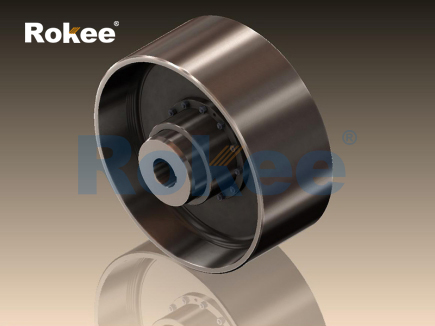
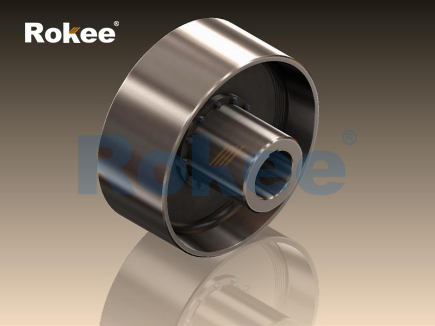
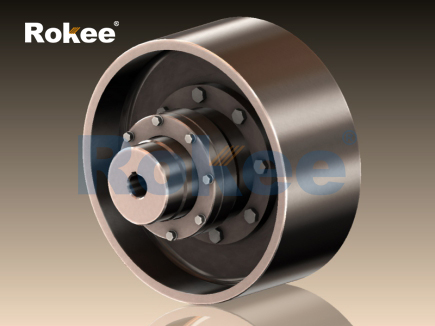
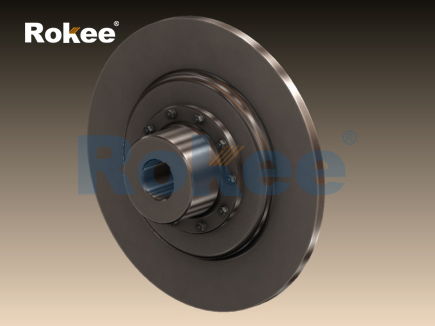
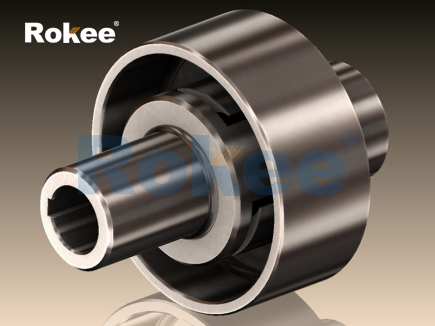
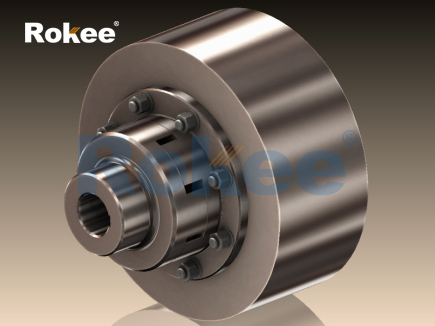
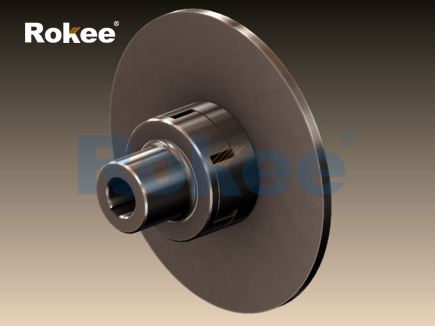
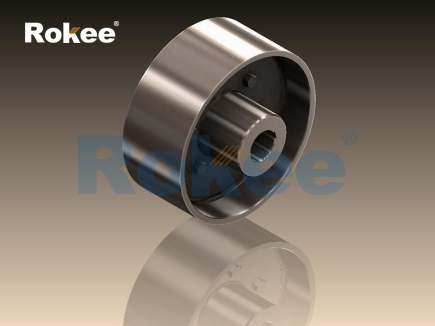
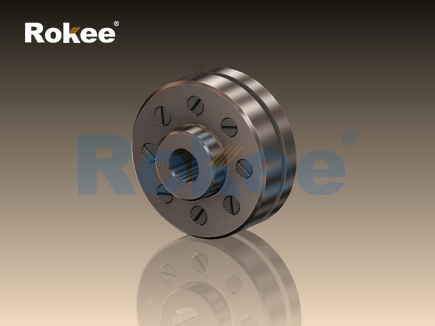
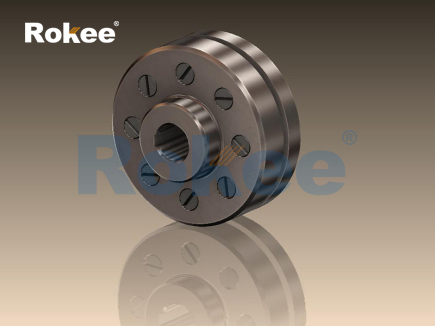
Brake drum coupling stands as an indispensable mechanical transmission component widely deployed in industrial shaft connection systems, which integrates torque transmission, displacement compensation and braking auxiliary functions into an integrated mechanical structure. This type of coupling organically combines the basic transmission unit with an independent brake drum structure, realizing seamless coordination between power transmission and mechanical braking during the operation of mechanical equipment. Unlike ordinary couplings that only undertake simple shaft connection tasks, brake drum coupling takes into account the special braking demands of heavy-duty mechanical systems, enabling mechanical equipment to achieve stable deceleration, rapid stop and static locking under complex working conditions. With the continuous upgrading of industrial manufacturing technology, brake drum coupling has evolved into multiple structural forms with differentiated performance characteristics, gradually becoming a core connecting part for heavy machinery, transportation equipment and industrial production lines that require frequent braking and stable torque transmission. Its unique structural design endows it with excellent mechanical adaptability, allowing it to maintain reliable operating performance in harsh working environments such as high load, strong vibration and variable temperature, which is why it is extensively adopted in various industrial fields.
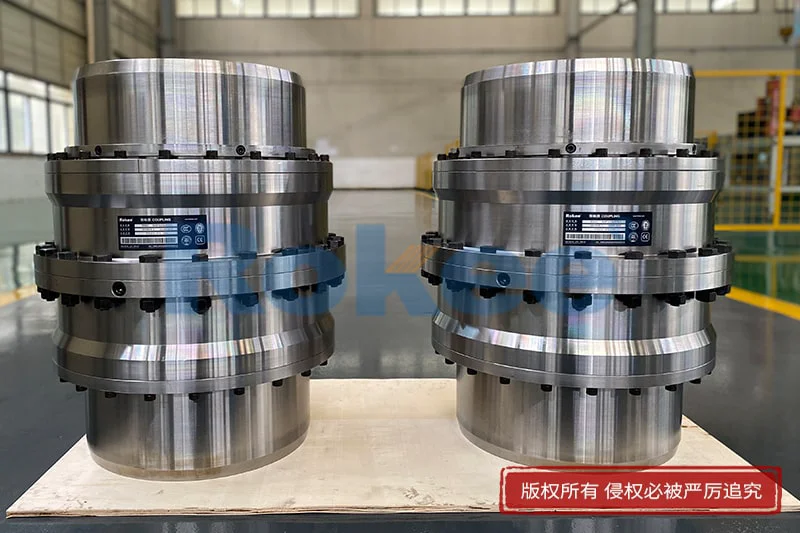
The internal structure of brake drum coupling follows a compact and reasonable mechanical design logic, and the overall composition mainly includes basic transmission components, brake auxiliary components and sealing protection components. The transmission part serves as the core functional area of the coupling, generally composed of two half-coupling bodies, meshing transmission structures and connecting fasteners. Most mainstream brake drum couplings adopt a curved tooth meshing structure, where the outer teeth are processed into spherical curved shapes. The spherical center of the curved teeth coincides with the axis of the coupling, which effectively optimizes the contact state between meshing teeth. Compared with straight tooth structures, this special tooth shape design increases the internal tooth gap by more than half, creating sufficient buffer space for relative displacement during equipment operation. The brake drum is an additional functional component different from ordinary couplings, which is usually cast from high-strength alloy steel and fixedly installed on one side of the half-coupling. The outer circular surface of the brake drum is smooth and wear-resistant, matching with external brake calipers or brake pads to complete friction braking actions. In addition, the coupling is equipped with an integral sealing end cover and elastic sealing components. The sealing structure can isolate internal transmission parts from the external environment, preventing dust, moisture and corrosive substances from invading the meshing area of internal and external teeth, while avoiding the leakage of internal lubricating grease. Some optimized structural models are also equipped with limit retaining rings and auxiliary positioning parts to enhance the overall structural stability and prevent axial displacement of components during high-load operation.
The inherent structural characteristics lay a solid foundation for the superior comprehensive performance of brake drum coupling, and its performance advantages are prominently reflected in load bearing capacity, displacement compensation, operating stability and environmental adaptability. In terms of load bearing performance, the curved tooth contact structure expands the effective contact area between teeth, making its torque bearing capacity fifteen to twenty percent higher than that of traditional straight tooth couplings with the same volume. This structural advantage enables the coupling to continuously bear large instantaneous torque and alternating load without plastic deformation or tooth surface wear, adapting to long-term stable operation of heavy-load equipment. In terms of displacement compensation performance, the optimized tooth gap and spherical tooth design endow the coupling with excellent multi-directional displacement tolerance. It can effectively compensate radial displacement, axial displacement and angular displacement generated by installation errors and mechanical vibration, and the allowable angular deflection can reach a relatively large angle range. This compensation capability eliminates additional mechanical stress caused by misalignment of the driving shaft and driven shaft, reducing component fatigue loss. In terms of operating stability, the integral casting brake drum has high structural rigidity and uniform mass distribution, which will not produce obvious centrifugal deviation during high-speed rotation. The friction matching degree between the drum surface and the brake accessory is high, ensuring smooth and gentle braking process without obvious jitter. Moreover, the metal-based overall structure gives the coupling good temperature resistance and corrosion resistance. It can maintain stable mechanical properties in low-temperature cold environments and high-temperature production workshops, and is not easily affected by humid and dusty working conditions.
Despite the unified functional orientation of transmitting torque and assisting braking, brake drum couplings can be divided into multiple types according to structural differences, transmission modes and assembly forms, and each type has distinct performance characteristics and applicable working conditions. The rigid flexible brake drum coupling is the most widely used type in the industrial field, which combines the high rigidity of metal transmission components and the mild flexibility of meshing gaps. This type adopts internal and external curved tooth meshing transmission, with a simple and compact overall structure. It has strong overload resistance and medium displacement compensation capability, suitable for medium and heavy mechanical equipment with moderate operating speed and frequent start-stop and braking actions. The integral cast brake drum coupling is characterized by one-piece casting molding of the brake drum and half-coupling. The integrated structure eliminates assembly gaps between components, greatly improving structural rigidity and torsional resistance. Although its displacement compensation ability is relatively weak, it has excellent stability under ultra-heavy static load and low-speed operating conditions, often used in large lifting machinery and mining crushing equipment. The sleeve-type brake drum coupling is designed with an intermediate connecting sleeve, which increases the axial spacing between the driving end and the driven end. This structural design not only optimizes the heat dissipation effect during equipment operation, but also facilitates daily disassembly, inspection and lubrication maintenance. Its vibration damping performance is better than that of ordinary integrated models, making it suitable for mechanical transmission systems with long transmission distance and continuous vibration. In addition, there are lightweight brake drum couplings optimized for small and medium-sized equipment. This type adopts thin-walled brake drum and simplified tooth structure, which reduces self-weight and rotational inertia. It responds quickly during braking, meeting the precise braking and frequent switching operation requirements of light industrial machinery.
Different types of brake drum couplings have clear application positioning in industrial scenarios, and their diverse performance characteristics make them cover multiple industrial production fields. In the metallurgical industry, rigid flexible brake drum couplings are commonly installed on rolling mills and metal processing transmission equipment. The heavy-load bearing capacity and displacement compensation performance can adapt to the strong vibration and alternating torque generated during metal rolling, and the matching brake drum structure can realize emergency stop protection during equipment failure, ensuring the safety of production lines. In the mining industry, integral cast brake drum couplings are widely used in ore crushers, hoists and conveying machinery. The high-rigidity structure can resist impact load generated by ore crushing and material transportation, and the wear-resistant brake drum can maintain stable braking effect in dusty and harsh environments for a long time. In the field of lifting and transportation machinery, sleeve-type brake drum couplings are applied to large cranes and material handling equipment. The optimized heat dissipation structure avoids mechanical failure caused by heat accumulation during frequent braking, and the convenient disassembly structure reduces the difficulty of daily maintenance. Lightweight brake drum couplings are mostly used in food processing machinery, packaging equipment and small automated production lines. Their sensitive braking response and compact structure meet the high-frequency start-stop and precise positioning requirements of light industrial equipment.
In addition to the above conventional application scenarios, brake drum couplings also play an important role in special industrial fields. In large water pump and fan systems, this coupling can balance the axial thrust generated by fluid movement through its displacement compensation function, reducing the abrasion of pump shaft and fan shaft components. In heavy-duty marine auxiliary machinery, the sealed brake drum coupling can resist the corrosion of humid salt spray environment, maintaining reliable transmission and braking performance under variable marine working conditions. In building material processing equipment such as cement mixers, the coupling can cope with viscous material resistance and uneven load, ensuring continuous and stable operation of mixing equipment. Beyond industrial production equipment, brake drum couplings are also applied to some special engineering machinery, providing stable power connection and safe braking guarantee for mechanical equipment that needs short-distance movement and fixed-point locking.
In actual industrial application, the service life and operating effect of brake drum coupling are closely related to structural design and daily use conditions. The curved tooth meshing structure reduces local stress concentration, slowing down the fatigue aging speed of metal materials. The closed sealing system can effectively isolate external pollutants, reducing the wear degree of internal transmission teeth. Reasonable lubrication maintenance can further optimize the meshing state of components, keeping transmission efficiency above an excellent level for a long time. Compared with ordinary couplings equipped with separate brake parts, the integrated brake drum coupling simplifies the overall mechanical structure, reduces the assembly space of transmission and braking components, and lowers the failure probability of connecting parts. Although metal structural materials lead to higher self-weight and certain vibration in high-speed operation, the overall performance balance still makes it have irreplaceable application value in heavy-load and frequent-braking working conditions.
With the continuous progress of industrial mechanical technology, the optimization and upgrading of brake drum coupling are always oriented to high efficiency, energy saving and intelligence. The structural design is gradually developing towards lightweight and high rigidity, and the improved tooth shape and alloy casting process further enhance the load-bearing performance and wear resistance. The sealing structure is constantly optimized to adapt to more extreme working environments such as high temperature, low temperature and strong corrosion. At the same time, the integration degree of the coupling is continuously improved, and some optimized structures can realize real-time monitoring of operating torque and braking state through matching mechanical sensing components, providing data support for equipment intelligent maintenance. As a key connecting component in mechanical transmission systems, brake drum coupling will continue to rely on structural innovation and performance optimization to adapt to the evolving industrial production needs, providing stable, safe and efficient connection guarantee for various mechanical equipment in different fields.
pu sandwich panel line,pu sandwich panel machine,sandwich panel machine
« Brake Drum Couplings » Latest Update Date: May 9, 2026
https://www.rokeecoupling.net/tags/brake-drum-couplings.html