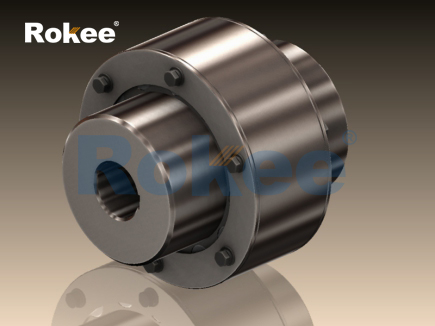
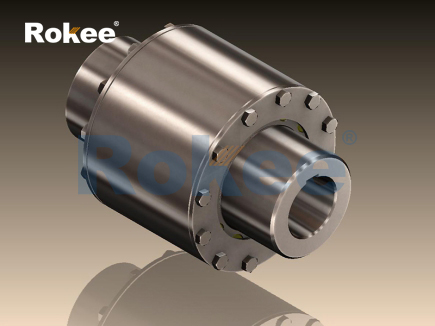
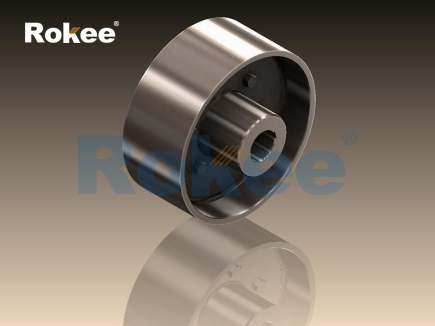
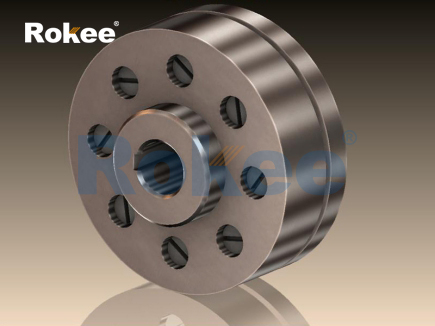
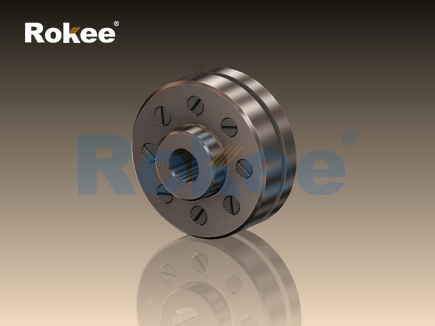
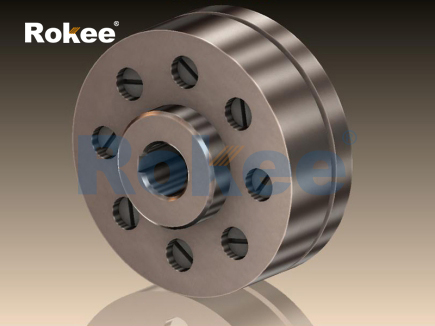
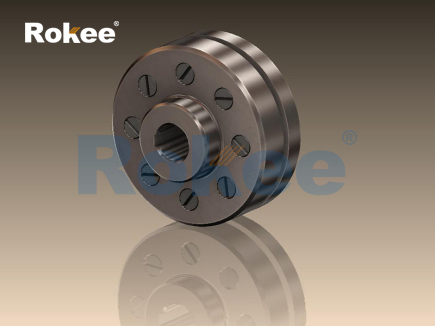
In the complex and interconnected mechanical transmission systems, coupling components serve as the critical medium for power transmission between adjacent rotating shafts, and they undertake the core tasks of torque transfer, motion coordination and mechanical vibration buffering. Among numerous coupling types, pin couplings stand out for their simple structural composition, reliable mechanical stability and excellent environmental adaptability, becoming one of the most widely used connecting parts in general mechanical equipment and industrial transmission devices. A pin coupling is a basic rigid-flexible integrated transmission component that relies on cylindrical or special-shaped pin bodies to realize the circumferential fixation and torque conduction between two coupling halves. Its unique structural design endows it with distinctive mechanical performance characteristics, and different structural optimization forms derive multiple performance classifications, which can meet the diversified connection demands of various industrial working conditions. This paper comprehensively analyzes the internal structural composition, core mechanical performance, detailed classification standards and practical application scenarios of pin couplings, and explores the correlation between structural changes and performance differences, so as to provide clear mechanical reference for the rational selection and standardized application of pin couplings in industrial production.

The basic structure of a pin coupling follows a concise and efficient mechanical design logic, and the overall composition is mainly composed of two symmetrical coupling halves, connecting pins, matching gaskets and fastening auxiliary parts. The two coupling halves are usually made of high-strength metal materials with uniform density, and the inner hole of each half is processed with precise tolerance to achieve tight nesting and assembly with the rotating shaft. A certain number of uniformly distributed pin holes are machined on the butt joint surfaces of the two coupling halves, and the connecting pins are inserted into the aligned pin holes to realize the circumferential locking of the two halves. Different from the rigid connection mode of flange couplings that rely on bolt fastening, the pin body of a pin coupling is the main force-bearing component during power transmission. When the driving shaft rotates, the torque is transmitted to the pin body through the hole wall of the active coupling half, and then the pin body drives the driven coupling half to rotate synchronously, thereby completing the continuous transmission of mechanical power. The internal gap between the pin body and the pin hole is strictly controlled within a tiny range through precision machining, which not only ensures the synchronization of rotational motion, but also reserves a small elastic deformation space for the pin body. This subtle structural feature enables the coupling to bear transient impact loads without instantaneous structural fracture. In addition, the surface of the connecting pin is usually processed with smoothing and anti-corrosion treatment to reduce friction loss during long-term high-speed rotation and avoid structural abrasion caused by metal contact extrusion. The overall structure does not contain complex transmission accessories, and the compact spatial layout makes the coupling suitable for mechanical equipment with limited installation space.
The core structural performance of pin couplings is reflected in load bearing capacity, deformation resistance, alignment compensation ability and operational stability, and these performance indicators are jointly determined by pin diameter, pin distribution density, coupling half thickness and material mechanical properties. In terms of torque bearing performance, the pin body bears shear force and extrusion pressure during operation. Under steady working conditions, the uniformly distributed pins can disperse the transmission torque evenly, avoiding local stress concentration caused by uneven force. This stress dispersion mechanism enables pin couplings to maintain stable transmission state under medium and low torque operating conditions, and the optimized thickened pin structure can also adapt to heavy-load mechanical scenarios. In terms of deformation resistance, qualified pin bodies have good shear rigidity and elastic toughness. When the equipment is started, stopped or subjected to external impact, the pin body can produce micro elastic deformation to absorb instantaneous mechanical vibration, and automatically recover to the original shape after the load returns to stability. This reversible deformation characteristic effectively buffers the rigid impact between shafts and reduces the fatigue loss of shaft components. In terms of axis deviation compensation, although pin couplings are classified as semi-rigid transmission components, the tiny assembly gap between pins and holes can compensate for slight radial deviation, angular deviation and axial displacement generated by installation errors or equipment operation vibration. Compared with completely rigid couplings, it has better fault tolerance for assembly accuracy, and can avoid additional bending stress on the shaft caused by minor axis misalignment. In terms of operational stability, the symmetrical structural design ensures uniform mass distribution during rotation, effectively reducing rotational inertia fluctuation and mechanical vibration noise. Moreover, the closed matching structure between coupling halves can prevent external dust, moisture and fine impurities from entering the friction contact surface, which delays the aging and wear speed of internal components and prolongs the continuous service cycle of the coupling.
According to structural differences, stress-bearing forms and performance characteristics, pin couplings can be divided into multiple types with clear classification boundaries, and each type has unique structural advantages and applicable working condition ranges. The most common classification is ordinary straight pin couplings, which adopt cylindrical straight pins with equal diameter as the connecting medium. The pins are in clearance fit with the pin holes, and the processing difficulty of the overall structure is low. This type of coupling has moderate shear strength and simple assembly process, and it is suitable for low-speed, medium-light load and stable operation mechanical systems. The tapered pin coupling is another optimized structural type. The connecting pins are processed into tapered structures with thin ends and thick middle. The tapered fit mode can eliminate the assembly gap between pins and holes, realizing zero-clearance circumferential fixation. This structural improvement greatly enhances the torque transmission efficiency, avoids rotational hysteresis caused by gap friction, and is more suitable for medium-speed transmission scenarios requiring high motion synchronization. In addition, the elastic sleeve pin coupling is a derivative type with flexible optimization. An elastic buffer sleeve made of polymer materials is sleeved on the outer surface of the metal pin. The elastic sleeve can enhance the vibration absorption and noise reduction ability of the coupling, and further improve the compensation range of axis deviation. This type of coupling has obvious advantages in mechanical equipment with frequent start-stop and alternating load changes. According to the load-bearing direction, pin couplings can also be divided into shear-resistant pin couplings and extrusion-resistant pin couplings. The shear-resistant structure adopts thin and high-toughness pin bodies, which are mainly used for transient impact load buffering; the extrusion-resistant structure uses thick and high-rigidity pins, which focus on bearing long-term stable heavy torque. Different classification types form a complete performance gradient system, covering various working conditions from low-speed light load to medium-speed heavy load.
The diversified performance types of pin couplings correspond to rich industrial application scenarios, and their simple structure, low maintenance cost and strong environmental adaptability make them widely used in general machinery, industrial manufacturing, transportation and agricultural equipment. In conventional industrial processing machinery, pin couplings are applied to the connection of rotating shafts of cutting equipment, grinding devices and conveying machinery. These devices have stable operating load and low requirement for transmission precision, and the ordinary straight pin couplings can meet the daily power transmission demand, while the convenient disassembly and assembly structure simplifies the daily maintenance and component replacement work. In the fluid transmission industry, water pumps, fans and air compression equipment often use tapered pin couplings. The zero-clearance matching structure ensures the synchronous rotation of impellers and transmission shafts, avoids power loss caused by rotational deviation, and maintains the efficient operation of fluid transmission for a long time. For light industrial equipment with frequent load changes, such as textile machinery and food processing equipment, elastic sleeve pin couplings are the preferred connecting components. The elastic buffer structure can reduce the vibration and friction between internal parts during frequent start and stop, lower the operating noise of the equipment, and protect the precision processing components from rigid impact damage. In addition, pin couplings also play an important role in agricultural machinery and engineering auxiliary equipment. Complex working environments such as field operation and outdoor construction have high requirements for component dust resistance and corrosion resistance. The compact closed structure of pin couplings can isolate external pollutants, and the metal substrate with anti-corrosion treatment can adapt to humid and dusty harsh working conditions.
In actual industrial application, the selection of pin coupling types needs to follow the matching principle of structural performance and working conditions, and multiple key factors should be comprehensively considered to ensure the rationality of component matching. The first consideration is the operating load characteristic. For equipment with stable continuous load, straight pin couplings with simple structure and low manufacturing cost can be selected; for equipment with alternating load and frequent impact, elastic sleeve pin couplings with vibration buffering performance are more suitable. The second factor is the rotating speed. Tapered pin couplings with high synchronization accuracy should be used for medium and high-speed rotating shafts to prevent transmission efficiency reduction caused by assembly gaps. The third factor is the installation accuracy. For mechanical systems with limited installation precision and inevitable axis deviation, couplings with elastic compensation structure need to be selected to reduce additional mechanical stress. Besides, the environmental conditions of the equipment operation area cannot be ignored. For humid, dusty or chemically corrosive working environments, pin couplings with integrated sealing structure and anti-corrosion treatment should be prioritized to extend the service life. In terms of daily maintenance, the simple structural characteristics of pin couplings make the inspection work more convenient. Staff only need to regularly check the deformation degree of pin bodies and the tightness of matching parts, and replace worn pins in time to maintain the stable transmission performance of the equipment.
With the continuous upgrading of industrial mechanical equipment towards high efficiency, energy saving and stable operation, the optimization and iteration of pin coupling structures are also constantly advancing. On the basis of retaining the original simple and reliable structural advantages, modern pin couplings adopt optimized material proportioning and refined processing technology to further improve shear strength, fatigue resistance and environmental adaptability. The lightweight structural design reduces the self-weight of components, which helps to lower the rotational energy consumption of high-speed operation; the integrated sealing structure is gradually popularized to enhance the protection ability of internal force-bearing parts. As a basic universal transmission component, pin couplings have irreplaceable application value in the mechanical connection field. The in-depth understanding of its structural composition, performance classification and application scenarios can help engineering personnel complete scientific type selection and standardized installation, reduce equipment failure rate and maintenance cost, and provide basic guarantee for the stable and efficient operation of various mechanical transmission systems. In the future, with the continuous innovation of material science and mechanical processing technology, pin couplings will realize more precise performance control and richer structural forms, and continuously adapt to the diversified and high-standard working condition requirements of modern industrial machinery.
pu sandwich panel line,pu sandwich panel machine,sandwich panel machine
« Pin Couplings » Latest Update Date: May 8, 2026
https://www.rokeecoupling.net/tags/pin-couplings.html