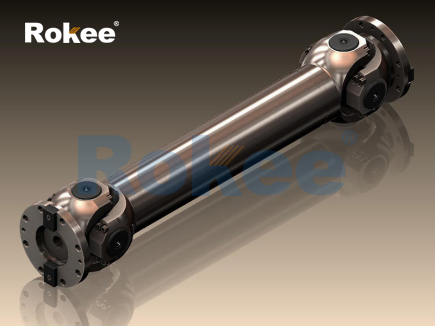
SWC Cardan Shaft Coupling
Rokee is a well-known SWC Cardan Shaft Coupling supplier from china, the page show cases of SWC Cardan Shaft Coupling, provide customized services based on user's drawings, and supporting exports.
As a pivotal mechanical transmission component in heavy industrial machinery, SWC cardan shaft coupling serves as an essential connecting unit for power transmission between disjointed rotating shafts. It is widely recognized for its exceptional angular compensation capability, robust load-bearing capacity and reliable mechanical stability under harsh operating conditions. Unlike conventional elastic couplings that rely on elastic deformation for vibration buffering, this type of coupling adopts a rigid mechanical transmission structure, which enables it to transmit large torque steadily without obvious power loss. In modern industrial production scenarios involving heavy load, variable operating angles and complex installation layouts, SWC cardan shaft coupling has become an indispensable core part of mechanical transmission systems, effectively solving the power transmission difficulties caused by shaft misalignment, spatial position deviation and equipment operation deformation. The inherent structural design logic determines its unique performance advantages, and diversified structural derivations further expand its adaptability to various industrial working conditions, forming a complete product application system in the field of heavy-duty transmission.

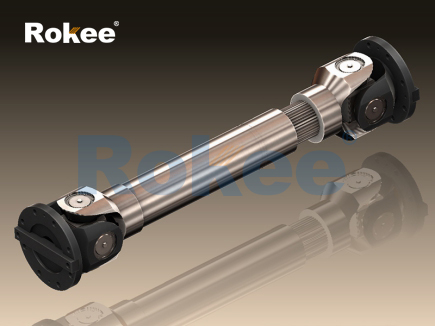
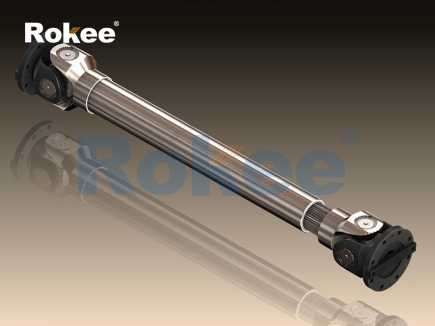
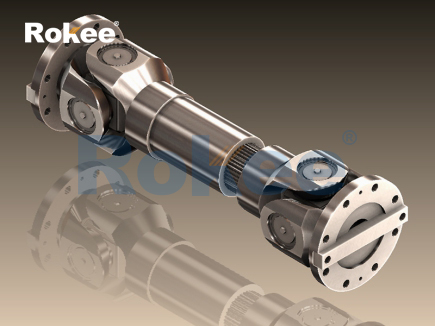
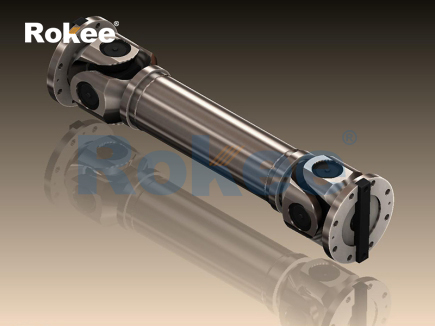
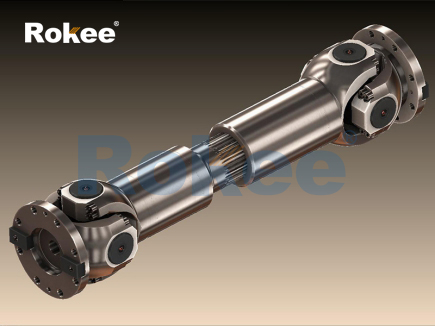
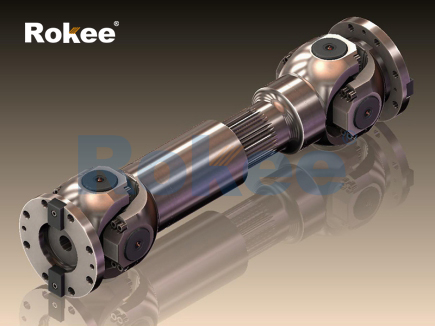
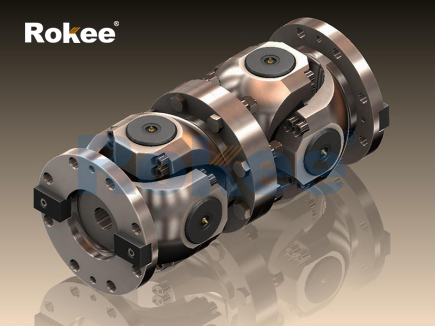
The basic structure of SWC cardan shaft coupling follows the mature design principle of cross shaft universal transmission, and the overall mechanical composition is compact and rigorous with clear functional division of each component. The main structural components include flange connectors, cross shaft assemblies, bearing components, intermediate transmission shafts and telescopic adjustment structures. The flange connectors located at both ends are designed with high-strength integral forging structure, which provides a stable connecting foundation for docking with driving and driven equipment shafts. The connecting holes distributed on the flange are processed with high-precision machining technology to ensure the assembly coaxiality and connection tightness during equipment installation. The cross shaft assembly is the core force-bearing and rotating connecting part of the coupling, consisting of a central cross-shaped shaft body and four sets of symmetrically arranged rolling bearings. This structural layout can realize flexible rotation in multiple spatial directions, and is the key to realizing angular displacement compensation between connected shafts. The bearing components adopt thickened high-strength rolling bearings with excellent pressure resistance and wear resistance, which can bear large radial and axial loads during continuous rotation, reducing mechanical friction loss in the transmission process. The intermediate transmission shaft is made of high-quality alloy steel through integral processing and heat treatment, featuring high torsional rigidity and strong anti-deformation ability, which can maintain structural stability under long-term high-torque working conditions. For the telescopic type of SWC cardan shaft coupling, an embedded spline telescopic structure is added between the intermediate shaft and the flange end. The precise matching spline pair can realize free axial stretching within a certain range, which effectively compensates the axial displacement generated by equipment thermal expansion, installation gap and mechanical vibration during operation.
Reasonable material selection and exquisite processing technology further optimize the structural stability of SWC cardan shaft coupling. The main load-bearing parts such as cross shaft and intermediate transmission shaft are usually made of chromium-molybdenum alloy steel with excellent mechanical properties. After forging, quenching and tempering heat treatment, the material obtains uniform internal metallographic structure, with significantly improved tensile strength, fatigue resistance and impact toughness. The surface of key moving parts is treated with carburizing and quenching to form a high-hardness wear-resistant layer, which reduces surface abrasion caused by long-term friction and prolongs the service life of components. The bearing sealing structure adopts a multi-layer combined sealing design, which can effectively isolate external dust, moisture and corrosive media, and prevent lubricating grease from leaking. This sealing structure ensures that the internal moving parts are always in a good lubrication state, reducing abnormal wear and mechanical noise caused by dry friction. All assembly dimensions are controlled by high-precision machining standards, and the matching gap between moving parts is kept within a reasonable range, which avoids transmission jitter and additional load caused by excessive assembly clearance during high-speed rotation.
Driven by its unique structural design, SWC cardan shaft coupling exhibits outstanding comprehensive mechanical performances, which make it adaptable to complex and harsh industrial working environments. Firstly, it has excellent angular compensation performance. The structural characteristics of the cross shaft enable the coupling to maintain stable power transmission under a certain angular deflection between the driving shaft and the driven shaft. It can adapt to the installation angle deviation and operating angle change generated during equipment operation, and effectively eliminate the additional mechanical stress caused by shaft misalignment. Secondly, this coupling boasts ultra-high torque transmission capacity. The rigid integral structure and high-strength alloy materials enable it to bear continuous heavy torque and instantaneous impact load, realizing efficient and lossless power transmission. Compared with elastic couplings, it will not produce elastic deformation and torque attenuation in the transmission process, ensuring the accuracy and stability of power output. In terms of operating adaptability, the optimized mechanical structure allows the coupling to operate normally within a wide speed range. The dynamically balanced intermediate shaft effectively suppresses rotational vibration and amplitude, reducing equipment vibration and mechanical noise during high-speed operation.
Moreover, SWC cardan shaft coupling has strong environmental adaptability and structural durability. It can maintain stable working performance under extreme working conditions such as low temperature, high temperature, dust pollution and medium corrosion, without performance degradation caused by environmental changes. The reliable sealing and lubrication system greatly reduce the maintenance frequency of the coupling. Under standardized operating conditions, it can realize long-term continuous cyclic operation, with low daily maintenance cost and simple maintenance procedures. It is necessary to note that this rigid coupling has limited vibration buffering capacity compared with elastic couplings. It cannot absorb high-frequency vibration and impact force in a large range, so it is more suitable for working conditions dominated by steady transmission rather than frequent severe impact vibration. In addition, although the overall structural stability is excellent, long-term overload operation will cause irreversible fatigue damage to the cross shaft and bearings, so the working load needs to be controlled within the rated range in actual use to ensure long-term reliable operation.
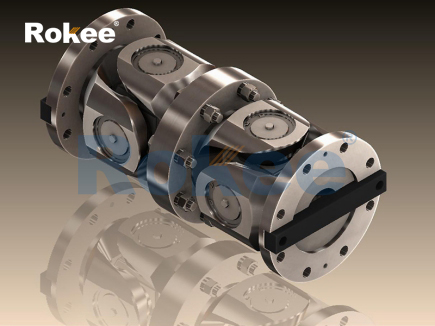
According to structural differences, functional characteristics and application scenarios, SWC cardan shaft couplings can be divided into multiple classification types, and each type has targeted structural optimization and performance adjustment to meet differentiated industrial demands. The most common classification is based on the presence or absence of telescopic structure, which divides the products into telescopic cardan shaft couplings and non-telescopic cardan shaft couplings. The telescopic type is equipped with an internal spline telescopic mechanism, which can freely stretch and compensate axial displacement. It is mostly used in mechanical equipment with frequent axial position changes, large thermal deformation and reserved installation gaps. The non-telescopic type adopts an integral fixed shaft body with simpler structure and higher overall rigidity, which is suitable for transmission systems with fixed shaft spacing and no axial displacement demand, providing more stable high-rigidity transmission effect. Classified by structural combination form, it can be divided into single-section cross shaft coupling and double-section reinforced coupling. The single-section structure is compact and lightweight, with small overall volume, suitable for medium and small torque transmission scenarios with limited installation space. The double-section structure adds an intermediate connecting section, which disperses the torque borne by a single cross shaft, reduces the torque density of individual components, and enables the equipment to bear higher load and larger angular deflection. This optimized design also effectively lowers the shaft diameter requirement under the same load condition, making the structure more compact and reasonable.
In terms of structural strength and load grade, SWC cardan shaft couplings can be categorized into standard type and enhanced heavy-duty type. The standard type adopts conventional component specifications and basic heat treatment process, with moderate bearing capacity and stable performance. It is widely applicable to general heavy industrial equipment with conventional load demands. The enhanced heavy-duty type is optimized by enlarging the cross shaft section, upgrading bearing specifications and thickening the shaft body structure. Through improved material forging and heat treatment processes, its ultimate bearing torque and fatigue resistance are significantly enhanced, which can adapt to extreme working conditions such as heavy load, low speed and high impact. In addition, according to the flange connection form, it can be divided into integral flange type and detachable flange type. The integral flange type is integrally forged with the shaft body, featuring high connection strength and good structural rigidity, which is not easy to deform under high load. The detachable flange type is convenient for disassembly, replacement and maintenance, reducing the difficulty of equipment daily overhaul and part replacement, and is suitable for equipment requiring frequent disassembly and debugging.
With diversified structural types and superior comprehensive performances, SWC cardan shaft couplings are widely applied in multiple heavy industrial fields, becoming an indispensable transmission component for major mechanical equipment. In the metallurgical industry, this coupling is applied to rolling mills, smelting conveying equipment and metal forging machinery. The high torque bearing capacity and angular compensation performance enable it to adapt to the heavy-load and low-speed operating state of metallurgical equipment, maintaining stable power transmission during the rolling and forging process of metal raw materials, and avoiding equipment failure caused by shaft position deviation. In the mining industry, it is matched with mining crushers, large mining conveyors and underground mining traction equipment. The rugged and durable structural design can resist dust pollution, impact load and complex vibration in the mining environment, ensuring continuous and reliable operation of mining machinery under harsh working conditions.
In the field of engineering machinery, SWC cardan shaft couplings are commonly used in heavy-duty transportation vehicles, large cranes and pavement construction machinery. The telescopic structural type can adapt to the position change of the transmission shaft during the walking and working process of engineering machinery, solving the power transmission problem of movable mechanical arms and walking transmission systems. In the petrochemical industry, it is applied to large industrial pumps, stirring transmission equipment and oilfield exploitation machinery. The good sealing performance and corrosion resistance enable the coupling to operate stably in corrosive medium environments, meeting the long-term continuous operation demand of petrochemical equipment. In the power industry, this type of coupling is used for large ventilation fans, power generation transmission equipment and cooling water pump units. Its stable high-speed operation performance and low vibration characteristics reduce the operating noise and mechanical failure rate of power equipment, improving the overall operational efficiency of the power system.
In addition to the above mainstream industrial fields, SWC cardan shaft couplings also play an important role in port handling, marine engineering and heavy-duty automation equipment. Port container cranes and bulk cargo conveying machinery rely on its high-rigidity transmission performance to complete heavy-load handling operations; deep-sea mining equipment and marine lifting machinery utilize its excellent environmental adaptability to resist the impact of humid and corrosive marine environments; automated stereoscopic warehouses and heavy-duty sorting equipment adopt optimized lightweight couplings to realize stable transmission of mechanical handling structures. With the continuous upgrading of industrial manufacturing technology, the processing precision and structural optimization level of SWC cardan shaft couplings are constantly improving. The application scope is gradually expanding from traditional heavy industry to emerging high-end equipment manufacturing fields, showing broader industrial application potential.
In conclusion, SWC cardan shaft coupling relies on its scientific cross shaft transmission structure, high-strength alloy materials and diversified classification designs to form unique advantages in angular compensation, torque transmission and environmental adaptability. Its simple and durable structural form, convenient maintenance characteristics and wide applicability make it occupy an important position in the field of heavy-duty mechanical transmission. Different types of couplings derived from structural differentiation can accurately match various working conditions such as fixed installation, movable operation, medium load and heavy impact, realizing personalized power transmission solutions for industrial equipment. In the future, with the continuous progress of material science and mechanical processing technology, the structural optimization, wear resistance and intelligent adaptation performance of SWC cardan shaft coupling will be further improved. It will continue to provide reliable transmission support for the upgrading and development of heavy industrial machinery, and become a core basic component to promote the stable operation of modern industrial systems.
With excellent quality, we have been continuously providing many coupling products of various categories and uses complying with multiple standards and a full range of services, from the product selection to final installation and operation, for the industry fields of ferrous metallurgy, nuclear power, gas turbine, wind power, ropeway construction, lifting transportation, general equipment, etc.
pu sandwich panel line,pu sandwich panel machine,sandwich panel machine
« SWC Cardan Shaft Coupling » Update Date: 2026/5/9
https://www.rokeecoupling.net/cases/swc-cardan-shaft-coupling.html