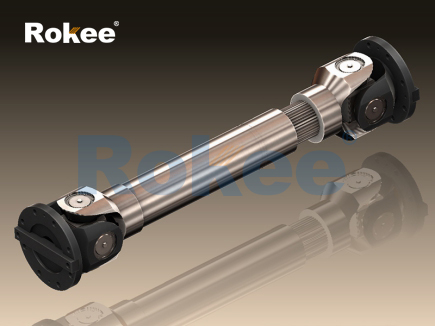
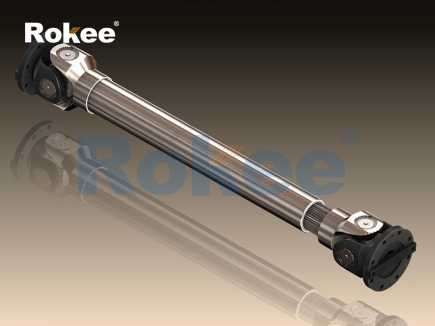
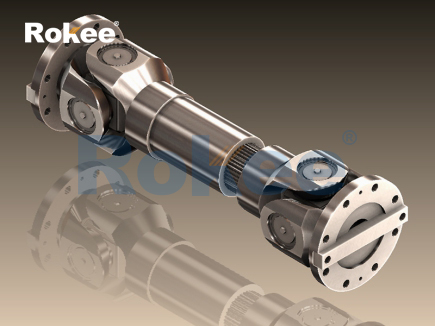
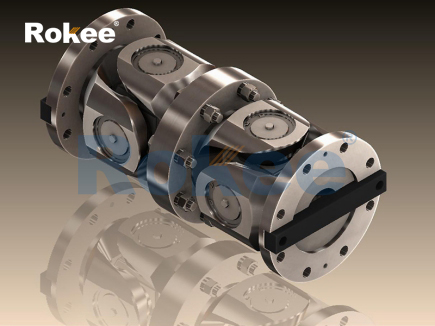
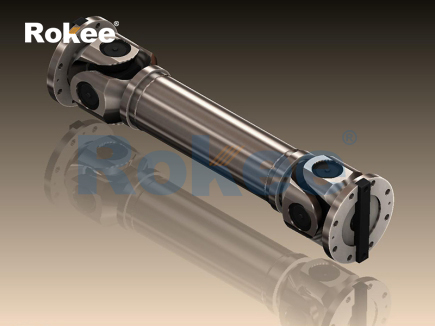
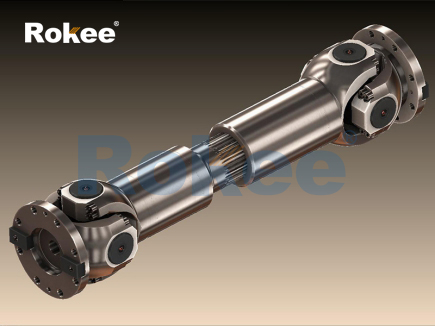
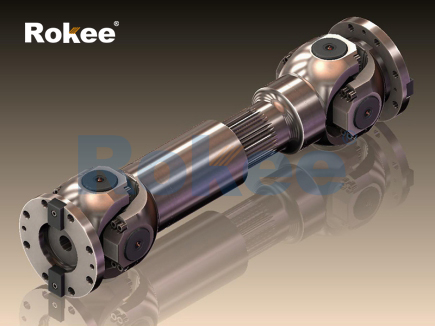
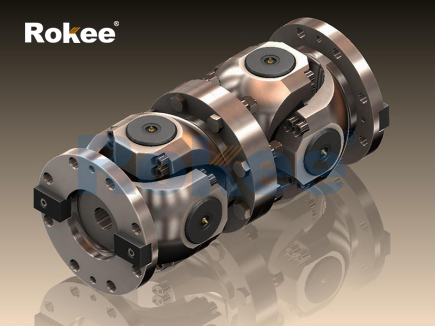
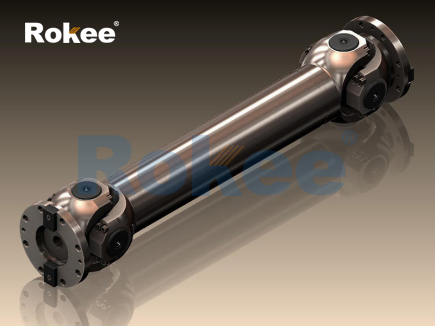
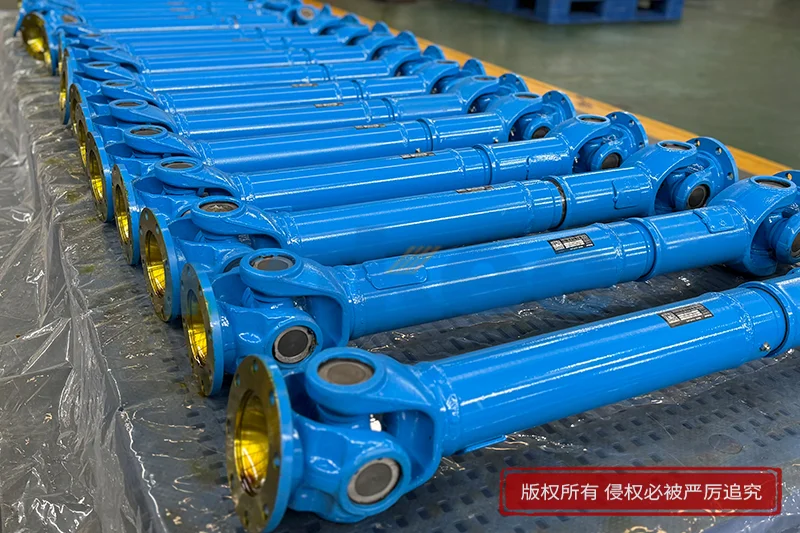
A universal joint coupling serves as a fundamental mechanical component designed to transmit rotational torque between two intersecting shafts with misaligned angular positions. Constructed with simple yet sophisticated mechanical structures, it generally consists of pivot joints and connecting yokes that enable flexible movement during power transmission. This mechanical device effectively accommodates angular deviations between driving and driven shafts, making it indispensable in various mechanical transmission systems where precise axial alignment cannot be consistently maintained. During operation, the interconnected movable parts rotate synchronously to transfer steady torque, while its adaptive structural design buffers mechanical stress generated by shaft deflection and positional changes. Such characteristics reduce excessive friction and mechanical wear on adjacent transmission parts, extending the overall service life of mechanical assemblies. The versatile adaptability allows this coupling to function reliably under diverse operating conditions, including fluctuating movement angles and moderate mechanical loads. It is widely applied in mechanical transmission systems of transportation equipment, industrial machinery and general mechanical devices, where stable power conveyance under complex motion states is required. With inherent structural simplicity, it facilitates convenient installation and routine maintenance, while its rational mechanical distribution effectively disperses operational pressure. Even in continuous long-term working cycles, it maintains stable transmission efficiency and minimizes mechanical failures caused by shaft misalignment, establishing its irreplaceable status in basic mechanical transmission engineering.
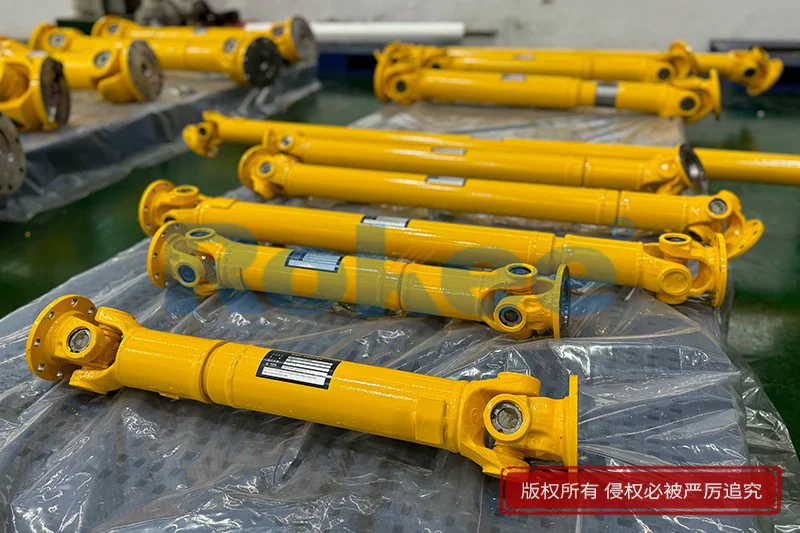
A universal joint coupling, often simply referred to as a universal joint or U-joint, is a critical mechanical component designed to transmit rotary motion and torque between two shafts whose axes are inclined to each other or may experience relative displacement during operation. Serving as the "flexible joint" of mechanical transmission systems, it plays an indispensable role in bridging the gap between non-collinear shafts, allowing for smooth power transfer even when the angle between the shafts changes dynamically. The versatility and reliability of universal joint couplings have made them essential in a wide range of industrial, automotive, and aerospace applications, where precise and efficient power transmission is crucial. To fully understand the value of this component, it is necessary to explore its structural composition, performance characteristics, various types, and practical applications in detail.
The basic structure of a universal joint coupling is relatively simple yet ingeniously designed to achieve its core function of angular displacement compensation. At its most fundamental level, a universal joint consists of two yokes (also known as forks) connected by a cross shaft (or spider), with bearings installed at the intersection points of the yokes and the cross shaft to reduce friction and enable smooth rotation. The yokes are typically attached to the ends of the two shafts that need to be connected, while the cross shaft acts as the central hinge that allows the yokes to rotate relative to each other at different angles. The bearings, which are often needle bearings for their compact size and high load-carrying capacity, ensure that the rotational motion is transmitted with minimal resistance, preventing excessive wear and tear even under heavy loads. In more complex designs, additional components such as bearing caps, seals, and lubrication channels may be incorporated to enhance durability and performance, especially in harsh operating environments. The simplicity of this structure not only makes universal joint couplings easy to manufacture and maintain but also ensures their ability to adapt to a wide range of angular misalignments, which is one of their key advantages over other types of couplings.
The performance of a universal joint coupling is determined by several key characteristics that directly affect its suitability for different applications. One of the most important performance metrics is angular misalignment capacity, which refers to the maximum angle between the two connected shafts that the coupling can accommodate while maintaining efficient power transmission. Most standard universal joint couplings can handle angular misalignments ranging from 15° to 45°, with some specialized designs capable of accommodating even larger angles up to 70° when used in a double cardan arrangement. This ability to compensate for significant angular misalignment makes them ideal for applications where the relative position of the shafts changes dynamically, such as in automotive drive systems or construction machinery articulated joints. Another critical performance characteristic is torque transmission capacity, which varies depending on the size, material, and design of the coupling. Universal joint couplings are capable of transmitting high levels of torque, making them suitable for heavy-duty applications such as metallurgical machinery, mine equipment, and ship propulsion systems. The torque capacity is primarily determined by the strength of the cross shaft and yokes, which are typically made from high-strength materials such as alloy steel or carbon steel to withstand the stresses associated with torque transmission.
Transmission efficiency is another key performance factor of universal joint couplings. High transmission efficiency ensures that minimal energy is lost during power transfer, which is essential for reducing energy consumption and improving the overall efficiency of the mechanical system. Well-designed universal joint couplings can achieve transmission efficiencies of 98% to 99.8%, with the slight energy loss primarily attributed to friction in the bearings and minor structural deformation under load. This high efficiency is particularly important in applications where energy conservation is a priority, such as in renewable energy systems or high-speed industrial machinery. Additionally, universal joint couplings exhibit good dynamic stability, with the ability to operate smoothly at varying speeds without excessive vibration or noise. However, it is important to note that a single universal joint does not provide constant velocity transmission when operating at an angle, which can lead to slight speed oscillations in the driven shaft. This issue can be addressed by using a double universal joint arrangement, where two universal joints are mounted in series with their yokes phased to cancel out the speed fluctuations, ensuring constant velocity output.
The durability and wear resistance of universal joint couplings are also critical performance considerations, especially in applications that involve continuous operation or harsh operating conditions. The use of high-quality materials and precision manufacturing processes ensures that the coupling can withstand prolonged use without significant wear. The bearings, which are the most vulnerable components, are often treated with special lubricants to reduce friction and extend their service life. Seals are also commonly used to prevent the ingress of dust, dirt, and moisture, which can cause corrosion and premature failure. In addition, some universal joint couplings are designed with replaceable components, such as bearings and seals, to simplify maintenance and reduce the overall cost of ownership. The ability to withstand extreme temperatures, humidity, and chemical exposure further enhances the versatility of universal joint couplings, allowing them to be used in a wide range of environments, from high-temperature industrial furnaces to cold outdoor applications.
Universal joint couplings can be classified into several different types based on their structural design, speed characteristics, and stiffness. The most common classification is based on speed characteristics, which divides them into non-constant velocity universal joints, constant velocity universal joints, and quasi-constant velocity universal joints. Non-constant velocity universal joints, also known as cross-shaft universal joints, are the simplest and most widely used type. They consist of two yokes and a cross shaft, and while they are capable of transmitting high torque and accommodating significant angular misalignment, they do not provide constant velocity transmission when the shafts are at an angle. This results in slight speed fluctuations in the driven shaft, which can cause vibration and noise in some applications. However, their simplicity, low cost, and high load-carrying capacity make them ideal for applications where constant velocity is not a critical requirement, such as in truck drive shafts, agricultural machinery, and heavy-duty industrial equipment.
Constant velocity universal joints are designed to eliminate the speed fluctuations associated with non-constant velocity joints, ensuring that the driven shaft rotates at the same angular velocity as the driving shaft regardless of the angle between them. The basic principle of constant velocity universal joints is to ensure that the point of force transmission always lies on the bisecting plane of the angle between the two shafts. The most common types of constant velocity universal joints are ball cage universal joints and ball fork universal joints. Ball cage universal joints consist of an inner race (star-shaped sleeve), an outer race (spherical shell), a cage, and six steel balls. The inner and outer races have arc grooves that form raceways for the steel balls, which are held in place by the cage. As the shafts rotate, the steel balls move along the raceways, ensuring that they always remain on the bisecting plane of the shaft angle, thus achieving constant velocity transmission. Ball cage universal joints are compact, have high load-carrying capacity, and can accommodate angular misalignments of up to 42°, making them ideal for high-speed applications such as passenger car drive shafts, precision machine tools, and industrial robots.
Ball fork universal joints, on the other hand, consist of two forks that are perpendicular to each other, with four steel balls embedded between them and a centering ball at the center. The forks have curved grooves that guide the steel balls, ensuring that they remain on the bisecting plane of the shaft angle during rotation. While ball fork universal joints are simpler and more compact than ball cage joints, they have a lower load-carrying capacity and can only accommodate angular misalignments of up to 33°. They are commonly used in applications where space is limited and constant velocity transmission is required, such as in some agricultural machinery and light-duty vehicles.
Quasi-constant velocity universal joints are designed based on the principle of double universal joints, which achieve constant velocity transmission by using two non-constant velocity joints in series. The most common types of quasi-constant velocity universal joints are double offset universal joints and tripod universal joints. Double offset universal joints are essentially a compact double universal joint arrangement, where the two yokes are integrated into a single component, reducing the overall length of the coupling. They can accommodate large angular misalignments of up to 50° and are commonly used in off-road vehicles and heavy-duty machinery. Tripod universal joints, which are derived from double offset joints, consist of two eccentric yokes and two tripods connected by bearings. They can accommodate angular misalignments of up to 45° and are often used in steering drive axles, where they help to reduce the turning radius of the vehicle and improve maneuverability.
Another classification of universal joint couplings is based on their stiffness, which divides them into rigid universal joints and flexible universal joints. Rigid universal joints, such as cross-shaft and ball cage joints, have no elastic components and rely on mechanical hinges to accommodate angular misalignment. They are characterized by high torsional stiffness, high load-carrying capacity, and high transmission efficiency, making them suitable for heavy-duty and high-precision applications. Flexible universal joints, on the other hand, incorporate elastic components such as rubber, polyurethane, or metal bellows to transmit torque and compensate for misalignment. These elastic components allow for slight axial, radial, and angular displacement, while also absorbing shock and vibration, reducing noise, and protecting the connected components from damage. Flexible universal joints have lower load-carrying capacity and torsional stiffness than rigid joints, but they are ideal for applications where shock absorption and noise reduction are critical, such as in automotive engine mounts, household appliances, and precision equipment.
The wide range of types and performance characteristics of universal joint couplings makes them suitable for a diverse array of applications across various industries. One of the most common applications is in the automotive industry, where universal joint couplings are used extensively in drive systems. In rear-wheel-drive vehicles, a double universal joint arrangement is used to connect the transmission output shaft to the drive axle, allowing for compensation of the angular changes caused by vehicle suspension movement. In front-wheel-drive vehicles, which do not have a separate drive shaft, constant velocity universal joints are used to connect the half-shafts to the wheels, as they need to accommodate both the driving torque and the steering angle. Universal joint couplings are also used in automotive steering systems, where they transmit motion from the steering wheel to the steering gear, allowing for smooth and precise steering control.
In the industrial machinery sector, universal joint couplings are widely used in various types of equipment, including metallurgical machinery, mine machinery, construction machinery, and machine tools. In metallurgical plants, they are used in rolling mills to connect the motor to the rolling stands, accommodating the angular misalignment caused by thermal expansion of the rolls. In mine equipment such as crushers and conveyors, they transmit high torque while compensating for the misalignment caused by the harsh operating conditions and heavy loads. In construction machinery such as excavators, loaders, and cranes, universal joint couplings are used in the articulated joints and drive systems, allowing for flexible movement and efficient power transmission. In machine tools, especially precision machining centers, constant velocity universal joints are used to connect the motor to the spindle, ensuring high-speed and precise rotation, which is essential for achieving high-quality machining results.
The aerospace industry also relies on universal joint couplings for various applications, where high reliability, lightweight design, and resistance to extreme conditions are critical. They are used in aircraft engine accessory drive systems, such as those for fuel pumps, generators, and hydraulic pumps, transmitting power from the engine to the accessories while accommodating the angular misalignment caused by engine vibration and thermal expansion. Universal joint couplings used in aerospace applications are typically made from lightweight and high-strength materials such as titanium alloys and composites, ensuring that they can withstand the high speeds, high temperatures, and high stresses encountered in flight.
Other applications of universal joint couplings include renewable energy systems, such as wind turbines and solar tracking systems. In wind turbines, they are used to connect the rotor to the generator, accommodating the angular misalignment caused by wind-induced vibrations and structural deflection. In solar tracking systems, they transmit motion from the drive motor to the tracking mechanism, allowing the solar panels to follow the sun’s path for maximum energy collection. Universal joint couplings are also used in household appliances, such as washing machines and dryers, where they connect the motor to the drum, absorbing vibration and compensating for minor misalignment. Additionally, they are used in medical equipment, such as surgical robots, where precise and smooth power transmission is essential for accurate surgical procedures.
The selection of the appropriate universal joint coupling for a specific application depends on several factors, including the required angular misalignment capacity, torque transmission requirements, operating speed, environmental conditions, and space constraints. For heavy-duty applications requiring high torque and large angular misalignment, rigid cross-shaft universal joints or double offset universal joints are often the preferred choice. For high-speed and precision applications requiring constant velocity transmission, ball cage universal joints are ideal. For applications where shock absorption and noise reduction are critical, flexible universal joints with elastic components are more suitable. It is also important to consider the maintenance requirements of the coupling, as some types require regular lubrication and component replacement, while others are maintenance-free.
In conclusion, universal joint couplings are versatile and essential mechanical components that play a crucial role in enabling efficient power transmission between non-collinear shafts. Their simple yet robust structure, excellent performance characteristics, and diverse range of types make them suitable for a wide variety of applications across automotive, industrial, aerospace, and other sectors. From heavy-duty industrial machinery to precision medical equipment, universal joint couplings ensure that rotary motion and torque are transmitted smoothly, reliably, and efficiently, even in the most challenging operating conditions. As technology continues to advance, the design and performance of universal joint couplings are constantly being optimized, with new materials and manufacturing processes being used to enhance their durability, efficiency, and versatility. This ongoing innovation ensures that universal joint couplings will remain a key component in mechanical transmission systems for years to come, supporting the development of more efficient, reliable, and advanced machinery across all industries.
pu sandwich panel line,pu sandwich panel machine,sandwich panel machine
« Universal Joint Couplings » Latest Update Date: May 9, 2026
https://www.rokeecoupling.net/tags/universal-joint-couplings.html