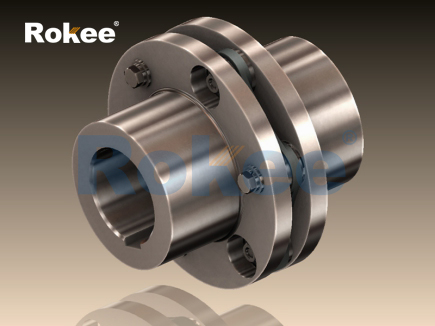
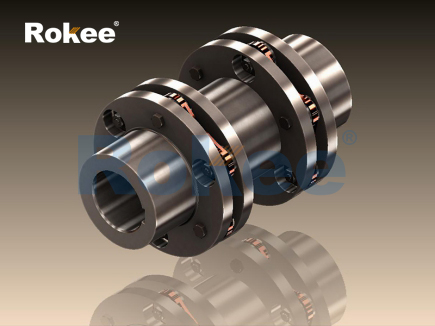
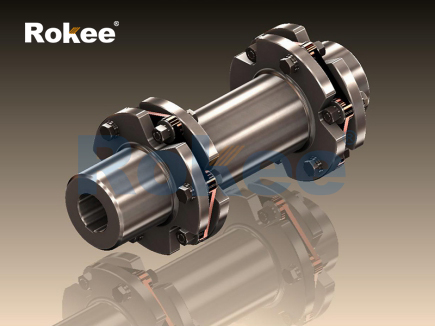
Shim pack couplings represent a crucial category of flexible mechanical transmission components widely adopted in modern industrial mechanical systems, serving as a key connecting medium between two rotating shafts within power transmission assemblies. Designed to transmit rotational torque while accommodating unavoidable mechanical deviations during equipment operation, these coupling structures rely on laminated thin metal shim groups as the core deformation component, achieving flexible connection through the elastic deformation of stacked metal shims. Compared with conventional rigid couplings and elastomeric flexible couplings, shim pack couplings balance structural simplicity, transmission stability and environmental adaptability, making them indispensable in high-precision, high-speed and high-stability mechanical transmission scenarios. Their unique laminated structure endows the couplings with distinctive mechanical properties, diverse classification forms and extensive application coverage across multiple industrial sectors.

The fundamental structure of shim pack couplings follows a standardized mechanical configuration composed of several core functional components, with laminated metal shim packs acting as the central load-bearing and deformation unit. Each shim pack consists of multiple ultra-thin metal sheets stacked in an orderly arrangement, and the number, thickness and arrangement pattern of these shims are adjusted according to different load requirements and working conditions. These metal shims are typically made of high-strength alloy metal with excellent fatigue resistance and tensile properties, ensuring long-term stable elastic deformation under cyclic mechanical stress. On both sides of the shim pack, rigid metal hubs are installed to connect the driving shaft and driven shaft respectively, and high-strength fasteners are used to fix the shim pack and hubs into an integrated assembly. The fasteners are evenly distributed along the circumferential direction of the hubs to ensure uniform force distribution on each metal shim during torque transmission. Some optimized structural designs add spacing auxiliary components between adjacent shims to avoid excessive friction and abrasion caused by direct contact between metal sheets during deformation. The overall structural layout abandons complex transmission accessories, maintaining a compact and streamlined outer contour, which effectively reduces axial space occupation and facilitates installation in narrow mechanical assembly spaces. In addition, the symmetrical structural design of the coupling effectively lowers the vibration amplitude generated during high-speed rotation, realizing inherent dynamic balance optimization without additional complicated balancing procedures.
The inherent structural features of shim pack couplings derive a series of superior mechanical and operational performances that distinguish them from other coupling types. First of all, the laminated shim structure provides outstanding misalignment compensation capability, which can simultaneously adapt to axial displacement, radial deviation and angular deflection between connected shafts. Tiny installation errors, thermal expansion and mechanical vibration during equipment operation often cause non-ideal alignment of rotating shafts, and the elastic deformation of stacked metal shims can absorb these deviations in real time, avoiding additional mechanical stress on shafts, bearings and other precision components. Secondly, such couplings exhibit exceptional torsional stiffness while maintaining moderate elastic deformability. The integral stacking structure of metal shims ensures stable torque transmission without obvious torsional distortion, which is critical for mechanical systems requiring high transmission accuracy and synchronous rotation. Meanwhile, the micro-deformation of shims can absorb part of vibration and impact energy generated during equipment start-up, shutdown and load fluctuation, achieving vibration damping and buffering effects to stabilize the operating state of the transmission system.
In terms of environmental adaptability and service durability, shim pack couplings have prominent application advantages. The all-metal structural configuration eliminates non-metallic vulnerable materials such as rubber and plastic, so they are not affected by extreme temperature changes, chemical corrosion and aging deterioration. They can maintain stable working performance in low-temperature cold environments, high-temperature heating conditions and atmospheres containing corrosive media such as oil mist and weak acid gas. The metal shims undergo precise heat treatment and surface optimization processing, with strong fatigue resistance and wear resistance, enabling long-term continuous operation under cyclic alternating loads without permanent deformation or structural damage. Moreover, the internal friction of the coupling is extremely low during operation, resulting in negligible transmission energy loss and high mechanical transmission efficiency. The all-metal structure also simplifies daily maintenance work, as there is no need for regular replacement of vulnerable elastic accessories, and the overall service cycle is significantly extended compared with elastomeric couplings. It is worth noting that the surface of metal components usually undergoes anti-rust and anti-corrosion treatment to further enhance environmental adaptability in harsh industrial working conditions.
Based on structural differences, assembly forms and functional characteristics, shim pack couplings can be divided into multiple classification types to meet differentiated industrial usage requirements. According to the number of shim packs adopted in the assembly, they are categorized into single shim pack type and double shim pack type. The single shim pack coupling features a simple overall structure and small axial dimension, suitable for compact mechanical equipment with limited installation space and low misalignment compensation requirements. It is mainly applied to conventional medium and low-speed transmission systems with stable load changes. In contrast, the double shim pack coupling installs two independent shim packs at intervals between the two hubs, and the intermediate connecting component enhances the overall structural flexibility. This type has stronger multi-directional misalignment compensation ability, especially for radial deviation and angular deflection, and can bear larger cyclic loads, making it suitable for high-power and high-precision mechanical transmission equipment.
In accordance with shim arrangement and stacking structure, shim pack couplings are classified into parallel stacking type and staggered stacking type. The parallel stacking type arranges metal shims in complete overlapping parallelism, with uniform stress distribution on each shim during torque transmission, stable deformation state and simple processing technology. This type is widely used in general industrial mechanical equipment with conventional load demands. The staggered stacking type adopts a dislocation arrangement for adjacent shims, which changes the internal force transmission path of the shim pack. This structural optimization improves the overall torsional strength and shear resistance of the coupling, effectively dispersing local stress concentration and avoiding fatigue damage of individual shims under extreme load fluctuations. Couplings of this type are commonly used in heavy-duty mechanical systems with frequent load changes and complex stress conditions.
Another common classification method divides shim pack couplings into rigid connection type and flexible reinforced type based on fastening and connection modes. The rigid connection type uses integral high-strength bolts for fixed assembly between shims and hubs, with high overall structural rigidity and minimal deformation during torque transmission. It is applicable to high-precision transmission scenarios requiring strict control of rotation angle deviation. The flexible reinforced type adds elastic buffer gaskets at the fastening positions, appropriately reducing local rigid restraint. This design enhances the anti-impact capability of the coupling, which can effectively relieve instantaneous impact load generated during equipment start-up and sudden load changes, thus protecting precision transmission components from instantaneous mechanical damage.
Diverse structural types and excellent comprehensive performances enable shim pack couplings to cover a wide range of industrial application scenarios, involving machinery manufacturing, energy power, transportation, automated production and many other industrial fields. In the field of precision mechanical processing, they are installed on high-speed machine tools, precision grinding equipment and numerical control processing machinery. The high torsional stiffness and low vibration characteristics ensure the synchronous rotation accuracy of transmission shafts, avoiding processing errors caused by transmission vibration and shaft deviation, so as to guarantee the dimensional accuracy and surface quality of processed workpieces. In the energy and power industry, such couplings are applied to power generation equipment, including wind power generation units and small and medium-sized steam turbine transmission systems. The all-metal structure adapts to the high-temperature and high-speed operating environment of power equipment, and the reliable torque transmission performance ensures the stable output of electric energy. At the same time, their fatigue resistance meets the long-term continuous operation demands of power generation equipment.
In automated industrial production lines, shim pack couplings serve as key connecting components of servo motors, reduction gears and transmission rollers. The precise transmission capability realizes accurate feedback and execution of motion signals, ensuring the positioning accuracy and operating stability of automated mechanical arms, assembly equipment and conveying devices. The compact structural design is perfectly compatible with the dense assembly layout of automated production lines, saving installation space and optimizing the overall structural integration degree of production equipment. In the transportation and heavy machinery industry, these couplings are used in transmission systems of engineering machinery, transportation pumps and compressor equipment. Their strong misalignment compensation ability adapts to the vibration and structural displacement generated during the operation of heavy machinery, while the excellent impact resistance can cope with complex and variable load conditions in engineering operation, reducing the failure rate of mechanical transmission systems.
In addition, shim pack couplings also have important application value in special working condition industries. In the chemical industry, they can operate stably in corrosive atmospheres such as chemical reagent processing and gas transportation, relying on the anti-corrosion performance of metal materials to avoid structural aging and failure caused by chemical erosion. In the cryogenic storage and transportation industry, their physical properties will not deteriorate in ultra-low temperature environments, ensuring the normal operation of low-temperature refrigeration equipment and cryogenic fluid transmission devices. In experimental testing equipment, high-precision shim pack couplings are used for torque testing, dynamic mechanical performance detection and other experimental facilities, providing accurate and stable transmission conditions for experimental data measurement.
With the continuous upgrading of modern industrial manufacturing technology, the production process and structural design of shim pack couplings are also constantly optimized and improved. Advanced precision stamping and laser cutting technologies are adopted for metal shim processing to ensure consistent thickness and flatness of each shim, which lays a foundation for uniform stress distribution of the coupling. The surface treatment process is continuously upgraded to enhance the wear resistance, anti-rust ability and corrosion resistance of metal components. Meanwhile, lightweight structural optimization has become an important development direction. Under the premise of guaranteeing mechanical performance, the structural size is reasonably optimized to reduce self-weight and rotational inertia, so as to adapt to the high-frequency dynamic operation requirements of modern high-precision machinery. In terms of material selection, new high-strength alloy materials are gradually applied to shim production, further improving fatigue resistance and extreme condition adaptability.
In practical industrial selection and application, multiple factors need to be comprehensively considered to determine the appropriate type of shim pack coupling. The rated torque, operating speed, shaft alignment accuracy and environmental conditions of the transmission system are the core selection indicators. For low-load and compact equipment, single parallel stacking couplings are more economical and practical; for high-speed, heavy-load and high-precision equipment, double staggered stacking reinforced couplings are more suitable. During installation, it is necessary to strictly control the coaxiality of the connecting shafts to reduce unnecessary compensation load of the coupling and extend its service life. Regular visual inspection of fastener tightness and shim surface condition is also required in daily use to eliminate potential mechanical hazards caused by loose parts and metal fatigue.
In conclusion, shim pack couplings occupy an irreplaceable important position in the field of mechanical transmission by virtue of their unique laminated metal structure, excellent comprehensive mechanical properties, diverse classification types and wide application adaptability. Their all-metal structure, high transmission accuracy, reliable misalignment compensation and strong environmental adaptability make them break through the performance limitations of traditional couplings. With the continuous development of industrial machinery towards high precision, high speed and high durability, shim pack couplings will be further optimized in structural design, material application and processing technology, and their application scope in emerging industrial fields such as intelligent manufacturing and new energy equipment will continue to expand. As a stable and efficient basic transmission component, shim pack couplings will continuously provide reliable technical support for the safe and efficient operation of various mechanical systems.
pu sandwich panel line,pu sandwich panel machine,sandwich panel machine
« Shim Pack Couplings » Latest Update Date: May 9, 2026
https://www.rokeecoupling.net/tags/shim-pack-couplings.html