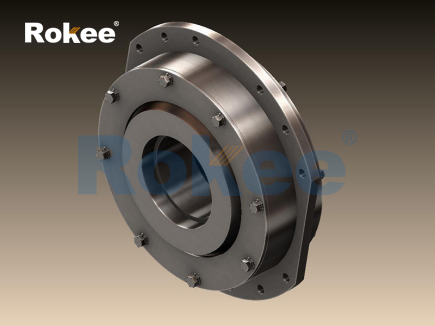
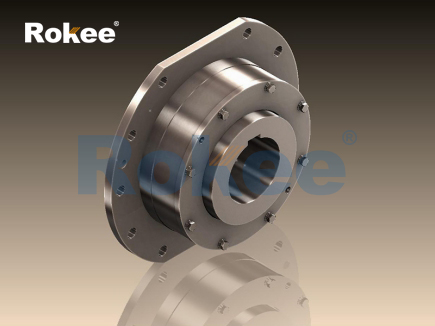
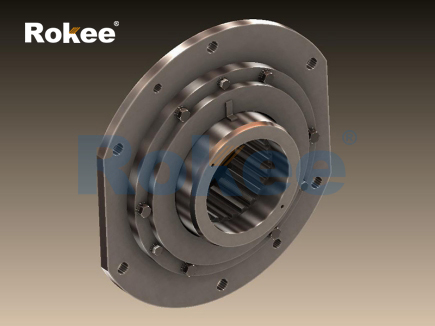
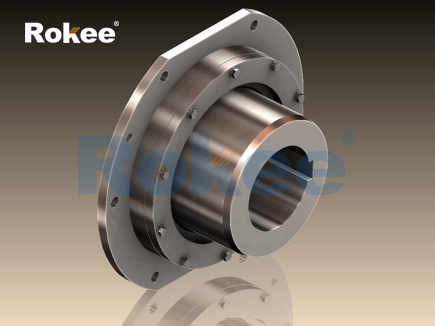
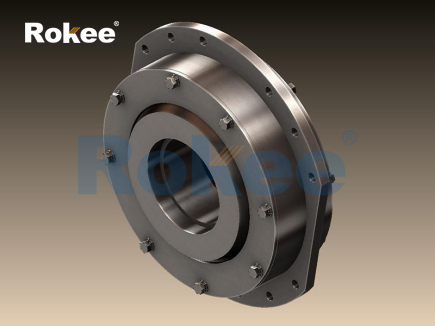
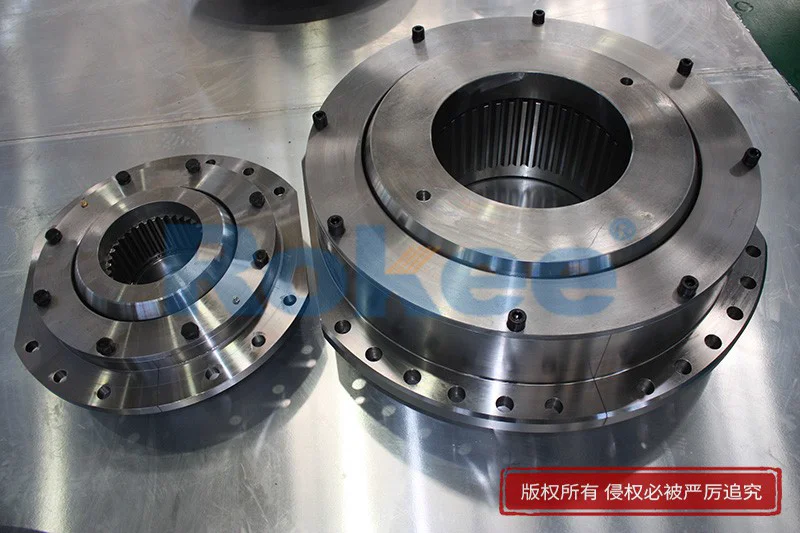
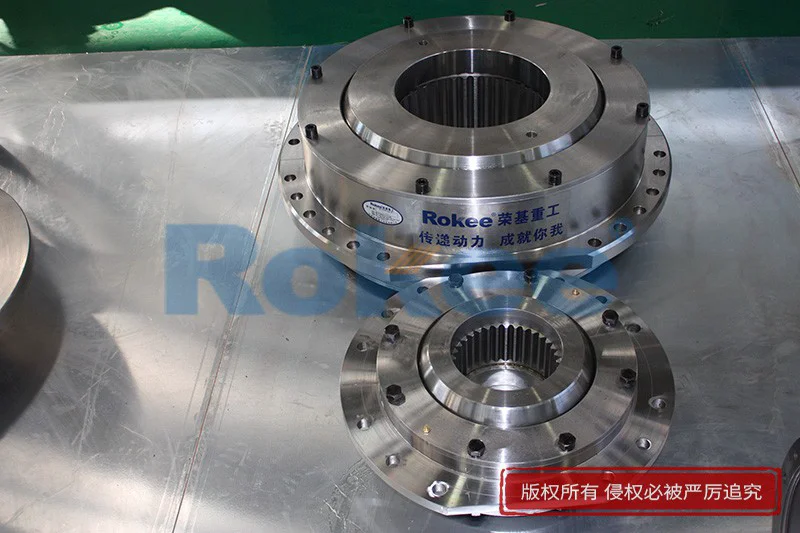
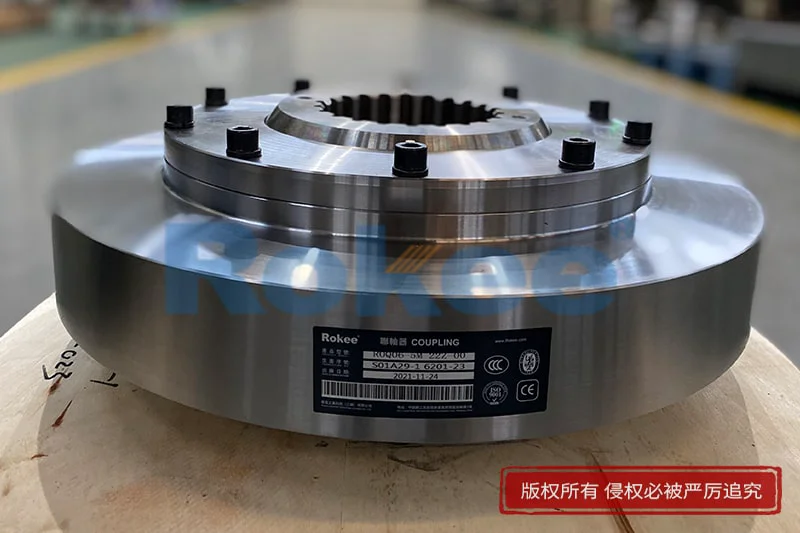
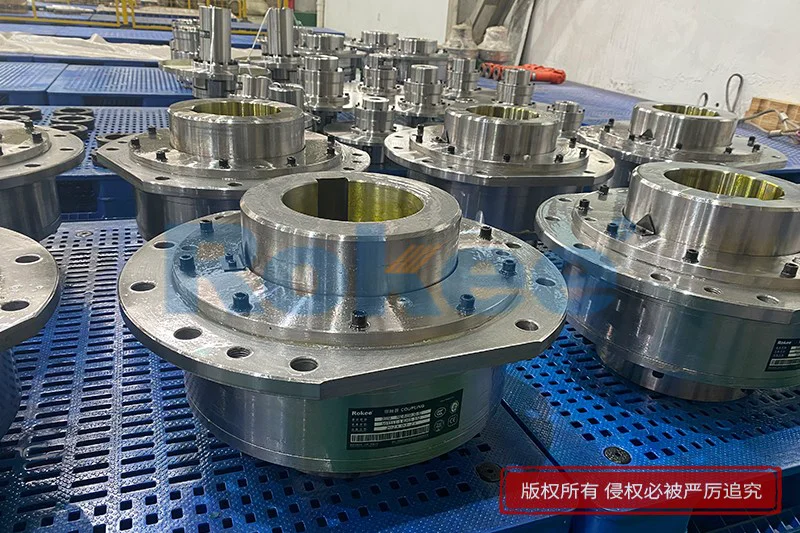
In the complex mechanical transmission systems of modern industrial production, couplings serve as fundamental connecting components that bond two rotating shafts to transmit torque and rotational motion. Among various types of couplings, barrel couplings stand out for their unique mechanical structures and excellent comprehensive performance, becoming indispensable core parts in heavy-duty transmission equipment. A barrel coupling is a rigid flexible coupling that relies on the meshing of internal and external drum-shaped teeth to realize power transmission, and it has been widely recognized in the industrial field for its outstanding displacement compensation capability, high torque bearing capacity and stable operating reliability. Unlike traditional straight-tooth couplings with rigid structural limitations, the drum-shaped tooth profile of barrel couplings optimizes the stress distribution of meshing parts, effectively overcoming the defects of easy tooth edge wear and poor deflection adaptability of conventional transmission couplings. With the continuous upgrading of industrial manufacturing technology, barrel couplings have derived multiple structural forms to adapt to diverse working conditions, covering low-speed heavy-load, medium-speed stable operation and long-distance shaft connection scenarios, providing reliable guarantee for the efficient and safe operation of mechanical equipment in various industries.
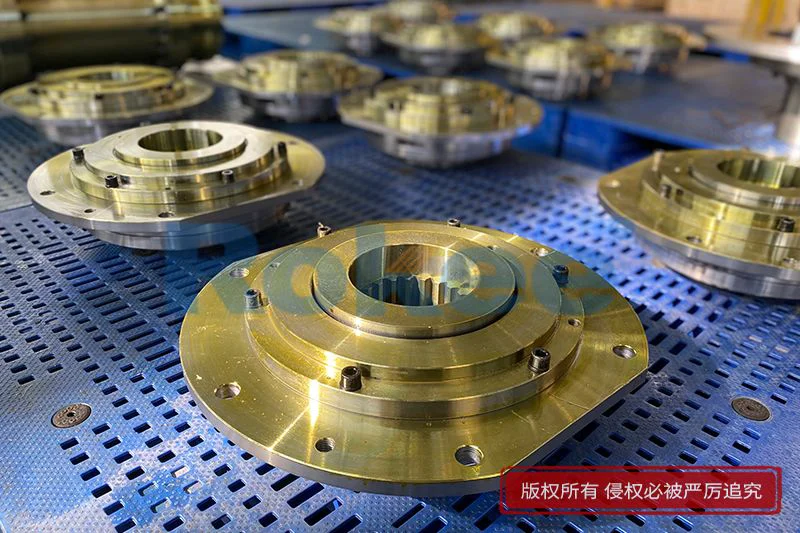
The internal structure of barrel couplings is scientifically and rationally designed, and the overall composition is compact with high structural integration. The basic structural components mainly include outer tooth sleeves, inner tooth rings, connecting shafts, sealing assemblies and lubrication structures. The external tooth end of the outer tooth sleeve is processed into a smooth drum-shaped curved surface, which is the most distinctive structural feature distinguishing it from ordinary straight-tooth couplings. This curved tooth surface enables the meshing teeth to have larger contact area and better stress uniformity during rotation. The inner tooth ring adopts an integrated rigid structure, which is tightly matched with the outer tooth sleeve to form a stable meshing pair. In order to adapt to different installation space requirements and transmission distance demands, some barrel couplings are equipped with intermediate shaft structures, which can extend the axial transmission length without reducing the overall transmission stability. The sealing system of barrel couplings is composed of combined sealing components, which usually adopts the combination of labyrinth sealing and skeleton oil seal structure. This composite sealing mode can effectively isolate external dust, moisture and corrosive impurities, preventing internal lubricating oil leakage and avoiding abrasive particles from entering the meshing gap of teeth. In terms of lubrication structure, most barrel couplings are designed with closed oil storage cavities, which can realize long-term oil bath lubrication. The reasonable lubrication layout greatly reduces the friction coefficient between meshing tooth surfaces, and the wear degree of tooth parts is far lower than that of couplings with ordinary lubrication methods. In addition, the connecting parts of barrel couplings adopt integrated forging molding process, which eliminates the structural stress concentration caused by welding or assembly splicing, and further enhances the overall structural rigidity and compression resistance of the coupling.
The excellent comprehensive performance of barrel couplings is derived from optimized structural design and high-quality material selection, and its core performance indicators are significantly better than other common coupling types in heavy-load working environments. First of all, it has remarkable displacement compensation performance. Due to the flexible meshing mode of drum-shaped teeth, the coupling can effectively compensate for axial displacement, radial displacement and angular displacement generated during equipment operation. Minor installation errors, shaft body deformation caused by thermal expansion and contraction, and position deviation caused by equipment vibration can all be buffered and eliminated through the micro-deformation of meshing teeth, avoiding additional shear stress on the shaft system and bearing components. Secondly, barrel couplings have ultra-high torque bearing capacity. The drum-shaped tooth profile increases the effective contact width of the tooth surface, disperses the instantaneous contact pressure during torque transmission, and can maintain stable transmission state under continuous heavy torque and impact load. The overall rigidity of the metal structure makes it not easy to produce torsional deformation during high-load operation, ensuring the accuracy of power transmission. In terms of transmission efficiency, the smooth curved contact surface reduces sliding friction between teeth, and the closed lubrication system keeps the friction state stable for a long time, making the transmission efficiency of barrel couplings remain above 99.5% in conventional working conditions, with extremely low power energy loss. In terms of operating stability, the optimized tooth profile structure reduces meshing impact and vibration noise during rotation. Compared with straight-tooth couplings, its operating noise is significantly lower, and it can adapt to long-term continuous working mode without obvious vibration resonance phenomenon. Moreover, barrel couplings have excellent environmental adaptability. The high-strength metal materials and anti-corrosion sealing structure enable them to work normally in high temperature, low temperature, dusty and humid industrial environments, with strong resistance to external environmental interference.
According to structural differences, connection modes and adaptive working conditions, barrel couplings can be divided into multiple classification types, each with unique structural advantages and applicable scenarios. The first category is the basic type without intermediate shaft, which has a compact overall structure, small axial occupied space and simple assembly and disassembly steps. This type of coupling is suitable for short-distance shaft connection occasions, and is mostly used in medium and small-sized transmission equipment with concentrated installation space. The second category is the intermediate shaft type barrel coupling, which adds a detachable intermediate connecting shaft between two sets of meshing tooth structures. The length of the intermediate shaft can be adjusted according to the actual transmission distance, realizing long-distance power transmission between two shafts. This structural design avoids the difficulty of equipment position adjustment caused by overlong transmission distance, and is widely used in conveyor equipment and long-axis transmission systems. The third category is the double-flange connection type barrel coupling. It adopts flange integrated molding structure at both ends, which can realize rapid bolt fastening connection with the rotating shaft of equipment. The flange connection has high positioning accuracy and strong anti-loosening ability, and is not easy to produce connection gaps under high-speed rotation and heavy load, suitable for high-precision transmission occasions such as metallurgical rolling mills. In addition, there are special reinforced barrel couplings, which are optimized in terms of tooth thickness, shell wall thickness and material hardness. The reinforced structure further improves the impact resistance and overload resistance, and can withstand instantaneous strong impact load in harsh working conditions such as mining and heavy lifting. Different types of barrel couplings have clear performance differentiation in terms of torque range, axial deflection allowable value and installation space, forming a complete product system covering light load, medium load and heavy load working conditions.
barrel couplings have diverse functional advantages, so they are widely applied in multiple heavy industrial fields, becoming an important guarantee for the stable operation of large mechanical equipment. In the metallurgical industry, barrel couplings are applied to the main transmission system of rolling mills. The rolling production process requires continuous high-torque power output, and the equipment will generate slight vibration and shaft deviation during operation. The displacement compensation and heavy-load resistance of barrel couplings can adapt to the harsh working state of rolling mills, ensuring the synchronization and stability of roller rotation, and avoiding equipment failure caused by transmission jitter. In the mining industry, this kind of coupling is used for transmission connection of mining hoists and crushing equipment. Mining equipment often bears irregular impact loads, and the excellent impact resistance and structural rigidity of barrel couplings can buffer instantaneous impact force, protect the shaft system and bearing parts from damage, and reduce the failure rate of mining machinery. In the field of lifting and transportation, barrel couplings are installed on large-scale lifting machinery and long-distance belt conveyors. For lifting equipment, the coupling needs to maintain stable torque output in the process of lifting heavy materials to prevent material shaking caused by transmission fluctuation; for conveyors, the intermediate shaft type barrel coupling can meet the long-distance transmission demand, realizing synchronous operation of multi-section conveying equipment.
In addition to the above heavy industrial fields, barrel couplings also play an important role in cement manufacturing, power generation and water conservancy industries. Cement production equipment such as rotary kilns and ball mills operate continuously for a long time with large operating load. The wear-resistant and durable characteristics of barrel couplings can reduce the frequency of equipment maintenance and extend the service life of transmission components. In thermal power plants, barrel couplings are used for the connection of large water pumps and fan equipment. The high transmission efficiency ensures the energy-saving operation of power equipment, and the stable sealing structure avoids equipment failure caused by dust and moisture erosion. In water conservancy projects, this coupling is applied to the transmission system of water delivery pumps. It can adapt to the humid and corrosive working environment, maintain stable operating performance for a long time, and ensure the continuous operation of water conservancy drainage and water delivery equipment. With the development of intelligent industrial manufacturing, barrel couplings are also gradually applied to automated heavy-duty production lines, providing accurate and stable power transmission guarantee for automated mechanical arms and heavy-duty transmission platforms.
In terms of daily maintenance and service life, barrel couplings have obvious application advantages compared with other coupling products. The closed lubrication system can keep the internal lubricating oil stable for a long time, and the maintenance cycle is much longer than that of elastic couplings and open-tooth couplings. The simple assembly structure makes the disassembly and replacement process convenient, and there is no need to move the main equipment during maintenance, which greatly reduces the downtime loss caused by equipment maintenance. The metal components with high hardness are not easy to age and deform, and can maintain stable mechanical performance after long-term continuous operation. Although the manufacturing cost of barrel couplings is higher than that of ordinary elastic couplings, their long service life and low maintenance cost make the comprehensive use cost more economical in the long-term industrial production process. At the same time, the strong compatibility of barrel couplings enables them to be matched with various types of transmission shafts, and the adaptability of shaft diameter and installation size is flexible, which can meet the transformation and upgrading needs of most traditional mechanical equipment.
In conclusion, barrel couplings have formed unique competitive advantages in the industrial transmission field by virtue of their compact and reasonable structural design, excellent displacement compensation ability, high-efficiency torque transmission performance and diverse classification types. The smooth drum-shaped tooth structure lays a foundation for its stable operation under heavy load and complex working conditions, and multiple structural classifications meet the transmission demands of different space distances and load intensities. From heavy metallurgical and mining equipment to conventional building materials and power machinery, barrel couplings undertake the important task of power transmission, providing reliable technical support for the safe and efficient operation of industrial equipment. With the continuous progress of mechanical manufacturing technology, the structural optimization of barrel couplings will be further deepened, and the material performance and processing accuracy will be continuously improved to adapt to more extreme working conditions. In the future industrial development process, barrel couplings will still maintain an irreplaceable important position in the field of mechanical transmission, and continuously promote the stable operation and efficient upgrading of modern heavy industry.
pu sandwich panel line,pu sandwich panel machine,sandwich panel machine
« Barrel Couplings » Latest Update Date: May 8, 2026
https://www.rokeecoupling.net/tags/barrel-couplings.html