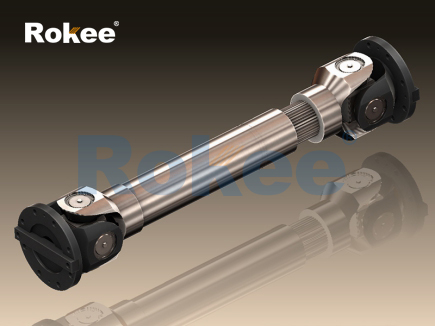
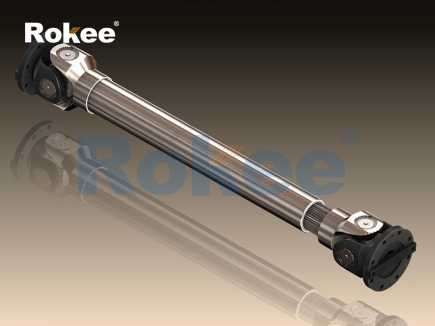
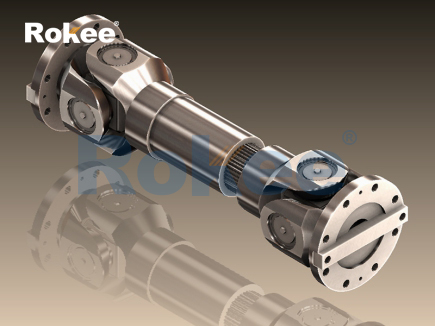
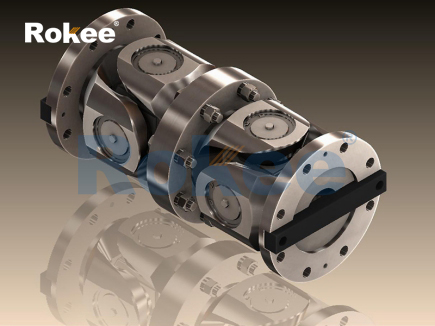
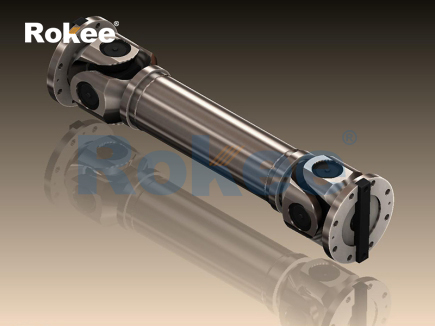
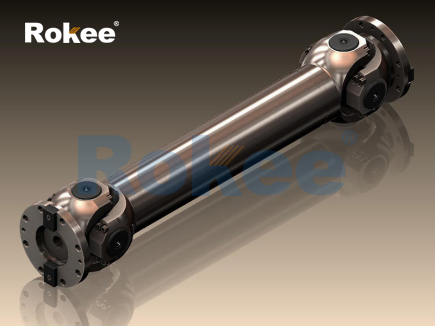
In the complex mechanical transmission systems that underpin modern industrial operations, cardan shaft couplings stand out as indispensable mechanical components designed to facilitate stable torque transmission between disjointed rotating shafts. Also commonly referred to as universal joints, these mechanical connectors address the inherent limitations of rigid transmission structures by accommodating spatial misalignment between connected shafts, making them prevalent in diverse mechanical equipment ranging from light-duty industrial machinery to heavy engineering devices. Unlike rigid coupling structures that demand precise shaft alignment and lack adaptive deformation capacity, cardan shaft couplings rely on articulated mechanical structures to realize continuous rotation and torque transfer under angular, axial and radial displacement conditions. Their unique structural characteristics endow them with exceptional environmental adaptability, enabling stable operation in harsh working scenarios involving vibration, position deviation and thermal deformation. A comprehensive understanding of the structural composition, core performance attributes, classification criteria and practical application scenarios of cardan shaft couplings is essential for optimizing mechanical transmission schemes, prolonging equipment service life and improving overall operational stability of mechanical systems.
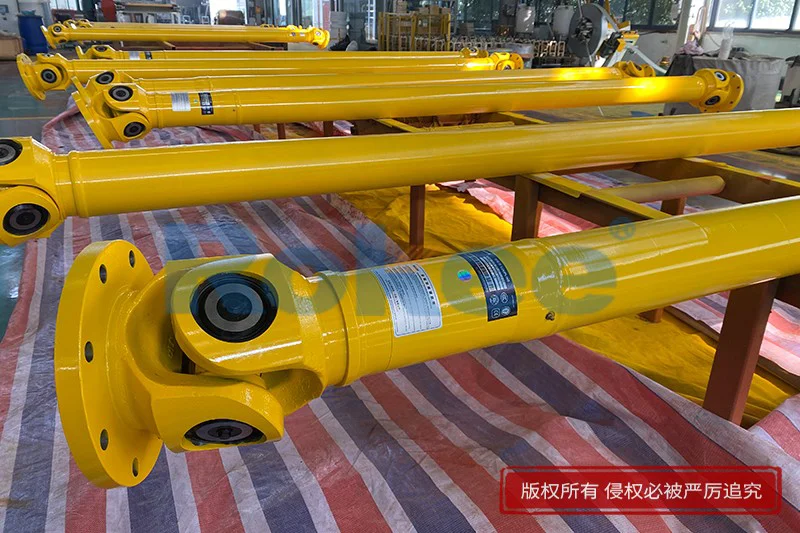
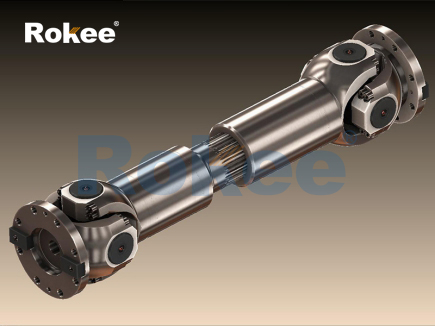
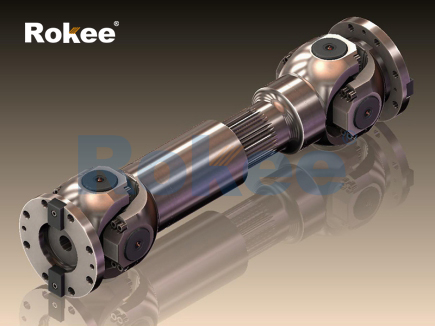
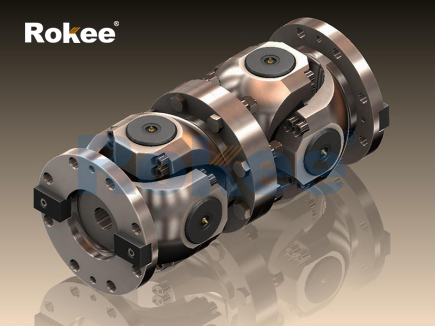
The fundamental structure of a cardan shaft coupling features a simple yet sophisticated mechanical combination dominated by metallic rigid components, with each part undertaking distinct transmission and load-bearing functions to ensure coordinated movement during rotation. The basic unit of a single-section cardan coupling consists of three core components: two yoke joints and a central cross-shaped shaft. The two yoke joints are separately fixed to the driving shaft and the driven shaft through mechanical connection structures, and the symmetrical lug structures at the ends of the yokes form a mutually perpendicular assembly space. The cross-shaped shaft, as the central connecting component, is embedded in the lug gaps of the two yokes, with four shaft necks of the cross shaft closely fitted with the inner holes of the yoke lugs. This assembly method forms a flexible hinge structure that allows the two yokes to generate a certain angular deflection relative to each other. To reduce mechanical friction and wear during relative rotation, precision rolling or sliding bearing structures are usually installed at the matching positions between the cross shaft and the yokes. In addition, auxiliary sealing parts are equipped on the outer side of the hinge structure to isolate external dust, moisture and corrosive substances, while retaining internal lubricating grease to maintain long-term smooth operation of the friction pairs. For multi-section cardan shaft couplings, intermediate connecting shafts are added between two single-section universal joints, and the combination of double hinge structures further expands the displacement compensation range of the coupling. All structural components are mostly made of high-strength alloy steel with excellent hardness and toughness, which can withstand alternating torque, shear force and impact load generated during high-speed rotation.
The unique structural design of cardan shaft couplings brings a series of distinctive performance advantages that differentiate them from other types of mechanical couplings. The most prominent performance feature is the outstanding misalignment compensation capability. This coupling can effectively tolerate angular misalignment, axial displacement and radial offset between connected shafts, with the allowable deflection angle of a single joint reaching a considerable range. In practical engineering applications, this characteristic greatly reduces the installation accuracy requirements of mechanical shafts. Compared with rigid couplings that require extremely strict shaft alignment, cardan shaft couplings can adapt to installation deviations caused by manual assembly errors, equipment manufacturing tolerances and foundation settlement. Meanwhile, they can automatically compensate for dynamic displacement generated during equipment operation, such as axial stretching caused by thermal expansion of metal components and position deviation induced by mechanical vibration, thereby avoiding excessive additional stress on the shaft system. In terms of torque transmission performance, cardan shaft couplings maintain high transmission efficiency under normal working conditions. The metal rigid contact structure ensures stable torque output without obvious power loss, and they can bear large instantaneous overload torque to adapt to fluctuating load working conditions. Although single-section universal joints produce periodic speed fluctuation during rotation due to their mechanical motion principle, the rational arrangement of double-section structures can effectively eliminate uneven rotation, achieving constant-speed torque transmission. Moreover, the overall structural rigidity of cardan shaft couplings is moderate; they can absorb part of vibration and impact energy through the micro-deformation of the hinge structure, reducing vibration transmission between the driving end and the driven end. Their durable metallic materials and compact structural layout also endow the couplings with excellent temperature resistance and corrosion resistance, enabling reliable operation in high-temperature, dusty and humid industrial environments.
Based on structural forms, connection modes and functional characteristics, cardan shaft couplings can be divided into multiple categories to meet differentiated usage demands of diverse mechanical equipment. According to the number of hinge joint sections, they are primarily classified into single-section and double-section cardan shaft couplings. Single-section couplings feature a compact structure with a small overall volume and a simple assembly process, suitable for working conditions with small shaft misalignment and limited installation space. Their structural composition is streamlined, making them easy to disassemble and maintain, yet they are limited by non-constant speed transmission and are not applicable to high-precision rotation scenarios. Double-section cardan shaft couplings connect two single-section universal joints through an intermediate shaft, and the symmetrical installation angle design neutralizes the speed fluctuation of a single joint. This type realizes approximate constant-speed transmission, boasts a larger angular compensation range, and is widely used in transmission systems with high rotation stability requirements. In accordance with different bearing structures at the hinge, cardan shaft couplings can also be categorized into sliding bearing type and rolling bearing type. Sliding bearing couplings adopt direct friction matching between metal components, with low manufacturing costs and simple structures, suitable for low-speed, heavy-load and low-operation-frequency mechanical occasions. Rolling bearing couplings integrate precision rolling elements, which effectively reduce friction coefficient, lower operating noise and improve transmission flexibility, adapting to high-speed continuous operation environments. Additionally, by connection methods, there are flange connection type and spline connection type. Flange-connected couplings rely on bolt fastening to realize shaft connection, featuring high connection rigidity and strong load-bearing capacity, ideal for heavy industrial mechanical transmission. Spline-connected couplings utilize spline structures for shaft matching, enabling convenient axial sliding and disassembly, and are commonly applied in mechanical equipment requiring frequent shaft position adjustment.
Diversified types and superior comprehensive performance enable cardan shaft couplings to be widely applied in numerous industrial fields and mechanical equipment, covering light industry, heavy industry, transportation and engineering machinery. In the field of transportation machinery, cardan shaft couplings serve as core transmission components for vehicle power systems. They connect automobile engines, gearboxes and rear drive axles, adapting to the up-and-down displacement and angular deviation of the axle caused by road bumps during vehicle travel, ensuring continuous and stable power transmission to the wheels. In engineering machinery such as excavators, loaders and cranes, these couplings are applied to walking mechanisms and hydraulic transmission systems. The harsh working conditions of engineering machinery involve complex vibration and uneven load changes, and the misalignment compensation and impact resistance of cardan shaft couplings effectively improve the operational reliability of the equipment. In industrial manufacturing, cardan shaft couplings are installed on various rotating mechanical equipment including conveyors, mixers and large fans. Production equipment often generates vibration during operation, and foundation deformation may occur after long-term service; the adaptive structure of the couplings avoids transmission failure caused by shaft position changes, reducing equipment maintenance frequency. In addition, in the field of agricultural machinery, farm machinery such as tractors and harvesters usually operate in complex terrain with poor road conditions. Cardan shaft couplings connect power output shafts and working components, adapting to severe angular deflection and harsh working environments such as dust and mud, ensuring stable operation of agricultural machinery. In some special mechanical fields, such as aerospace auxiliary transmission mechanisms and marine ship power transmission systems, high-strength customized cardan shaft couplings are also adopted to meet the stringent requirements of extreme working conditions for transmission stability and structural durability.
Despite the mature application technology and wide coverage of cardan shaft couplings, their performance still has inherent limitations that need to be reasonably considered in equipment selection and system design. Excessively large deflection angles will lead to increased internal friction of the coupling, aggravated component wear and reduced transmission efficiency. Long-term operation under high deflection angles may also cause fatigue damage to the cross shaft and bearings, shortening the service life. Moreover, although double-section couplings can achieve constant-speed transmission, unreasonable installation angles will produce additional axial thrust and torsional vibration, affecting the stability of the entire transmission system. Therefore, in practical application, mechanical designers need to select appropriate coupling types according to actual working parameters such as rotation speed, load magnitude and shaft misalignment angle. Meanwhile, regular maintenance measures including lubricating grease replacement and sealing component inspection should be implemented to reduce friction loss and prevent corrosive damage. With the continuous advancement of mechanical manufacturing technology, the material formula and structural optimization design of cardan shaft couplings are constantly upgraded. High-strength lightweight alloy materials and optimized hinge structures are gradually applied to product manufacturing, further improving their load-bearing capacity, fatigue resistance and high-speed operation performance.
To sum up, cardan shaft couplings occupy an irreplaceable important position in the modern mechanical transmission industry by virtue of their simple and reliable structure, excellent misalignment compensation performance, diverse classification forms and wide application scenarios. Their unique articulated hinge structure breaks through the transmission limitations of traditional rigid couplings, providing stable and efficient power connection solutions for various mechanical systems with shaft displacement. Different types of cardan shaft couplings can precisely match the usage requirements of various working conditions, covering low-speed heavy-load, high-speed stable-operation and complex-environment machinery. Although restricted by inherent mechanical principles, they have partial performance limitations, and reasonable type selection, standardized installation and regular maintenance can effectively optimize their operating state. In the future, with the continuous development of intelligent manufacturing and high-end mechanical equipment, cardan shaft couplings will realize further breakthroughs in material optimization, structural refinement and precision manufacturing, continuously adapting to the higher performance requirements of modern mechanical transmission systems, and providing more reliable basic component support for the upgrading and iteration of various industrial machinery.
pu sandwich panel line,pu sandwich panel machine,sandwich panel machine
« Cardan Shaft Couplings » Latest Update Date: May 8, 2026
https://www.rokeecoupling.net/tags/cardan-shaft-couplings.html