In modern mechanical transmission systems, the connection between rotating shafts serves as a fundamental guarantee for stable power transmission, and couplings are indispensable core components that link driving and driven mechanical parts. Among various coupling types, membrane couplings have gradually become one of the most widely used transmission components in high-precision and high-stability mechanical equipment by virtue of their unique metal elastic deformation mechanism, compact structural design and excellent comprehensive mechanical properties. Different from traditional flexible couplings that rely on rubber or polymer elastic elements for deformation and energy absorption, membrane couplings adopt thin metal sheets as the elastic deformation carrier. This structural difference endows membrane couplings with outstanding advantages in temperature resistance, corrosion resistance and transmission accuracy, making them adaptable to complex and harsh working environments that many ordinary couplings cannot withstand. The continuous optimization of structural design and the upgrading of metal processing technology further expand the application boundary of membrane couplings, covering light-duty precision transmission equipment and heavy-duty industrial mechanical systems, and playing a vital role in ensuring the efficient and reliable operation of mechanical shaft systems.

The basic working principle of membrane couplings is based on the elastic deformation characteristics of metal membranes. During the operation of mechanical equipment, the driving shaft transmits torque to the driven shaft through the laminated metal membrane group. When the connected two shafts produce relative displacement due to installation errors, mechanical vibration or thermal expansion and contraction, the metal membranes will undergo tiny elastic bending and tensile deformation. This controllable elastic deformation can effectively compensate for the misalignment between shafts, including axial displacement, radial deviation and angular deflection. Unlike rigid couplings that cannot tolerate any shaft misalignment, membrane couplings can buffer the mechanical stress generated by shaft displacement through membrane deformation, avoiding concentrated stress on shaft components and reducing mechanical wear. Meanwhile, the metal membrane maintains stable rigidity in the torque transmission direction, which ensures that the torque transmission will not produce obvious hysteresis loss. This combination of high torsional rigidity and flexible displacement compensation is the core mechanical advantage that distinguishes membrane couplings from other coupling products. In addition, the all-metal structural design eliminates the aging and fatigue failure problems of non-metal elastic materials, so the service life of membrane couplings is significantly longer than that of ordinary elastic couplings under the same working conditions.
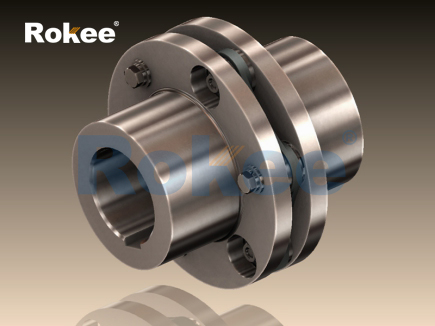
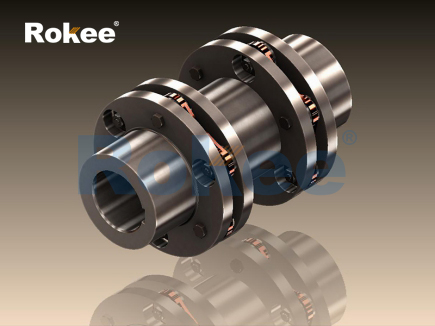
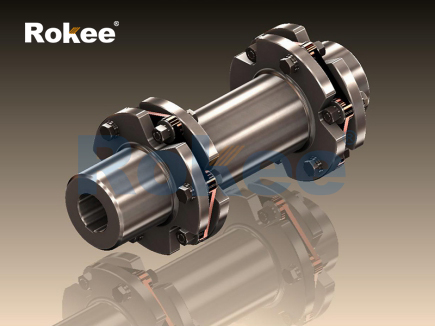
From the perspective of internal structure composition, membrane couplings have a concise and highly integrated structural system. The main components include metal membranes, fastening bolts, shaft sleeves and spacing sleeves. The metal membrane is the key functional component of the coupling, which is usually made of high-strength alloy steel with uniform thickness and smooth surface. The membrane is processed into a circular or special-shaped sheet structure with reserved bolt holes for assembly and fixation. Multiple membranes are stacked in a specific arrangement to form a membrane group, and the number of stacked membranes can be adjusted according to the torque bearing requirement. Fastening bolts are used to connect the membrane group with the driving and driven shaft sleeves. The bolt assembly mode determines the connection tightness and force uniformity of the coupling, and reasonable bolt distribution can avoid local stress concentration during torque transmission. The shaft sleeve is a cylindrical matching component connected with the mechanical shaft. Its inner hole is precisely processed to ensure a tight fit with the shaft body, preventing relative sliding between the coupling and the shaft during operation. The spacing sleeve is arranged between adjacent membranes or between the membrane group and the shaft sleeve, which plays a role in limiting the deformation range of the membranes, avoiding excessive bending deformation of a single membrane, and improving the overall structural stability of the coupling. There is no need to add lubricating medium inside the entire structure, and the fully enclosed metal assembly mode can effectively resist the erosion of dust, moisture and chemical corrosives in the external environment.
Membrane couplings can be divided into multiple categories according to structural differences, and the most common classification standard is based on the number of membrane layers and the assembly form of membrane groups. Single-layer membrane couplings are composed of an independent single metal membrane. The structure of this type of coupling is extremely compact with low overall mass and small rotational inertia. The single-layer membrane has excellent angular displacement compensation capability, which can adapt to mechanical equipment with large angular deflection between shafts. However, limited by the single-layer structural characteristics, its torque bearing capacity is relatively weak, and it is mostly suitable for light-load and high-speed transmission scenarios, such as precision instrument transmission components and small-sized high-speed rotating machinery. Multi-layer membrane couplings are composed of multiple thin metal membranes stacked together. The stacked structure effectively improves the torque bearing limit of the coupling. Each membrane shares the transmission load during operation, which disperses mechanical stress and reduces the fatigue loss of a single membrane. The multi-layer structure also optimizes the axial and radial displacement compensation performance, enabling the coupling to maintain stable operation under complex misalignment conditions. This type of coupling has strong environmental adaptability and is widely used in medium and heavy-duty industrial equipment.
Another mainstream classification method divides membrane couplings into single-section type and intermediate shaft type according to the overall connection structure. The single-section membrane coupling is an integrated connection structure without intermediate transition components. The two ends of the membrane group are directly connected to the driving shaft and the driven shaft respectively. It has the characteristics of short transmission distance and high transmission efficiency, and is suitable for mechanical systems with compact installation space and short shaft spacing. The intermediate shaft membrane coupling adds an intermediate connecting shaft between two sets of membrane groups. This structural design breaks the limitation of short transmission distance. The double-membrane group structure can compensate for larger comprehensive displacement deviation, and the intermediate shaft can balance the vibration generated during the operation of the two shaft systems. This kind of coupling is often applied to long-distance power transmission equipment, such as large-scale conveying machinery and remote power transmission systems of industrial production lines. In addition, some special-shaped membrane couplings are designed for special installation conditions. Through optimizing the membrane shape and bolt arrangement, they can adapt to narrow installation space and special shaft connection angles, realizing customized transmission requirements for special mechanical equipment.
The excellent comprehensive performance of membrane couplings is derived from material characteristics and structural optimization design, and its core performance indicators cover rigidity, fatigue resistance, vibration damping and environmental adaptability. In terms of torsional rigidity, the metal membrane maintains stable structural rigidity in the torque transmission direction, and the angular deformation generated during torque transmission is extremely small. This high-rigidity characteristic ensures the synchronization of shaft rotation, avoids rotation angle deviation, and meets the high-precision transmission requirements of precision manufacturing equipment. In terms of fatigue resistance, high-strength alloy metal materials have excellent tensile and bending fatigue resistance. After repeated elastic deformation for a long time, the membrane is not easy to produce plastic deformation and structural cracks, which ensures the long-term stable operation of the coupling. Compared with non-metal elastic couplings, membrane couplings can work continuously for tens of thousands of hours under rated working conditions without frequent replacement.
In terms of vibration damping and impact resistance, although metal materials do not have the high damping characteristics of polymer materials, the laminated membrane structure can absorb tiny vibration generated by mechanical operation through micro elastic deformation. It can effectively reduce the vibration amplitude of the shaft system and isolate part of the vibration transmission between the driving and driven shafts. For mechanical equipment with frequent start-stop and load fluctuation, the membrane deformation can buffer instantaneous impact torque and reduce the impact load on mechanical bearings and gears. In terms of environmental adaptability, all-metal materials are not affected by temperature changes. It can maintain stable mechanical performance in low-temperature cold environments and high-temperature working conditions generated by mechanical friction. Meanwhile, the surface of metal membranes can form a dense oxide protective layer, which resists the corrosion of humid air, weak acid and weak alkali media, and is suitable for outdoor industrial equipment and chemical production machinery with harsh environmental conditions. In addition, the smooth metal surface and closed assembly structure are not easy to accumulate dust and impurities, which reduces the maintenance frequency of the equipment and saves the operation cost of the mechanical system.
Membrane couplings have a wide range of industrial application scenarios, covering many fields such as mechanical manufacturing, energy production, transportation and chemical industry. In the field of precision machining equipment, membrane couplings are applied to machine tool spindles and servo transmission systems. High torsional rigidity ensures the rotation accuracy of the spindle, and displacement compensation eliminates the transmission error caused by installation deviation, which improves the machining precision of workpieces. The low rotational inertia characteristic also enables the machine tool to realize rapid start-stop and forward-reverse rotation switching, optimizing the processing efficiency of precision parts. In the energy industry, large-scale power generation equipment such as centrifugal compressors and steam turbine generator sets rely on multi-layer membrane couplings for power transmission. These large-scale equipment have high operating speed and heavy transmission load, and the high torque bearing capacity and high-speed stability of membrane couplings can meet the long-term continuous operation requirements of power generation equipment.
In the transportation and marine industry, membrane couplings are used for ship propulsion systems and vehicle power transmission components. The marine working environment is humid and accompanied by salt fog corrosion, and the corrosion resistance of all-metal structure can adapt to the harsh marine atmospheric environment. The displacement compensation function can offset the shaft displacement caused by hull vibration and water wave impact, ensuring the stable transmission of ship power. In the chemical and papermaking industry, various pumps and rolling machinery need to operate continuously for a long time. Membrane couplings without lubrication maintenance can avoid the pollution of chemical raw materials and paper products caused by lubricating oil leakage, meeting the production requirements of clean industrial production lines. In heavy industrial machinery such as metallurgy and mining, intermediate shaft membrane couplings are used for long-distance power transmission of conveying equipment. The strong load-bearing capacity and vibration resistance can adapt to the harsh working conditions of heavy load and severe vibration in mining sites.
With the continuous upgrading of industrial manufacturing technology, the performance optimization direction of membrane couplings is gradually clear. On the material side, higher-strength and lighter alloy materials are being developed to reduce the self-weight of couplings while improving torque bearing capacity, so as to adapt to the lightweight development trend of modern mechanical equipment. On the structural side, the membrane shape and bolt distribution are further optimized by finite element simulation technology to reduce stress concentration points, improve the deformation uniformity of membranes, and extend the fatigue service life of products. In terms of processing technology, high-precision cutting and polishing technology is adopted to improve the surface finish of membranes, reduce friction loss during operation, and enhance the dynamic balance performance of couplings. In the future, with the popularization of intelligent mechanical equipment, membrane couplings will also develop towards intelligent monitoring. By combining sensing components, the deformation degree and operating load of membranes can be monitored in real time, realizing early warning of equipment failure and further improving the safety and stability of mechanical transmission systems.
In conclusion, membrane couplings occupy an irreplaceable important position in the field of mechanical transmission by virtue of their simple metal structure, excellent mechanical performance and diverse classification forms. The unique elastic deformation mechanism of metal membranes realizes the organic combination of high-precision torque transmission and multi-dimensional displacement compensation. Different types of membrane couplings can accurately match various working conditions from light-load high-speed precision transmission to heavy-load long-distance power transmission. Their advantages of long service life, low maintenance cost and strong environmental adaptability make them widely used in various industrial fields. With the continuous progress of material science and mechanical processing technology, the structural performance of membrane couplings will be further improved, and their application scope will continue to expand. As a key basic component of mechanical equipment, membrane couplings will continuously support the high-efficiency and stable operation of modern industrial mechanical systems and provide reliable guarantee for the upgrading and development of the mechanical manufacturing industry.
pu sandwich panel line,pu sandwich panel machine,sandwich panel machine
« Membrane Couplings » Latest Update Date: May 8, 2026
https://www.rokeecoupling.net/tags/membrane-couplings.html