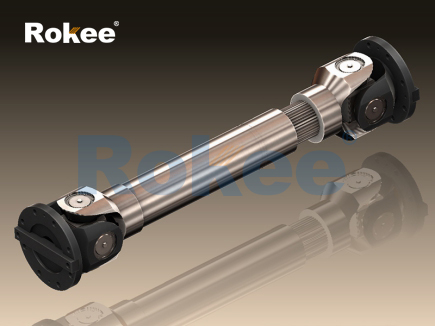
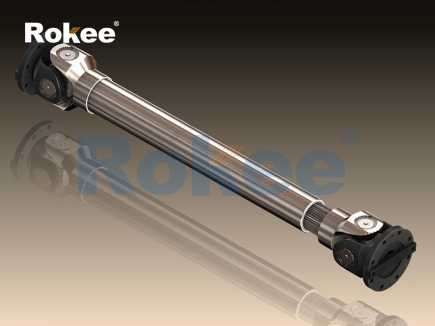
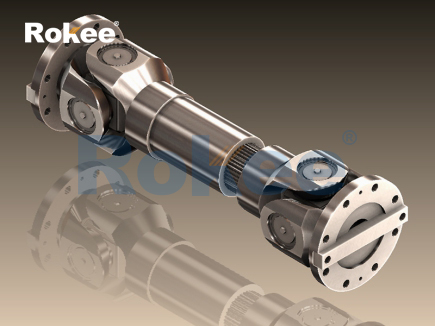
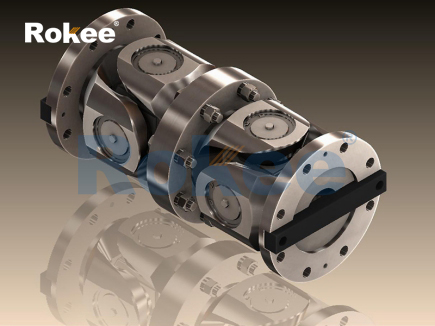
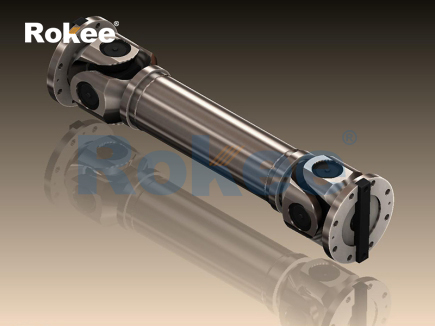
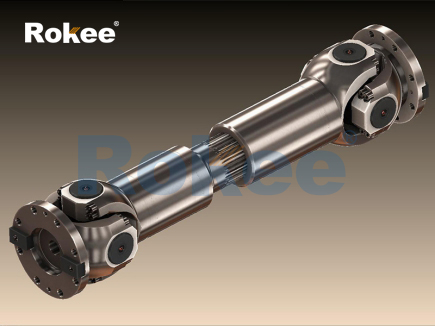
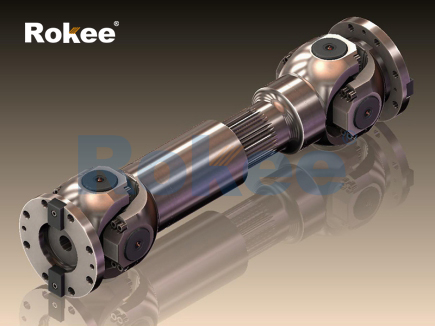
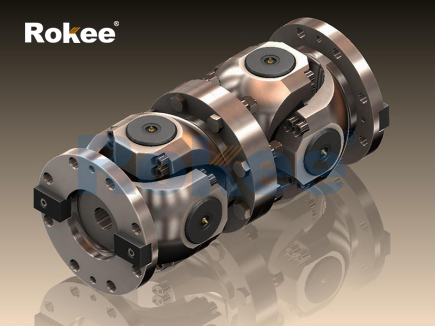
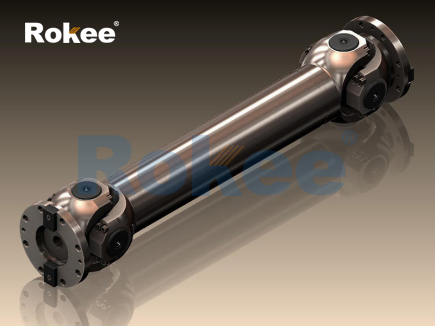
As an indispensable mechanical transmission component in modern industrial machinery and transportation equipment, the cardan shaft has laid a solid foundation for flexible power transmission between spatially offset mechanical parts with its unique mechanical structure and adaptable working properties. Also known as a universal joint shaft, this mechanical component is designed to transmit rotational torque and motion between two shafts that are not collinear, with variable angular deflection and axial displacement during continuous operation. Its ingenious mechanical configuration enables power transmission under complex working conditions such as angle deviation, spatial dislocation and relative displacement, making it widely applied in diverse industrial fields ranging from traditional mechanical manufacturing to heavy-duty transportation engineering. Unlike rigid transmission shafts that require strict coaxial alignment, the cardan shaft breaks through the spatial limitation of linear transmission, realizing efficient and stable power conveyance in non-linear transmission paths, which endows numerous mechanical devices with higher operational flexibility and environmental adaptability. The comprehensive understanding of its internal structure, core performance indicators, reasonable classification standards and practical application scenarios is essential for optimizing mechanical transmission systems, improving equipment operating efficiency and extending the overall service life of mechanical facilities.
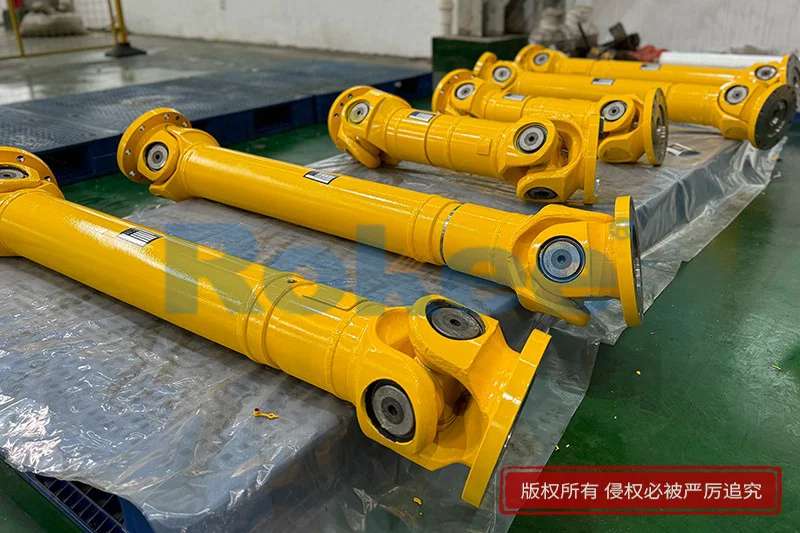
The basic structure of a cardan shaft adopts a modular combined design, and each component has clear functional division and precise mechanical coordination, jointly completing the torque transmission and motion compensation process. The core constituent parts include universal joints, intermediate shaft tube, connecting yokes, rolling bearing assemblies and sealing components, and the structural matching of these parts determines the fundamental working mechanism of the cardan shaft. The universal joint serves as the core motion compensation unit, which is mainly composed of cross shafts and bearing structures. The cross shaft connects two groups of connecting yokes in a mutually perpendicular spatial form, forming a rotatable hinge structure. This structural design allows the connected shaft sections to generate a certain angular deflection in multiple spatial planes, thereby adapting to the angle change during equipment operation. The connecting yoke, processed with high-strength metal materials, acts as a transitional connecting part, firmly fixing the universal joint and the intermediate shaft tube to ensure the stability of force transmission. The intermediate shaft tube is usually made of seamless metal pipes with low weight and high rigidity; its hollow structure effectively reduces the overall mass of the shaft body while maintaining excellent bending resistance, avoiding excessive energy consumption caused by self-weight during high-speed rotation. Inside the universal joint, precision rolling bearings are installed between the cross shaft and the yoke, which can convert sliding friction into rolling friction, effectively reducing friction resistance and mechanical wear during rotation. Meanwhile, external sealing accessories such as rubber sealing rings and dust covers are equipped at the movable joints to isolate external dust, moisture and corrosive substances, preventing internal lubricant leakage and component corrosion. In some optimized structural designs, telescopic sliding structures are added to the shaft body, which can automatically adjust the axial length according to the relative displacement of the connected equipment, further expanding the spatial compensation capability of the cardan shaft.
The inherent performance characteristics of cardan shafts are derived from their structural design and manufacturing materials, and these performances determine their applicable working conditions and service limits. First of all, excellent angular compensation performance is the most prominent mechanical feature of cardan shafts. Under normal working conditions, a single universal joint can stably complete torque transmission with an angular deflection range of a certain degree, and the combined structure of double universal joints can further eliminate the periodic speed fluctuation of a single joint, realizing constant-speed power transmission at larger deflection angles. This angular adaptability enables mechanical equipment to maintain stable power output even when the installation position deviates or the fuselage deforms during operation. Secondly, cardan shafts have outstanding torque transmission capacity. Most shaft bodies and core load-bearing components are made of high-strength alloy steel through forging and heat treatment processes, which possess high tensile strength and torsional rigidity. They can withstand instantaneous impact torque and continuous heavy-load torque without permanent deformation or structural fracture, meeting the power transmission demands of heavy-duty mechanical equipment. In terms of motion stability, the optimized shaft tube structure and dynamic balance processing technology effectively reduce the amplitude of radial runout during high-speed rotation, lowering mechanical vibration and operating noise. Even in high-frequency rotating working environments, the cardan shaft can maintain smooth operation and reduce additional mechanical loss caused by vibration. In addition, good environmental adaptability is another key performance advantage. With reliable sealing structures and anti-corrosion material coatings, cardan shafts can work stably in harsh environments such as low temperature, high humidity, dust pollution and slight chemical corrosion, and the wearing parts have low replacement frequency, reducing daily maintenance costs. It is worth noting that the performance of cardan shafts is restricted by working speed and deflection angle; excessive rotation speed or ultra-large angular deviation will increase internal friction and centrifugal force, leading to accelerated component wear and reduced transmission efficiency.
According to different structural forms, motion characteristics and application scenarios, cardan shafts can be divided into multiple categories with distinct functional differences, and each type has unique structural improvements and performance advantages. Based on the number of universal joints, cardan shafts are classified into single-joint type and double-joint type. The single-joint cardan shaft has a simple structure with only one universal joint, featuring a compact overall size and low manufacturing cost. However, it has an obvious inherent defect of periodic speed change, which makes it suitable for low-speed, low-precision and intermittent transmission occasions, such as simple agricultural machinery and small conveying equipment. The double-joint cardan shaft assembles two universal joints at both ends of the intermediate shaft tube. By rationally adjusting the installation angle of the two joints, the speed fluctuation generated by a single joint can be mutually offset, achieving approximate constant-speed transmission. This type has higher transmission stability and is widely used in medium and high-speed mechanical transmission systems. Based on the structural flexibility of the shaft body, cardan shafts can be divided into rigid type and telescopic type. The rigid cardan shaft has an integrated fixed-length shaft tube with no axial displacement allowance, which is suitable for mechanical structures with fixed installation spacing and no relative displacement between driving and driven parts. The telescopic cardan shaft is equipped with a spline telescopic mechanism inside the shaft body, which can freely stretch within a specified stroke range to adapt to the axial distance change caused by equipment vibration, lifting and moving, and it is mostly applied in mobile engineering machinery and transportation vehicles. In accordance with bearing capacity and structural specification, cardan shafts are categorized into light-duty, medium-duty and heavy-duty types. Light-duty cardan shafts adopt thin-walled shaft tubes and small-sized universal joints, with low self-weight and flexible rotation, applicable to precision light machinery and small power transmission devices. Medium-duty products balance bearing capacity and flexibility, covering most conventional industrial mechanical scenarios. Heavy-duty cardan shafts use thickened high-strength shaft bodies and oversized reinforced universal joints, which can bear ultra-high torque and harsh impact loads, and are commonly used in large mining machinery, metallurgical equipment and heavy engineering vehicles.
Cardan shafts have extremely wide application coverage in various industrial sectors, and their flexible transmission characteristics make them an essential core component in multiple mechanical systems. In the transportation industry, cardan shafts are extensively applied in land transportation vehicles. For various rear-wheel-drive and four-wheel-drive vehicles, they connect the transmission and the rear axle, transmitting the power generated by the engine to the driving wheels. During the driving process, the jolt of the vehicle body will cause the relative position change between the chassis components, and the cardan shaft can adapt to the angle and distance fluctuation in real time to ensure continuous and stable power output. In addition, large engineering vehicles such as loaders, excavators and dump trucks also rely on heavy-duty cardan shafts to complete power transmission between power components and walking mechanisms, adapting to the complex road conditions and severe vibration working environment. In the field of industrial manufacturing, cardan shafts are used in various rotating mechanical equipment such as production line conveying devices, machine tool transmission systems and fan power components. Many automated production lines have complex spatial layouts with non-parallel and non-collinear installation positions of driving and driven motors. The cardan shaft can realize cross-space power transmission, simplifying the mechanical layout of the production line and reducing the occupation of production space. In metallurgical and mining industries, large-scale rolling mills, mining crushers and lifting machinery need to bear heavy loads and frequent impact during operation. Heavy-duty cardan shafts with high torsional strength are selected to undertake high-power torque transmission, ensuring the continuous operation of large mechanical equipment under harsh working conditions.
In agricultural machinery and special mechanical fields, the application value of cardan shafts is also fully reflected. Common agricultural equipment such as rotary tillers, harvesters and seeders usually works in uneven field terrain, and the fuselage will produce irregular deformation and position deviation during operation. The cardan shaft connected to the power output end of agricultural machinery can adapt to complex terrain changes, stably transmit power to working components such as tillage cutters and harvesting structures, and improve the operational stability of agricultural equipment. In addition, in some special mechanical equipment such as ship auxiliary transmission systems and aerospace ground handling machinery, customized cardan shafts with special materials and optimized structures are adopted. These customized products have higher vibration resistance and environmental adaptability, meeting the strict mechanical performance requirements of special industry scenarios. With the continuous progress of mechanical manufacturing technology, the processing precision of cardan shafts is constantly improved, and optimized designs such as lightweight materials and intelligent wear monitoring are gradually applied. The upgraded cardan shafts have lower energy consumption and longer service life, further expanding their application boundaries in emerging industries such as new energy equipment and intelligent mechanical devices.
In the long-term application practice, the service life and working efficiency of cardan shafts are affected by multiple external factors, and standardized use and maintenance are crucial to maintain their stable performance. The unreasonable installation angle is the main cause of accelerated wear; excessive deflection angle will increase the friction torque of the universal joint, leading to overheating of internal components and fatigue damage. Therefore, the installation angle should be strictly controlled within the rated range according to the mechanical design requirements. Lubrication maintenance also plays a vital role in the operation of cardan shafts. Regular injection of high-quality lubricant into the universal joint bearing area can reduce rolling friction and avoid dry friction ablation of metal components. Meanwhile, the sealing structure should be inspected regularly to prevent lubricant leakage and external impurity invasion. For cardan shafts working in high-load and high-frequency operation scenarios, regular dynamic balance detection and bolt fastening inspection are required to eliminate mechanical vibration and connection looseness caused by long-term operation. In addition, selecting appropriate types of cardan shafts according to actual working conditions is the premise of efficient application. Blindly using light-duty products for heavy-load operation will lead to structural deformation and failure, while excessive selection of heavy-duty models will cause unnecessary energy waste.
Looking ahead, with the continuous upgrading of industrial manufacturing and mechanical transmission technology, the optimization and innovation of cardan shafts will keep advancing. In terms of material selection, new high-strength and lightweight composite metal materials will gradually replace traditional single alloy steel, reducing the self-weight of the shaft body while improving corrosion resistance and fatigue resistance. In structural design, the integrated seamless forming process will optimize the internal connection structure of universal joints, further reduce mechanical gaps and friction loss, and improve transmission efficiency. In terms of intelligent performance, combined with sensing technology, some cardan shaft products will realize real-time monitoring of operating temperature, vibration amplitude and wear degree, providing data support for equipment predictive maintenance. As one of the most basic and versatile transmission components, the cardan shaft will always occupy an irreplaceable position in the mechanical industry. Its flexible transmission principle and scalable structural design can continuously adapt to the diversified development needs of modern machinery, and continuously create value for industrial production, transportation engineering, agricultural development and other fields through iterative optimization and performance improvement.
pu sandwich panel line,pu sandwich panel machine,sandwich panel machine
« Cardan Shafts » Latest Update Date: May 8, 2026
https://www.rokeecoupling.net/tags/cardan-shafts.html