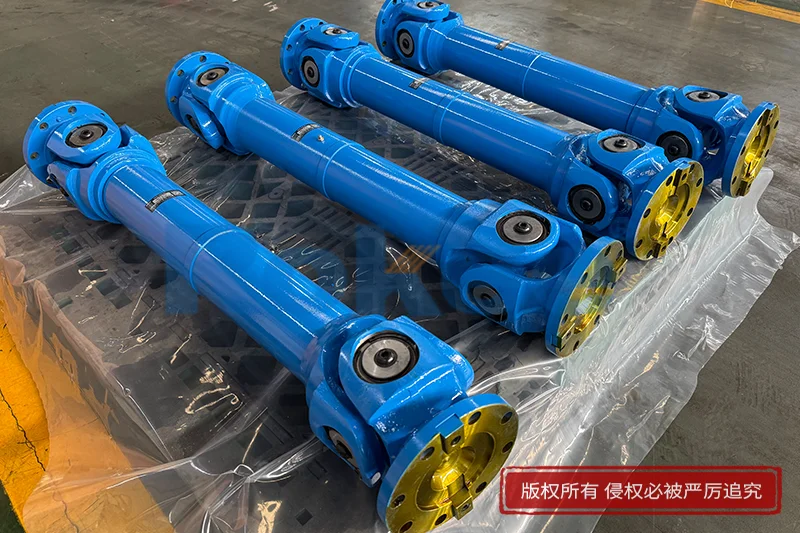
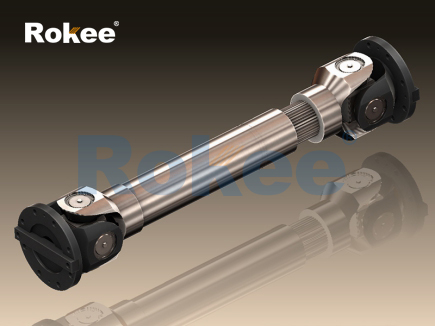
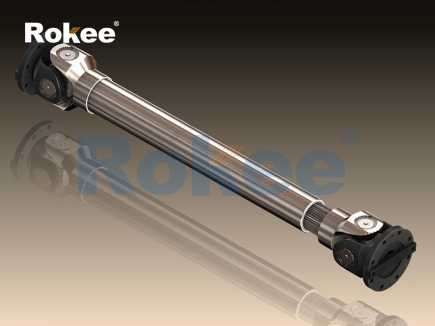
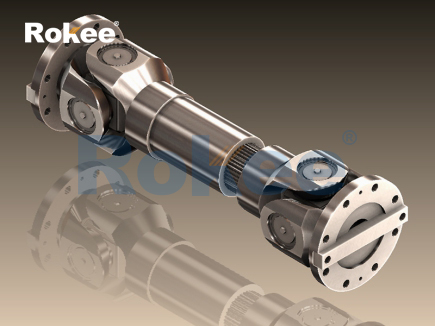
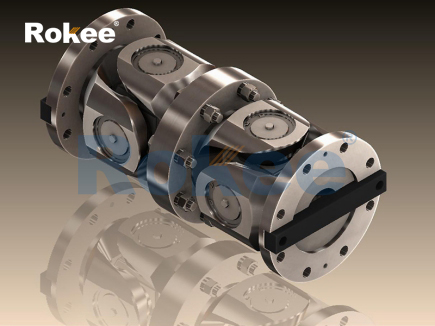
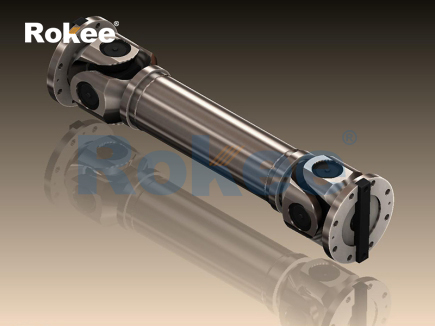
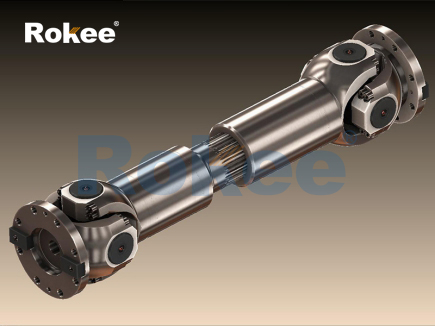
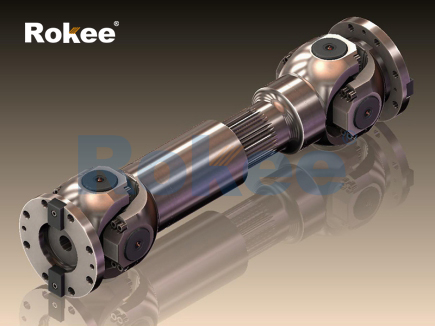
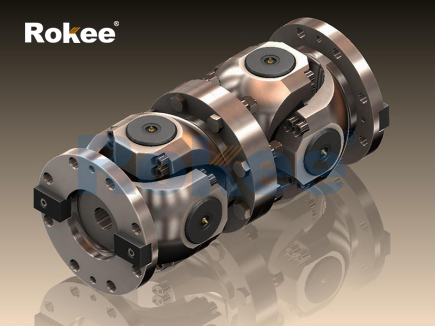
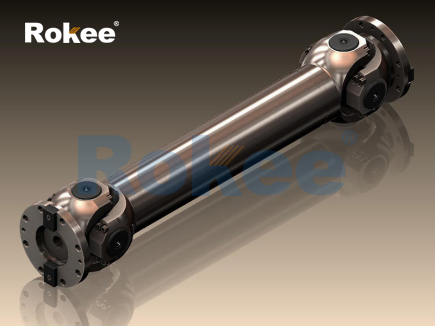
Rokee is a well-known high-quality supplier of Universal Shafts and technical services in China, customize universal shafts according to user drawings, alternatively, if the user provides universal shafts parameters, we can select the model and design drawings for you, support wholesale and export.


universal shaft is a mechanical device that allows two shafts to transmit torque and rotational motion under conditions of relative position and angle changes. This flexible connection method makes it an indispensable key component in modern mechanical transmission systems, widely used in various fields such as automobiles, industrial machinery, aerospace, etc.
The core feature of universal shaft is its ability to achieve power transmission in non-linear shaft systems. When the angle between the two shafts changes, it can still maintain continuous rotational motion transmission. This characteristic makes it irreplaceable in complex transmission systems.
The universal shaft works based on the principle of spherical kinematics and achieves angle compensation through hinge connection. When the driving shaft rotates, the motion is transmitted to the driven shaft through a cross axis or cage structure, which can maintain the continuity of power transmission even when there is an angle between the two axes.
Cross axis universal shaft
The most common type consists of two fork shaped components and a cross axis, with a simple structure and low manufacturing cost, but there are speed fluctuations.
Ball cage universal shaft
By using a spherical cage and multiple steel balls to transmit torque, the movement is smoother and allows for a larger working angle (up to 45 °), making it widely used in automotive front wheel drive systems.
Double universal shaft
Composed of two single universal shafts, it can eliminate speed fluctuations and requires an intermediate shaft and a specific installation angle.
Trident universal shaft
Using three needle roller bearings and a three pronged structure, it has a larger torque capacity and longer service life.
Maximum working angle: The maximum allowable deflection angle for different types of universal shafts, usually between 15 ° -45 °
Rated torque: The maximum torque value that a coupling can continuously transmit
Maximum speed: the upper limit of safe operating rotational speed
Efficiency: typically between 98% and 99.5%, depending on the type and working angle
Service life: usually calculated in hours or rotations, affected by lubrication conditions and loads
Weight and inertia: particularly important for high-speed applications
automotive industry
The transmission shaft connects the gearbox and the drive axle
Half axle of front wheel drive vehicles
Steering column connection
industrial machinery
Rolling mill roller drive
paper-making machinery
mining equipment
Ship propulsion system
Special applications
robot joint
Aircraft control system
medical equipment
Selection considerations
Torque and speed requirements
Angle deviation between two axes
Working environment (temperature, corrosiveness, etc.)
Installation space restrictions
Is it necessary to compensate for axial displacement
Installation precautions
Ensure proper alignment
Follow the installation angle restrictions specified by the manufacturer
Use the correct fasteners and installation torque
Maintenance points
Regular lubrication (for types that require lubrication)
Check for wear and clearance
Monitor vibration and noise changes
Regularly check the integrity of the seals
As a core component in the field of mechanical transmission, the technology of universal shaft is still constantly developing. With the advancement of materials science and manufacturing technology, more efficient, reliable, and intelligent universal shaft solutions will emerge in the future, providing better performance for various complex transmission systems.
The universal shaft, also commonly referred to as a cardan shaft, stands as a pivotal component in mechanical transmission systems, enabling the seamless transfer of torque and rotational motion between two shafts that are not aligned on the same axis. This unique capability to accommodate angular misalignment, radial displacement, and axial movement makes it an indispensable element across a wide spectrum of industrial and automotive applications. Unlike rigid couplings that require precise alignment to function effectively, universal shafts offer a high degree of flexibility, allowing mechanical systems to operate smoothly even when structural deviations or dynamic shifts occur during operation. The versatility of universal shafts stems from their sophisticated design, which balances robustness with adaptability, ensuring reliable performance under varying load conditions, speeds, and environmental factors. From heavy-duty industrial machinery to everyday vehicles, the universal shaft plays a quiet yet critical role in keeping mechanical systems running efficiently, making it a cornerstone of modern engineering design.
At the core of a universal shaft’s functionality lies its intricate structural composition, which is engineered to deliver both flexibility and strength. The basic configuration of a standard universal shaft comprises several key components that work in harmony to transmit power while compensating for misalignment. The cross shaft, often considered the heart of the assembly, features four mutually perpendicular journals, each fitted with a bearing component to facilitate smooth rotation and movement. These bearings, typically needle roller bearings or sliding bearings, reduce friction between the cross shaft and the adjacent components, ensuring efficient power transfer and minimizing wear over time. Flanking the cross shaft are two fork-shaped joints, also known as yokes, which connect the universal shaft to the driving and driven shafts respectively. The yokes are designed to cradle the cross shaft’s journals, allowing the assembly to pivot as the angle between the connected shafts changes. To secure the connection between the yokes and the shafts, flange or spline connections are commonly used. Flange connections provide a rigid, secure link through bolted fasteners, while spline connections offer the additional benefit of accommodating axial displacement, allowing the shaft to expand or contract during operation without compromising performance. A critical addition to the assembly is the lubrication system, which includes oil nozzles and sealing devices. This system ensures that the bearings and moving parts remain properly lubricated, preventing metal-to-metal contact, reducing corrosion, and extending the overall service life of the universal shaft.
The working principle of a universal shaft is rooted in basic spatial kinematics, leveraging the rotational and oscillatory movement of its components to transmit power across misaligned axes. When the driving shaft rotates, it imparts rotational motion to the connected yoke, which in turn drives the cross shaft. The cross shaft then transfers this motion to the opposing yoke, which ultimately rotates the driven shaft. What distinguishes this mechanism is the cross shaft’s ability to swing freely in two perpendicular planes, adjusting to changes in the angle between the driving and driven shafts. This flexibility allows the universal shaft to maintain continuous power transmission even as the alignment between the shafts fluctuates, a scenario common in many mechanical systems due to load shifts, thermal expansion, or structural vibrations. However, it is important to note that a single cross shaft universal joint exhibits a inherent limitation: periodic speed fluctuations in the driven shaft when angular misalignment is present. This phenomenon, known as the “velocity fluctuation effect,” occurs because the rotational velocity of the driven yoke varies cyclically as the cross shaft pivots, with the degree of fluctuation increasing in proportion to the angle between the shafts. To mitigate this issue, engineers often employ a dual universal joint arrangement, where two single universal joints are connected via an intermediate shaft. By carefully aligning the phases of the two joints, the speed fluctuations from each joint cancel each other out, resulting in uniform rotational velocity in the driven shaft. This configuration is particularly crucial in applications where smooth, consistent power transmission is essential, such as high-speed machinery and precision equipment.
Over time, engineering advancements have led to the development of various types of universal shafts, each tailored to specific application requirements and operating conditions. The cross shaft universal joint, the most traditional and widely used type, is valued for its simplicity, durability, and high load-bearing capacity. It is commonly found in automotive drive systems, industrial machinery, and heavy equipment, where robustness and reliability are paramount. Another popular variant is the ball cage universal joint, which features an inner star wheel, an outer star wheel, steel balls, and a retaining cage. The steel balls roll within grooved channels in the inner and outer star wheels, enabling torque transmission with minimal speed fluctuation. This design is particularly suited for applications requiring constant velocity transmission, such as front-wheel-drive vehicles, where the drive shafts must accommodate both angular misalignment and steering movements. For long-distance transmission systems, the dual universal shaft is often preferred, as it eliminates speed fluctuations and can span greater distances between shafts. The tripod universal joint represents a more specialized design, utilizing a three-ball pin structure to achieve a larger angle compensation capacity than traditional cross shaft designs. This type is commonly used in modern automotive drive systems and other applications where maximum flexibility is required. Additionally, flexible universal shafts, which replace mechanical joints with elastic elements such as rubber or composite materials, offer the advantages of vibration damping, noise reduction, and maintenance-free operation, making them ideal for small to medium-power applications where simplicity and quiet operation are prioritized.
The selection of materials for universal shaft components is a critical engineering decision that directly impacts the shaft’s performance, durability, and suitability for specific applications. The choice of materials is guided by a range of factors, including the expected load capacity, operating speed, temperature conditions, environmental exposure, and desired service life. For the cross shaft, high-strength alloy steels such as 42CrMo, 40Cr, and 20CrMnTi are commonly used. These materials exhibit excellent tensile strength, toughness, and wear resistance when subjected to heat treatment processes such as quenching and tempering or carburizing. Heat treatment enhances the material’s mechanical properties, ensuring that the cross shaft can withstand the high stresses and torque loads encountered during operation. The yokes and flange components are typically manufactured from medium-carbon steels like 45号 steel or alloy steels such as 35CrMo. For light-load applications, cast iron may be used as a cost-effective alternative, while heavy-duty applications require forged steel yokes to improve fatigue resistance and structural integrity. The bearing components are crafted from high-quality bearing steels, with needle roller bearings often made from high-carbon steel or carburized bearing steel to handle high speeds and heavy loads. In applications requiring maintenance-free operation, sliding bearings made from bronze alloys or self-lubricating composite materials are preferred, as they eliminate the need for regular lubrication.
Specialized operating environments demand tailored material solutions to ensure the universal shaft’s performance and longevity. In corrosive environments such as marine, chemical, or food processing applications, stainless steel grades like 304 or 316 are used to resist rust and chemical degradation. Surface treatments such as nickel plating or galvanization can also be applied to carbon steel components to enhance corrosion resistance at a lower cost than using stainless steel. For high-temperature applications, such as those found in metallurgical equipment or industrial furnaces, heat-resistant alloys like 35CrMo or 42CrMo are selected, often with additional high temperature resistance coatings to protect against oxidation and thermal stress. Applications requiring lightweight designs, such as aerospace or high-performance automotive systems, may utilize aluminum or titanium alloys for non-critical components, though this often involves a trade-off between weight reduction and load-bearing capacity. The careful selection of materials and surface treatments ensures that the universal shaft can operate reliably in even the most demanding conditions, from freezing temperatures to extreme heat, and from dry industrial settings to corrosive marine environments.
The manufacturing processes employed in producing universal shafts are equally important as material selection, as they directly influence the precision, strength, and consistency of the final product. The production of universal shaft components typically begins with the preparation of raw materials, which are often supplied as rod-shaped blanks or castings. For critical components like the cross shaft and yokes, forging is a common manufacturing method. Forging involves heating the metal blank to a high temperature and shaping it using compressive forces, either through free forging or die forging. This process eliminates internal defects such as porosity and grain inconsistencies, resulting in a denser, stronger material structure with improved fatigue resistance. After forging, the components undergo heat treatment to optimize their mechanical properties, followed by machining to achieve the precise dimensions and surface finishes required for proper assembly and operation. Machining processes may include turning, milling, drilling, and grinding, each performed with high-precision equipment to ensure tight tolerances and consistent quality.
Recent advancements in manufacturing technology have led to the adoption of innovative techniques that enhance efficiency and performance. One such development is the use of thermoforming or semi-thermoforming processes for shaping universal shaft components, which can eliminate the need for cold calibration on functional surfaces, reducing production time and costs while maintaining precision. Computer-aided design (CAD) and computer-aided manufacturing (CAM) systems are now standard in the industry, allowing engineers to design complex components with greater accuracy and simulate their performance under various conditions before production. This virtual testing minimizes the risk of design flaws and ensures that the universal shaft will meet the required performance specifications. Additionally, finite element analysis (FEA) is used to optimize the design of components, identifying areas of high stress and modifying the geometry to improve strength and reduce weight. These technological advancements have not only improved the quality and reliability of universal shafts but also expanded their potential applications, enabling them to handle higher loads, faster speeds, and more extreme operating conditions than ever before.
The versatility of universal shafts is reflected in their wide range of applications across diverse industries, where they serve as a critical link in mechanical transmission systems. In the automotive industry, universal shafts are a fundamental component of rear-wheel-drive and four-wheel-drive vehicles, transmitting torque from the transmission to the axles. In these applications, the universal shaft must accommodate the movement of the suspension, adjusting to changes in the angle between the transmission and the axle as the vehicle travels over uneven terrain. The ball cage universal joint, in particular, is widely used in front-wheel-drive vehicles, where it enables constant velocity transmission to the front wheels while accommodating steering movements. Beyond passenger vehicles, universal shafts are also essential in commercial vehicles such as trucks, buses, and trailers, where they handle heavy loads and harsh operating conditions, ensuring reliable power transmission across long distances.
In the industrial sector, universal shafts are ubiquitous in heavy machinery and processing equipment. The steel manufacturing industry relies heavily on universal shafts for rolling mills, where they transmit torque to the rollers that shape and form steel. These applications demand universal shafts with high load-bearing capacity and resistance to extreme temperatures, as the machinery operates under intense stress and thermal conditions. Similarly, the cement industry uses universal shafts in rotary kilns and grinding mills, where they handle the high torque required to process raw materials into cement. The paper and pulp industry also benefits from universal shafts, which are used in high-speed paper machines to transmit power between non-aligned components, ensuring smooth operation and consistent paper quality. Other industrial applications include mining equipment, where universal shafts withstand the abrasive and high-load conditions of ore extraction and processing, and sugar mills, where they facilitate power transmission in large processing machines handling heavy loads and variable speeds.
The renewable energy sector has emerged as a significant user of universal shafts, particularly in wind turbine systems. In wind turbines, universal shafts connect the gearbox to the generator, transmitting the rotational energy captured by the blades to generate electricity. These applications require universal shafts that can handle variable loads and speeds, as wind conditions fluctuate constantly, and must operate reliably in outdoor environments exposed to wind, rain, and temperature extremes. The aerospace industry also utilizes specialized universal shafts in aircraft systems, where lightweight materials and precision engineering are critical. These shafts are designed to transmit power in confined spaces while withstanding the high vibrations and temperature changes associated with flight. Even in smaller-scale applications such as agricultural machinery, construction equipment, and industrial pumps, universal shafts play a vital role in ensuring efficient power transmission and system reliability.
Despite their robust design and durable construction, universal shafts require regular maintenance to ensure optimal performance and extend their service life. The primary cause of premature universal shaft failure is inadequate lubrication, which leads to increased friction, wear, and corrosion of moving parts. Establishing a consistent lubrication schedule is therefore essential, with the frequency of lubrication determined by the operating conditions, load, and speed of the shaft. High-quality lithium-based EP NLGI 2 grease is commonly recommended for universal shafts, as it offers excellent water tolerance, rust protection, and load-carrying capacity. Before applying new grease, it is crucial to clean the grease fittings and surrounding areas to remove contaminants such as dirt, dust, and old grease, which can accelerate wear and damage bearings. When lubricating, grease should be applied until fresh grease emerges from all bearing seals, a process that purges contaminants and ensures full coverage of the moving parts. In some cases, light tapping on the bearing end caps with a brass hammer may be necessary to relieve seal tension and facilitate proper grease flow.
Regular inspection is another key aspect of universal shaft maintenance, allowing for the early detection of potential issues before they escalate into costly failures. During inspections, operators should check for signs of wear, damage, or misalignment, including unusual noises, vibrations, and fluid leaks. Unusual sounds such as clunking, squeaking, or grinding are often indicators of worn bearings or inadequate lubrication. A squeaking sound at low speeds typically signals dry bearings, requiring immediate lubrication or replacement to prevent further damage. Clunking noises when shifting between drive and reverse may indicate worn bearing cups or loose connections, which can lead to catastrophic failure if not addressed. Vibrations at medium speeds are another warning sign, often caused by worn universal joint components that allow the shaft to move side-to-side during rotation. These vibrations can intensify over time, leading to additional stress on other mechanical components and increasing the risk of system failure.
Fluid leaks around the universal shaft’s connections can also indicate underlying issues, such as damaged seals or loose fasteners. Leaks may allow lubricant to escape, leading to dry operation, or permit contaminants to enter the assembly, accelerating wear. During inspections, it is also important to check the condition of the seals, ensuring they are intact and functioning properly to prevent lubricant loss and contamination. For spline connections, inspecting for signs of wear, corrosion, or seizure is critical, as these issues can impair the shaft’s ability to accommodate axial displacement. In addition to regular inspections and lubrication, proper storage and handling of universal shafts when not in use are essential to prevent damage. Shafts should be stored in a clean, dry environment, protected from moisture, dust, and extreme temperatures. They should be supported evenly to avoid bending or deformation, and any exposed components should be coated with a protective lubricant to prevent corrosion.
Troubleshooting universal shaft issues requires a systematic approach, as symptoms such as noise and vibration can be caused by a variety of factors unrelated to the shaft itself, including tire imbalance, steering misalignment, or transmission problems. To accurately diagnose the source of the issue, technicians may use specialized equipment such as dynamometers to observe the shaft’s operation under load, or visual inspection tools to examine hard-to-reach components. In cases where the universal shaft is found to be faulty, replacement is often the most reliable solution, particularly for worn bearings or damaged cross shafts. When replacing components, it is important to ensure that the new parts are compatible with the existing assembly and installed correctly, with proper torque applied to fasteners and adequate lubrication before operation. In some instances, minor adjustments to alignment or lubrication practices can resolve issues and extend the shaft’s service life, highlighting the importance of proactive maintenance and regular monitoring.
The future of universal shaft technology is shaped by ongoing efforts to improve efficiency, durability, and sustainability, driven by the evolving needs of industries and advancements in materials science and manufacturing. One key area of development is the integration of lightweight materials to reduce the overall weight of universal shafts, without compromising strength or load-bearing capacity. Carbon fiber-reinforced polymers (CFRP) are emerging as a promising material for certain components, offering a high strength-to-weight ratio and resistance to corrosion. The use of CFRP can reduce the inertial forces acting on the shaft, improving energy efficiency and reducing wear on adjacent components. This is particularly beneficial in applications such as wind turbines and electric vehicles, where weight reduction directly contributes to improved performance and energy savings.
Another area of innovation is the development of self-lubricating and maintenance-free universal shafts, which aim to reduce operational costs and downtime. By incorporating advanced bearing materials and sealing technologies, engineers are creating shafts that require little to no lubrication over their service life, eliminating the need for regular maintenance and reducing the risk of lubricant-related failures. These designs are particularly valuable in applications where access to the shaft is limited, such as in confined industrial machinery or offshore wind turbines, where maintenance is time-consuming and expensive. Additionally, advancements in sensor technology are enabling the development of smart universal shafts equipped with condition monitoring systems. These sensors can detect changes in vibration, temperature, and load, providing real-time data on the shaft’s performance and alerting operators to potential issues before they lead to failure. This predictive maintenance capability can significantly reduce downtime, extend service life, and optimize the overall efficiency of mechanical systems.
Environmental sustainability is also becoming a key focus in universal shaft design and manufacturing. Efforts are underway to reduce the environmental impact of production processes, including the use of recycled materials and more energy-efficient manufacturing techniques. Additionally, the development of longer-lasting universal shafts reduces the need for frequent replacement, minimizing waste and conserving resources. In the automotive and transportation sectors, the shift toward electric vehicles is driving demand for universal shafts that are optimized for high torque and smooth operation, with reduced noise and vibration. These shafts must be designed to integrate seamlessly with electric drivetrains, which operate at higher speeds and require greater precision than traditional internal combustion engine systems.
Advancements in computational design and simulation tools are also playing a crucial role in the evolution of universal shaft technology. Engineers can now use advanced software to model the performance of universal shafts under a wide range of conditions, optimizing their design for specific applications and identifying potential issues early in the development process. This allows for the creation of more efficient, reliable, and cost-effective universal shafts that are tailored to the unique requirements of each industry. Finite element analysis (FEA) continues to be refined, enabling more accurate predictions of stress distribution, fatigue life, and performance under dynamic loads. These tools are also being used to explore new design configurations, such as integrated universal shaft and coupling systems, which offer improved efficiency and reduced complexity.
In conclusion, the universal shaft remains an essential component in modern mechanical transmission systems, with its versatility, reliability, and adaptability making it indispensable across a wide range of industries. From its basic structural design and operating principles to the selection of materials, manufacturing processes, and maintenance practices, every aspect of the universal shaft is engineered to deliver optimal performance under varying conditions. As technology continues to advance, the universal shaft is evolving to meet the changing needs of industries, with innovations in materials, design, and monitoring systems driving improvements in efficiency, durability, and sustainability. Whether in heavy industrial machinery, automotive systems, or renewable energy equipment, the universal shaft will continue to play a critical role in powering the mechanical systems that underpin modern society. By understanding its design, operation, and maintenance requirements, engineers and operators can ensure that universal shafts deliver reliable performance, minimize downtime, and contribute to the overall efficiency and success of mechanical systems for years to come.
« Universal Shafts » Latest Update Date: 2026/1/20 , https://www.rokeecoupling.net/tags/universal-shafts.html