As a crucial type of flexible coupling widely adopted in mechanical transmission systems, tyre couplings serve as an indispensable connecting component between driving shafts and driven shafts in general mechanical equipment. Relying on the unique elastic deformation capacity of rubber tyre bodies, this mechanical part realizes torque transmission while mitigating various adverse mechanical effects generated during equipment operation. In modern industrial transmission designs, the connection between rotating shafts inevitably faces challenges such as installation deviation, operational vibration, instantaneous impact load and axial position displacement. Tyre couplings stand out among numerous flexible coupling products due to their simple structural logic, excellent elastic damping performance and remarkable displacement compensation capability. They effectively coordinate the operating state of transmission components, reduce mechanical wear between interconnected equipment, and extend the overall service life of mechanical systems. Different from rigid couplings with low deformation tolerance and other flexible couplings with complex internal structures, tyre couplings balance economic practicability and functional diversity, making them adaptable to complicated working conditions with frequent load fluctuations and unstable operating environments. An in-depth exploration of the internal structure, core performance attributes, mainstream classification standards and diversified application scenarios of tyre couplings can provide clear theoretical references for reasonable type selection and standardized application in industrial mechanical design.
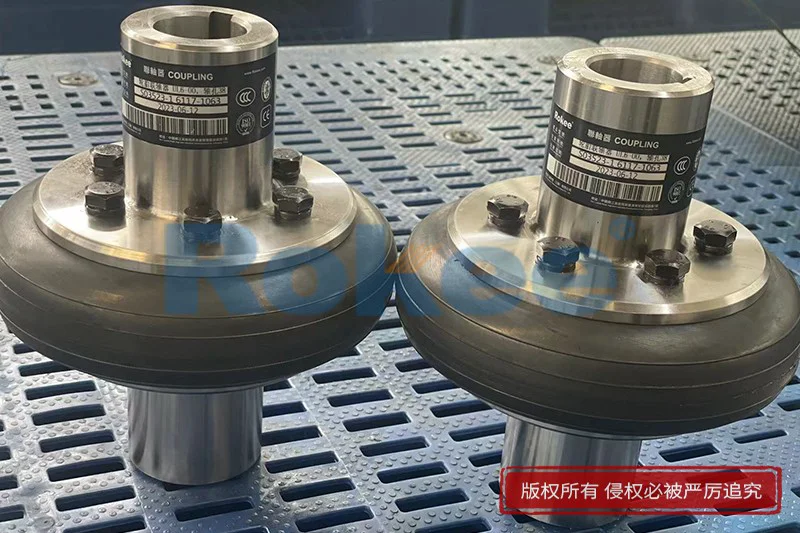
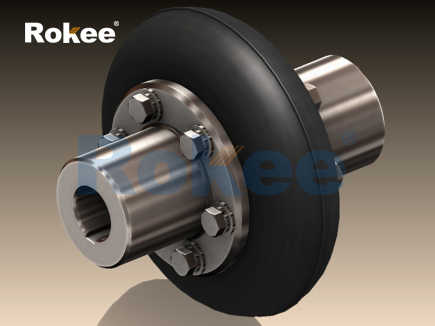
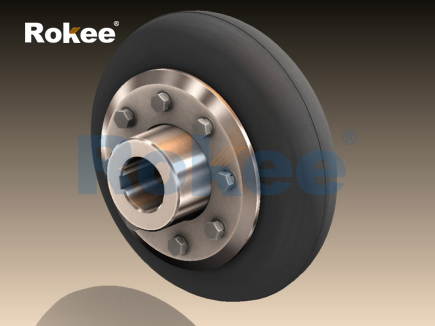
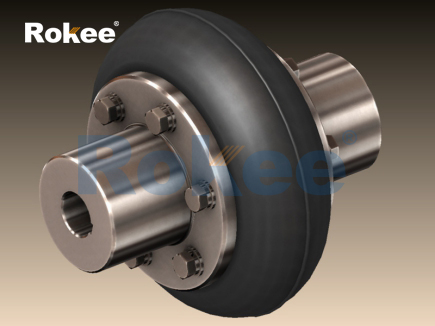
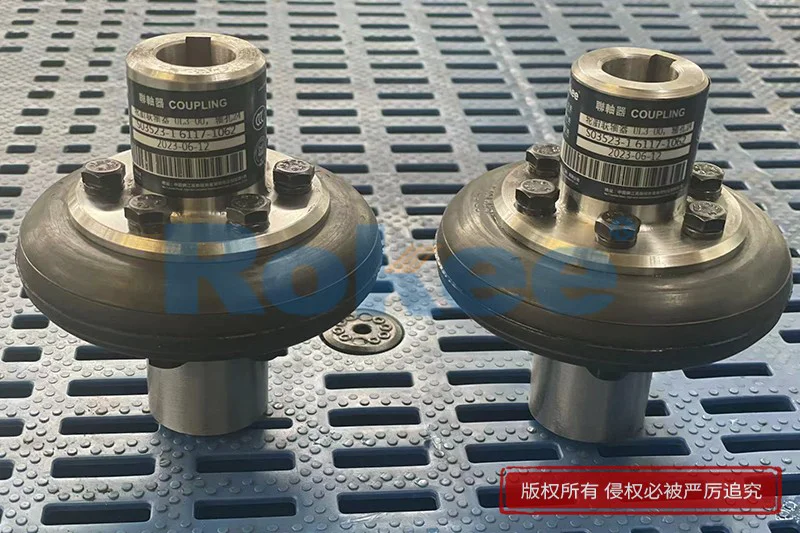
The basic structure of a tyre coupling follows a concise and reliable assembly logic, mainly composed of elastic tyre bodies, metal connecting flanges, fastening connectors and anti-loosening auxiliary components. The elastic tyre body acts as the core force-bearing and deformation component, which is vulcanized and molded with high-elasticity rubber materials. Its special annular tyre-shaped structure endows it with uniform deformation capacity in all directions. The interior of the tyre body is usually embedded with fiber reinforcement layers to enhance overall structural stability and avoid excessive elastic deformation under long-term torque load. The metal flanges distributed on both sides of the tyre body are made of high-strength metal materials, with smooth and flat mounting surfaces to ensure stable fitting with the end faces of mechanical shafts. Each flange is equipped with evenly distributed mounting holes for fixing connection positions and transmitting torque stably. Fastening components including bolts and gaskets tightly combine the tyre body with metal flanges, and the optimized contact gap between different parts eliminates mechanical looseness during high-speed operation. Some improved structural designs add limit auxiliary structures at the joints of flanges and tyre bodies, which can prevent excessive radial displacement of the tyre body under extreme load conditions and further improve the operational safety of the coupling. The overall structural design abandons redundant mechanical accessories, realizing an integrated assembly mode with fewer parts, which greatly reduces the difficulty of daily installation and later disassembly. Moreover, the non-rigid connection mode between internal components avoids rigid friction and collision, effectively lowering the mechanical loss generated during torque transmission. The reasonable structural layout also enables the coupling to maintain stable mechanical performance under changing ambient temperatures, laying a solid structural foundation for its wide application in various industrial scenarios.
Tyre couplings possess comprehensive and superior mechanical properties that adapt to complex industrial operating conditions, among which high elasticity and strong damping capacity are the most prominent performance advantages. The rubber tyre body can produce elastic deformation under instantaneous impact load, converting the instantaneous impact mechanical energy into internal energy of the material and dissipating it in the form of heat. This characteristic effectively weakens the vibration amplitude generated during equipment startup, shutdown and sudden load changes, realizing efficient buffering and shock absorption. In continuous rotating mechanical systems, this damping performance can suppress resonance vibration within a specific frequency range, reduce vibration conduction between interconnected mechanical equipment, and lower the overall vibration level of the transmission system. In terms of displacement compensation performance, tyre couplings can simultaneously accommodate radial deviation, axial displacement and angular deflection generated during shaft installation and operation. The large deformation tolerance derived from the tyre structure enables it to adapt to minor position changes of rotating shafts caused by equipment aging and mechanical vibration, avoiding additional shear stress and extrusion stress on shaft components due to installation misalignment. In addition, the rubber material itself has good electrical insulation performance, which can isolate current conduction between two connected shafts and prevent stray current from damaging precision mechanical parts in the transmission system. In terms of operating flexibility, the surface friction between internal components is small during the operation of tyre couplings, resulting in low transmission resistance and stable torque transmission efficiency within the rated load range. Nevertheless, tyre couplings also have inherent performance limitations restricted by material characteristics. The rubber tyre body is prone to accelerated aging under long-term high-temperature environments, and corrosive substances such as oil stains and chemical solvents will erode the rubber surface, leading to reduced elasticity and structural damage. Meanwhile, compared with heavy-duty rigid couplings, the torque bearing capacity of tyre couplings is relatively limited, making them unsuitable for extreme working conditions with ultra-high torque and continuous heavy load.
According to structural differences, assembly forms and morphological characteristics, tyre couplings can be divided into multiple categories with distinct application orientations, and each type has unique structural improvements and performance emphases based on the basic tyre coupling model. The most common classification includes straight tyre couplings and curved tyre couplings. The tyre body of straight tyre couplings adopts a flat straight structure with uniform thickness, featuring simple manufacturing processes and low production costs. This type of coupling has moderate deformation capacity, stable basic torque transmission performance, and is mostly suitable for conventional general mechanical equipment with low vibration intensity and stable load changes. Curved tyre couplings adopt an arc-shaped curved design on the tyre body, which optimizes the stress distribution state of the rubber material during deformation. The curved structure can disperse local stress concentration, enhance the displacement compensation range of the coupling, and significantly improve the buffering effect on strong impact loads. It is widely used in mechanical equipment with severe vibration and frequent forward and reverse rotation. In addition, tyre couplings can be classified into integral tyre couplings and split tyre couplings based on the integration degree of the tyre body. The integral tyre body is vulcanized into a single whole with good structural integrity, uniform stress bearing and long service life, but the disassembly and replacement process is relatively cumbersome. The split tyre body is composed of multiple spliced rubber components, which simplifies the later maintenance work. Worn local parts can be replaced individually without disassembling the overall transmission structure, reducing maintenance time and replacement costs. There is also a reinforced tyre coupling optimized for heavy-load working conditions. Its tyre body is embedded with high-strength composite fiber layers, and the thickness of the rubber body is increased. This improved design enhances the torque bearing limit and structural tear resistance, adapting to medium and heavy industrial mechanical scenarios that ordinary tyre couplings cannot withstand. Different types of tyre couplings form a diversified product system, realizing targeted matching with equipment of different power levels and operating intensities.
Tyre couplings are applied in a wide range of industrial fields, covering general light industry, heavy industrial machinery, transportation equipment and public facility power systems, and they exert irreplaceable functional value in various mechanical transmission links. In the field of fluid conveying machinery, tyre couplings are commonly installed in power transmission structures of water pumps and ventilation fans. Such equipment usually operates continuously for a long time, and unstable fluid pressure is easy to cause mechanical vibration. The damping performance of tyre couplings can suppress vibration diffusion, reduce operating noise, and maintain the stable rotating state of fan blades and pump bodies. In mining and metallurgical industries, mechanical equipment such as crushers and conveyors often bear irregular impact loads during operation, with harsh on-site environments and large installation deviation of equipment shafts. The strong displacement compensation and impact resistance of tyre couplings can buffer the instantaneous impact force generated by material crushing and transportation, protecting the transmission shafts and bearings of heavy equipment from mechanical damage. In port and logistics transportation machinery, various conveying devices and lifting equipment need frequent startup, braking and direction adjustment. The flexible connection characteristics of tyre couplings avoid rigid torque impact during equipment state switching, ensuring smooth operation of transportation mechanisms. In addition, tyre couplings are also applied in light industrial processing machinery, agricultural operating equipment and partial ship power auxiliary systems. For light industrial machinery such as papermaking and textile equipment, the insulation and low-vibration operation characteristics of tyre couplings can protect precision processing components and avoid product processing defects caused by vibration. For mobile agricultural machinery with complex operating road conditions, the good deformation adaptability of tyre couplings enables the equipment to maintain stable transmission performance under bumpy working conditions.
In actual industrial application practices, the service life and operating efficiency of tyre couplings are closely related to type selection, installation standards and daily maintenance measures. When selecting a specific type of tyre coupling, it is necessary to comprehensively evaluate key factors such as the maximum operating torque of the equipment, rotating speed range, vibration intensity and ambient medium environment. It is essential to avoid applying low-load tyre couplings to heavy-duty impact working conditions, so as to prevent irreversible damage to the rubber tyre body caused by overload extrusion. During the installation process, the coaxiality of the two connecting shafts should be adjusted within the allowable deviation range of the coupling, and excessive installation deviation should not rely solely on the deformation of the tyre body for compensation, otherwise long-term biased stress will accelerate material aging. In terms of daily maintenance, regular visual inspection of the tyre body surface is required to check for aging cracks, local deformation and corrosive adhesion. For equipment operating in high-temperature and oil-polluted environments, protective isolation measures should be taken to reduce the erosion of external adverse media on rubber materials. Fastening bolts need regular tightening inspection to prevent component loosening caused by long-term vibration. Timely replacement of severely aged and deformed tyre bodies can avoid sudden failure of the coupling during high-speed operation and ensure the continuous and safe operation of mechanical equipment.
With the continuous upgrading of modern industrial manufacturing technology, the material formula and structural design of tyre couplings are also constantly optimized and improved. New high-temperature resistant and corrosion-resistant modified rubber materials are gradually applied to the production of tyre bodies, breaking the environmental adaptation limitations of traditional tyre couplings. The lightweight structural design further reduces the self-weight of components, lowering the energy consumption of mechanical transmission. Meanwhile, the integrated processing technology of metal flanges improves the fitting accuracy between components and reduces mechanical friction loss. As a mature flexible transmission component, tyre couplings will still rely on their simple structure, convenient maintenance and excellent vibration reduction advantages to occupy an important position in the mechanical coupling market. In the future industrial transmission system design, tyre couplings will develop towards higher environmental adaptability, longer service life and more diversified structural forms, continuously meeting the increasingly stringent operating requirements of modern industrial mechanical equipment. Through reasonable type selection, standardized installation and scientific maintenance, tyre couplings can give full play to their structural and performance advantages, provide stable and reliable connection guarantees for various mechanical transmission systems, and create higher operational economic benefits for industrial production activities.
pu sandwich panel line,pu sandwich panel machine,sandwich panel machine
« Tyre Couplings » Latest Update Date: May 9, 2026
https://www.rokeecoupling.net/tags/tyre-couplings.html