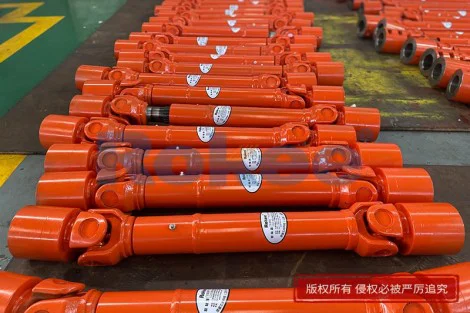
Cold-rolling Main Transmission Universal Coupling
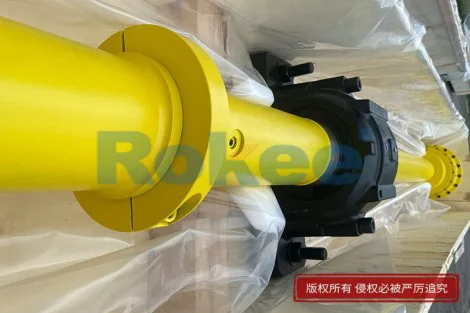
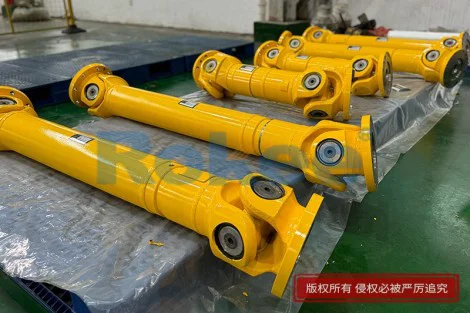
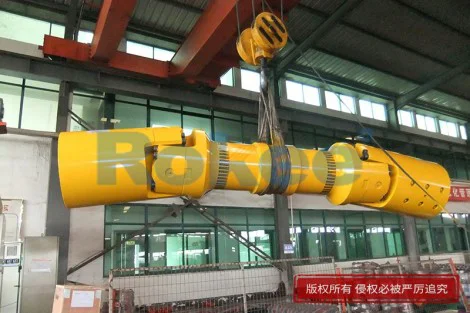
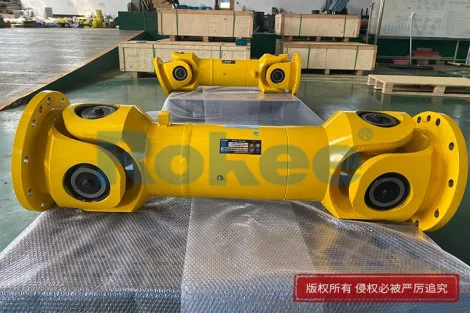
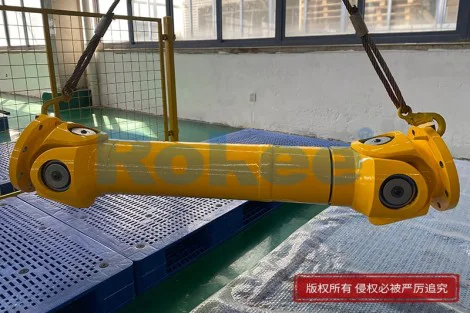
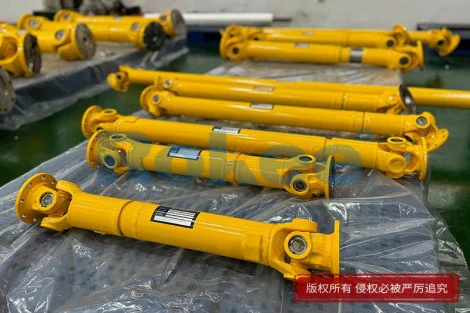
Rokee is a well-known Cold-rolling Main Transmission Universal Coupling supplier from china, the page show cases of Cold-rolling Main Transmission Universal Coupling, provide customized services based on user's drawings, and supporting exports.
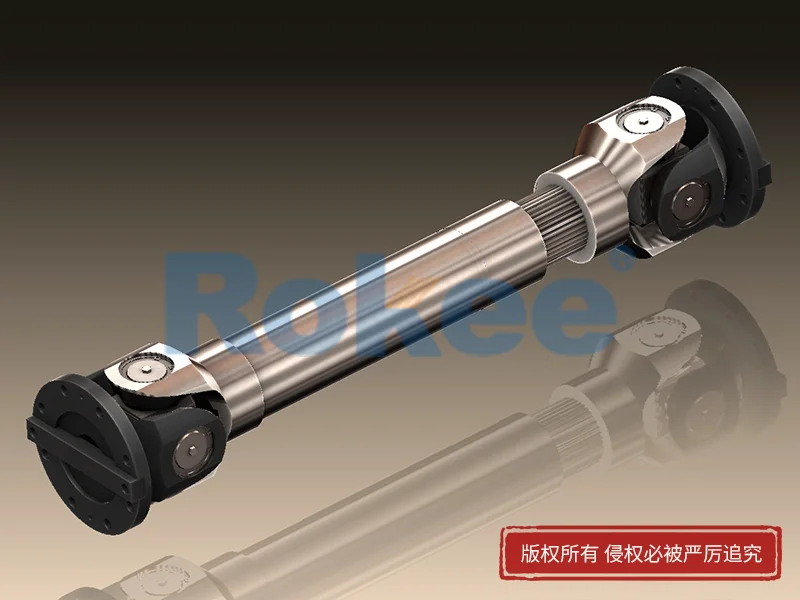
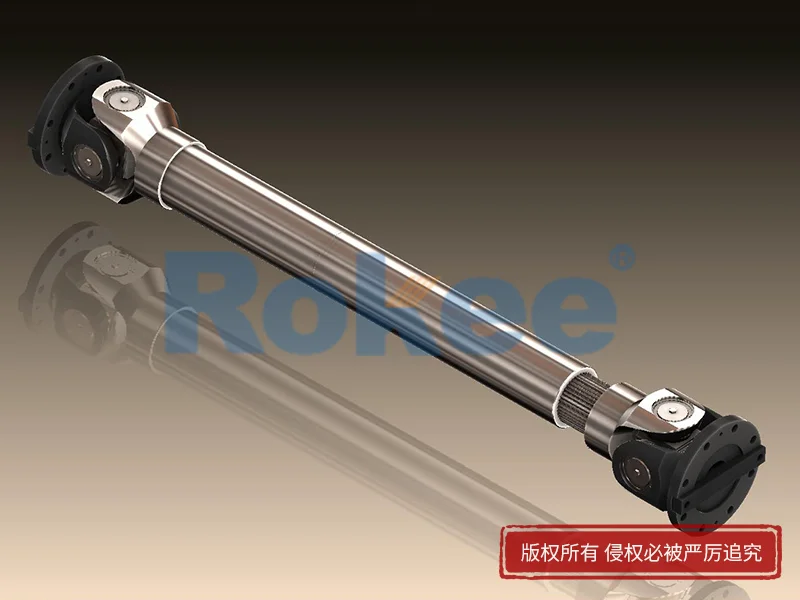
The cold-rolling main transmission universal coupling serves as one of the core mechanical components connecting the driving power source and the rolling mill stand within a cold rolling production line. Its fundamental function lies in transmitting high torque while accommodating unavoidable relative displacement between connected shafts that arises during equipment operation. In cold rolling processes, metal strips are compressed at room temperature to achieve precise thickness, smooth surface finish and consistent mechanical properties. This working condition imposes continuous heavy loads on the whole transmission system. Shaft misalignment can be generated by multiple factors including thermal expansion of mill components, foundation settlement, elastic deformation of rolling housings under rolling force and assembly deviations during equipment installation. Without a reliable universal coupling, even minor misalignment will create extra bending stress on shafts, bearings and gear assemblies, which accelerates fatigue damage and may lead to sudden shutdown of the rolling line. The universal coupling is designed to compensate for angular, axial and radial misalignments simultaneously, ensuring stable power transfer even when the relative position of the driving and driven shafts changes dynamically. Unlike rigid couplings that require extremely precise shaft alignment, this flexible transmission element absorbs part of vibration and shock produced by biting of metal strips, reducing the impact transferred to the gearbox and driving motor. Its structural characteristics make it particularly suitable for the heavy-duty, intermittent impact load environment typical of cold rolling main transmission systems, where power output must remain steady through frequent fluctuations of rolling torque.

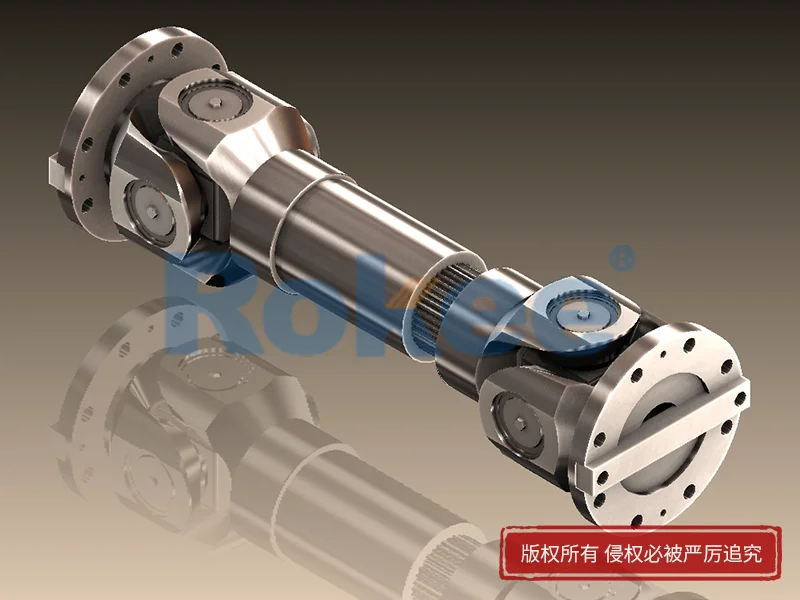
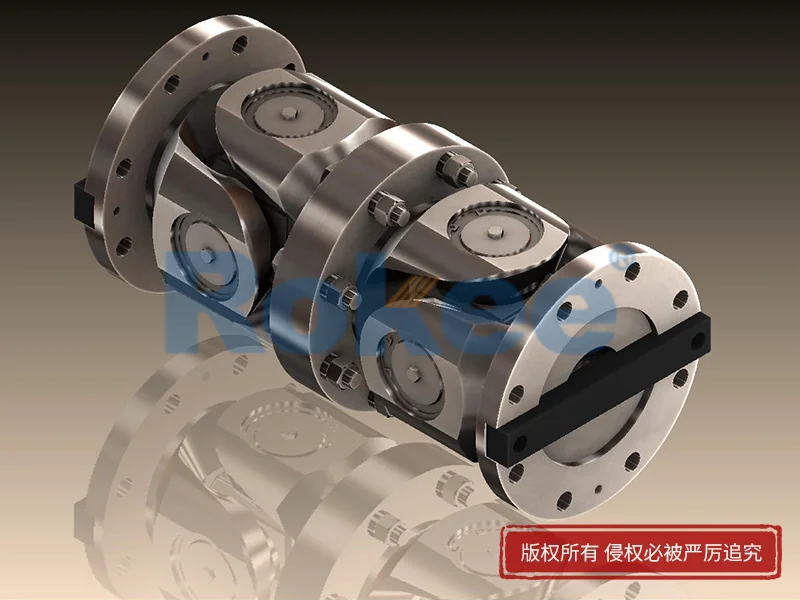
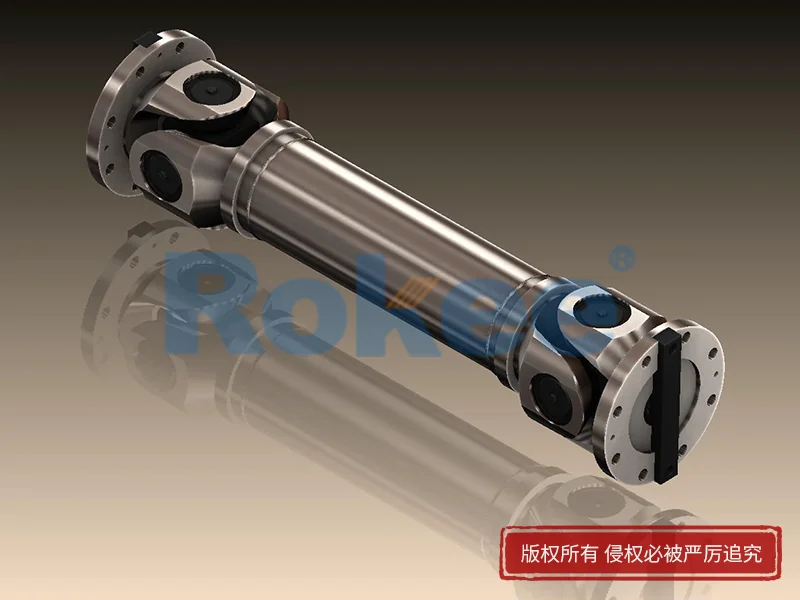
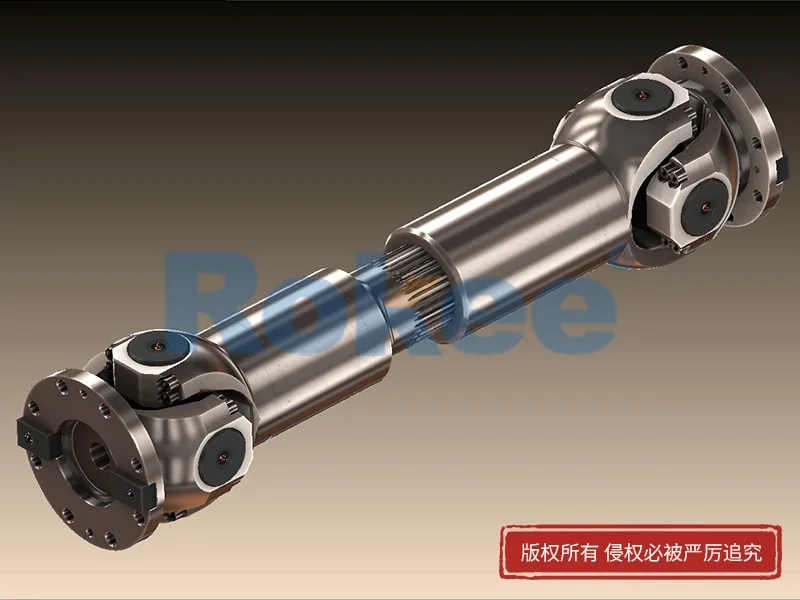
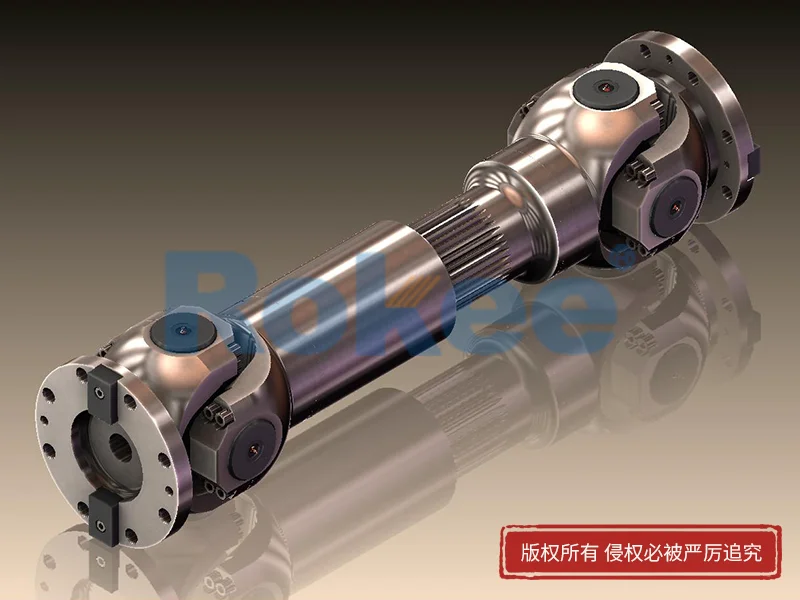
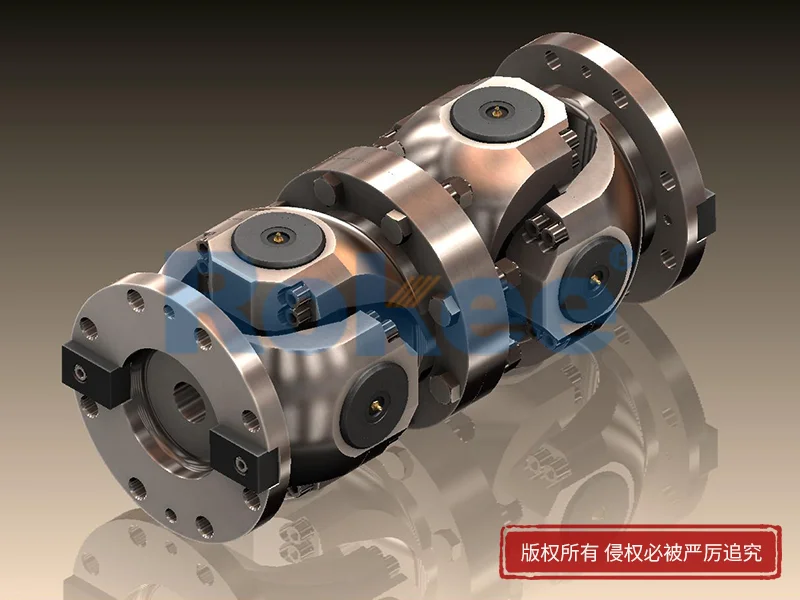
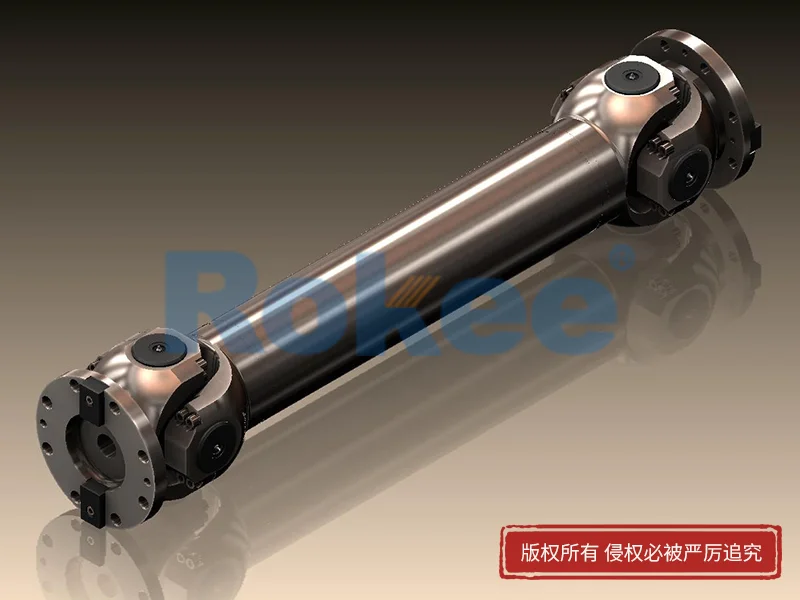
The basic structural composition of the cold-rolling main transmission universal coupling consists of several key assemblies that cooperate to complete torque transmission and displacement compensation. The main parts include two yoke forks, a cross-shaped intermediate joint, bearing assemblies, sealing structures and connecting flanges. Each yoke fork is fixed to the end of the driving shaft and driven shaft respectively, and the cross piece connects the two forks through needle roller bearings. The cross member acts as the hinge center, allowing the two yoke forks to rotate at a certain angle relative to each other. The bearing units between the cross and yoke forks bear the sliding and rolling friction during angular deflection, and they are protected by integrated sealing components to block external contaminants. In cold rolling workshops, large amounts of cooling emulsion, metal dust and fine iron powder float in the working environment. If these impurities enter the bearing clearance, they will scratch rolling surfaces, cause lubricant deterioration and increase wear rate sharply. The sealing design therefore becomes a critical part of the coupling, preventing emulsion and solid particles from invading the internal friction pairs while retaining lubricating grease inside the bearing cavity. The flange section is used for bolted connection with shaft ends, and the contact surface is processed to guarantee uniform force distribution when transferring heavy torque. All structural members are manufactured with high-strength materials that can resist repeated cyclic loading, because the coupling undergoes periodic tension and compression as torque rises and falls in each rolling pass. Every component must maintain dimensional stability under long-term alternating stress to avoid deformation or crack initiation.
Material selection for the cold-rolling main transmission universal coupling directly determines its load capacity, service life and resistance to fatigue failure. The working condition of the coupling features cyclic heavy torque, frequent impact loads and continuous friction at the hinge joints, so raw materials need excellent comprehensive mechanical performance. Yoke forks and cross shafts are generally made of alloy steel with good hardenability. After forging forming, rough machining, heat treatment and fine finishing, the material obtains high tensile strength, impact toughness and fatigue resistance. Forging processes eliminate internal voids and loose structures inside the metal, making the material grain continuous to withstand repeated alternating stress without early crack generation. The surface of friction working areas receives special heat treatment to raise surface hardness, reducing abrasive wear from relative movement between contact surfaces, while the core part keeps a certain toughness to prevent brittle fracture under sudden impact. Bearing rollers and raceways adopt high-carbon chromium bearing steel, which possesses stable hardness and wear resistance under continuous rolling friction. Lubricants matched for the coupling are required to maintain stable viscosity in a wide temperature range. In cold rolling workshops, local temperature changes happen due to cooling liquid spraying and heat generated by friction. The grease should not thin excessively at higher temperatures or lose fluidity at low temperature, so that it can form a stable oil film between contact surfaces to separate metal pairs and reduce friction loss. Improper material selection will lead to different failure modes: insufficient toughness causes brittle fracture under impact, low surface hardness brings rapid abrasive wear, and poor fatigue strength results in fatigue cracks expanding under cyclic torque.
The kinematic principle of the universal coupling determines its motion characteristics during torque transmission. When the driving shaft rotates at a constant rotating speed and an angular deflection exists between the driving shaft and driven shaft, the instantaneous angular velocity of the driven shaft will fluctuate periodically within one rotation cycle. This velocity fluctuation creates additional inertia torque, and the magnitude of this fluctuation increases as the working angle becomes larger. For cold rolling main transmission, this periodic fluctuation needs to be controlled within an acceptable range. Excessive angular deflection will amplify velocity variation, induce torsional vibration of the whole transmission chain and generate alternating stress on the coupling itself and adjacent parts. In practical cold rolling mill configuration, double universal joint arrangements are widely adopted to counteract the instantaneous speed variation. By arranging two universal joints in series and adjusting the installation phase, the velocity fluctuation produced by the first joint can be offset by the second joint. This configuration makes the average rotating speed of the driven shaft consistent with the driving shaft, effectively lowering torsional vibration and dynamic load. During operation, the cross piece swings around the bearing center within the allowable deflection angle, and the needle rollers roll between the cross journal and yoke fork raceway to convert sliding friction into rolling friction, lowering friction torque and heat generation. The allowable working angle is limited by structural constraints. When the deflection angle exceeds the design limit, contact stress on bearing assemblies rises rapidly, lubrication conditions worsen, and the service life drops significantly. Engineers must calculate the maximum possible misalignment under working states and select coupling specifications whose allowable deflection covers the actual displacement range.
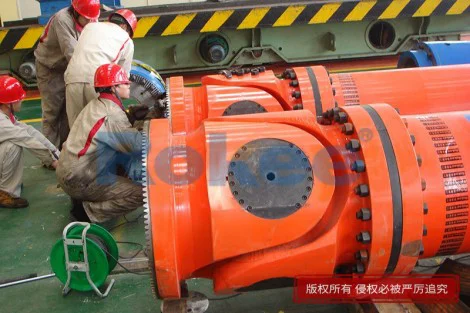
Installation and alignment procedures exert a profound influence on the operating performance and service cycle of the cold-rolling main transmission universal coupling. Before installation, all connecting surfaces, bolt holes, bearing cavities and sealing grooves need thorough cleaning to remove machining chips, rust and residual dirt. Any hard particles left on flange mating surfaces will create uneven contact pressure after fastening, leading to local stress concentration. The inspection of each component is necessary before assembly, checking for surface scratches, microcracks, deformation of yoke forks and damage of sealing rings. During assembly of the cross and bearing unit, lubricating grease is filled into the bearing cavity according to the designed filling volume; too much grease will cause high resistance and overheating during rotation, while insufficient grease leads to insufficient oil film and accelerated wear. When connecting the coupling to the driving and driven shaft flanges, operators adjust the relative position of two shafts to control initial misalignment. Even though the coupling can compensate for misalignment, the static alignment after installation should be kept as close as possible to the ideal coaxial state. Excessive initial offset will make the coupling work near its maximum allowable angle all the time, shortening its usable life. After bolt tightening, check the fastening torque of connecting bolts evenly, because uneven bolt tension causes flange tilt and additional bending load. After installation, manual rotation of the whole transmission system is required to verify that no stuck point exists and the coupling can swing smoothly within its compensation range. Trial rotation under no-load condition follows static inspection to observe vibration level, temperature rise and abnormal noise. Only after passing no-load test can the equipment be put into low-load rolling operation, with gradual load increase to complete commissioning.
Lubrication and sealing maintenance is essential to keep the cold-rolling main transmission universal coupling running stably over long periods. Lubrication forms a protective oil film between the cross journal, needle rollers and yoke raceway, separating metal contact surfaces, reducing friction and carrying away part of friction heat. Without effective lubrication, metal surfaces will directly contact, resulting in adhesive wear, surface scoring and local high temperature that may seize the hinge joint. Different working loads and environmental conditions determine the lubrication cycle. Under heavy continuous rolling load, grease deteriorates faster due to heat and contamination, so the replenishment interval is shortened. When adding lubricant, old degraded grease should be discharged properly to avoid mixing deteriorated grease with fresh lubricant, which weakens lubrication performance. Sealing systems work together with lubrication. Seals prevent cooling emulsion, iron dust and moisture from entering bearing cavities. Abrasive particles in the workshop environment are extremely harmful; once they enter the friction pair, they continuously scrape the contact surface and accelerate component loss. Sealing elements will gradually age under repeated deformation, temperature change and chemical corrosion from rolling emulsion. Hardening, cracking or permanent deformation of seals will cause leakage of internal grease and ingress of external pollutants. Maintenance staff need to regularly inspect seal positions for grease leakage. Minor leakage at the early stage indicates seal aging, and replacement should be arranged before serious contamination occurs. In daily maintenance, avoid washing the coupling assembly with high-pressure water jet directly, because strong water flow may damage sealing lips and push liquid into the bearing chamber. Reasonable management of lubrication and sealing can greatly extend the service life of coupling hinge parts and reduce unplanned maintenance events.
Common failure modes of the cold-rolling main transmission universal coupling can be summarized into several typical categories, and analysis of failure characteristics helps identify root causes and optimize operation schemes. Fatigue crack is one of the most frequent failure types. The coupling bears cyclic alternating torque during every rolling cycle. Microcracks gradually form at stress concentration points such as the root of yoke fork and cross journal fillet, and these cracks expand slowly under repeated load until component fracture. This kind of failure usually appears after long running time, and abnormal vibration and noise often occur before final fracture. Wear failure mainly takes place at the cross shaft journal and needle roller bearing surfaces, usually caused by poor lubrication or seal failure. Contaminants entering the bearing cavity produce abrasive wear, making the clearance of hinge joint increase. Larger clearance will bring obvious impact during torque change, further worsening wear condition. Overload fracture occurs when instantaneous rolling torque exceeds the designed load capacity of the coupling. It may be triggered by abnormal rolling conditions such as strip jamming, where huge impact torque instantly exceeds material strength limit, leading to brittle fracture of yoke fork or cross piece. Bearing seizure happens when lubrication fails completely, high temperature fuses the contact surfaces and locks the relative rotation of the universal joint. Once seizure occurs, torque transmission is interrupted immediately and other transmission components may suffer secondary damage. Vibration and abnormal noise are common precursor signals of coupling failure. Maintenance personnel can monitor vibration amplitude and sound features during routine inspection. Timely shutdown inspection upon discovering abnormal signals can prevent catastrophic component breakage and massive production loss.
Dynamic performance monitoring of the cold-rolling main transmission universal coupling helps grasp its operating state and realize predictive maintenance. Real-time monitoring mainly focuses on vibration, temperature and torque fluctuation of the transmission system. Vibration sensors are installed near coupling supports to collect vibration signals in multiple directions. Changes of vibration frequency and amplitude reflect the health status of internal components. When bearing clearance grows or fatigue cracks emerge, vibration characteristics will show obvious deviation from normal operating data. Temperature measurement tracks the surface temperature of coupling hinge parts. Friction heat rises sharply when lubrication fails or bearing wear becomes severe. Sustained temperature increase serves as an early warning indicator. Torque monitoring data reflects the actual load applied on the coupling during rolling passes. By comparing real torque curve with design value, operators can identify abnormal overload events caused by rolling process fluctuations. The collected monitoring data can be stored and analyzed to track performance degradation trend over time. Instead of adopting fixed periodic overhaul blindly, predictive maintenance arranges inspection and component replacement according to equipment health condition. This method reduces unnecessary disassembly work and avoids unexpected breakdown caused by sudden coupling failure. It is worth noting that monitoring data must be interpreted comprehensively. Single abnormal temperature or vibration signal cannot directly confirm coupling damage, because abnormal status of gearbox, motor or mill housing may also generate similar signal changes. Technicians need to combine multiple indicators and on-site inspection to make accurate judgment.
Optimization design approaches for the cold-rolling main transmission universal coupling focus on improving load capacity, reducing dynamic load and enhancing environmental adaptability. Structural optimization adjusts the geometric shape of yoke forks and cross shafts to lower stress concentration. Smooth transition fillets are set at the position where cross journal connects with the cross body, and the contour of yoke fork root is optimized to make stress distribution more uniform, slowing the initiation of fatigue cracks. Optimization of bearing arrangement increases the contact area between needle rollers and raceway, reducing unit contact pressure under heavy torque. New sealing structures are developed to resist the corrosion of rolling emulsion and block finer dust particles. Lubrication channel layout can also be optimized to make fresh grease reach all friction surfaces evenly during refilling. Material optimization explores improved alloy forging materials and advanced surface strengthening processes, raising wear resistance and fatigue performance without excessive increase of component weight. Weight control is important because heavier coupling parts bring greater inertia force during rotation, which enlarges dynamic impact load when torque changes. Simulation tools are used in the design stage to conduct finite element analysis and dynamic kinematics simulation. Engineers can calculate stress distribution under different torque and deflection angles, simulate vibration response and predict wear trend before physical prototype manufacturing. Through iterative simulation and structural adjustment, the optimized coupling can adapt to larger torque fluctuation and maintain stable operation under complex cold rolling working conditions. Design optimization also considers convenience of disassembly and maintenance, simplifying component replacement procedures and shortening equipment downtime during overhaul.
The application value and development trend of the cold-rolling main transmission universal coupling are closely linked to the advancement of cold rolling production technology. Modern cold rolling lines pursue higher rolling speed, greater rolling force and better strip product quality, which puts forward stricter requirements on transmission components. Stable torque transmission directly affects the uniformity of strip thickness. Torsional vibration from defective coupling will cause periodic fluctuation of rolling force, resulting in thickness deviation of finished metal strip and reducing product qualification rate. Reliable universal coupling minimizes production interruption. Each unplanned shutdown of a cold rolling line leads to large economic loss, so improving coupling reliability reduces production cost indirectly. Looking at future development directions, universal couplings will continue to develop toward higher load density, longer service life and intelligent condition monitoring. Advanced manufacturing processes will further improve the internal quality of forged components and precision of finished surfaces. Integrated sensor technology may be embedded into coupling assemblies to realize direct measurement of torque, deflection angle and temperature inside the joint, transmitting real-time operating data to the central control system. New composite sealing materials and high-performance lubricants will enhance the adaptability of couplings to harsh workshop environments. At the same time, lightweight design will be further promoted to reduce rotating inertia while maintaining high strength, lowering dynamic impact on the whole transmission chain. As cold rolling technology keeps progressing, the universal coupling will remain an indispensable connecting element of the main transmission system, and continuous technical upgrading of this component will support stable, efficient and high-quality operation of cold rolling production lines.
With excellent quality, we have been continuously providing many coupling products of various categories and uses complying with multiple standards and a full range of services, from the product selection to final installation and operation, for the industry fields of ferrous metallurgy, nuclear power, gas turbine, wind power, ropeway construction, lifting transportation, general equipment, etc.
pu sandwich panel line,pu sandwich panel machine,sandwich panel machine
« Cold-rolling Main Transmission Universal Coupling » Latest Update Date: Oct 20, 2026
https://www.rokeecoupling.net/cases/cold-rolling-main-transmission-universal-coupling.html