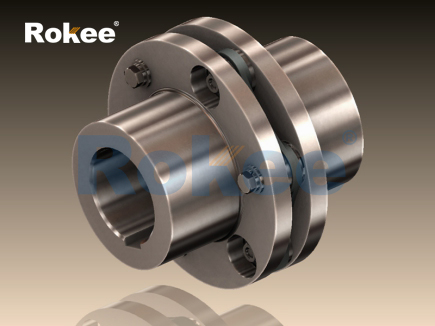
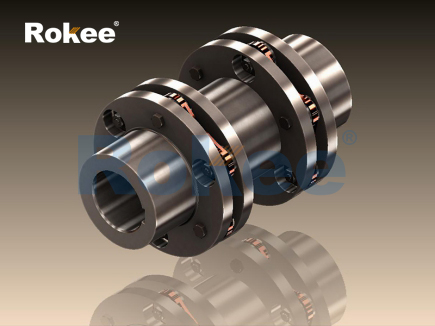
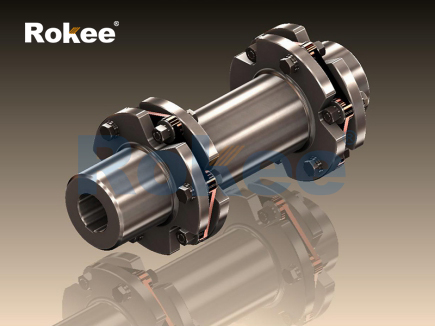
In the modern mechanical transmission industry, the stable connection between rotating shafts serves as the fundamental guarantee for the continuous operation of mechanical equipment. As a high-precision and high-reliability transmission component, laminated membrane coupling has gradually become an indispensable core part of various mechanical systems relying on its unique layered composite structure and excellent comprehensive mechanical properties. Different from traditional rigid couplings and elastic couplings with simple structures, laminated membrane coupling adopts a multi-layer stacked membrane structure, which organically combines the mechanical advantages of different materials through precise processing and assembly technologies. This structural design not only optimizes the torque transmission efficiency of the coupling but also endows the component with outstanding displacement compensation capability and vibration damping performance. With the continuous upgrading of industrial manufacturing standards and the increasing demand for high-speed and high-precision mechanical transmission, laminated membrane coupling has been widely applied in many industrial fields such as aerospace, precision manufacturing, petrochemical industry and automated production lines. Exploring the internal structure, core performance, classification types and practical application scenarios of laminated membrane coupling can provide a clear theoretical reference for the reasonable selection and optimized application of this component in industrial mechanical design.
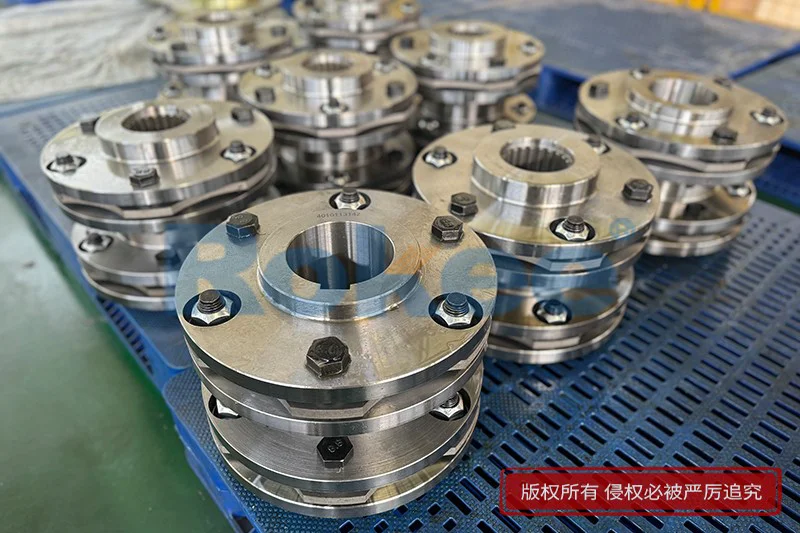
The basic structure of laminated membrane coupling presents a typical composite laminated form, and the overall composition is concise and compact without redundant auxiliary structures. The main components include half couplings distributed at both ends, fastening connecting parts and laminated membrane groups arranged in the middle transmission area. The half couplings on both sides are symmetrically distributed, which are responsible for connecting the driving shaft and the driven shaft respectively. They are usually made of high-strength metal alloys with good rigidity and structural stability, ensuring that the connection end will not undergo irreversible deformation under long-term torque load. The laminated membrane group is the core functional part of the coupling, which is composed of multiple thin elastic membranes stacked at equal intervals. These membranes are closely fixed by fasteners such as bolts, and the tightness of assembly is precisely controlled to avoid relative sliding between membrane layers during operation. There are tiny uniform gaps between adjacent membranes, which provide sufficient deformation space for the elastic movement of the membrane layers. In terms of internal structural matching, the connecting holes on the membrane are consistent with the installation holes of the half coupling, realizing the integrated connection of the whole structure. This layered assembly structure abandons the single thick membrane design of traditional membrane couplings. The stacked thin membranes can disperse the stress generated during torque transmission, effectively reducing the local stress concentration of a single component. Meanwhile, the layered structure can also balance the rigid and flexible characteristics of the coupling, maintaining stable structural rigidity while possessing appropriate elastic deformation ability. In addition, the surface of each membrane is treated with smooth polishing, which reduces friction loss between layers during relative micro-deformation and further improves the transmission stability of the coupling.
The excellent comprehensive performance of laminated membrane coupling stems from its unique structural design and high-quality material selection, and its core mechanical properties cover transmission performance, deformation compensation performance, environmental adaptability and service stability. In terms of torque transmission performance, the laminated structure significantly improves the torsional rigidity of the coupling. Multiple membranes bear the torque load together, which avoids the defect of insufficient bearing capacity of a single thin membrane. Even under high-speed and heavy-load operating conditions, the coupling can maintain stable torque transmission without obvious torsional deformation, ensuring the synchronization of the rotation speed of the driving and driven shafts. In terms of displacement compensation performance, the stacked membrane layers can produce tiny elastic deformation in multiple directions. When installation errors or mechanical vibration cause axial, radial and angular displacement between the two connected shafts, the membrane group can absorb and offset the displacement through flexible deformation. This compensation effect effectively reduces the additional mechanical stress generated by shaft position deviation, avoiding abnormal wear of shafts and bearings. Vibration damping and noise reduction is another key performance of laminated membrane coupling. The gaps between membrane layers and the elastic characteristics of metal materials can consume the vibration energy generated during equipment operation, inhibit the resonance phenomenon of the transmission system, and reduce mechanical operation noise. In terms of environmental adaptability, different membrane materials can be selected according to the application environment. Common stainless steel and aluminum alloy membrane materials have good corrosion resistance and high-temperature resistance, and can maintain stable working performance in humid, corrosive and high-temperature industrial environments. Moreover, the whole coupling has a fully sealed metal structure without rubber elastic parts, so it will not aging and deform due to environmental temperature changes, realizing long-term maintenance-free operation. In terms of service life, the layered stress dispersion structure reduces the fatigue loss of a single membrane, and the uniformly distributed stress avoids local fatigue fracture, greatly extending the service cycle of the coupling.
According to the structural difference of membrane groups and the functional characteristics of finished products, laminated membrane couplings can be divided into multiple classification types, and each type has unique structural advantages and applicable working conditions. The most common classification is based on the number of membrane groups, which divides the products into single-group laminated membrane couplings and double-group laminated membrane couplings. The single-group laminated membrane coupling is composed of one set of stacked membrane layers, with a compact overall structure and small axial occupation space. This type of coupling has high torsional rigidity and sensitive dynamic response, which is suitable for mechanical equipment with small shaft displacement deviation and high transmission accuracy requirements. The double-group laminated membrane coupling is equipped with two sets of independent membrane groups, which are symmetrically arranged on both sides of the middle connecting sleeve. The double-layer membrane structure significantly improves the displacement compensation capability, especially for angular and radial displacement. It can adapt to mechanical systems with large installation errors and severe operation vibration. Classified by membrane material, the coupling can be divided into stainless steel laminated membrane coupling and lightweight alloy laminated membrane coupling. Stainless steel membranes have high hardness and strong corrosion resistance, which are suitable for heavy-load transmission and harsh industrial environments such as chemical production and marine machinery. Lightweight alloy membranes represented by aluminum alloy have low density and small inertial mass, which can adapt to ultra-high-speed rotating equipment and reduce the energy consumption of mechanical operation. In addition, according to the membrane shape, it can be divided into circular integral membrane coupling and special-shaped split membrane coupling. The circular integral membrane has uniform stress distribution and simple processing technology, which is widely used in conventional industrial transmission equipment. The special-shaped split membrane adopts an asymmetric cutting structure, which can enhance the deformation flexibility of the membrane and is mostly used in precision intelligent equipment with complex displacement changes.
With the continuous maturity of manufacturing technology, laminated membrane couplings have been applied in more and more industrial fields, covering precision manufacturing, energy power, chemical engineering, transportation and other industries, and undertake the core transmission work of various mechanical equipment. In the field of precision mechanical manufacturing, this coupling is widely used in precision machine tools, semiconductor processing equipment and industrial robots. These devices have extremely high requirements for transmission accuracy, and the zero-clearance transmission characteristic of laminated membrane coupling can eliminate the rotation hysteresis error during operation. The tiny displacement compensation function can offset the micro-vibration generated by high-speed operation, ensuring the processing accuracy of precision parts and the stable movement of robot joints. In the energy and power industry, the coupling is applied to power generation equipment such as steam turbines, wind turbines and generator sets. The power generation equipment runs continuously for a long time with large transmission load. The high fatigue resistance and stable torsional rigidity of laminated membrane coupling can adapt to long-term uninterrupted operation, reducing the failure rate of power transmission components and ensuring the continuous output of electric energy. In the petrochemical industry, the production environment is usually accompanied by corrosive gases and humid media. The corrosion-resistant metal membrane material can resist chemical erosion, and the fully enclosed structure avoids the intrusion of dust and impurities. It is commonly installed on chemical pumps, mixing reactors and conveying machinery to maintain stable transmission performance in harsh environments.
In the transportation industry, laminated membrane couplings are used in the transmission systems of ships and railway locomotives. The mechanical vibration during the operation of transportation equipment is intense, and the coupling can absorb impact vibration through the elastic deformation of the membrane layer, reducing the friction loss of internal parts of the transmission system and improving the operation stability of transportation tools. In addition, in the field of medical machinery and laboratory precision instruments, small-sized lightweight laminated membrane couplings are adopted. These miniature couplings have small volume and low vibration noise, which will not interfere with the precision detection data of instruments and meet the ultra-high precision operation requirements of medical and experimental equipment. Compared with other types of couplings, laminated membrane couplings have obvious application advantages in the above fields, especially in high-speed, high-precision and long-term continuous operating scenarios, which can show more stable working performance and lower maintenance cost.
Although laminated membrane coupling has many excellent performances, it still has certain application limitations restricted by structural characteristics. The layered membrane structure has higher requirements for installation accuracy. Excessive installation deviation will cause the membrane layers to bear uneven load, accelerate fatigue aging, and even lead to membrane fracture in severe cases. Meanwhile, the membrane material is mostly thin metal sheet, and the bearing capacity of a single coupling is limited. It is not suitable for ultra-heavy-load mechanical equipment with instantaneous impact torque. In the future, with the innovation of new metal alloy materials and the optimization of layered composite processes, the comprehensive performance of laminated membrane coupling will be further improved. The development direction of products will tend to lightweight, high load-bearing and intelligent customization. New high-strength and high-toughness alloy materials will enhance the impact resistance of the membrane layer, and the optimized layered assembly process will reduce the installation accuracy requirements. At the same time, combined with dynamic monitoring technology, the operating state of the coupling can be detected in real time, realizing early warning of component fatigue damage and further improving the safety and stability of mechanical transmission systems.
To sum up, laminated membrane coupling relies on its unique multi-layer composite membrane structure to realize the organic combination of high rigidity and high flexibility. Its excellent torque transmission ability, displacement compensation performance and environmental adaptability make it an important basic component in the modern mechanical transmission field. Different types of laminated membrane couplings have clear application boundaries, which can meet the transmission needs of equipment under different working conditions from low-speed heavy load to high-speed precision operation. With the continuous progress of industrial manufacturing technology, the market demand for high-performance laminated membrane couplings will continue to grow. In the subsequent mechanical design and equipment selection, it is necessary to reasonably select the coupling type according to the actual working conditions, make full use of its structural performance advantages, avoid application limitations, and provide reliable guarantee for the efficient and stable operation of various mechanical equipment. The continuous technical optimization and performance upgrading of laminated membrane coupling will also promote the high-quality development of the entire mechanical transmission industry and lay a solid foundation for the innovation and iteration of industrial mechanical equipment.
pu sandwich panel line,pu sandwich panel machine,sandwich panel machine
« Laminated Membrane Couplings » Latest Update Date: May 9, 2026
https://www.rokeecoupling.net/tags/laminated-membrane-couplings.html