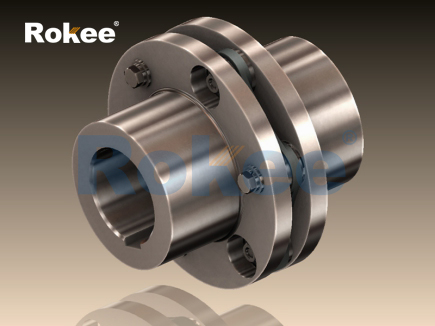
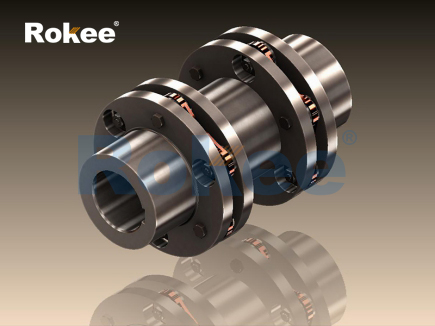
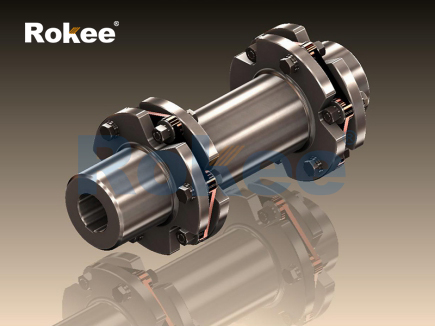
High Speed Diaphragm Coupling
Rokee is a well-known High Speed Diaphragm Coupling supplier from china, the page show cases of High Speed Diaphragm Coupling, provide customized services based on user's drawings, and supporting exports.
In the modern industrial transmission system, high-speed rotating machinery has become an indispensable core component of advanced manufacturing, energy production and fluid transportation industries. As a key connecting component between rotating shafts, high speed diaphragm coupling has gradually become the preferred transmission part for high-speed operating equipment by virtue of its unique elastic deformation mechanism, excellent mechanical stability and reliable torque transmission capability. Unlike traditional coupling structures that rely on rubber elastic elements or gear meshing for power transmission, this type of coupling adopts thin metal diaphragm groups as the elastic deformation core, realizing non-rigid flexible connection while maintaining high torsional rigidity, which perfectly adapts to the stringent operating requirements of high-speed working conditions for transmission accuracy, operational stability and service life. With the continuous upgrading of industrial equipment towards high speed, high precision and high efficiency, the application scope of high speed diaphragm coupling is constantly expanding, and it plays an irreplaceable role in optimizing the dynamic performance of transmission systems and reducing mechanical operation failure rates.
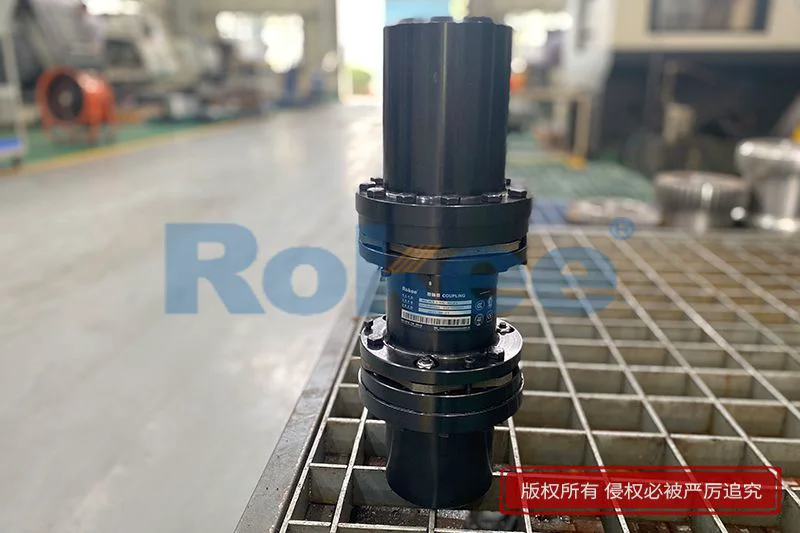
The basic structural composition of high speed diaphragm coupling is simple and compact, and the overall mechanical layout is designed to adapt to high-speed rotation dynamic balance requirements. The main components include metal diaphragm groups, high-strength connecting fasteners, flange connecting discs and intermediate spacer sleeves. The diaphragm group is usually composed of multiple stacked thin metal sheets, which are processed into special geometric shapes through precision stamping and cutting processes. This laminated structure can effectively disperse mechanical stress during deformation and avoid local stress concentration damage caused by single-layer diaphragm bearing load. The connecting fasteners adopt high-strength metal bolts with precise tolerance matching, which can firmly connect the diaphragm and flange disc without clearance, ensuring synchronous rotation of all components during high-speed operation and eliminating transmission hysteresis and rotation backlash. The intermediate spacer sleeve is mostly applied to double-diaphragm structures, which separates two sets of diaphragm groups to enhance the spatial compensation ability of the coupling, and rationally optimize the stress distribution of each component under high-speed rotation. All structural parts are processed with high-precision machining technology, and the surface smoothness and assembly tolerance are strictly controlled to reduce air resistance and rotational friction during high-speed operation, laying a structural foundation for stable operation under ultra-high speed working conditions.
The working principle of high speed diaphragm coupling is based on the elastic deformation characteristics of metal materials. In the actual operation process, there are inevitable assembly deviations and operational deformations between the driving shaft and the driven shaft of mechanical equipment, including axial displacement, radial offset and angular deflection. These misalignment problems will generate additional alternating stress on the transmission component during high-speed rotation, induce mechanical vibration and noise, and even accelerate component fatigue damage in severe cases. The metal diaphragm group of the coupling can produce tiny elastic deformation under external force, and rely on its own deformation capability to absorb and compensate for various misalignment deviations between the shafts. During the torque transmission process, the torque is transmitted from the driving flange to the diaphragm group through fasteners, and then stably transmitted to the driven flange by the diaphragm, realizing synchronous rotation of the two shafts. The metal diaphragm has stable elastic recovery performance, which can maintain continuous and effective compensation effect under long-term alternating load, and will not produce permanent plastic deformation under allowable working conditions. This deformation compensation mechanism enables the coupling to isolate the vibration generated by shaft misalignment in high-speed operation, reduce the vibration transmission amplitude between equipment components, and optimize the dynamic operation state of the entire transmission system.
Material selection is the core factor determining the comprehensive performance of high speed diaphragm coupling, especially the diaphragm material directly restricts the high-speed bearing capacity and service life of the coupling. High-quality diaphragm materials are mostly high-strength alloy stainless steel, which has excellent fatigue resistance, tensile strength and corrosion resistance. In the high-speed rotating environment, the diaphragm needs to bear frequent alternating tension and compression stress, and high-strength metal materials can effectively resist fatigue cracks caused by long-term stress circulation. At the same time, this type of material has low temperature sensitivity, and can maintain stable mechanical properties in a wide temperature range, avoiding elastic performance attenuation caused by temperature changes during equipment operation. The flange and spacer sleeve are usually made of high-quality carbon steel or alloy steel after forging and heat treatment. The forging process optimizes the internal metal structure of the material, improves the overall density and structural rigidity, and prevents structural deformation caused by centrifugal force during high-speed rotation. The surface of metal parts is treated with anti-corrosion and wear-resistant processes to isolate the erosion of humid air, industrial oil and chemical corrosives in the working environment, reduce surface oxidation and wear loss, and further extend the service cycle of the coupling. The scientific material matching design makes each component give full play to its mechanical advantages, ensuring that the coupling can maintain stable performance in long-term high-speed continuous operation.
High speed diaphragm coupling has outstanding performance advantages that are difficult to match with other types of couplings in high-speed working scenarios. First of all, it has extremely high torsional rigidity. The laminated metal diaphragm structure can resist torsional deformation during torque transmission, ensure high-precision synchronous rotation of the driving and driven shafts, and meet the strict positioning accuracy requirements of precision transmission equipment. Secondly, the coupling realizes completely backlash-free transmission. There is no gap between the connecting components, and no rotation delay will occur during forward and reverse switching operation, which is suitable for high-frequency forward and reverse working conditions of high-speed automation equipment. In terms of maintenance, this coupling adopts an all-metal structural design without any rubber vulnerable parts, and does not need to add lubricating oil and grease during operation, realizing maintenance-free operation in the service cycle and effectively reducing daily operation and maintenance costs. In addition, its vibration damping and noise reduction performance is excellent. The elastic deformation of the diaphragm can absorb part of the mechanical vibration energy generated by equipment operation, suppress vibration resonance amplitude, and reduce mechanical noise generated by friction and impact between components. The overall transmission efficiency of the coupling can reach more than 99.5%, and the power loss during the torque transmission process is extremely low, which conforms to the energy-saving and efficient operation requirements of modern industrial equipment.
In actual industrial application scenarios, high speed diaphragm coupling shows strong working condition adaptability and is widely used in various high-speed rotating mechanical equipment. In the energy industry, it is applied to turbine equipment and large-scale compressor units. These devices need to operate stably at ultra-high rotating speeds for a long time, and the coupling can bear large torque while compensating for shaft displacement caused by thermal expansion of high-temperature equipment, ensuring the safe and continuous operation of energy production equipment. In the fluid transportation industry, high-speed centrifugal pumps and large ventilation fans rely on this coupling to realize power transmission. The coupling can offset the installation deviation of pump bodies and fan shafts, reduce the vibration amplitude of equipment during high-speed operation, and avoid pipeline connection loosening caused by long-term vibration. In the field of precision manufacturing, high-speed servo motors and precision processing machine tools use diaphragm couplings to ensure transmission accuracy. Its high rigidity and zero-backlash characteristics can meet the micron-level positioning requirements of precision processing equipment, and improve the processing consistency and product qualification rate. In the new energy and semiconductor industries, automated transmission equipment and precision handling equipment need to maintain high-frequency and high-speed cyclic operation, and the corrosion resistance and fatigue resistance of the coupling can adapt to harsh and continuous working environments, reducing equipment downtime caused by coupling failure.
Although high speed diaphragm coupling has many performance advantages, it also has certain application limitations and installation requirements in actual use. This type of coupling has high requirements for installation alignment accuracy. Excessive radial or angular misalignment will cause the diaphragm to bear excessive instantaneous stress, accelerate fatigue damage and shorten the service life. Therefore, professional alignment tools are required to calibrate the shaft position during installation to control the misalignment error within the allowable range. In terms of bearing capacity, although the diaphragm has high torsional rigidity, its radial bearing capacity is weak, and it is not suitable for working conditions with large radial impact load. For mechanical equipment with severe vibration and impact, auxiliary vibration damping structures need to be matched to optimize the operating environment. In addition, the metal diaphragm will produce tiny stress loss after long-term cyclic deformation. In high-intensity continuous working scenarios, regular visual inspection and stress detection are required to check for tiny cracks and deformation on the diaphragm surface, so as to replace aging components in a timely manner and avoid sudden equipment failure caused by diaphragm fracture. Reasonable installation and standardized maintenance are important prerequisites to give full play to the performance advantages of high speed diaphragm coupling.
With the continuous progress of industrial manufacturing technology, the production and processing technology of high speed diaphragm coupling is also constantly optimized and upgraded. In terms of processing technology, modern precision laser cutting and numerical control milling technology are applied to diaphragm processing, which can realize more complex and uniform geometric structure design, optimize the stress distribution path of the diaphragm, and further improve the deformation compensation ability and fatigue resistance. In terms of material research and development, new high-temperature resistant and high-strength alloy materials are gradually applied to coupling production. These new materials can maintain stable mechanical properties in extreme high-temperature and low-temperature environments, expanding the applicable working condition range of the coupling. In terms of dynamic balance optimization, finite element analysis technology is used to simulate the stress and vibration state of the coupling under different rotating speeds. By adjusting the structural size and component weight distribution, the dynamic balance level of the coupling is improved, reducing the centrifugal force and vibration generated during ultra-high speed operation.
From the perspective of industrial market development, the market demand for high speed diaphragm coupling is showing a steady growth trend. The continuous expansion of high-end manufacturing industries such as aerospace, new energy equipment and precision mechanical processing has put forward higher requirements for the speed, accuracy and stability of transmission components. Traditional elastic couplings are gradually unable to meet the operating standards of high-end equipment due to the limitations of vulnerable rubber parts and low rigidity. High speed diaphragm coupling has become the mainstream replacement product in the high-end coupling market by virtue of its long service life, high stability and maintenance-free advantages. At the same time, with the popularization of intelligent monitoring technology, some coupling structures have begun to reserve monitoring installation positions, which can be matched with vibration and temperature sensors to realize real-time monitoring of operating status, providing data support for equipment predictive maintenance and further improving the intelligent operation level of industrial transmission systems.
In the future industrial development process, high speed diaphragm coupling will continue to evolve in the direction of lightweight, high integration and extreme working condition adaptation. The lightweight structural design will reduce the self-weight and centrifugal inertia of the coupling, adapt to higher rotating speed operation requirements, and reduce the energy consumption of equipment operation. The integrated forming process will simplify the assembly structure of the coupling, reduce the assembly gap between components, and further improve the transmission accuracy and structural stability. In terms of extreme working condition adaptation, through material innovation and structural optimization, the coupling will be able to operate stably in ultra-low temperature, high pressure and strong corrosion environments, covering more special industrial production scenarios. In addition, with the improvement of industrial environmental protection standards, the all-metal recyclable structural characteristics of high speed diaphragm coupling conform to the concept of green manufacturing, and will occupy a more important position in the future industrial transmission component market.
In conclusion, high speed diaphragm coupling is an efficient and reliable mechanical transmission component tailored for high-speed rotating equipment. Its unique metal diaphragm elastic compensation structure, excellent torsional rigidity and stable dynamic performance make it stand out in various coupling products. From basic mechanical structure and working principle to material selection and performance advantages, from diversified industrial application scenarios to installation and maintenance precautions, every design detail of the coupling is closely combined with the actual working condition requirements of high-speed equipment. With the continuous upgrading of industrial manufacturing level and the continuous innovation of processing technology, high speed diaphragm coupling will continuously optimize its comprehensive performance, adapt to more complex and harsh industrial working conditions, provide stable and efficient transmission guarantee for high-end mechanical equipment in various industries, and make important contributions to the high-quality development of modern industrial transmission systems.
With excellent quality, we have been continuously providing many coupling products of various categories and uses complying with multiple standards and a full range of services, from the product selection to final installation and operation, for the industry fields of ferrous metallurgy, nuclear power, gas turbine, wind power, ropeway construction, lifting transportation, general equipment, etc.
pu sandwich panel line,pu sandwich panel machine,sandwich panel machine
« High Speed Diaphragm Coupling » Latest Update Date: May 9, 2026
https://www.rokeecoupling.net/cases/high-speed-diaphragm-coupling.html