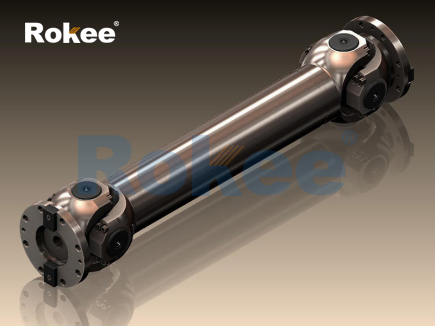
SWC Cardan Shaft
Rokee is a well-known SWC Cardan Shaft supplier from china, the page show cases of SWC Cardan Shaft, provide customized services based on user's drawings, and supporting exports.
In the realm of mechanical power transmission, the SWC cardan shaft stands as a highly versatile and robust component, engineered to address the core challenge of transferring torque and rotational motion between two shafts that are not aligned on a single axis, with inherent angular, axial, and even radial offset compensation capabilities. Unlike standard rigid couplings that demand precise shaft alignment and fail to accommodate positional shifts during operation, the SWC cardan shaft is purpose-built to maintain consistent power delivery in dynamic, high-load, and space-constrained industrial environments, making it an indispensable part of countless heavy-duty and general mechanical transmission systems worldwide. Its design integrates the fundamental principles of universal joint technology with enhanced structural durability and functional adaptability, resulting in a component that balances strength, flexibility, and operational efficiency across a broad spectrum of working conditions. To fully understand its value and application scope, it is essential to explore its internal structural composition, core performance parameters, distinct classification criteria based on design variations, and the diverse industrial sectors where it delivers unmatched functionality.

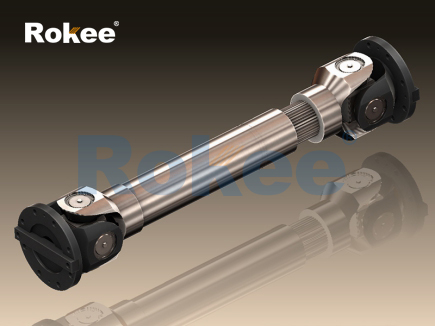
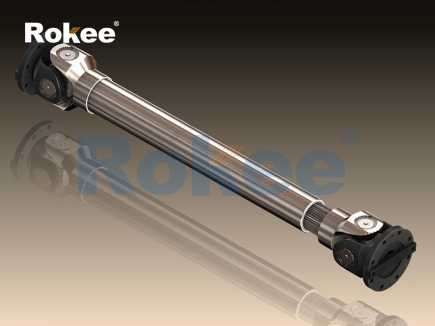
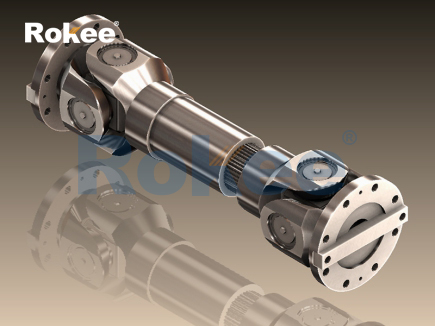
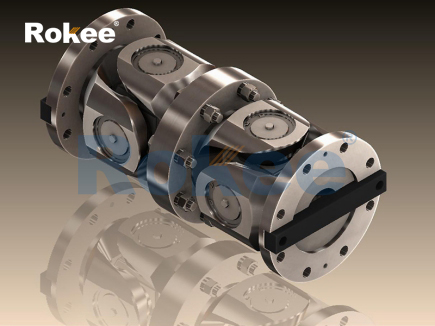
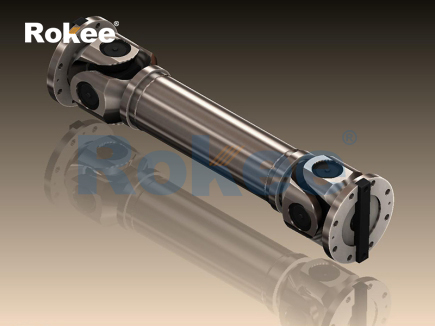
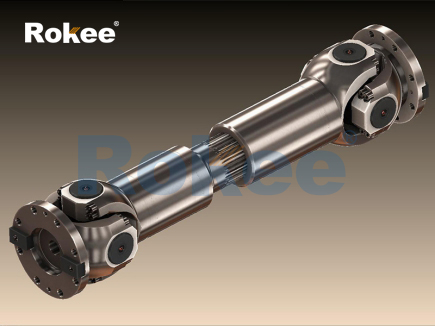
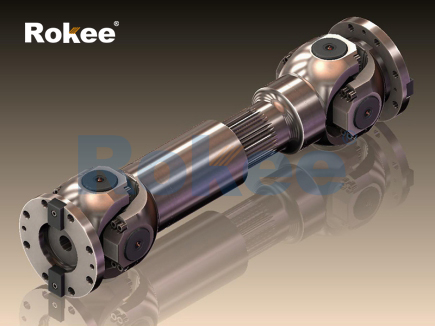
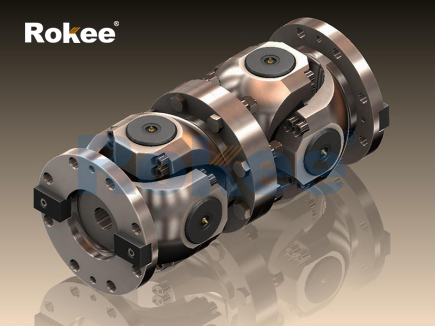
At its core, the SWC cardan shaft features a modular, integrated structure that eliminates weak points associated with traditional assembled universal shafts, prioritizing structural integrity and long-term reliability. The primary components include a cross shaft assembly, fork heads, a telescopic spline shaft (in adaptable designs), connecting flanges or welded ends, bearing units, and sealing systems. The cross shaft, the central load-bearing element, is precision-machined to a symmetrical cross shape, with four journal ends that house high-performance bearing assemblies—typically needle roller bearings, chosen for their high load-bearing capacity, low friction, and ability to withstand both radial and axial forces generated during torque transmission. These bearings are encased in robust bearing housings integrated into the fork heads, which are forged or machined from high-strength alloy steel to resist bending, fatigue, and impact loads without deformation. A key structural advantage of the SWC design is the one-piece fork head construction, which replaces conventional bolted connections; this eliminates the risk of fastener loosening, breakage, or misalignment caused by prolonged vibration or heavy loading, a common failure point in lower-grade universal shafts. The telescopic spline section, included in most standard SWC variants, consists of a male spline shaft and a female spline sleeve that slide smoothly relative to each other, enabling axial length compensation to absorb thermal expansion, suspension movement, or installation tolerances between driving and driven equipment. For non-telescopic variants, the shaft body is a solid or hollow rigid structure, optimized for fixed-distance transmission where axial adjustment is unnecessary. Sealing components, such as multi-layer lip seals and dust covers, are fitted around the bearing assemblies and spline connections to prevent lubricant leakage and block the ingress of dust, moisture, grease, and abrasive particles, preserving internal component integrity and extending service life even in harsh operating environments. The end connections are designed for compatibility with various mechanical interfaces: flanged ends for bolted attachment to gearboxes, motors, or driven machinery, and welded ends for permanent, high-strength connections in fixed transmission setups, offering flexibility to match different installation requirements without compromising torque transmission efficiency.
The performance characteristics of the SWC cardan shaft are directly shaped by its structural design, material selection, and manufacturing precision, with key metrics that define its suitability for specific applications. Foremost among these is torque transmission capacity, which ranges from light-duty, low-torque applications to heavy-duty, ultra-high-torque industrial scenarios, with the ability to handle both steady continuous loads and sudden shock loads without compromising performance. The angular compensation capability is another critical performance trait; standard SWC designs can accommodate shaft angles ranging from 15 degrees to 25 degrees between driving and driven shafts, with specialized variants supporting even larger angles, making them ideal for systems where shaft alignment shifts dynamically during operation. Axial compensation, provided by the telescopic spline section, varies by design, with standard models offering moderate length adjustment and extended-compensation variants handling greater axial displacement, ensuring stable power transfer even when the distance between connected equipment changes. Torsional rigidity and fatigue resistance are enhanced through the use of high-quality alloy steels, precision heat treatment, and smooth surface finishing on load-bearing components, preventing torsional deformation and fatigue cracking under repeated cyclic loading—an essential feature for machinery that operates continuously for extended periods. Operational speed range is another key performance parameter, with SWC cardan shafts engineered to maintain balance and low vibration at both low, high-torque speeds and moderate to high rotational speeds, minimizing energy loss and reducing wear on adjacent components. Additional performance attributes include low rotational inertia, which reduces starting load and energy consumption for driving motors, and minimal maintenance requirements, thanks to sealed bearing assemblies and durable spline designs that reduce the need for frequent lubrication and upkeep. Unlike universal joints that experience speed fluctuations at offset angles, properly paired SWC cardan shafts (using dual joint setups) deliver consistent, uniform rotational speed output, eliminating vibration and ensuring smooth operation in precision-sensitive transmission systems. These combined performance features make the SWC cardan shaft highly adaptable to extreme working conditions, including high-temperature environments, dusty construction sites, wet marine settings, and heavy-impact mining operations, where standard transmission components would quickly fail.
SWC cardan shafts are classified into distinct types based on structural variations, functional adaptations, and intended load capacities, with each category tailored to address specific transmission challenges and operational requirements. These classifications are not arbitrary but are designed to optimize performance, installation, and durability for different working scenarios, ensuring that users can select a variant that aligns precisely with their equipment’s needs. The most common classification is based on telescopic functionality and end connection type, with several core variants dominating industrial use. The first major category is the standard telescopic welded type, which features a telescopic spline shaft and welded end connections; this variant offers reliable axial compensation and permanent, high-strength attachment, making it suitable for general industrial applications where moderate torque transmission and dynamic axial adjustment are needed. The second category is the standard telescopic flanged type, which retains the telescopic spline design but uses bolted flanged ends for easy installation, removal, and alignment adjustments, ideal for equipment that requires periodic maintenance or component replacement. A third category is the long telescopic welded type, engineered with an extended spline section to provide significantly greater axial displacement compensation, specifically designed for applications where large thermal expansion or substantial shaft movement occurs, such as long-distance transmission lines in heavy industrial machinery. The short telescopic welded type is a compact variant with a shortened overall length and limited axial compensation, optimized for space-constrained installations where minimal clearance is available, such as small-scale industrial equipment and compact transmission assemblies. Non-telescopic welded and flanged types are designed for fixed-distance transmission setups with no need for axial adjustment, offering enhanced torsional rigidity and higher torque capacity for heavy-duty, stationary machinery. Beyond these structural classifications, SWC cardan shafts are also categorized by load capacity: light-duty models for low-torque, small-scale machinery with moderate speed requirements, medium-duty models as the most widely used general-purpose variant for balanced torque and speed applications, and heavy-duty models for ultra-high-torque, extreme-load industrial equipment that operates under constant stress and shock loading. Each classification maintains the core SWC structural advantages of one-piece fork heads and high-strength components, with targeted design modifications to enhance specific performance traits, ensuring that every variant delivers consistent reliability and efficiency in its intended application.
The versatility of the SWC cardan shaft, stemming from its unique structure and balanced performance, has led to its widespread adoption across nearly every major industrial sector, where reliable torque transmission under offset and dynamic conditions is non-negotiable. In the automotive and heavy transportation sector, SWC cardan shafts are integral components of rear-wheel-drive and four-wheel-drive vehicle drivetrains, transferring power from the transmission system to the drive axles while accommodating suspension movement, wheel articulation, and frame flex during operation. They are particularly critical in heavy commercial vehicles, off-road vehicles, and specialized transport machinery, where they withstand heavy payloads, rough terrain, and constant vibration, ensuring stable power delivery and safe vehicle operation. In the construction machinery industry, these shafts are used in a vast array of equipment, including excavators, loaders, bulldozers, cranes, and concrete mixers, where they connect power sources to working components such as booms, buckets, and rotating drums. Construction equipment operates in extremely harsh environments—dusty, muddy, and subject to constant impact—and the SWC cardan shaft’s robust construction and sealing capabilities prevent premature failure, maintaining consistent performance even under extreme loading and frequent angular shifts. The metallurgical and steel manufacturing industry relies heavily on heavy-duty SWC cardan shafts for high-torque transmission in rolling mills, continuous casting machines, straightening equipment, and metal processing machinery. These applications involve continuous operation, ultra-high torque loads, and high-temperature environments, and the shaft’s fatigue resistance and thermal stability ensure uninterrupted production, a critical factor in steel manufacturing where downtime results in significant financial losses.
In the mining and mineral processing sector, SWC cardan shafts are used in crushing equipment, grinding mills, conveyor systems, and drilling machinery, where they endure heavy shock loads, abrasive dust, and prolonged operation in underground and open-pit mining environments. Their ability to withstand extreme mechanical stress and resist contamination makes them a preferred choice for mining operations that demand unwavering component reliability. The shipbuilding and marine industry utilizes SWC cardan shafts in marine propulsion systems, deck machinery, steering mechanisms, and auxiliary equipment, where they provide reliable torque transmission in wet, corrosive saltwater environments. Specialized marine-grade variants feature corrosion-resistant materials and enhanced sealing to protect against saltwater damage, ensuring smooth operation of shipboard machinery even in harsh marine conditions. The paper and pulp manufacturing industry employs light and medium-duty SWC cardan shafts in paper making machines, drying cylinders, and conveyor systems, where precise, vibration-free rotation is essential to maintain product quality and continuous production. These shafts accommodate minor shaft misalignments and ensure smooth power transfer, preventing disruptions in the delicate paper manufacturing process. Additional industrial applications include petroleum and chemical processing machinery, where they operate in corrosive and explosive environments with sealed, durable designs; power generation equipment, including water turbines, gas turbines, and auxiliary power units, where they transfer power efficiently in fixed and dynamic setups; and general industrial machinery such as pumps, compressors, mixers, and machine tools, where they offer a cost-effective, reliable solution for offset torque transmission.
Beyond these core industrial sectors, SWC cardan shafts are also adapted for specialized applications in agricultural machinery, where they power tractors, harvesters, and tillage equipment, accommodating uneven terrain and dynamic component movement; in material handling equipment, such as forklifts and conveyor systems, where they ensure reliable power transfer in compact, high-use machinery; and in various custom mechanical systems where standard rigid couplings cannot meet alignment or load requirements. The widespread use of SWC cardan shafts across such diverse industries is a testament to their superior structural design, balanced performance, and adaptability. Unlike specialized transmission components that are limited to a single application, the SWC cardan shaft’s modular design and multiple classifications allow it to be tailored to nearly any torque transmission scenario involving shaft misalignment or dynamic movement. As industrial machinery continues to evolve toward higher loads, greater efficiency, and more compact designs, the SWC cardan shaft remains a critical component, with ongoing advancements in material science, manufacturing precision, and sealing technology further enhancing its performance, durability, and service life. Its ability to solve the universal challenge of offset torque transmission while maintaining structural integrity and operational efficiency ensures that it will continue to be a staple in mechanical engineering and industrial power transmission for years to come, supporting the reliable operation of essential machinery across global industries.
In summary, the SWC cardan shaft represents a pinnacle of universal joint engineering, combining a robust, one-piece structural design with versatile functional features to deliver exceptional torque transmission, offset compensation, and durability in diverse industrial environments. Its carefully engineered components—from the precision cross shaft and high-strength fork heads to the sealed bearings and telescopic spline sections—work in harmony to address the limitations of rigid couplings and lower-grade universal joints, providing a reliable solution for dynamic and high-load transmission systems. The range of classifications based on telescopic function, end connections, and load capacity ensures that there is an SWC cardan shaft variant suitable for every application, from light-duty precision machinery to heavy-duty industrial equipment operating in extreme conditions. Its extensive use across automotive, construction, metallurgical, mining, marine, and manufacturing sectors highlights its irreplaceable role in modern industrial production, where reliable power transmission directly impacts productivity, equipment lifespan, and operational safety. As industrial demands continue to grow more stringent, the SWC cardan shaft will remain a foundational component, evolving alongside technological advancements to meet the ever-changing needs of mechanical power transmission systems worldwide, solidifying its status as one of the most practical and reliable universal transmission components available today.
With excellent quality, we have been continuously providing many coupling products of various categories and uses complying with multiple standards and a full range of services, from the product selection to final installation and operation, for the industry fields of ferrous metallurgy, nuclear power, gas turbine, wind power, ropeway construction, lifting transportation, general equipment, etc.
pu sandwich panel line,pu sandwich panel machine,sandwich panel machine
« SWC Cardan Shaft » Update Date: 2026/5/9