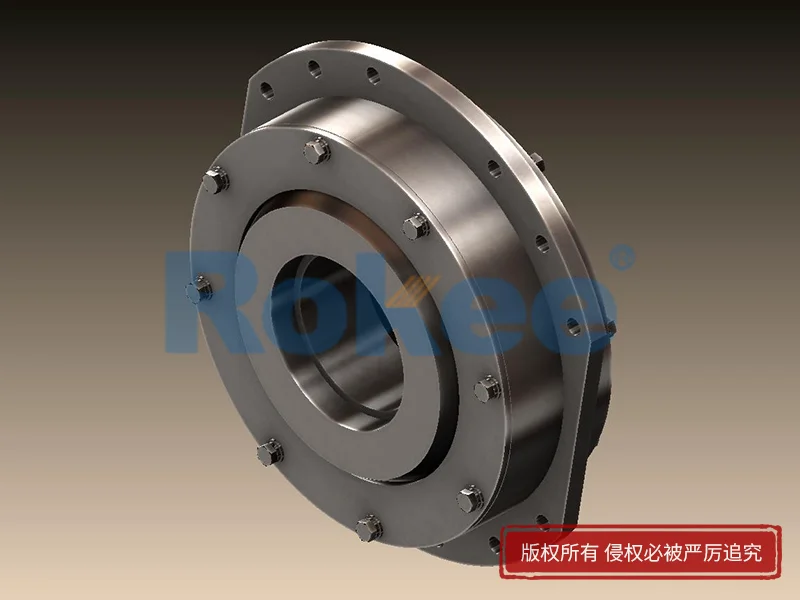
WZL Internal Spline Drum Coupling
Rokee is a well-known WZL Internal Spline Drum Coupling supplier from china, the page show cases of WZL Internal Spline Drum Coupling, provide customized services based on user's drawings, and supporting exports.
In the complex and interconnected system of modern industrial mechanical transmission, the rational selection and reliable operation of coupling components directly determine the overall operating efficiency, structural stability and service life of mechanical equipment. As a vital mechanical transmission component specially designed for heavy-load and low-speed operating conditions, internal spline drum coupling has gradually become an indispensable core part of large-scale transmission machinery by virtue of its unique structural design, excellent torque transmission capacity and reliable displacement compensation performance. This type of coupling abandons the structural defects of traditional straight-tooth connecting parts, optimizes the meshing form of internal and external teeth through drum-shaped tooth profile design, and combines the compact assembly advantage of internal spline structure to realize stable power transmission between adjacent shafts in various complex mechanical systems. In the long-term industrial application practice, it has shown outstanding adaptability in harsh working environments such as heavy load, frequent start-stop and shaft misalignment, providing a solid guarantee for the continuous and efficient operation of industrial equipment.
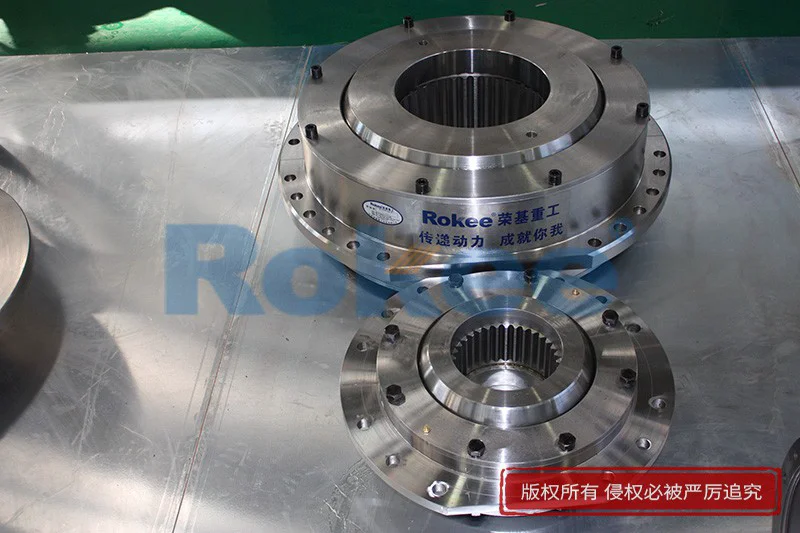
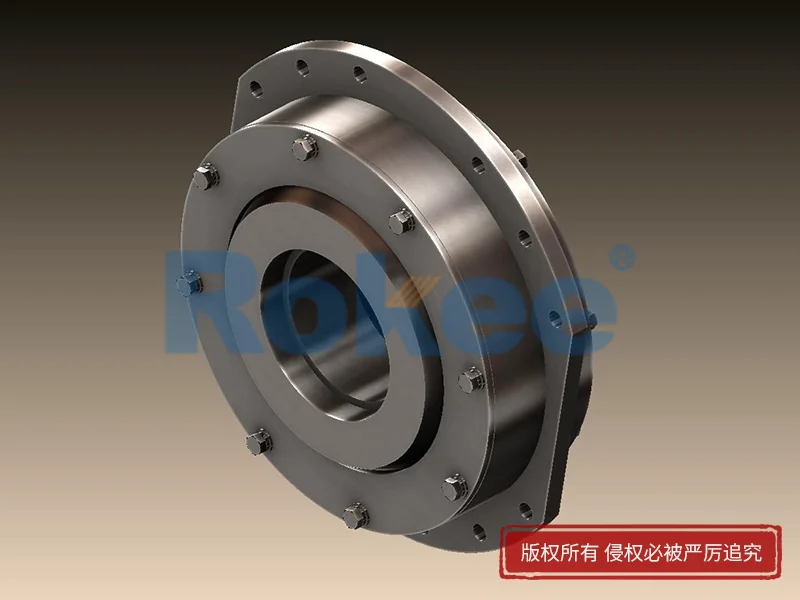
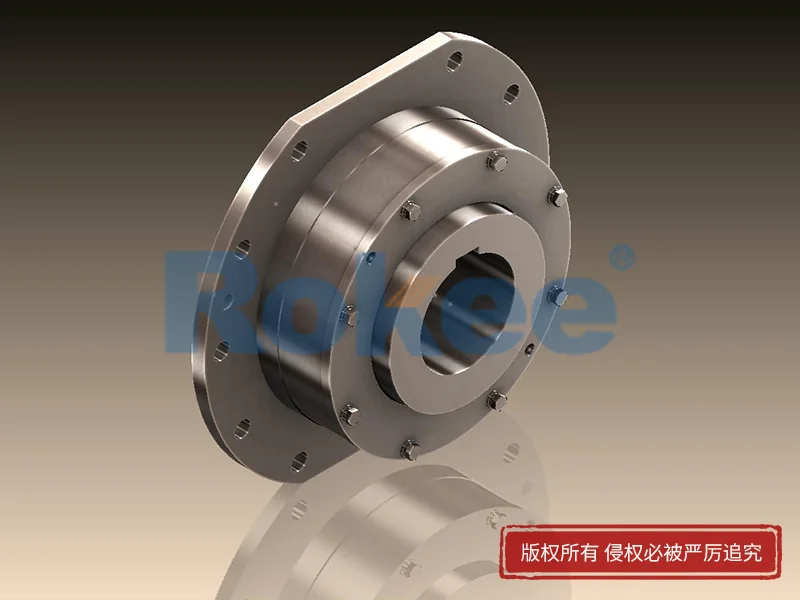
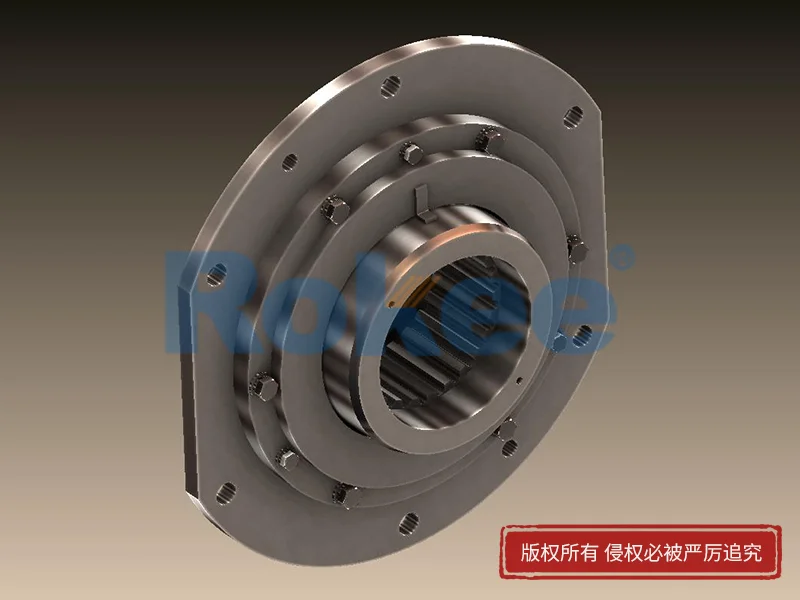
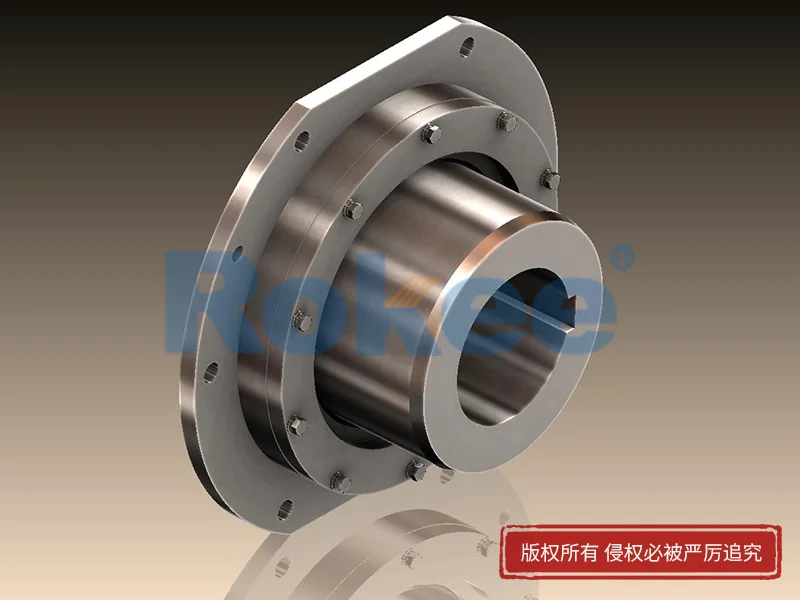
The overall structure of internal spline drum coupling adopts an integrated compact layout, which is mainly composed of inner spline hub, drum-shaped outer tooth sleeve, outer sleeve, sealing assembly and auxiliary lubrication structure. Each component has clear functional division and closely matched dimensional tolerance, forming a complete torque transmission system. The inner spline hub is the core connecting component of the coupling, and the precise spline groove processed on its inner wall can realize tight nesting and stable connection with the connecting shaft. The spline structure evenly distributes the contact stress on the tooth surface, effectively reducing the stress concentration at the tooth root. Compared with the ordinary key connection structure, it weakens the structural damage to the shaft body, maintains the mechanical strength of the shaft while ensuring the coaxiality of connection, and lays a foundation for high-precision power transmission. The drum-shaped outer tooth sleeve is the key functional part to realize displacement compensation. Its outer tooth surface is processed into a smooth arc transition structure. This special drum-shaped design breaks through the limitation of linear contact of traditional straight teeth, realizes surface contact during meshing, and expands the stress-bearing area of the tooth surface.
The outer sleeve wraps the outer side of the drum-shaped tooth sleeve to form a closed meshing space. It not only provides stable structural support for the meshing movement of internal and external teeth, but also cooperates with the end cover and sealing ring to build an independent lubrication cavity. The interior of the cavity is filled with lubricating medium for a long time, so that all meshing tooth surfaces can work in an oil bath environment. This enclosed structural form can effectively isolate external dust, moisture and corrosive impurities, avoid abrasive wear and chemical corrosion of the tooth surface, and greatly improve the operational stability of the coupling in harsh industrial environments. In addition, the surface of the outer sleeve is provided with reserved through holes for oil injection and ventilation. The oil injection hole is convenient for regular supplement and replacement of lubricating medium, while the ventilation hole can balance the internal and external air pressure during high-load operation, prevent the pressure in the closed cavity from rising sharply due to friction heat generation, and avoid structural deformation and sealing failure caused by excessive internal pressure.
The working principle of internal spline drum coupling is based on the meshing transmission of internal and external drum-shaped teeth and the flexible coordination of spline positioning. During the operation of mechanical equipment, the driving shaft drives the inner spline hub to rotate synchronously, and the torque is transmitted to the drum-shaped outer tooth sleeve through the meshing contact between the inner spline and the outer tooth body. Then the outer tooth sleeve drives the outer sleeve and the connected driven shaft to rotate, realizing the synchronous operation of the two shafts and the continuous transmission of power. In the actual working process, affected by manufacturing tolerance, installation deviation, equipment vibration and structural thermal deformation, the connected two shafts often have unavoidable displacement errors, including radial offset, angular deflection and axial movement. The arc tooth profile of the drum-shaped tooth can produce small axial sliding and angular rotation during meshing. This flexible movement characteristic can effectively absorb and compensate various displacement deviations between the shafts, reduce the additional mechanical stress generated by shaft misalignment on the transmission system, and avoid abnormal vibration and impact friction of the equipment.
Different from rigid coupling parts that require strict coaxiality of shafts, internal spline drum coupling has excellent comprehensive compensation capability. Its unique tooth surface structure allows a certain range of angular displacement between the two connected shafts, and the smooth arc transition of the tooth surface can ensure that the contact state of the meshing part remains stable even under deflection conditions, without local stress surge. In terms of radial displacement compensation, the matching gap between the spline and the shaft and the flexible meshing margin of the drum-shaped teeth jointly buffer the radial offset of the shaft body, preventing rigid friction between components. The axial displacement adaptability comes from the reserved assembly gap inside the coupling. When the shaft body expands with heat or produces axial floating due to mechanical vibration, the coupling can adapt to the axial position change of the shaft without generating extrusion stress inside the structure. This multi-directional compensation performance makes it perfectly suitable for mechanical systems with unstable shaft positioning and complex operating strokes.
In terms of material selection and processing technology, internal spline drum coupling always adheres to high-strength and wear-resistant design standards. The main structural components such as the spline hub and the tooth sleeve are made of high-quality alloy steel materials. The internal metal structure of this material is dense, with excellent tensile strength, impact resistance and fatigue resistance. After forging and forming, the components are subjected to multiple heat treatment processes including quenching and tempering. The heat treatment can optimize the hardness and toughness of the metal surface and internal structure, so that the tooth surface has high wear resistance and extrusion resistance, while the core part maintains good toughness to resist impact load. The precision machining process is adopted for the spline groove and tooth profile. The surface roughness is strictly controlled, and the dimensional tolerance is kept within a tiny error range. The smooth and flat contact surface can reduce friction resistance during relative sliding, lower operating energy consumption, and effectively inhibit the generation of running noise.
Compared with other common types of couplings in the market, internal spline drum coupling has obvious comprehensive performance advantages. Traditional straight-tooth couplings are limited by linear tooth profile, with small displacement compensation range and poor stress uniformity. It is easy to cause local tooth surface wear and tooth root fracture under long-term heavy load. Elastic couplings rely on elastic elements for buffering, but their torque bearing capacity is limited, and elastic parts are prone to aging and deformation, which is not suitable for long-term stable operation of heavy machinery. Rigid couplings have high transmission efficiency but no displacement compensation ability. Any slight shaft misalignment will aggravate component wear and even cause equipment resonance. In contrast, internal spline drum coupling combines the high rigidity of metal transmission and the flexible adaptability of curved tooth meshing. It not only retains the characteristics of large torque transmission and high transmission efficiency, but also has multi-directional displacement compensation function, balancing rigidity and flexibility in mechanical transmission.
The application scenarios of internal spline drum coupling cover a large number of heavy industrial machinery and transmission equipment. In the metallurgical industry, it is applied to rolling mills and smelting transmission equipment. These devices need to bear continuous heavy load and high-frequency start-stop impact, and the coupling can maintain stable meshing state under harsh working conditions such as high temperature and dust pollution. In the mining field, it is matched with mineral conveying equipment and crushing machinery to adapt to the complex vibration environment and uneven load impact generated during mineral processing. In the port and logistics industry, large-scale winding machinery and handling equipment rely on this coupling to realize stable rotation of the winding drum. Its compact internal spline structure saves installation space and meets the layout requirements of dense mechanical structures. In addition, it also plays an important role in building material processing, chemical heavy machinery and large-scale water conservancy transmission equipment, becoming a universal transmission component for heavy-load industrial scenarios.
The excellent durability of internal spline drum coupling is closely related to its sealing and lubrication system. The multi-layer sealing structure composed of sealing gaskets and anti-leakage end covers is arranged at the assembly gap of each component. This structure can lock the internal lubricating medium to avoid oil leakage caused by equipment vibration and pressure change. At the same time, it can block external dust, rainwater and corrosive gas from invading the meshing area. The long-term stable oil bath lubrication environment can form a uniform oil film on the tooth contact surface. The oil film can reduce direct metal friction between meshing teeth, lower friction heat generation, and slow down the wear rate of the tooth surface. Moreover, the lubricating medium can take away the tiny metal debris generated by friction, keep the interior of the coupling clean, and avoid abrasive damage caused by debris accumulation. Under standard operating conditions, the reasonable lubrication cycle can effectively extend the service life of components and reduce the frequency of equipment shutdown maintenance.
In terms of installation and daily maintenance, internal spline drum coupling has the characteristics of simple operation and low maintenance cost. During the installation process, the spline connection mode realizes quick nesting and positioning. The assembly steps are simple, and there is no need for complex calibration tools. The reserved assembly gap can tolerate minor installation errors, reducing the technical requirements for installation personnel. In the daily use stage, the maintenance work is mainly concentrated on the regular inspection of sealing performance and the replacement of lubricating medium. The staff only need to check whether there is oil leakage at the sealing gap and whether the ventilation hole is blocked at fixed cycles. According to the operating load and working environment, the lubricant can be replaced regularly to ensure the lubrication effect. There is no need for frequent disassembly and debugging of the overall structure, which greatly reduces the time cost and labor cost of equipment maintenance, and improves the continuous operation rate of industrial production lines.
Although internal spline drum coupling has mature structural performance and wide application range, it still needs to pay attention to reasonable type selection and use specification in actual application. In the equipment design stage, it is necessary to select coupling specifications matching the torque demand, rotating speed and shaft diameter according to the actual operating parameters of the mechanical equipment. Excessively small specifications will lead to insufficient load-bearing capacity and accelerated component fatigue damage, while oversized specifications will cause structural redundancy and increase equipment energy consumption. During the equipment operation, extreme overload operation should be avoided. Instantaneous impact load exceeding the bearing limit will cause irreversible deformation of the tooth surface and damage the internal spline structure. For the equipment working in high temperature and high humidity corrosive environment, the surface anti-corrosion treatment cycle of the coupling should be shortened to avoid metal oxidation and corrosion affecting the meshing accuracy.
With the continuous upgrading of modern industrial manufacturing technology, the production and processing technology of internal spline drum coupling is also constantly optimized and innovated. Advanced precision forging technology and numerical control machining equipment further improve the dimensional accuracy and surface finish of components. The optimized heat treatment process makes the metal material have more stable mechanical properties. At the same time, the structural design is continuously optimized towards miniaturization, high load and low energy consumption. The compact internal structure is adapted to the increasingly refined mechanical layout, and the optimized tooth profile curve further improves the displacement compensation range and stress uniformity. In the future, with the development of intelligent manufacturing and heavy industrial equipment towards large-scale and high-efficiency, internal spline drum coupling will further expand its application boundary and become a more critical basic component in the industrial transmission field.
In conclusion, internal spline drum coupling relies on its compact internal spline layout, excellent drum-shaped tooth meshing performance, reliable sealing and lubrication system, showing unique technical advantages in heavy-load mechanical transmission. It solves many practical problems such as shaft misalignment, severe component wear and unstable power transmission in industrial equipment. Its simple installation process, low maintenance cost and strong environmental adaptability make it widely used in various heavy industrial fields. As an important basic mechanical component, it not only ensures the stable operation of a single mechanical device, but also supports the efficient connection of the entire industrial transmission system. With the continuous progress of material science and mechanical processing technology, the comprehensive performance of internal spline drum coupling will be further improved, providing more stable and reliable technical support for the sustainable development of modern heavy industry.
With excellent quality, we have been continuously providing many coupling products of various categories and uses complying with multiple standards and a full range of services, from the product selection to final installation and operation, for the industry fields of ferrous metallurgy, nuclear power, gas turbine, wind power, ropeway construction, lifting transportation, general equipment, etc.
pu sandwich panel line,pu sandwich panel machine,sandwich panel machine
« WZL Internal Spline Drum Coupling » Latest Update Date: May 21, 2026
https://www.rokeecoupling.net/cases/wzl-internal-spline-drum-coupling.html