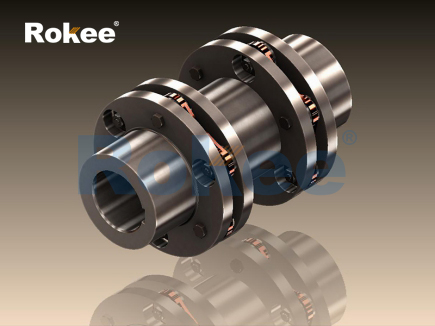
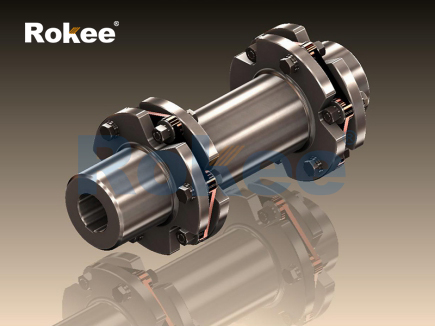
In the modern mechanical transmission industry, coupling components serve as critical connecting units that link driving and driven shafts to realize torque transmission, rotational motion transfer, and mechanical vibration buffering. Among various coupling types, double diaphragm coupling stands out as a high-performance flexible transmission component with unique structural design and excellent comprehensive mechanical properties. It has gradually become an indispensable core part in high-precision, high-speed and high-stability mechanical systems. Different from single diaphragm coupling with limited displacement compensation capability and traditional rigid coupling lacking elastic buffering performance, double diaphragm coupling adopts a dual-diaphragm combined structure, which balances torsional rigidity, displacement compensation and operational stability. It adapts to complex and changeable working conditions while maintaining efficient and stable power transmission. With the continuous upgrading of industrial manufacturing standards, the market demand for double diaphragm coupling keeps growing steadily, and it is widely recognized in multiple industrial fields for its simple maintenance, fatigue resistance and pollution-free operation characteristics.

The basic structural composition of double diaphragm coupling follows a compact and reasonable mechanical design logic, mainly including metal diaphragm groups, intermediate spacer sleeves, connecting fasteners and shaft connecting hubs. As the core force-bearing and deformation component of the coupling, the diaphragm group is usually made of high-strength stainless steel materials, which are stacked in multiple layers to form an integrated elastic structure. The double diaphragm structure is composed of two independent diaphragm groups, which are symmetrically installed on both sides of the intermediate spacer sleeve. This intermediate connecting part plays a role in isolating the two diaphragm sets and providing a stable force transmission interval, effectively optimizing the spatial displacement compensation ability of the coupling. High-strength metal bolts are used as connecting fasteners to fix the diaphragms, spacer sleeves and hubs together. The tight assembly mode eliminates the gap between connecting parts, realizing zero-backlash torque transmission. The shaft connecting hub is designed with diverse connection structures to fit different shaft body installation requirements, realizing stable nesting and fixation between the coupling and the transmission shaft. The overall structure abandons elastic vulnerable parts such as rubber gaskets, and all metal components ensure long-term structural stability. There is no relative sliding friction between internal parts during operation, which fundamentally avoids wear debris generation and reduces mechanical operation loss.
The unique structural endowment brings superior comprehensive performance to double diaphragm coupling, covering displacement compensation, torsional rigidity, dynamic operation stability and environmental adaptability. In terms of displacement compensation capability, this coupling can simultaneously compensate axial, radial and angular misalignment generated during equipment installation and operation. The axial compensation range meets the expansion and contraction changes of the shaft body caused by thermal deformation of mechanical equipment, while radial compensation adapts to minor position deviation of parallel shafts. Angular compensation relieves the transmission pressure caused by tiny deflection of the shaft system. The elastic deformation of the double diaphragm groups shares the additional load generated by shaft misalignment, effectively protecting the shaft body, bearings and other precision components from fatigue damage. In terms of torsional performance, the double diaphragm layout endows the coupling with high torsional rigidity. It will not produce obvious torsional deformation during torque transmission, which ensures high-precision synchronous rotation of the driving and driven ends. This characteristic makes it suitable for transmission scenarios requiring strict position accuracy and motion synchronization. In terms of dynamic operation performance, the symmetrical and compact structural design optimizes the mass distribution of the coupling, enabling it to pass high-precision dynamic balance processing. It can maintain stable operation under high-speed rotating conditions without obvious vibration and noise, and the allowable speed range covers medium and high-speed working conditions of various mechanical equipment.
In addition to core transmission performance, double diaphragm coupling also has outstanding durability and environmental adaptability. The metal diaphragm has excellent anti-fatigue characteristics, which can withstand millions of cyclic load changes during long-term continuous operation without permanent deformation or structural fracture. All-metal components do not need lubricating oil for auxiliary operation, realizing maintenance-free use in the whole service cycle and reducing daily operation and maintenance costs of mechanical equipment. Meanwhile, the selected metal raw materials have good corrosion resistance and temperature resistance. It can work stably in harsh environments such as high temperature, low temperature, dry dust and weak corrosive gas, and will not undergo aging, softening or hardening failure like polymer elastic materials. In terms of vibration isolation and buffering, the elastic deformation of the diaphragm can absorb tiny vibration generated by equipment operation and isolate high-frequency vibration between adjacent mechanical structures, reducing vibration resonance and mechanical impact of the transmission system. Although its vibration damping amplitude is lower than that of elastic couplings with rubber parts, it achieves a balance between rigidity and vibration isolation, which is more suitable for industrial scenarios that prioritize transmission accuracy.
According to structural differences, connection modes and application characteristics, double diaphragm couplings can be divided into multiple classification types to meet differentiated industrial usage needs. Based on internal assembly structure, it can be divided into integral double diaphragm coupling and split double diaphragm coupling. The integral type adopts an integrated forming process for the diaphragm and the connecting frame, with higher overall structural rigidity and better concentricity. It is suitable for high-precision transmission equipment with strict requirements on rotation accuracy. The split type assembles independent diaphragms and accessories through fasteners, featuring simple disassembly and replacement, convenient later maintenance and low component replacement cost, which is more applicable to general industrial mechanical equipment. According to the shaft connection mode, it is categorized into keyway connection type and keyless clamping type. The keyway connection type processes standard key grooves on the connecting hub, realizing torque transmission through the cooperation between flat keys and key grooves. It has simple assembly process and strong overload resistance, suitable for heavy-load and medium-low speed transmission scenarios. The keyless clamping type relies on the elastic contraction of the hub to clamp the shaft body, realizing non-gap and non-slip fixed connection. It will not produce extrusion deformation on the shaft body, with higher connection accuracy, and is commonly used in precision servo transmission systems.
In accordance with bearing capacity and application load characteristics, double diaphragm couplings are classified into light-duty, medium-duty and heavy-duty types. The light-duty coupling has a compact external size and small self-weight, with low moment of inertia during operation. It is perfectly matched with small precision transmission equipment such as servo motors and encoders, focusing on ensuring sensitive motion response and accurate positioning. The medium-duty coupling has balanced torque bearing capacity and structural volume, covering most conventional industrial transmission equipment, and is widely used in general processing machinery and fluid transportation equipment. The heavy-duty coupling adopts thickened diaphragms and enlarged connecting structures, with strong torque resistance and impact resistance. It adapts to harsh working conditions with large load fluctuation and strong mechanical impact, and is applied to large industrial equipment such as mining machinery and rolling mills. Moreover, based on environmental adaptation differences, there are conventional type and special anti-corrosion type. The conventional type is suitable for normal temperature and dry indoor working environments, while the anti-corrosion type undergoes surface strengthening treatment on metal components to resist chemical corrosion, meeting the usage requirements of chemical and marine engineering equipment.
Driven by its diversified structural types and excellent comprehensive performance, double diaphragm coupling has been widely applied in multiple industrial fields, covering precision manufacturing, energy power, fluid transportation and heavy industrial machinery. In the field of precision manufacturing and intelligent equipment, it is used in numerical control machine tools, industrial robots and automated production lines. The high torsional rigidity and zero-backlash transmission characteristics ensure precise angle positioning and stable motion transmission of mechanical arms and processing shafts. It effectively reduces transmission errors caused by shaft vibration and displacement deviation, improving the processing accuracy and operation consistency of precision equipment. In servo motor and encoder matching systems, the light-duty double diaphragm coupling with low moment of inertia can respond quickly to motor speed regulation and torque changes, realizing synchronous and accurate rotation of the transmission system.
In the energy and power industry, double diaphragm coupling serves for wind power generation units, turbine equipment and generator sets. Wind power generation equipment is usually installed in complex outdoor environments, with large structural deformation of supports and obvious temperature difference changes. The good displacement compensation capability of the coupling can offset installation errors and thermal deformation displacement of the transmission shaft. Its fatigue resistance meets the long-term uninterrupted operation requirements of wind power equipment. In high-speed turbine and generator systems, the high dynamic balance accuracy of the coupling suppresses high-speed vibration, ensuring the stable operation of power transmission equipment and reducing mechanical failure rates. In marine engineering and ship propulsion systems, the anti-corrosion double diaphragm coupling adapts to humid and salt-spray containing marine working environments. It connects diesel engines and propeller shafts, compensating shaft displacement caused by hull deformation and water flow impact, and maintaining the stability of ship power transmission.
The fluid transportation industry is also one of the important application scenarios of double diaphragm coupling, including high-speed pumps, compressors and ventilation fans. Such equipment is prone to shaft misalignment due to pipeline vibration and fluid impact during operation. The double diaphragm structure can absorb irregular displacement changes of the shaft system, reduce additional friction and wear between bearings and seals, and extend the service life of fluid transportation equipment. Meanwhile, the oil-free and wear-free operation characteristics avoid fluid pollution caused by lubricating oil leakage or wear debris, which is especially suitable for food processing, pharmaceutical and chemical fluid transportation scenarios with high purity requirements. In heavy industrial fields such as mining, metallurgy and building materials, heavy-duty double diaphragm couplings undertake high-load torque transmission tasks. They resist mechanical impact and load fluctuation generated by raw material crushing and metal rolling, maintaining the structural stability of the transmission system under harsh working conditions.
With the continuous progress of industrial manufacturing technology, the production process and structural design of double diaphragm coupling are also constantly optimized and upgraded. In terms of material research and development, higher-strength alloy metal materials are gradually applied to diaphragm processing to further improve fatigue resistance and specific torque bearing capacity. In terms of structural optimization, the lightweight design of intermediate accessories reduces the moment of inertia of the coupling, making it more suitable for high-precision and high-frequency dynamic transmission scenarios. In terms of processing technology, precision cutting and numerical control finishing technologies improve the flatness and assembly accuracy of diaphragms, further reducing transmission errors and operational vibration. In the future, with the deep development of intelligent manufacturing and high-end industrial equipment, the performance requirements for transmission components in terms of high speed, high precision and high stability will continue to increase. Double diaphragm coupling will break through the limitations of traditional structural design, develop towards miniaturization, high torque density and intelligent wear monitoring, and expand its application scope in high-end equipment fields such as aerospace and precision testing instruments.
As a mature and high-performance flexible transmission component, double diaphragm coupling relies on its scientific double-diaphragm mechanical structure to achieve excellent performance in displacement compensation, torsional rigidity, operational stability and environmental adaptability. Its diversified classification types meet the differentiated usage needs of different industries and working conditions, covering precision light-load transmission to heavy-load industrial transmission scenarios. Compared with other types of couplings, it has prominent advantages such as maintenance-free operation, no pollution, long fatigue life and strong environmental adaptability. In the context of continuous industrial upgrading, double diaphragm coupling will always maintain irreplaceable application value in the mechanical transmission field. Continuous optimization of materials, structures and processing technologies will further enhance its comprehensive performance, provide more reliable basic component support for modern industrial mechanical systems, and promote the stable and efficient development of the entire mechanical manufacturing industry.
pu sandwich panel line,pu sandwich panel machine,sandwich panel machine
« Double Diaphragm Couplings » Latest Update Date: May 9, 2026
https://www.rokeecoupling.net/tags/double-diaphragm-couplings.html