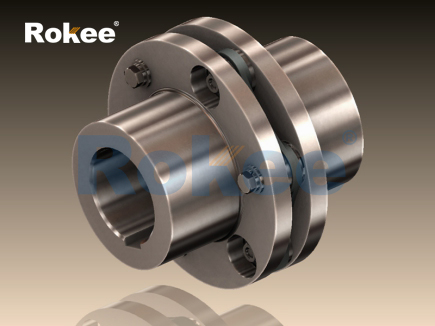
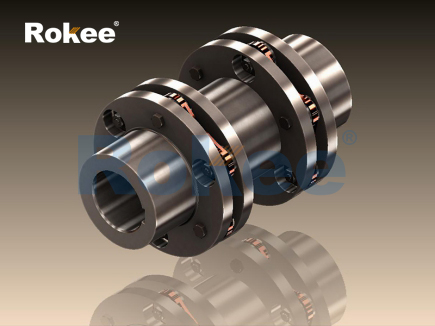
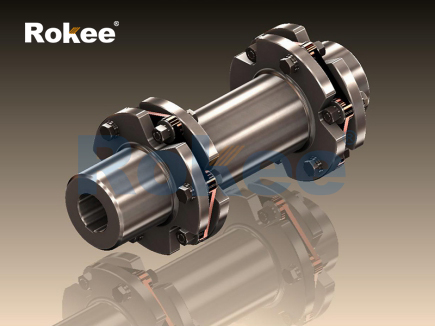
In the modern mechanical transmission industry, coupling components serve as essential connecting units that link driving and driven shafts to realize torque transmission, motion transfer, and mechanical system coordination. Among various coupling types, metal diaphragm couplings have gained widespread recognition and continuous optimization in industrial manufacturing by virtue of their unique all-metal structural design, excellent elastic compensation capability, and stable high-speed operation performance. Different from traditional flexible couplings that rely on rubber or polymer elastic elements, metal diaphragm couplings adopt thin metal sheets as the core deformation components, which fundamentally avoids the aging, deformation and failure defects of non-metallic materials under extreme working conditions. This distinctive structural characteristic enables the coupling to maintain reliable working performance in complex environments such as high temperature, low temperature, vacuum and chemical corrosion, making it a key transmission component in high-precision and high-end mechanical equipment. The inherent advantages of metal diaphragm couplings are closely related to their structural composition, material selection and morphological classification, and differentiated structural designs also endow products with diversified performance characteristics to adapt to variable industrial application scenarios.
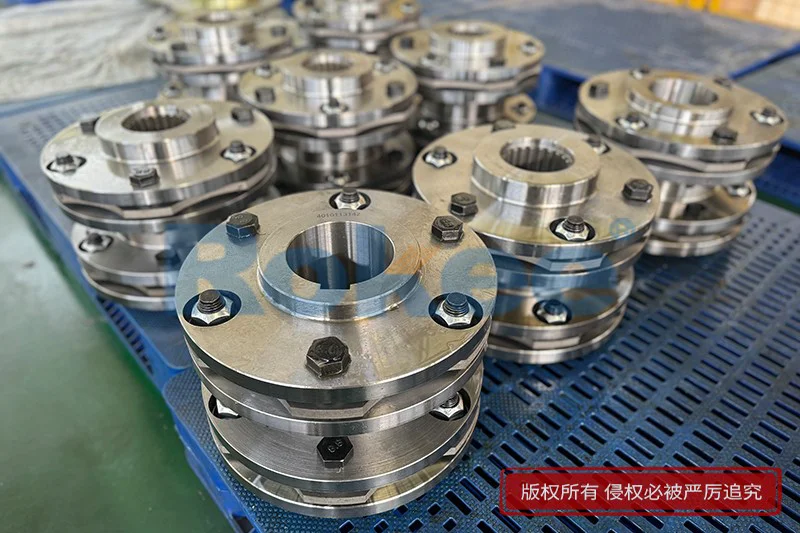
The basic structure of a metal diaphragm coupling presents a compact and symmetrical mechanical layout, mainly composed of metal diaphragm sets, half couplings, fasteners and positioning components. As the core functional unit of the entire coupling, the metal diaphragm set is generally made of high-strength stainless steel alloy sheets with uniform thickness and smooth surface. Multiple thin metal sheets are stacked in an orderly manner to form an integrated diaphragm combination, and the number of stacked sheets varies according to the torque bearing requirement of the equipment. The half couplings located at both ends are the connecting bases for external transmission shafts, with reserved assembly holes and fastening structures on the surface to ensure stable connection with the driving shaft and driven shaft. Fasteners such as high-strength bolts are arranged in a staggered penetrating form to fixedly connect the diaphragm set and the half couplings. This staggered assembly mode can evenly disperse the transmission torque on each metal diaphragm, effectively avoiding local stress concentration caused by concentrated force bearing. In addition, subtle positioning structures are designed inside the coupling to limit the radial displacement of components during operation, ensuring the coaxiality of the two half couplings in the static state and laying a foundation for stable high-speed rotation. There is no need for any lubricating medium or elastic auxiliary materials inside the whole coupling structure, and the fully enclosed metal assembly form simplifies the daily maintenance work while improving the structural durability.
According to the morphological structure and assembly form of diaphragms, metal diaphragm couplings can be divided into two mainstream categories: integral diaphragm couplings and link diaphragm couplings, and each type has unique structural characteristics and application advantages. The integral diaphragm coupling adopts an integrated thin metal plate with a special geometric contour, and the plate body is provided with symmetrically distributed connecting holes for bolt penetration and fixation. The overall structure of the integral diaphragm is continuous without segmented gaps, which makes the stress distribution more uniform during torque transmission. The integrated forming process eliminates the assembly gaps between discrete components, realizing higher torsional rigidity and transmission precision. This type of coupling is mostly applied in mechanical systems that require extremely high rotation accuracy and low vibration interference. In contrast, the link diaphragm coupling is composed of multiple independent fan-shaped or strip-shaped metal diaphragm pieces, and each diaphragm piece is independently connected to the half couplings through fasteners. The discrete structural design gives each diaphragm piece a more independent elastic deformation space, which enhances the compensation ability for angular and axial displacement between shafts. Compared with the integral structure, the link diaphragm has stronger deformation tolerance, can adapt to larger installation deviation, and shows better adaptability in equipment with frequent start-stop and reciprocating operation. In addition to the two mainstream types, there are composite stacked diaphragm couplings derived from optimized structures. This type combines the advantages of integral and link structures, adopting multi-layer composite stacking of special-shaped diaphragms to balance torsional rigidity and displacement compensation performance, and is suitable for medium and heavy-duty transmission working conditions.
The excellent comprehensive performance of metal diaphragm couplings is the core reason for their wide application in industrial fields, and their performance advantages are reflected in displacement compensation, transmission performance, environmental adaptability and service life. In terms of displacement compensation, the elastic deformation of metal diaphragms can simultaneously offset radial deviation, angular deviation and axial deviation between two connected shafts. When the mechanical equipment has installation errors or slight shaft displacement during operation, the diaphragm generates micro elastic deformation to buffer the displacement difference, avoiding additional mechanical friction and extrusion stress between shafts. The compensation range varies with the coupling structure; single-layer diaphragm structures are more suitable for working conditions with large angular deviation, while multi-layer stacked structures have better radial displacement tolerance. In terms of transmission performance, the all-metal structure brings high torsional rigidity to the coupling, which can accurately transmit rotational torque and angular displacement without obvious torsional deformation. This characteristic ensures the synchronous operation precision of the driving and driven ends, effectively reducing motion loss and improving the overall transmission efficiency of the mechanical system. Meanwhile, the smooth metal surface and compact assembly structure make the coupling have low moment of inertia, which can respond quickly in high-speed rotating equipment and reduce dynamic energy consumption.
In terms of environmental adaptability, metal diaphragm couplings break through the temperature limitation of non-metallic elastic couplings. The special stainless steel alloy materials maintain stable mechanical properties in both ultra-low temperature and high-temperature environments, without brittle fracture or soft deformation. The metal surface undergoes anti-corrosion treatment, which can resist the erosion of humid air, weak acid and weak alkali media, and can work stably in harsh industrial environments such as chemical plants and coastal humid areas. Besides, the sealed metal structure does not accumulate dust and impurities easily, and is free from the aging and fatigue failure of rubber and plastic materials. There is no need to add lubricating oil or grease during operation, which avoids component pollution and maintenance costs caused by lubricant deterioration. In terms of service life, the metal diaphragm has excellent fatigue resistance. Under normal working conditions, the fatigue cycle life of the diaphragm set can exceed tens of millions of times. Even under frequent alternating load and high-speed rotation, the structural integrity can be maintained for a long time. The wearing parts in the coupling are few, and the later maintenance only needs regular inspection of fastener tightness and diaphragm surface integrity, greatly reducing the equipment operation and maintenance cost.
With the continuous upgrading of industrial manufacturing standards, metal diaphragm couplings have been applied in more and more professional mechanical fields, covering light precision equipment to heavy industrial machinery. In the field of high-speed precision manufacturing equipment, such as numerical control machine tool spindles, precision testing instruments and automated production lines, integral metal diaphragm couplings are widely used. Their high torsional rigidity and low vibration characteristics ensure the processing accuracy of mechanical equipment, avoid motion deviation caused by torque loss, and meet the strict precision requirements of fine processing. In the energy power industry, the couplings are applied to centrifugal compressors, generator sets and high-speed water pumps. The stable high-speed operation performance and temperature resistance enable the equipment to maintain continuous and efficient operation under long-term high-load working conditions, reducing the failure rate of power transmission components.
In heavy industrial production such as metallurgy and building materials, link diaphragm couplings are favored for their strong displacement compensation ability and high torque bearing capacity. Metallurgical rolling equipment and large conveying machinery often have installation deviations and mechanical vibration during operation. The flexible deformation of link diaphragms can buffer mechanical vibration and impact force, protecting the transmission shaft and other core components from rigid damage. In the marine and transportation industry, metal diaphragm couplings are installed in ship propulsion systems and mobile transportation equipment. Their corrosion resistance and compact structural design adapt to the humid and salt-spray marine working environment, and the stable transmission performance ensures the power output stability of transportation equipment. Moreover, in the papermaking, pharmaceutical and food processing industries that require high equipment sanitation standards, the all-metal smooth structure of the coupling is easy to clean, free from microbial contamination, and conforms to the sanitary production specifications of special industries.
In the current mechanical transmission industry, the iterative optimization of metal diaphragm coupling technology is still in progress. The research and development of new high-strength alloy materials further improve the fatigue resistance and corrosion resistance of diaphragms. The optimized diaphragm geometric structure reduces the internal stress of components during deformation, and the refined assembly process improves the overall matching precision of couplings. With the continuous development of intelligent manufacturing and high-end equipment manufacturing industry, the market demand for high-precision, high-stability and low-maintenance transmission components will continue to rise. Relying on mature structural design and excellent comprehensive performance, metal diaphragm couplings will gradually replace part of traditional coupling products, and expand their application scope in emerging fields such as new energy equipment and aerospace auxiliary machinery. In the future, the development direction of metal diaphragm couplings will focus on miniaturization, high torque density and intelligent fault monitoring, so as to adapt to the increasingly complex and diversified industrial working conditions and provide more reliable basic guarantee for the stable operation of modern mechanical systems.
pu sandwich panel line,pu sandwich panel machine,sandwich panel machine
« Metal Diaphragm Couplings » Latest Update Date: May 9, 2026
https://www.rokeecoupling.net/tags/metal-diaphragm-couplings.html