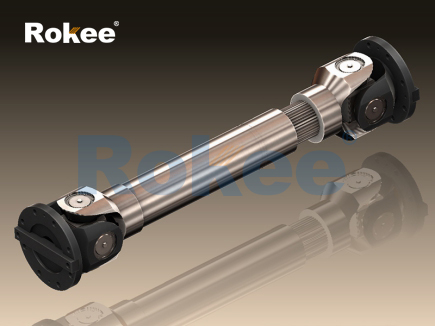
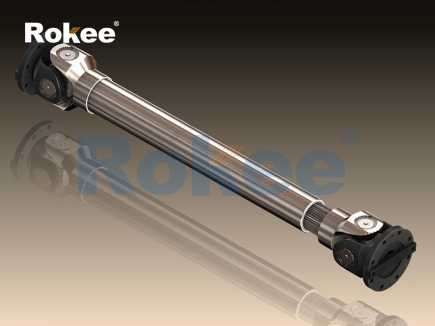
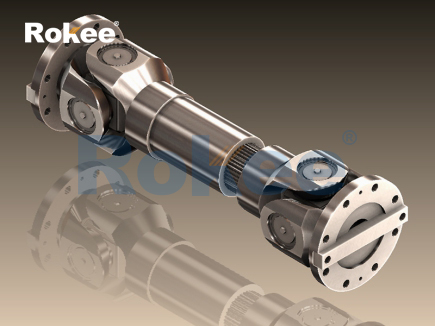
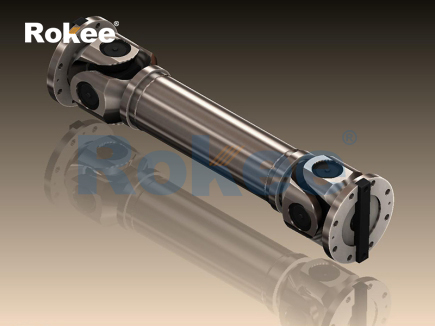
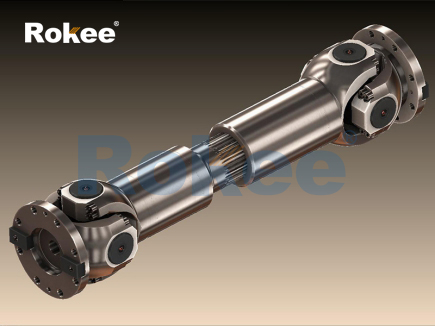
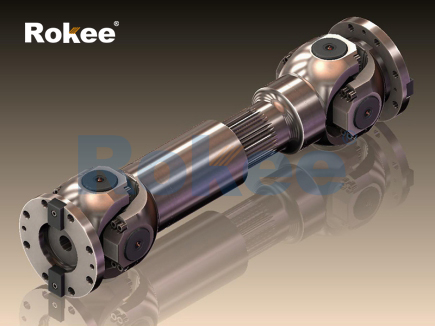
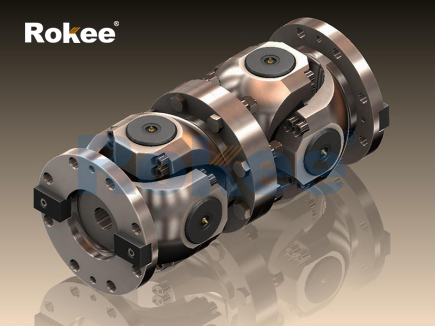
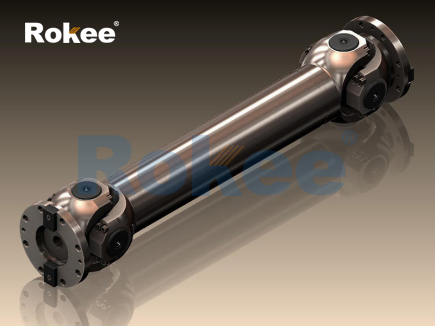
As one of the most fundamental and versatile mechanical transmission components, cardan coupling occupies an irreplaceable position in modern mechanical transmission systems. It is specially designed to transmit rotational torque between two shafts that are not collinear, effectively solving the transmission difficulties caused by angular displacement, axial deviation and spatial staggered arrangement between driving shafts and driven shafts. With the continuous upgrading of mechanical manufacturing technology and the diversification of industrial working conditions, cardan coupling has been continuously optimized in structural design and performance parameters, gradually adapting to complex working environments such as high load, variable speed and harsh external conditions. Its simple mechanical principle, reliable structural stability and strong displacement compensation capability make it widely used in various industrial machinery, transportation equipment and engineering mechanical devices. This paper comprehensively elaborates on the internal composition and working mechanism of cardan coupling, analyzes its core performance characteristics and influencing factors, sorts out common classification forms based on structural differences, and discusses its application scenarios in different industrial fields, so as to systematically present the comprehensive mechanical attributes and application value of cardan coupling.
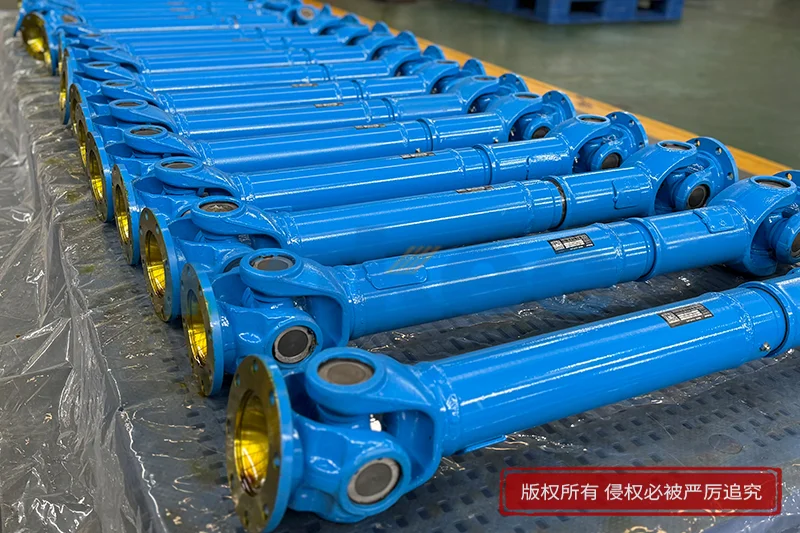
The basic structure of cardan coupling follows a concise and efficient mechanical design logic, and the classic component combination ensures stable torque transmission under multi-angle working conditions. The conventional single-section cardan coupling is mainly composed of three core parts: two yoke forks and an intermediate cross shaft. The two yoke forks are respectively fixed on the end surfaces of the driving shaft and the driven shaft through fastening connection structures. Each yoke fork is processed with symmetric bearing installation holes, which are used for matching assembly with the shaft necks at the four ends of the cross shaft. The cross shaft acts as the intermediate hinge connection component, and its four mutually perpendicular shaft necks can freely rotate around the bearing center inside the yoke fork, forming a flexible movable connection structure between the two shafts. In order to reduce mechanical friction and wear during operation, precision rolling bearings or sliding bearings are usually installed at the matching positions between the cross shaft and the yoke forks. Some optimized structural designs are also equipped with sealing components and lubrication structures inside the bearings. The sealing structures can effectively block external dust, moisture and corrosive impurities from entering the friction clearance, while the lubrication system continuously provides lubricating oil for the contact surfaces of moving parts, reducing friction resistance and prolonging the service life of mechanical components. In terms of overall assembly structure, all parts of the cardan coupling adopt modular assembly design, which simplifies the installation and disassembly process, and brings convenience for daily maintenance and component replacement in industrial production.
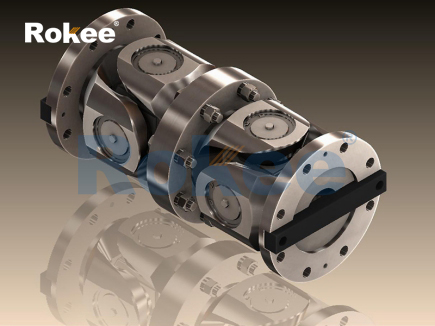
The working principle of cardan coupling is based on the spatial hinge motion mechanism, realizing continuous and stable transmission of rotational motion under angular deviation conditions. When the driving shaft rotates at a constant speed, the torque is transmitted to the cross shaft through the yoke fork on one side, and then the cross shaft drives the yoke fork on the other side to rotate synchronously, thereby completing the torque transmission between the two staggered shafts. It is worth noting that the single-section cardan coupling has the inherent mechanical characteristic of non-constant speed transmission. When there is an included angle between the driving shaft and the driven shaft, the angular velocity of the driven shaft will fluctuate periodically within a single rotation cycle. The fluctuation range of angular velocity is positively correlated with the shaft angle; the larger the included angle between the two shafts, the more obvious the velocity fluctuation. This periodic velocity change will generate alternating torsional vibration and additional mechanical load on the transmission system, which may cause vibration and noise during equipment operation in severe cases. In order to eliminate the non-constant speed defect of single-section structure, double-section or multi-section combined cardan couplings are designed. By connecting two single-section universal joints with an intermediate connecting shaft, and reasonably adjusting the installation angle and spatial position of the two universal joints, the velocity fluctuation generated by the front universal joint can be offset by the rear one, finally realizing approximately constant-speed torque transmission between the two shafts. This improved structural design greatly expands the applicable working angle of the coupling and optimizes the dynamic transmission performance.
Cardan coupling possesses multiple excellent performance attributes that adapt to complex industrial transmission requirements, and its performance advantages are prominently reflected in displacement compensation, load resistance and structural adaptability. Firstly, it has outstanding angular displacement compensation capability, which is the core performance advantage distinguishing it from rigid couplings. It can maintain stable transmission when the included angle between shafts ranges from a small angle to a large deflection angle, and can adapt to the angular position deviation caused by equipment installation errors, mechanical vibration and component thermal deformation. Secondly, the coupling has good axial and radial displacement tolerance. During the long-term operation of mechanical equipment, the shaft system will have tiny axial stretching and radial offset due to mechanical vibration and material thermal expansion. The flexible hinge structure of cardan coupling can absorb such displacement changes, avoiding additional extrusion stress between shaft components. In terms of load performance, the all-metal solid structure gives the coupling high mechanical strength and torsional rigidity, enabling it to bear large instantaneous impact loads and stable long-term heavy loads without permanent deformation or structural damage. In addition, the overall structural rigidity of cardan coupling is moderate. Although it cannot achieve the vibration absorption effect of elastic couplings, it can buffer part of the impact vibration generated during torque transmission through the hinge clearance and mechanical deformation of the cross shaft. In terms of environmental adaptability, the all-metal structural material and reliable sealing design enable it to work normally in low-temperature, high-temperature, dusty and humid harsh working environments, with strong environmental corrosion resistance and structural durability.
While having diverse performance advantages, cardan coupling also has inherent performance limitations that need to be considered in application selection. The most prominent limitation is the dynamic vibration problem of single-section structure. The periodic angular velocity fluctuation will induce torsional vibration of the transmission shaft, which may cause fatigue wear of mechanical parts and reduce the running stability of the equipment when working at high speed for a long time. Moreover, the friction pairs such as cross shafts and bearings are prone to mechanical wear during continuous operation. Although lubrication and sealing structures can slow down the wear rate, regular maintenance and lubrication replacement are still required to ensure transmission efficiency. In addition, compared with miniature elastic couplings, the overall structural volume of cardan coupling is larger, and the space occupation of the transmission system is higher, which is not suitable for compact mechanical equipment with extremely limited installation space. Its torsional rigidity is relatively high, and it lacks elastic buffering elements, so the vibration isolation effect for high-frequency alternating vibration is poor. These performance characteristics determine that cardan coupling is more suitable for medium and low-speed, heavy-load and large-displacement transmission scenarios, rather than high-precision micro-transmission systems.
According to structural composition, connection mode and motion characteristics, cardan couplings can be divided into multiple classification types, and each type has unique structural characteristics and applicable working conditions. The most common classification is based on the number of universal joint sections, including single-section cardan coupling and multi-section cardan coupling. The single-section structure has the advantages of simple composition, small volume and low assembly difficulty. It is usually used in transmission occasions with small shaft deflection angle and low requirement for transmission stability, and is mostly applied to low-speed auxiliary transmission mechanisms of mechanical equipment. The multi-section structure is mainly double-section combination type, which realizes constant-speed transmission through angle compensation between two universal joints. It has larger allowable shaft angle and higher transmission stability, and is widely used in main transmission systems with high continuity requirements. According to the structural form of the hinge part, it can be divided into traditional cross-shaft cardan coupling and ball-cage cardan coupling. The cross-shaft type adopts rigid cross shaft hinge, with strong bearing capacity and simple manufacturing process, which is suitable for heavy-load industrial transmission. The ball-cage type uses steel balls and arc raceways to replace the traditional cross shaft structure, realizing smoother rolling friction transmission, lower friction noise and higher transmission accuracy, and is suitable for medium-speed and medium-load transmission scenarios requiring low vibration. In addition, according to the fixing mode of the connecting end, it can be divided into flange connection type and sleeve clamping type. The flange connection type has large contact area and high fastening strength, which is not easy to loosen under heavy load and impact conditions. The sleeve clamping type has convenient assembly and disassembly, which is suitable for mechanical parts that need frequent debugging and replacement.
Different types of cardan couplings have differentiated application scenarios, covering multiple industrial fields such as engineering machinery, transportation equipment, industrial production machinery and agricultural equipment. In the field of engineering machinery, heavy-duty double-section cardan couplings are widely used in transmission systems of excavators, loaders and bulldozers. The complex working conditions of engineering machinery are accompanied by severe vibration, large load fluctuation and uneven ground. The excellent displacement compensation and heavy-load bearing performance of cardan couplings can adapt to the irregular position changes of transmission shafts during equipment operation, ensuring continuous power output of hydraulic and mechanical transmission systems. In the transportation industry, cardan couplings are important components of vehicle transmission structures. They are installed at the connection position between the automobile gearbox and the rear axle. When the vehicle is driving on uneven roads, the body jitter causes the relative position change of the transmission shaft. The couplings can flexibly adapt to the angular displacement, realizing stable transmission of power from the engine to the driving wheels. In industrial production, cardan couplings are applied to large-scale transmission equipment such as conveyor lines, rolling mills and mining machinery. These devices need to maintain long-term continuous operation under heavy-load conditions, and the durable all-metal structure can reduce the failure rate of mechanical transmission and improve production continuity.
In addition to the above application fields, cardan couplings also play an indispensable role in agricultural machinery and special mechanical equipment. Agricultural machinery such as tractors and harvesters often works in muddy and bumpy field environments. The working mechanism needs to adjust the transmission angle in real time with the terrain changes. The good environmental adaptability and flexible displacement compensation capability of cardan couplings can meet the operation requirements of agricultural machinery under complex terrain. In some special mechanical transmission systems, such as marine transmission equipment and industrial debugging transmission devices, customized optimized cardan couplings are used to solve the power transmission problem of spatially staggered shafts. With the progress of mechanical processing technology, the manufacturing precision of cardan couplings is continuously improved, and surface strengthening treatment processes are adopted for key friction components to enhance wear resistance and corrosion resistance. The optimized structural design further reduces motion vibration and mechanical noise, expanding its application scope in medium-high speed and low-noise transmission scenarios.
In the long-term application practice, the selection and maintenance of cardan coupling directly affect the operating efficiency and service life of the transmission system. When selecting the coupling type, it is necessary to comprehensively judge according to the actual working parameters such as shaft deflection angle, transmission load, operating speed and working environment. For heavy-load and large-angle transmission conditions, double-section cross-shaft cardan coupling with high structural rigidity should be preferred; for medium-speed and low-vibration working conditions, ball-cage cardan coupling with smooth transmission is more suitable. In terms of daily maintenance, regular inspection of the fastening state of connecting parts is required to prevent connection loosening caused by long-term vibration. It is also necessary to replace the internal lubricant regularly to ensure the lubrication effect of friction pairs and reduce component wear. Meanwhile, the sealing integrity should be checked to avoid the entry of external impurities causing structural corrosion and mechanical jamming. Standardized selection and scientific maintenance can give full play to the performance advantages of cardan coupling, reduce equipment failure rate, and save operation and maintenance costs for industrial production.
To sum up, cardan coupling relies on its unique hinge structure, excellent displacement compensation performance and strong load-bearing capacity to become a key connecting component in the mechanical transmission industry. Its simple and reliable structural design, diverse classification forms and wide environmental adaptability enable it to adapt to various complex transmission working conditions. Although restricted by inherent defects such as non-constant speed vibration and large structural volume, the continuous optimization of improved structures and processing technologies has continuously made up for its performance deficiencies. With the rapid development of intelligent manufacturing and heavy industry, the market demand for high-performance and durable transmission components is constantly increasing. As a mature and stable mechanical coupling, cardan coupling will still have broad application prospects in engineering machinery, transportation, industrial production and agricultural equipment. In the future, with the innovation of new materials and optimized structural design, cardan coupling will develop towards higher transmission accuracy, lower vibration noise and longer service life, providing more reliable basic component support for the upgrading and iteration of modern mechanical transmission systems.
pu sandwich panel line,pu sandwich panel machine,sandwich panel machine
« Cardan Couplings » Latest Update Date: May 8, 2026
https://www.rokeecoupling.net/tags/cardan-couplings.html