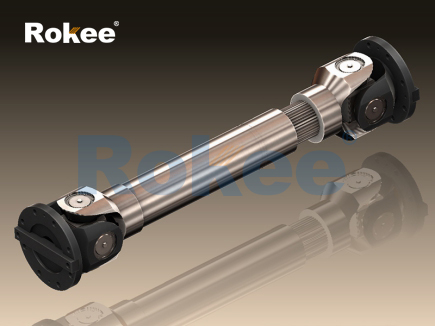
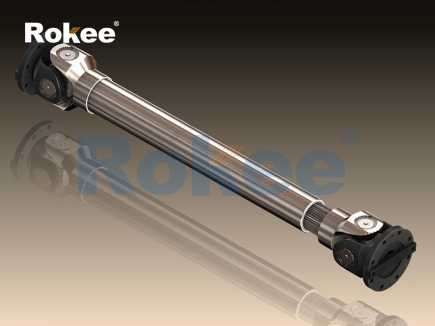
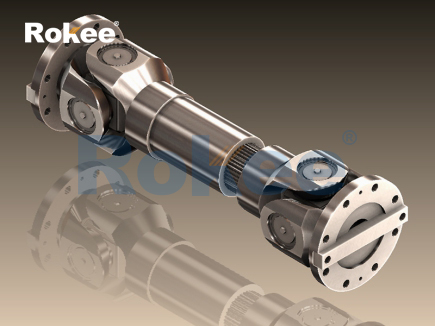
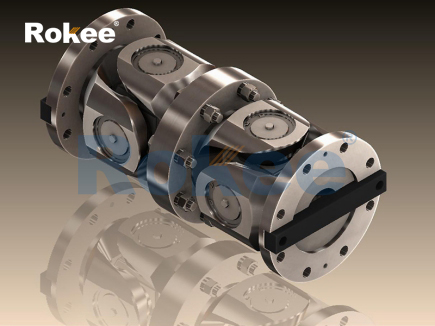
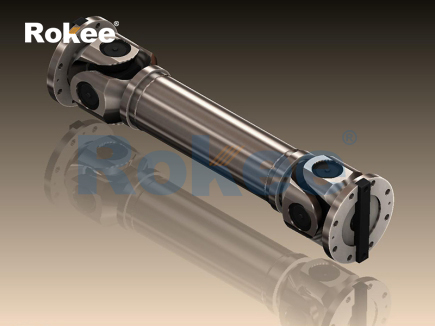
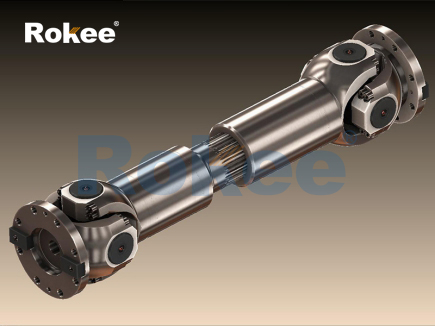
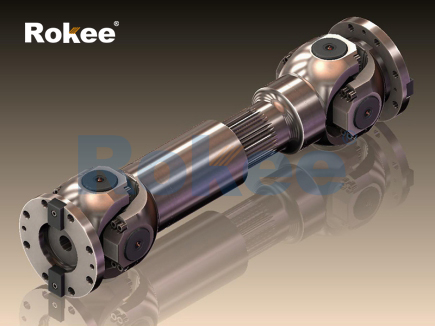
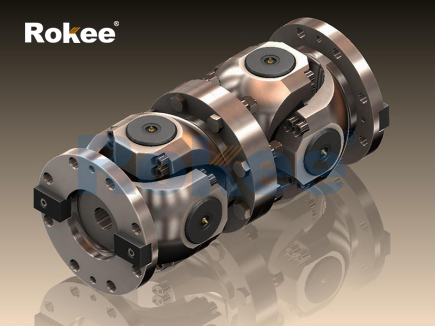
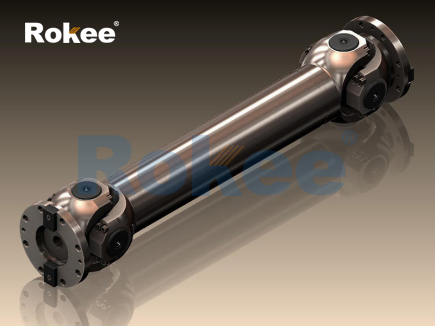
A universal joint shaft serves as an essential mechanical transmission component designed to transfer rotational torque between two misaligned shafts in diverse mechanical systems. Constructed with flexible joint structures and sturdy shaft bodies, this mechanical part effectively accommodates angular deviations, axial displacements and minor radial offsets during equipment operation. Its core working mechanism relies on movable internal connecting structures that maintain steady power transmission even when the connected shafts change angles dynamically. In practical application scenarios, the universal joint shaft is widely applied in transportation machinery, industrial transmission equipment and general mechanical transmission systems to resolve the transmission limitations of rigid shafts. Made of high-strength metallic materials, it possesses excellent mechanical toughness and wear resistance to withstand continuous rotational friction and variable mechanical loads in long-term operation. Reasonable structural design reduces vibration and mechanical noise during power delivery, ensuring stable and efficient torque transmission under complex working conditions. Regular maintenance such as surface cleaning and lubrication can slow down component wear, extend service life and keep the transmission precision at a stable level. With its simple structure, strong adaptability and reliable transmission performance, the universal joint shaft remains an indispensable basic component in modern mechanical transmission technology, continuously supporting the normal operation of various mechanical devices with stable and flexible power transmission capabilities.
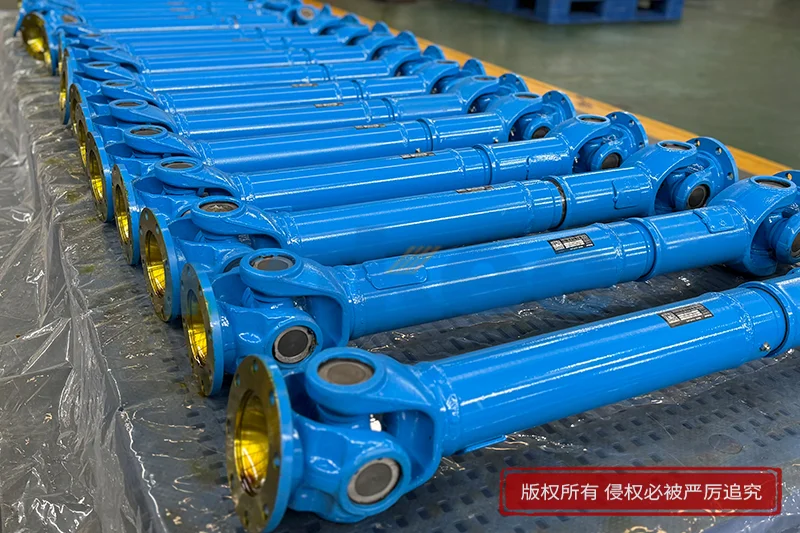
In the realm of mechanical engineering, power transmission stands as a cornerstone technology that enables the conversion and transfer of energy from a source to a load. Among the numerous components that facilitate this critical process, the universal joint shaft, often referred to as a U-joint shaft or cardan shaft, occupies a pivotal position. Designed to transmit rotational power between two shafts that are not aligned perfectly, this mechanical device has become an indispensable part of a wide range of industrial, automotive, and agricultural applications. From the drive shafts of automobiles to the conveyor systems in factories and the machinery in agricultural fields, the universal joint shaft’s ability to accommodate angular misalignment while maintaining efficient power transfer makes it a key element in modern mechanical systems. This article delves into the fundamental principles, structural characteristics, material considerations, applications, maintenance practices, and future trends of the universal joint shaft, providing a comprehensive overview of this essential mechanical component.
To understand the universal joint shaft, it is first necessary to grasp the basic concept of a universal joint (U-joint), the core component around which the shaft assembly is built. A universal joint is a type of flexible coupling that connects two rigid shafts, allowing them to rotate at varying angles relative to each other without significantly affecting the transmission of torque. The universal joint shaft extends this functionality by incorporating these joints into a shaft assembly, which can be of varying lengths and configurations to suit specific application requirements. Unlike rigid shafts that require precise alignment to operate effectively, the universal joint shaft can accommodate both angular misalignment (the angle between the two shafts) and, in some cases, axial displacement (linear movement along the shaft axis) and radial displacement (lateral movement perpendicular to the shaft axis).
The history of the universal joint dates back centuries, with early iterations appearing in ancient civilizations for simple mechanical devices. However, the modern universal joint, as we know it today, was refined in the 16th century by the Italian mathematician and physicist Gerolamo Cardano, leading to the alternative name “cardan joint.” The subsequent development of the universal joint shaft followed as engineers recognized the need to transmit power over longer distances while accommodating misalignment. Over time, advancements in materials science and manufacturing technologies have enhanced the performance, durability, and versatility of universal joint shafts, making them suitable for high-speed, high-torque applications that were once beyond their capabilities.
The structural composition of a universal joint shaft is relatively straightforward, yet each component plays a crucial role in ensuring reliable power transmission. The primary components include the universal joints (typically two, one at each end), the shaft body, yokes (which connect the joints to the shafts), and fasteners such as bolts and nuts. Some designs may also incorporate additional elements such as slip yokes (to accommodate axial displacement), bearings (to reduce friction in the joints), and protective covers (to shield the components from dust, debris, and moisture).
The universal joints themselves are available in several configurations, with the cross-and-bearing universal joint being the most common. This type of joint consists of a cross-shaped component (known as the cross or spider) with four trunnions (projections) at each end. Each trunnion is fitted with a bearing, which allows the cross to rotate freely within the yokes. The yokes are attached to the ends of the universal joint shaft and the driven/driving shafts, creating a flexible connection that enables angular movement. When one shaft rotates, the cross transfers the torque to the other shaft, even when the two shafts are at an angle. It is important to note that a single universal joint can introduce variations in the rotational speed of the driven shaft, a phenomenon known as angular velocity fluctuation. To mitigate this issue, most universal joint shaft assemblies use two universal joints arranged in a way that the angular fluctuations cancel each other out, ensuring a constant rotational speed at the driven end.
The shaft body, which connects the two universal joints, is typically a cylindrical rod or tube made from high-strength materials. The choice between a solid shaft and a hollow shaft depends on the application requirements. Solid shafts are generally used for applications with high torque and low rotational speeds, as they offer greater rigidity and strength. Hollow shafts, on the other hand, are lighter in weight and have a higher strength-to-weight ratio, making them ideal for high-speed applications where reducing inertia is critical. The diameter and length of the shaft body are determined by factors such as the amount of torque to be transmitted, the rotational speed, and the distance between the driving and driven shafts.
Material selection is a critical aspect of universal joint shaft design, as the materials must withstand the stresses, loads, and environmental conditions of the application. The most commonly used materials for universal joint shafts include carbon steel, alloy steel, stainless steel, and aluminum alloys. Carbon steel is widely used due to its high strength, durability, and cost-effectiveness, making it suitable for general-purpose applications. Alloy steel, which contains additional elements such as chromium, nickel, and molybdenum, offers enhanced strength, toughness, and resistance to wear and fatigue, making it ideal for high-torque and high-speed applications. Stainless steel is used in applications where corrosion resistance is essential, such as in marine environments or food processing facilities. Aluminum alloys are lightweight and offer good corrosion resistance, making them suitable for applications where weight reduction is a priority, such as in automotive and aerospace applications.
The working principle of the universal joint shaft revolves around the ability of the universal joints to transmit torque between misaligned shafts. When the driving shaft rotates, it imparts rotational motion to the first universal joint’s yoke. This motion is transferred through the cross to the second yoke, which is connected to the universal joint shaft. The universal joint shaft then rotates and transfers the motion to the second universal joint, which ultimately drives the driven shaft. The key to the universal joint shaft’s functionality is the ability of the cross’s trunnions to rotate within the bearings, allowing the yokes to move at varying angles relative to each other. As mentioned earlier, the use of two universal joints ensures that the angular velocity fluctuation from the first joint is canceled out by the second joint, resulting in a smooth and constant rotational speed at the driven shaft. This is achieved when the two universal joints are properly aligned and the angles between the driving shaft and the universal joint shaft are equal to the angles between the universal joint shaft and the driven shaft.
Universal joint shafts find applications in a wide range of industries, owing to their versatility and ability to accommodate misalignment. One of the most common applications is in the automotive industry, where they are used as drive shafts in rear-wheel-drive, four-wheel-drive, and all-wheel-drive vehicles. In these vehicles, the universal joint shaft transmits power from the transmission to the differential, which then distributes the power to the wheels. The ability of the universal joint shaft to accommodate the movement of the suspension (which causes the differential to move relative to the transmission) makes it an essential component in automotive drive systems. Additionally, universal joint shafts are used in steering systems to transmit motion from the steering wheel to the steering gear, allowing for the turning of the wheels.
In the industrial sector, universal joint shafts are widely used in conveyor systems, pumps, compressors, and industrial machinery. Conveyor systems, which are used to transport materials in factories, warehouses, and mining operations, rely on universal joint shafts to transmit power from the motor to the conveyor rollers. The misalignment between the motor and the rollers, which can occur due to installation errors or structural movement, is easily accommodated by the universal joint shaft. Pumps and compressors also use universal joint shafts to connect the motor to the pump/compressor impeller, ensuring efficient power transmission even when there is slight misalignment between the shafts. In heavy industrial machinery such as crushers, mills, and extruders, universal joint shafts are used to transmit high torque between large shafts, often in harsh operating conditions.
The agricultural industry is another major user of universal joint shafts. Agricultural machinery such as tractors, harvesters, and tillers use universal joint shafts to transmit power from the tractor’s power take-off (PTO) to various implements. For example, a tractor’s PTO uses a universal joint shaft to connect to a harvester, allowing the harvester to be powered by the tractor’s engine. The ability of the universal joint shaft to accommodate the movement of the implement (which can vary in height and angle during operation) makes it ideal for agricultural applications. Additionally, universal joint shafts are used in irrigation systems to transmit power to pumps, ensuring the efficient distribution of water to crops.
Other applications of universal joint shafts include marine propulsion systems, where they are used to transmit power from the engine to the propeller, accommodating the misalignment between the engine and the propeller shaft. In aerospace applications, lightweight universal joint shafts are used in aircraft engines and control systems, where weight reduction and reliability are critical. They are also used in robotics to transmit motion between different components of robotic arms, allowing for flexible and precise movement.
Proper maintenance of universal joint shafts is essential to ensure their longevity, reliability, and safe operation. Neglecting maintenance can lead to premature failure, which can result in costly downtime, equipment damage, and even safety hazards. The key maintenance practices for universal joint shafts include lubrication, inspection, and replacement of worn components.
pu sandwich panel line,pu sandwich panel machine,sandwich panel machine
« Universal Joint Shafts » Latest Update Date: May 9, 2026
https://www.rokeecoupling.net/tags/universal-joint-shafts.html