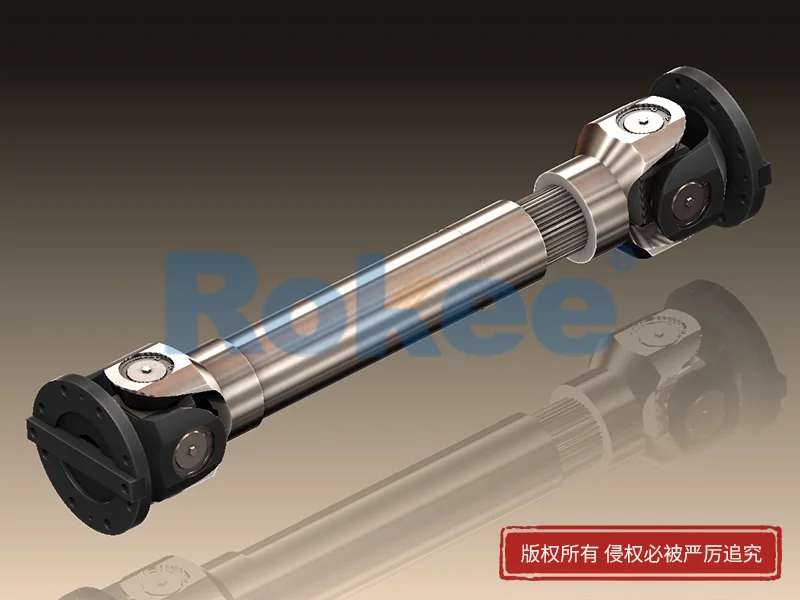
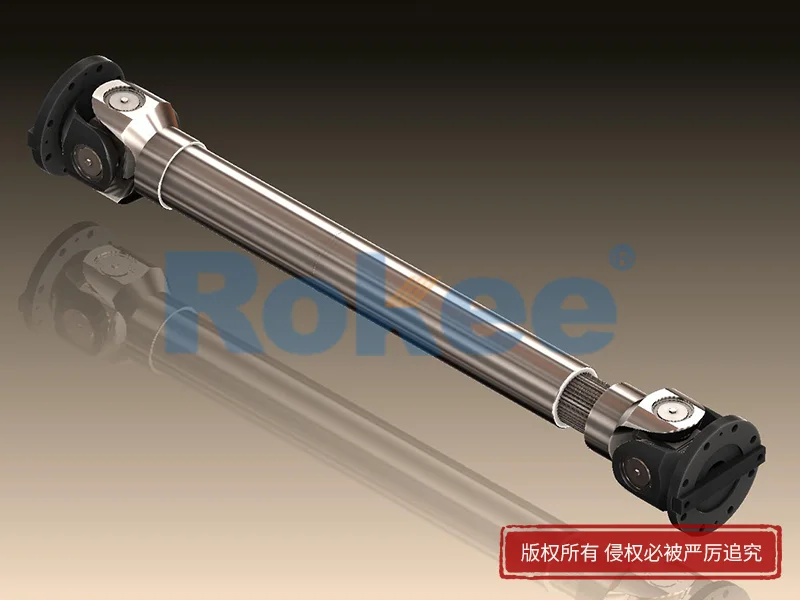
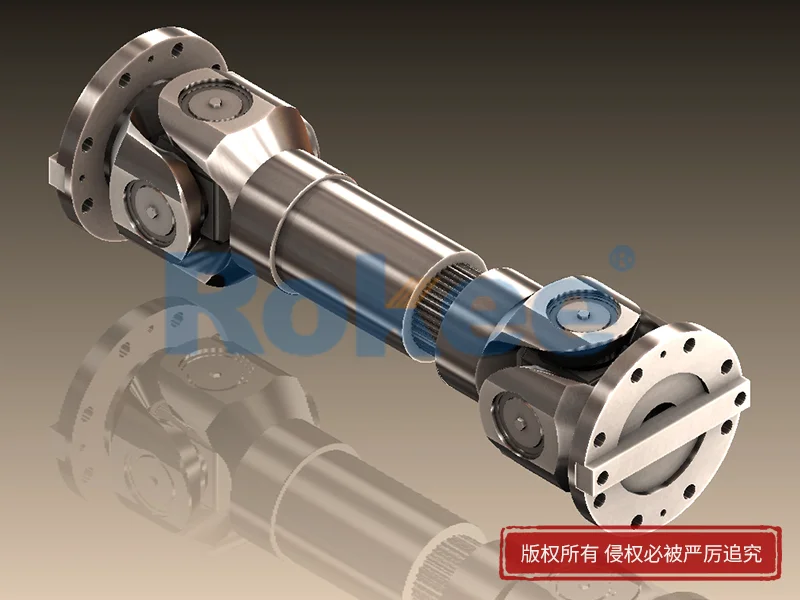
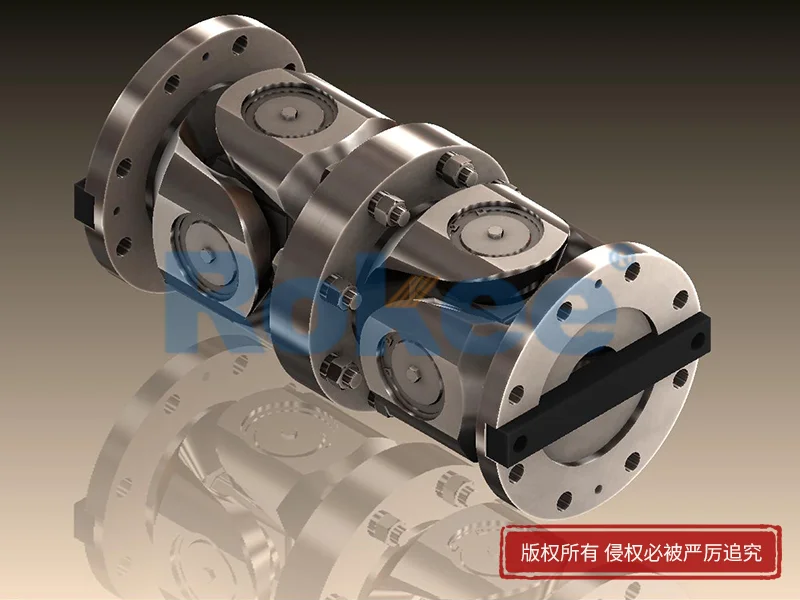
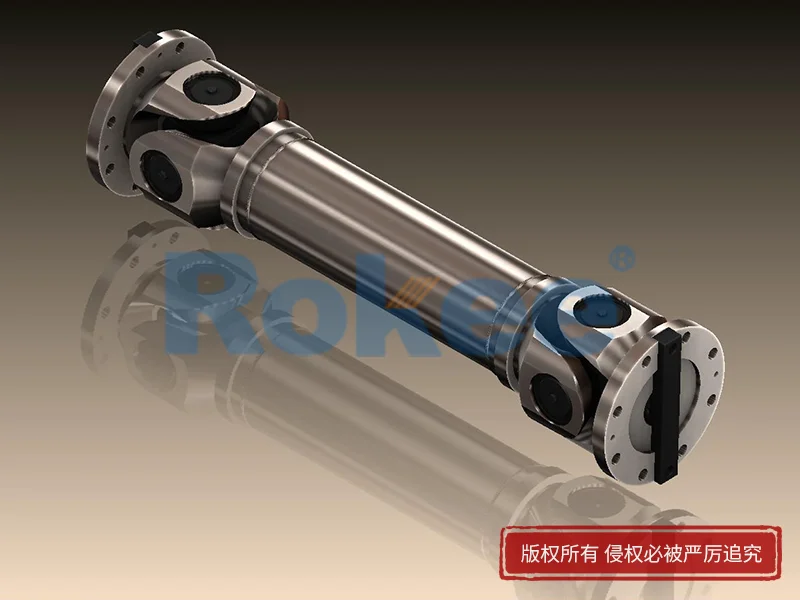
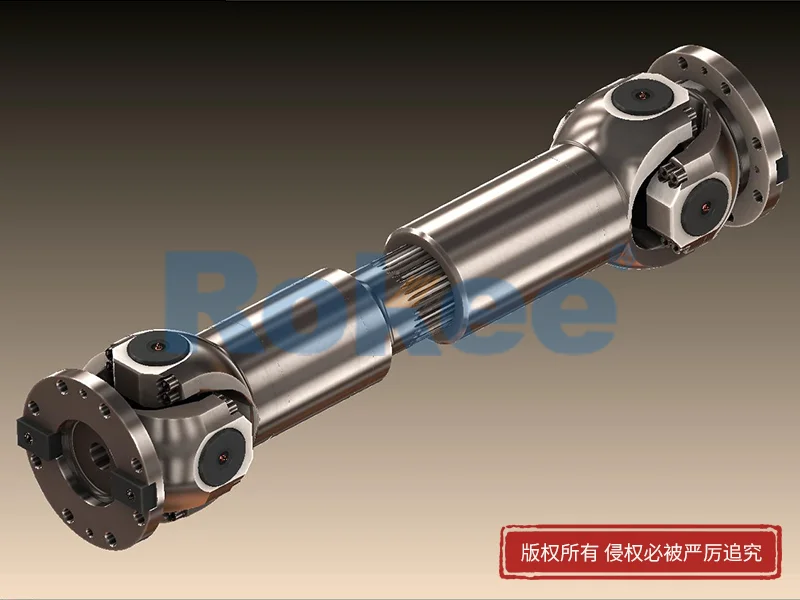
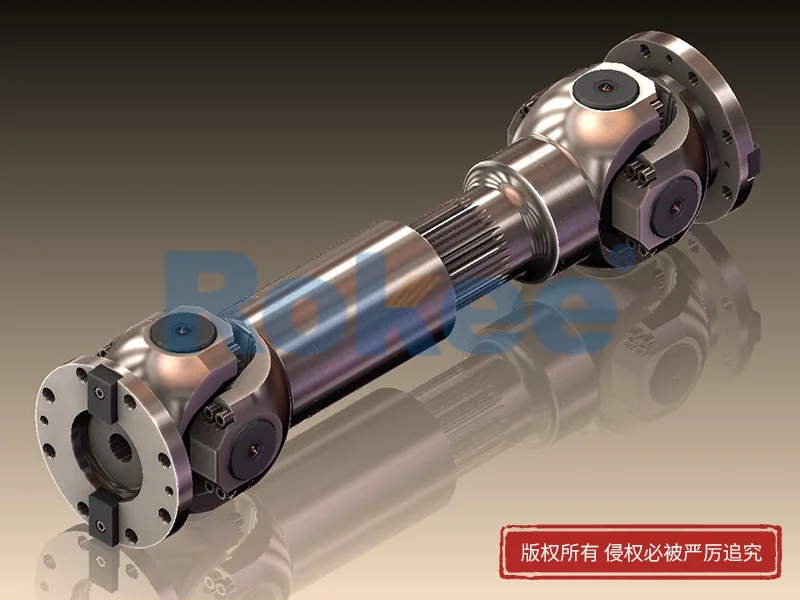
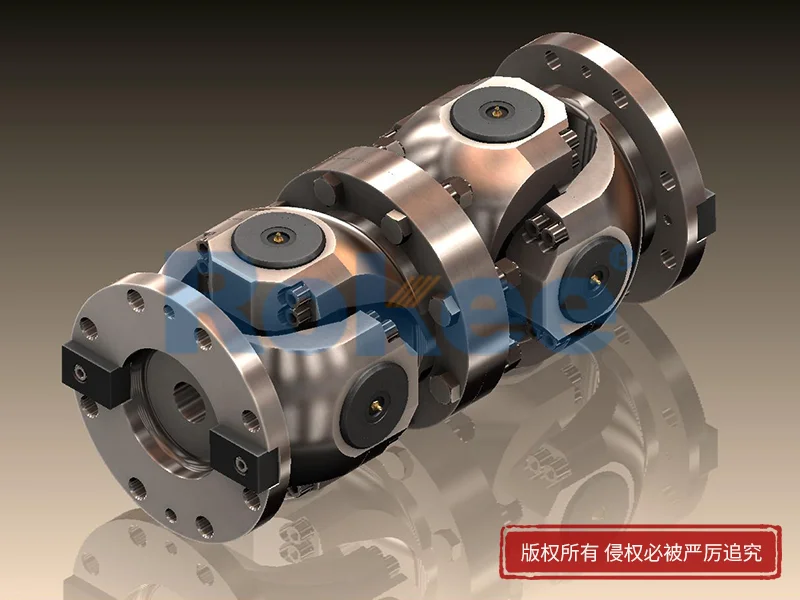
In the intricate ecosystem of mechanical power transmission, universal joints stand out as one of the most fundamental yet indispensable components, serving as a flexible mechanical hinge that bridges misaligned rotating shafts across countless industrial and mobile mechanical systems. Often referred to as U-joints in practical engineering contexts, these mechanical elements address a core challenge in power transmission: the inability to maintain perfect linear alignment between driving and driven shafts during equipment operation. Unlike rigid shaft couplings that rely on precise coaxial alignment to deliver consistent torque, universal joints accommodate angular deflection, axial displacement, and minor lateral misalignments while sustaining continuous rotational power transfer, making them a cornerstone design solution for machinery operating under dynamic, variable-position working conditions. Their ingenious mechanical structure, proven reliability, and exceptional adaptability have secured their widespread application spanning over a century of mechanical engineering development, from traditional industrial machinery to modern mobile equipment and precision agricultural devices.
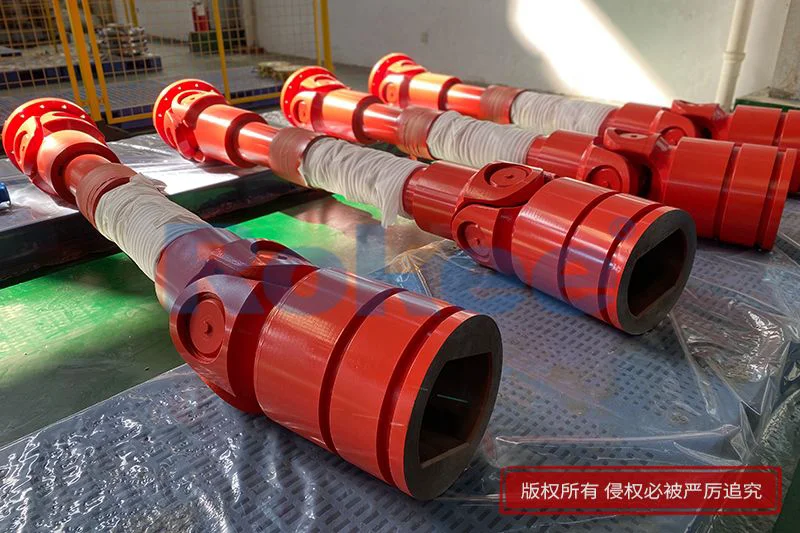
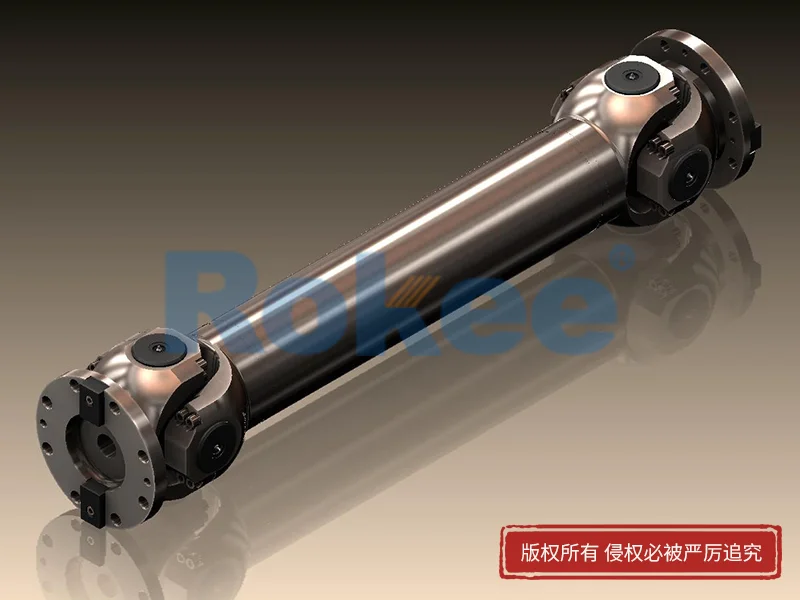
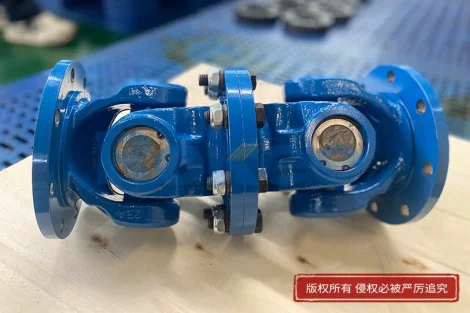
The fundamental structure of a standard universal joint is elegantly simple yet mechanically robust, composed of four core functional components that collaborate seamlessly to achieve flexible power transmission. At the center of the assembly lies a cross-shaped intermediate component, commonly named a spider or cross shaft, which acts as the pivotal transmission core connecting all auxiliary parts. Four cylindrical trunnions extend perpendicularly from the cross shaft’s central body, forming a symmetrical four-way support structure that enables multi-directional rotational adjustment. Matching these four trunnions are four sets of precision needle roller bearings, installed between the trunnion surfaces and the inner holes of two fork-shaped yoke assemblies. The two yokes, classified as driving yoke and driven yoke according to their power connection positions, are fixed respectively to the input driving shaft and output driven shaft of the transmission system. Complementing these primary components are a series of auxiliary structural parts, including sealing rings, dust covers, and fastening snap rings, which serve to isolate internal moving structures from external environmental interference and maintain the stability of internal lubrication conditions during long-term operation.
The working principle of universal joints originates from the spatial linkage mechanism theory, realizing the conversion and transmission of rotational motion through the coordinated movement of internal components. When the driving shaft rotates at a constant speed, the attached driving yoke drives the cross shaft to perform composite rotational and swinging movements. The cross shaft’s four trunnions rotate freely inside the needle roller bearings, eliminating rigid friction between metal components and allowing the cross shaft to adjust its spatial angle in real time according to the deflection between the two shafts. This adaptive angular adjustment further drives the movement of the driven yoke and the connected driven shaft, ultimately completing the transfer of torque and rotational motion. A key mechanical characteristic of single cross-shaft universal joints is the non-uniform rotational speed transmission under angular deflection conditions. When there is a fixed angle between the input and output shafts, the output shaft speed fluctuates periodically within each rotation cycle, even if the input shaft maintains absolutely constant speed. This periodic speed variation generates minor torsional vibration and alternating stress on the transmission system, a inherent mechanical feature that has guided the iterative optimization of universal joint design for decades.
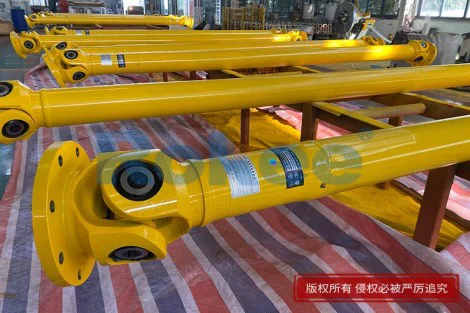
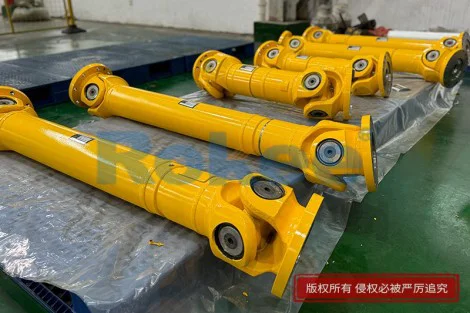
To mitigate the non-uniform speed defect of single universal joints and achieve nearly constant velocity power transmission, engineering practices widely adopt the double universal joint configuration, which integrates two single universal joints with a middle connecting shaft. The core design logic of this combined structure lies in offsetting the speed fluctuation generated by the first joint through the complementary motion of the second joint. By ensuring the two universal joints maintain equal deflection angles and arranging their yoke planes in a mutually symmetrical state, the periodic speed variation produced by the first joint’s angular deflection can be completely counterbalanced by the second joint’s motion characteristics. This optimized structure effectively eliminates torsional vibration and rotational jitter in the transmission process, realizing quasi-homokinetic power transfer. Double universal joint assemblies have become the mainstream configuration in high-stability transmission scenarios, as they retain the original flexible alignment compensation capability while significantly improving the smoothness and reliability of the entire transmission system.
The unique performance advantages of universal joints endow them with irreplaceable value in diverse mechanical scenarios where rigid transmission structures fail to adapt. In ground mobile equipment, universal joint assemblies are critical components of the drivetrain system, connecting transmission output shafts, drive shafts, and axle input ends. During vehicle travel, road unevenness causes continuous up-and-down floating displacement of the wheels and axles, generating real-time changes in the relative angle and position between the transmission and axles. Universal joints flexibly accommodate these dynamic misalignments, ensuring uninterrupted power output from the engine to the wheels while buffering partial vibration and impact from the road surface. This functional characteristic directly supports the normal driving of various mobile equipment under complex road conditions and improves the overall stability of the drivetrain system.
In agricultural machinery, universal joints serve as core transmission components for power take-off systems, widely applied in equipment such as field tillage machines, harvesting devices, and fertilization machinery. Field operation environments are characterized by uneven ground, frequent equipment attitude adjustments, and large-range working position changes. Traditional rigid transmission structures cannot adapt to the continuous angular and displacement variations of agricultural machinery components, while universal joints efficiently transmit power from the main engine to various working accessories under variable deflection conditions. They effectively avoid transmission component jamming, structural deformation, or power interruption caused by equipment attitude changes, ensuring the continuous and stable operation of agricultural tools during high-intensity field work. The rugged structural design of universal joints also enables them to resist dust, mud, and intermittent impact loads in field environments, demonstrating excellent environmental adaptability and structural durability.
Industrial mechanical systems also rely heavily on universal joints for flexible power transmission in complex operating environments. In automated production lines, material handling equipment, and heavy-duty industrial transmission devices, multiple transmission shafts are often arranged in three-dimensional space due to equipment layout limitations, making it impossible to achieve full coaxial alignment. Universal joints connect spatially staggered shafts to build continuous transmission paths, realizing flexible torque transmission in limited installation spaces. In addition, for mechanical equipment with periodic swing, telescopic, or positional adjustment functions, universal joints can follow the dynamic changes of component positions in real time, maintaining stable power output during equipment adjustment and operation. This adaptability greatly improves the structural design flexibility of industrial equipment and expands the feasible range of mechanical motion trajectories.
The service performance and service life of universal joints depend heavily on structural maintenance and operating condition control, with friction and wear being the primary factors leading to performance degradation. The internal needle roller bearings and cross shaft trunnions are precision moving pairs that bear cyclic friction and pressure during continuous operation. Insufficient lubrication will cause dry friction between metal surfaces, accelerating component wear, increasing transmission resistance, and generating abnormal vibration and noise. Long-term operation under insufficient lubrication will further lead to bearing clearance enlargement, rotational jitter, and even structural jamming. Meanwhile, harsh operating environments such as dust, moisture, and corrosive media can penetrate internal moving gaps through aging or damaged sealing structures, causing rust, corrosion, and abrasive wear of precision components, which gradually reduces transmission accuracy and structural stability.
Scientific daily maintenance effectively prolongs the service cycle of universal joints and maintains stable transmission performance. Regular lubrication supplementation is the most critical maintenance measure, which can form a uniform oil film on the surface of moving pairs, isolating metal contact, reducing friction loss, and taking away heat generated by operation to avoid local overheating and material fatigue. It is also essential to regularly check the integrity of sealing components such as dust covers and sealing rings; timely replacement of aging, cracked, or deformed sealing parts can prevent external pollutants from invading the internal structure. In addition, long-term high-load operation will cause minor deformation and clearance changes of internal components, so periodic inspection of transmission smoothness and angular deflection flexibility is required. Abnormal jitter, noise, or stuck rotation during operation indicates component wear or structural failure, which requires timely maintenance and part replacement to avoid secondary damage to the entire transmission system.
With the continuous progress of mechanical manufacturing technology and the upgrading of industrial application requirements, universal joint design and production have been constantly optimized and innovated, evolving toward higher precision, higher durability, and stronger environmental adaptability. In terms of material selection, traditional ordinary carbon steel is gradually replaced by high-strength alloy steel and wear-resistant alloy materials. Through precision forging, heat treatment, and surface strengthening processes, the structural strength, wear resistance, and fatigue resistance of universal joint components are significantly improved, enabling them to adapt to higher load and longer-cycle operating conditions. In structural optimization, refined bearing matching and optimized cross shaft spatial structure design effectively reduce internal friction resistance and rotational inertia, improving transmission efficiency and operational smoothness. Improved sealing structures with multi-layer protection design further enhance the isolation ability against external pollutants, making universal joints suitable for more extreme working environments such as high dust, high humidity, and low temperature.
Modern industrial development also puts forward higher requirements for the lightweight and compact design of universal joints. In precision machinery, new energy equipment, and lightweight mobile devices, optimized miniaturized universal joint structures can achieve the same flexible transmission function with smaller installation space and lighter weight, helping reduce the overall structural weight of equipment and improve energy utilization efficiency. At the same time, the integration of modular design concepts makes universal joint assembly and disassembly more convenient, reducing equipment maintenance difficulty and improving the overall operational efficiency of mechanical systems. In terms of performance optimization, through dynamic simulation and mechanical parameter calibration, the structural proportion of double universal joints is further optimized, minimizing speed fluctuation and torsional vibration in the transmission process and achieving ultra-smooth constant-velocity power transmission, which meets the high-precision operation requirements of modern automated mechanical equipment.
As a classic mechanical basic component, universal joints have transcended simple power transmission functions and become an important structural guarantee for the flexible operation of modern mechanical systems. Their simple and reliable mechanical principle, flexible spatial adaptation capability, and wide environmental applicability make them an indispensable part of mobile equipment, agricultural machinery, industrial automation, and special engineering machinery. From traditional mechanical transmission to modern intelligent equipment systems, universal joints continue to exert stable and reliable performance values through continuous material innovation, structural optimization, and process upgrading. In the future, with the development of intelligent manufacturing and high-end mechanical equipment, universal joint technology will further evolve toward high precision, long life, low energy consumption, and strong adaptability, continuously providing solid basic support for the iterative upgrading of various mechanical transmission systems and promoting the stable development of the entire mechanical engineering field.
pu sandwich panel line,pu sandwich panel machine,sandwich panel machine
« Universal Joints » Latest Update Date: Jun 18, 2026
https://www.rokeecoupling.net/tags/universal-joints.html