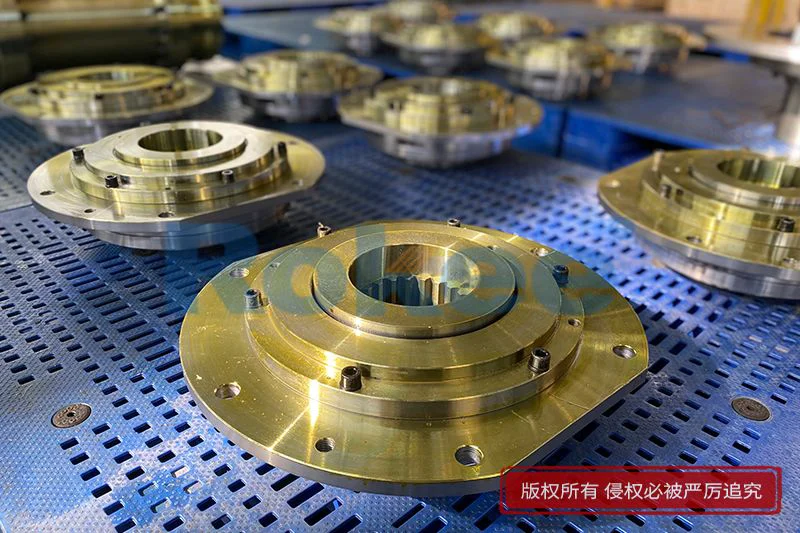
Expansion Sleeve Coupling
Rokee is a well-known Expansion Sleeve Coupling supplier from china, the page show cases of Expansion Sleeve Coupling, provide customized services based on user's drawings, and supporting exports.
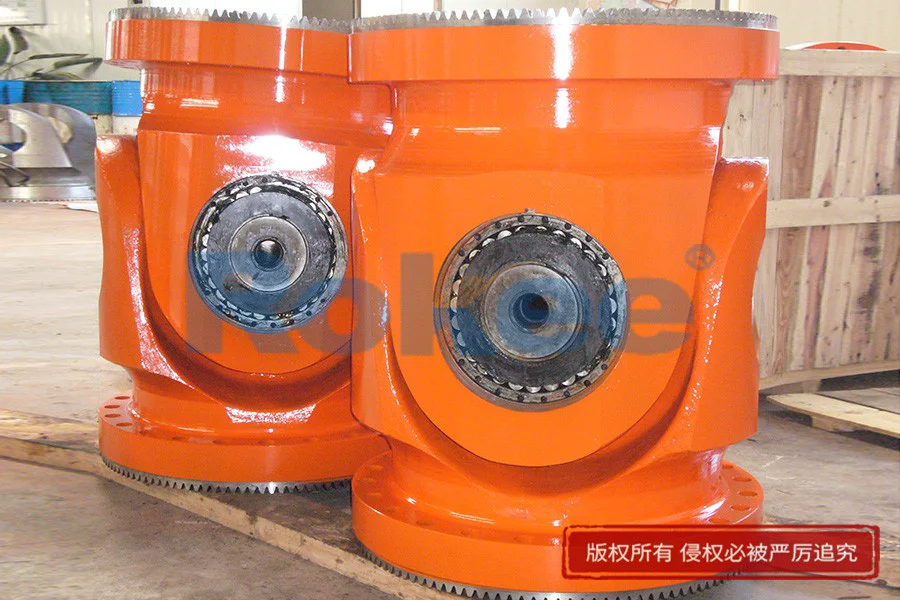
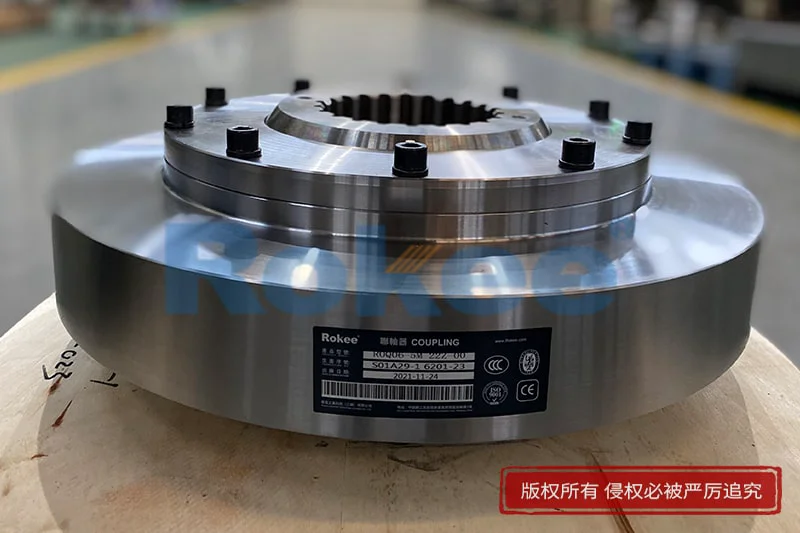
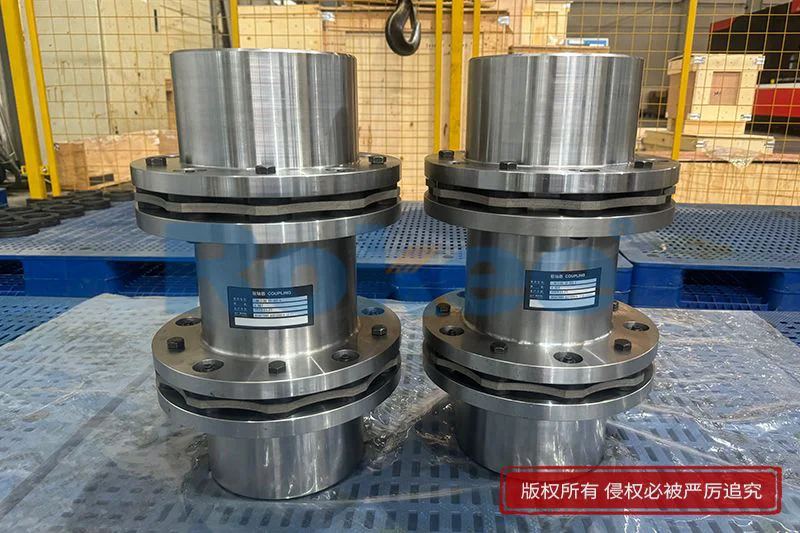
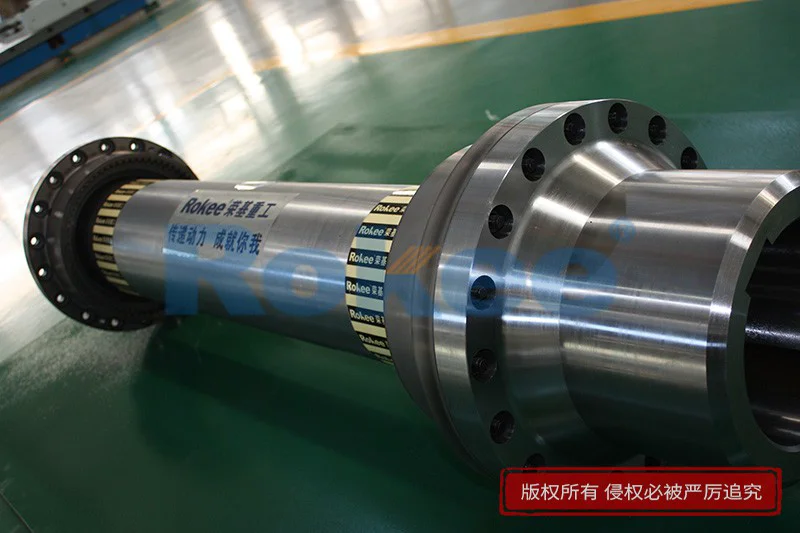
Expansion sleeve coupling, a critical keyless connection component in modern mechanical transmission systems, serves as a core intermediate part that links drive shafts and driven components, enabling efficient torque transmission, precise alignment, and reliable mechanical connection without relying on traditional keyways, splines, or welding processes. Unlike conventional coupling designs that depend on mechanical interlocking or rigid fixed connections, this type of coupling operates on the fundamental principles of elastic deformation and frictional force transmission, creating a tight, uniform bond between shaft and hub through controlled radial expansion. This unique operating mechanism sets it apart from standard shaft-hub connection solutions, addressing longstanding limitations of traditional methods such as stress concentration, poor alignment accuracy, difficult disassembly, and accelerated wear under dynamic loads. As a versatile and high-performance transmission element, it has evolved from a specialized industrial component to a widely adopted solution across diverse manufacturing and engineering sectors, with its design continuously refined to meet increasingly demanding operational requirements, including high-speed rotation, heavy-load transmission, frequent assembly and disassembly, and resistance to harsh environmental conditions. Every aspect of its structure, performance, classification, and application is engineered to optimize mechanical efficiency, extend service life, and enhance overall system stability, making it an indispensable part of modern precision machinery and heavy-duty industrial equipment alike.

At its core, the expansion sleeve coupling features a compact, symmetric structure composed of a small number of precision-machined components, with no complex moving parts or fragile elements, which contributes to its high durability and low maintenance needs. The primary components typically include an inner tapered sleeve, an outer tapered sleeve, high-strength locking bolts, and a pressure plate or locking ring, each manufactured from high-grade alloy steel with consistent mechanical properties and precise dimensional tolerances. The inner sleeve is designed to fit closely around the drive shaft, with a smooth, finely polished inner surface that ensures full contact with the shaft exterior, while the outer sleeve fits snugly inside the hub bore of the driven component, such as a gear, pulley, flywheel, or spindle. Both the inner and outer sleeves feature matching tapered contact surfaces, with a gradual, uniform taper angle that is carefully calculated to maximize radial expansion force when axial pressure is applied. The high-strength bolts are positioned circumferentially around the pressure plate, passing through aligned holes in the outer sleeve and connecting to threaded holes in the inner sleeve or the opposite pressure plate; when these bolts are tightened evenly in a symmetrical sequence, they generate controlled axial force that pushes the two tapered sleeves together. This axial compression forces the inner sleeve to contract radially around the shaft and the outer sleeve to expand radially against the hub bore, creating a double-sided interference fit that generates immense contact pressure between all mating surfaces. The resulting static friction between the shaft and inner sleeve, and between the outer sleeve and hub, is sufficient to transmit torque, axial force, and bending moment without any slippage or rotational backlash, even under extreme operational loads. Critical to its structural integrity is the precision machining of all contact surfaces, with strict control over surface roughness, taper angle accuracy, and dimensional consistency, as even minor deviations can disrupt uniform pressure distribution, reduce transmission capacity, and lead to premature wear or failure. Additionally, the material selection is tailored to withstand high compressive stress, fatigue loading, and environmental factors such as temperature fluctuations and corrosion, ensuring the structural stability of the coupling over prolonged operation.
The performance characteristics of expansion sleeve couplings are directly derived from their unique structural design and frictional transmission principle, offering a comprehensive set of advantages that address the shortcomings of traditional shaft-hub connection methods. One of the most prominent performance benefits is zero rotational backlash, a key feature for precision transmission applications; unlike keyway connections that inevitably create small gaps due to machining tolerances, leading to backlash during direction reversals, the tight interference fit of the expansion sleeve eliminates all clearance between mating components, enabling instant torque transfer and maintaining consistent positional accuracy, which is vital for high-precision machinery such as machine tools, robotic systems, and measuring equipment. Another standout performance trait is exceptional centering accuracy, with the uniform radial expansion of the sleeves automatically aligning the shaft and hub with minimal radial runout, often achieving coaxiality tolerances far stricter than those of conventional connections. This self-centering capability reduces vibration and noise during operation, minimizes bearing wear, and allows for stable high-speed rotation, with many models capable of operating reliably at speeds exceeding 20,000 revolutions per minute under properly balanced conditions. In terms of load capacity, these couplings deliver excellent torque and axial force transmission performance, with the frictional contact area optimized to distribute load evenly across the entire mating surface, avoiding the stress concentration that occurs at keyway edges in traditional connections; this even load distribution significantly improves fatigue resistance, extending the service life of both the coupling and the connected shaft and hub components. Furthermore, expansion sleeve couplings offer outstanding ease of installation and disassembly, a critical practical performance feature in industrial settings where equipment maintenance, component replacement, or system reconfiguration is required regularly. Unlike welded or permanently fixed connections, these couplings can be installed and removed using standard hand tools or torque wrenches, without the need for specialized heating, pressing, or cutting equipment; loosening the locking bolts gradually releases the radial pressure, allowing the sleeves to return to their original shape and enabling easy separation of the shaft and hub without damaging either component. This non-destructive assembly and disassembly not only reduces maintenance time and costs but also allows for repeated reuse of the coupling, making it a cost-effective long-term solution. Additional performance advantages include strong environmental adaptability, with the ability to operate effectively across a wide temperature range, resist moderate corrosion and dust contamination, and function without the need for lubrication; this maintenance-free operation minimizes downtime and reduces the need for regular upkeep, particularly in remote or hard-to-access industrial locations. The coupling also exhibits high rigidity and minimal elastic deformation under load, ensuring stable transmission efficiency and preventing power loss during operation, while its compact axial size saves valuable space in mechanical designs, allowing for more streamlined and efficient equipment layouts.
Expansion sleeve couplings are classified into distinct categories based on structural design, operational mechanism, load capacity, and application-specific requirements, with each type engineered to excel in particular operational scenarios and meet unique performance demands. The most common classification is based on the structural configuration of the tapered sleeve assembly, which divides the couplings into single-cone, double-cone, and multi-component expansion sleeve designs. Single-cone expansion sleeve couplings feature a single tapered sleeve paired with a matching cylindrical or tapered hub component, offering a simple, compact structure and easy installation; this type is ideal for light to medium load applications with limited installation space, though it may require higher disassembly force due to the single contact surface. Double-cone expansion sleeve couplings, the most widely used variant, incorporate inner and outer dual tapered surfaces that engage with each other and with the shaft and hub respectively, reducing the required disassembly force by a significant margin while maintaining high load capacity and uniform pressure distribution; this balanced design makes it suitable for a broad range of general industrial and precision applications, offering a versatile combination of performance and practicality. Beyond tapered sleeve structure, classifications also include hydraulic expansion sleeve couplings, which use controlled hydraulic pressure instead of mechanical bolts to generate radial expansion, enabling more precise control over the interference fit and uniform pressure distribution; this type is preferred for high-precision, large-diameter shaft connections where manual bolt tightening may not achieve consistent pressure. Another structural category is the flexible expansion sleeve coupling, which integrates a small elastic element or diaphragm into the assembly to compensate for minor radial, angular, or axial misalignment between the shaft and hub, combining the keyless connection benefit of expansion sleeves with the misalignment tolerance of flexible couplings; this variant is suitable for systems where perfect alignment is difficult to maintain due to thermal expansion, mechanical vibration, or installation errors. Classifications can also be based on load and operational performance, including standard-duty couplings for general industrial transmission with medium torque and speed requirements, high-torque couplings reinforced with thicker materials and enhanced alloy compositions for heavy-duty applications such as mining machinery, steel rolling equipment, and wind turbine drive systems, high-speed couplings that undergo precision dynamic balancing to minimize vibration at elevated rotational speeds, and heavy-duty corrosion-resistant couplings manufactured with specialized surface treatments or stainless steel alloys for use in harsh, humid, or chemically exposed environments. Each classification is defined by its structural and material adaptations, ensuring that there is a suitable expansion sleeve coupling design for nearly every mechanical transmission scenario, from small-scale precision instruments to large-scale industrial heavy machinery.
The diverse structural designs and exceptional performance properties of expansion sleeve couplings make them applicable across an extensive range of industrial sectors and mechanical systems, replacing traditional connection methods in countless applications where reliability, precision, and ease of maintenance are prioritized. In the field of machine tool manufacturing, these couplings are widely used in spindle connections, gear drives, and feed systems, where zero backlash and high centering accuracy are essential for maintaining machining precision and surface finish quality; their ability to withstand frequent direction reversals and high-speed rotation ensures stable operation of CNC lathes, milling machines, grinding machines, and machining centers, reducing downtime and improving product consistency. In the automation and robotics industry, expansion sleeve couplings are employed in robotic arm joints, servo motor connections, and precision transmission modules, where compact size, light weight, and precise torque transmission are critical for the agility and positional accuracy of robotic systems; the easy disassembly feature also simplifies maintenance and component replacement in automated production lines, supporting uninterrupted manufacturing operations. The heavy machinery and equipment sector, including mining, metallurgy, and construction machinery, relies heavily on high-torque expansion sleeve couplings for connecting drive shafts, gears, and conveyor systems; these couplings can withstand extreme impact loads, heavy continuous torque, and harsh working conditions, avoiding the stress concentration and failure risks associated with keyway connections in heavy-duty applications. In the wind power generation industry, expansion sleeve couplings are used in the connection between wind turbine gearboxes and generators, as well as in rotor shaft connections, where they must endure alternating loads, vibration, and variable environmental conditions; their high fatigue resistance and maintenance-free operation make them ideal for remote wind turbine installations where regular maintenance is challenging. Additional key applications include the automotive and transportation industry, where they are used in engine drive systems, transmission components, and railway vehicle axle connections, offering reliable torque transmission and improved durability; the textile, printing, and packaging machinery sector, where high-speed, continuous operation requires zero backlash and consistent performance to ensure product quality; and the marine and shipbuilding industry, where corrosion-resistant expansion sleeve couplings are used in propulsion systems, pump drives, and deck machinery, capable of withstanding humid, saltwater environments. They are also commonly used in pump and fan systems, conveyor belt drives, food processing machinery, and medical equipment, adapting to both general industrial needs and specialized high-precision or hygienic operational requirements. The broad applicability of expansion sleeve couplings stems from their ability to solve core mechanical transmission challenges: eliminating stress-related failures, improving system precision, reducing maintenance burdens, and enhancing overall equipment reliability. As industrial technology continues to advance toward higher precision, greater efficiency, and more sustainable operation, the demand for expansion sleeve couplings is expected to grow further, with ongoing design and material innovations expanding their performance capabilities and opening up new application scenarios across emerging engineering fields.
In summary, the expansion sleeve coupling represents a highly optimized and practical solution in the realm of mechanical shaft-hub connections, combining a straightforward yet robust structural design with exceptional performance metrics that outperform traditional connection methods in nearly every key aspect. Its reliance on frictional force transmission via controlled radial expansion eliminates the inherent flaws of keyway, spline, and welded connections, while its diverse classifications ensure adaptability to every conceivable operational load, speed, and environmental condition. From precision micro-mechanisms to heavy industrial drive systems, the expansion sleeve coupling delivers consistent, reliable performance, enhancing the efficiency, durability, and maintainability of mechanical equipment across global industries. As a testament to its engineering value, it has become a standard component in modern mechanical design, continuously evolving to meet the evolving demands of advanced manufacturing and engineering, and remaining a critical element in the development of more efficient, reliable, and sustainable mechanical transmission systems.
With excellent quality, we have been continuously providing many coupling products of various categories and uses complying with multiple standards and a full range of services, from the product selection to final installation and operation, for the industry fields of ferrous metallurgy, nuclear power, gas turbine, wind power, ropeway construction, lifting transportation, general equipment, etc.
pu sandwich panel line,pu sandwich panel machine,sandwich panel machine
« Expansion Sleeve Coupling » Update Date: 2026/3/25
https://www.rokeecoupling.net/cases/expansion-sleeve-coupling.html
Other Cases
![Metal Laminated Flexible Coupling]() Metal Laminated Flexible Coupling
Metal Laminated Flexible Coupling![Split Bearing Type Large Universal Joint]() Split Bearing Type Large Universal Joint
Split Bearing Type Large Universal Joint![Pulling Fork Tooth Coupling]() Pulling Fork Tooth Coupling
Pulling Fork Tooth Coupling![Claw Coupling With Brake Disc]() Claw Coupling With Brake Disc
Claw Coupling With Brake Disc![ROQ Drum Coupling]() ROQ Drum Coupling
ROQ Drum Coupling![Double Diaphragm Flexible Coupling]() Double Diaphragm Flexible Coupling
Double Diaphragm Flexible Coupling![High-speed & Corrosion-resistant Steam Turbine Coupling]() High-speed & Corrosion-resistant Steam Turbine Coupling
High-speed & Corrosion-resistant Steam Turbine Coupling![Drum Gear Coupling With Intermediate Tube]() Drum Gear Coupling With Intermediate Tube
Drum Gear Coupling With Intermediate Tube![WJ Spherical Roller Coupling For Drum]() WJ Spherical Roller Coupling For Drum
WJ Spherical Roller Coupling For Drum![LK Elastic Block Coupling]() LK Elastic Block Coupling
LK Elastic Block Coupling