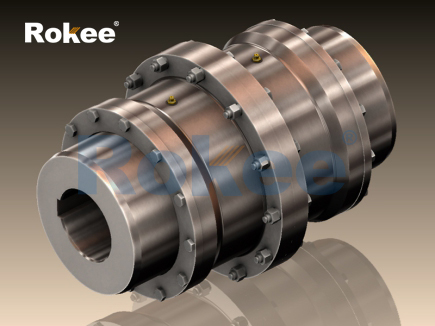
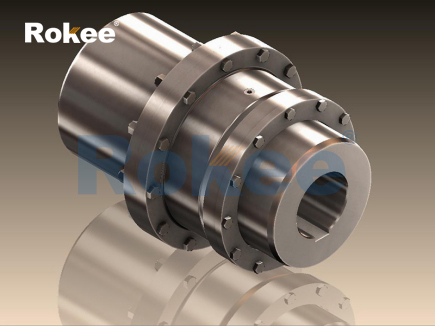
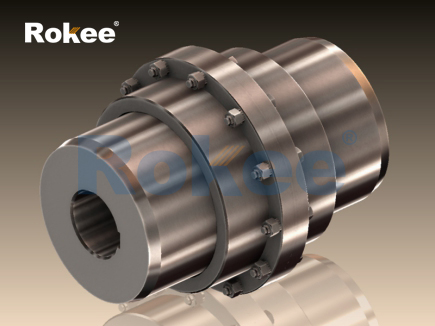
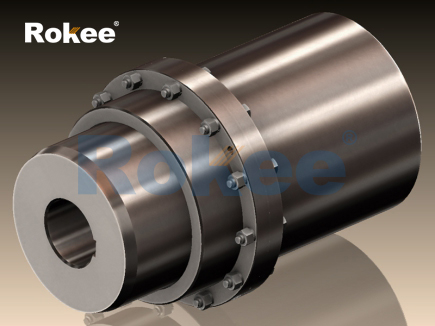
Tooth Coupling With Intermediate Shaft
Rokee is a well-known Tooth Coupling supplier from china, the page show cases of Tooth Coupling With Intermediate Shaft, provide customized services based on user's drawings, and supporting exports.
In the intricate ecosystem of mechanical transmission systems, the rational connection between rotating shafts determines the operational stability, power transmission efficiency, and service life of entire mechanical equipment. Among various shaft connection components, tooth coupling with intermediate shaft stands out as a reliable and robust transmission component, widely applied in heavy-duty mechanical scenarios that require long-distance power transmission, strong load-bearing capacity, and axis deviation compensation. This type of coupling integrates the mature meshing principle of tooth structures and the auxiliary transmission function of intermediate shafts, breaking through the spatial limitation of traditional short-distance couplings and solving multiple mechanical pain points such as shaft misalignment, vibration impact, and concentrated load in long-span transmission. With compact mechanical logic and durable structural design, it has become an indispensable core component in industrial transmission equipment, delivering stable power transmission performance under complex and harsh working conditions.
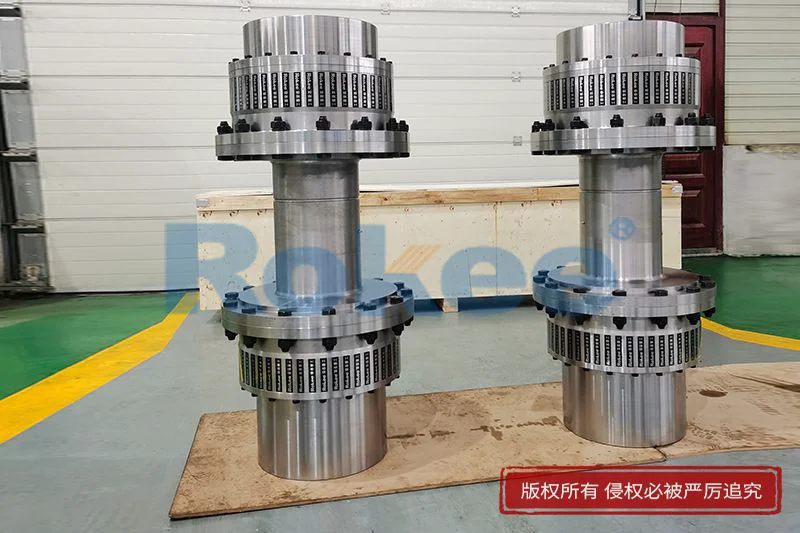
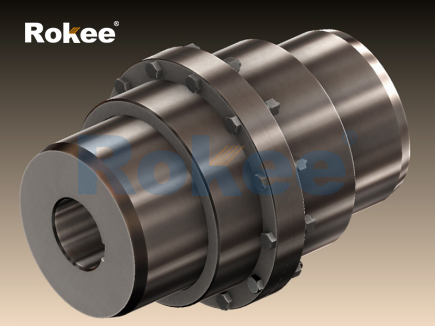
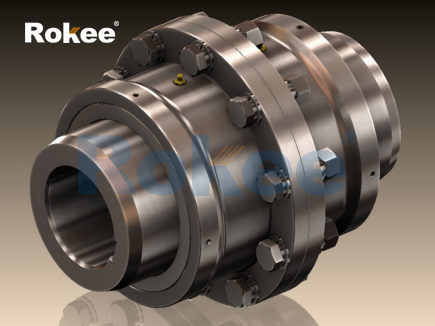
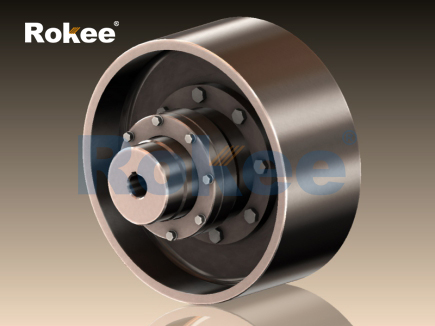
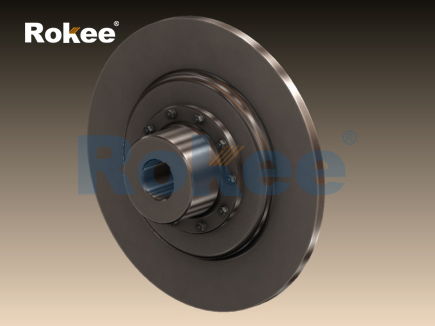
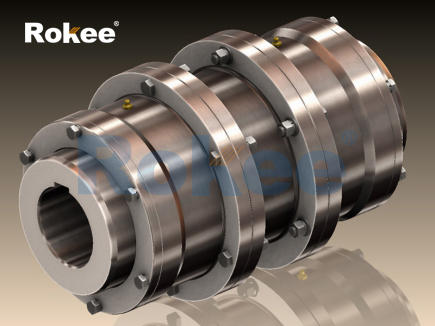
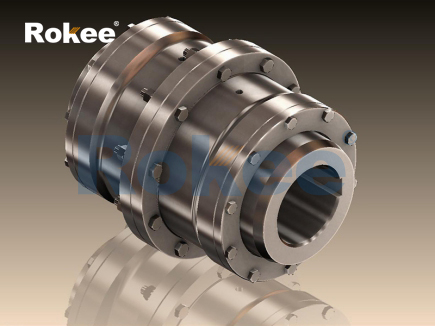
The basic composition of tooth coupling with intermediate shaft follows a modular mechanical design concept, and each component has clear functional positioning and mutual coordination to complete the power transmission process. The overall structure mainly includes two half couplings distributed at both ends, an intermediate shaft arranged in the middle, inner tooth sleeves, and fastening connection components. The half couplings located at the driving end and driven end are the core connecting parts linked with the power shaft and the working shaft respectively. The outer part of the half coupling is processed into spherical crowned tooth profiles through precision machining. This optimized tooth structure differs from traditional straight tooth structures, effectively avoiding the problem of stress concentration at the tooth edge during meshing. The intermediate shaft, as the middle transmission carrier, undertakes the task of connecting the two end half couplings and extending the transmission distance. Its length can be adjusted according to the actual installation spacing of mechanical equipment, which greatly improves the flexibility of mechanical layout. The inner tooth sleeve is sleeved on the outer side of the meshing part of the outer teeth, and the inner tooth contour matches the crowned outer teeth to form a precise meshing pair. All fastening components such as connecting bolts and positioning keys are made of high-strength metal materials, which can maintain stable locking performance under high-speed rotation and heavy load conditions to prevent component loosening and transmission failure.
Material selection is the fundamental guarantee for the excellent mechanical properties of tooth coupling with intermediate shaft. Most of the key force-bearing components including teeth and intermediate shafts adopt high-quality alloy steel with stable metallographic structure. After carburizing, quenching and precision grinding processes, the surface hardness of the tooth part is significantly improved, which endows the coupling with excellent wear resistance and extrusion resistance. The internal matrix of the alloy steel still maintains good toughness after heat treatment, enabling the coupling to buffer instantaneous impact loads generated during equipment startup, shutdown and variable speed operation. For the intermediate shaft with long force-bearing span, the material proportion is optimized to reduce self-weight inertia while ensuring structural rigidity, avoiding excessive bending deformation caused by long-term torsion. The surface of metal components is treated with anti-corrosion and oxidation resistance processes to adapt to humid, dusty and other harsh industrial environments, slowing down the aging rate of materials and extending the overall service cycle of the coupling. The scientific material matching and processing technology make the coupling not only adapt to continuous heavy-load operation, but also maintain stable mechanical performance in alternating working conditions.
The power transmission principle of tooth coupling with intermediate shaft is based on the precise meshing of internal and external teeth and the rigid transmission of intermediate shafts. During the operation of mechanical equipment, the torque generated by the power source is first transmitted to the driving-end half coupling. The outer teeth of the half coupling mesh with the inner teeth of the tooth sleeve, and the meshing contact force between the tooth surfaces drives the tooth sleeve to rotate synchronously. Subsequently, the torque is transmitted to the driven-end half coupling through the intermediate shaft, and finally stably output to the working mechanical shaft to realize the continuous transmission of power. The reasonably optimized tooth side gap is reserved in the meshing structure of internal and external teeth. This structural design does not affect the efficiency of torque transmission, but provides a certain movable space for the meshing teeth. When the connected two shafts have tiny angular deviation, radial displacement or axial offset due to installation errors or equipment operation vibration, the elastic dislocation between the crowned teeth can automatically compensate for the axis deviation. Compared with ordinary rigid couplings that lack deviation compensation capability, this tooth meshing structure effectively reduces the additional shear force and bending moment on the shaft body, and lowers the wear loss of bearings and other matching components.
Tooth coupling with intermediate shaft has multiple irreplaceable performance advantages in industrial application scenarios. First of all, it has excellent load-bearing performance. The crowned tooth structure makes the load evenly distributed along the tooth width during meshing, avoiding local stress concentration. Under the same overall size, its torque bearing capacity is significantly higher than that of straight tooth couplings and elastic couplings, and it can operate stably for a long time under heavy-load and high-torque working conditions. Secondly, the intermediate shaft expands the effective transmission distance between the two shafts, which solves the layout problem of separated installation of power equipment and working equipment, and provides more space for the structural design of mechanical systems. In addition, the overall structural rigidity of the coupling is high, the rotation synchronization of the driving and driven shafts is excellent, and the transmission ratio remains stable during operation without obvious rotation lag, which meets the high-precision rotation synchronization requirements of industrial transmission. Meanwhile, the metal meshing structure has strong vibration damping and impact resistance. The tiny gap between the tooth surfaces can buffer the instantaneous vibration generated by equipment operation, reduce vibration conduction between shafts, and weaken the vibration noise of the overall mechanical system.
This type of coupling is widely used in multiple industrial fields relying on its comprehensive performance. In the metallurgical industry, it is applied to rolling mills, smelting conveying equipment and other mechanical devices that require continuous heavy-load operation. It can resist the harsh environment of high temperature and dust in metallurgical workshops, and maintain stable power transmission during long-term non-stop operation. In the mining industry, it serves for crushing equipment, screening equipment and underground conveying machinery. The excellent impact resistance and anti-distortion performance enable it to cope with complex working conditions such as uneven material feeding and instantaneous load fluctuation. In the field of heavy transportation, it is used for power connection of large-scale conveying machinery, realizing long-distance stable transmission of power between transmission rollers. Besides, it also plays an important role in building material processing, chemical industry and water conservancy machinery. Whether it is low-speed heavy-torque operation or medium-speed continuous rotation, the coupling can adapt to diverse working modes and maintain consistent transmission performance.
In terms of installation and debugging, tooth coupling with intermediate shaft follows simple and efficient assembly logic. Before installation, workers need to check the flatness of each component and the smoothness of the tooth surface to eliminate impurities and burrs that may affect meshing accuracy. During the installation process, the half couplings at both ends are fixedly connected to the power shaft and the working shaft respectively through positioning keys. The intermediate shaft is butted and fixed with the half couplings by high-strength bolts, and the butt joint position is accurately calibrated to control the axis deviation within the reasonable allowable range. The internal space of the tooth sleeve is filled with lubricating grease to form a uniform lubricating film on the meshing tooth surfaces. This measure can reduce friction loss during tooth meshing, lower operating temperature, and avoid tooth surface abrasion caused by dry friction. After the installation is completed, low-speed trial rotation is required to check for abnormal vibration and noise, and fine-tune the fastening tightness of bolts to ensure that all components are closely matched without loosening. The standardized installation process reduces the difficulty of equipment assembly and shortens the debugging cycle of mechanical transmission systems.
Daily maintenance and scientific detection are key links to prolong the service life of tooth coupling with intermediate shaft. In the daily operation cycle, regular inspection of the fastening state of connecting bolts is required to prevent bolt loosening caused by long-term mechanical vibration, which may lead to meshing dislocation. The lubrication state of the meshing teeth should be checked periodically. Aging and deteriorated lubricating grease needs to be cleaned and replaced in a timely manner to maintain good lubrication conditions. For the intermediate shaft, it is necessary to detect the bending deformation degree regularly. Once irreversible bending occurs, the intermediate shaft should be replaced in time to avoid aggravating shaft body wear and transmission vibration. During the shutdown maintenance period, the dust and metal debris attached to the surface of the coupling should be cleaned to prevent hard impurities from wearing the tooth surface. In addition, the vibration amplitude and operating temperature of the coupling during high-speed operation should be monitored. Excessive temperature rise often indicates insufficient lubrication or abnormal meshing friction, while excessive vibration may mean axis deviation beyond the allowable range. Timely troubleshooting of potential faults can effectively avoid sudden equipment shutdown caused by coupling failure.
Compared with other types of couplings, tooth coupling with intermediate shaft has obvious differentiated advantages in structural design and application performance. Elastic couplings rely on elastic elements such as rubber and spring pads to buffer vibration, but their load-bearing capacity is limited, and elastic components are easy to age and damage, making them unsuitable for long-term heavy-load operation. Ordinary rigid couplings have simple structures and high rigidity, but they cannot compensate for axis deviation. Tiny installation errors will cause severe wear of the shaft body and bearings. In contrast, tooth coupling with intermediate shaft combines the high rigidity of metal rigid connection and the flexibility of tooth meshing compensation. It not only retains the characteristics of high load-bearing and high transmission efficiency, but also has reliable axis deviation compensation capability. The detachable modular structure also makes component replacement more convenient, reducing the later maintenance cost of equipment. Although its structural volume is slightly larger than that of miniature couplings, its comprehensive stability and durability are more suitable for large industrial mechanical systems.
With the continuous upgrading of industrial mechanical equipment towards large-scale, high-power and long-life direction, the technical optimization of tooth coupling with intermediate shaft is also advancing steadily. In terms of structural optimization, the tooth profile curve is further refined to make the stress distribution of the meshing tooth surface more uniform and reduce fatigue wear under alternating loads. The lightweight transformation of the intermediate shaft is realized by optimizing the hollow structure and material ratio, which reduces the rotational inertia on the premise of ensuring rigidity and improves the dynamic balance performance during high-speed operation. In terms of processing technology, high-precision CNC grinding technology is adopted to improve the finish of the tooth surface, reduce meshing friction resistance, and further enhance power transmission efficiency. At the same time, composite anti-corrosion coatings are applied to the metal surface to adapt to more extreme working environments such as high humidity and strong corrosion, expanding the applicable boundary of the coupling.
In the entire industrial transmission chain, tooth coupling with intermediate shaft undertakes the important task of connecting power sources and executing components. Its stable operation directly affects the production continuity and operational safety of mechanical equipment. A high-quality tooth coupling with intermediate shaft can not only reduce the failure rate of mechanical transmission systems, but also lower the comprehensive maintenance cost of equipment. The reasonable structural design reduces the loss of matching parts such as bearings and sealing parts, extending the overall service life of mechanical equipment. In the long-term industrial production process, its high transmission efficiency can effectively reduce energy consumption, creating stable economic benefits for industrial production. As a basic mechanical component with mature technology and excellent performance, it will continue to play an irreplaceable role in heavy industry, transportation and other fields, and continuously iterate and upgrade with the development of mechanical manufacturing technology to adapt to more complex industrial working conditions.
With excellent quality, we have been continuously providing many coupling products of various categories and uses complying with multiple standards and a full range of services, from the product selection to final installation and operation, for the industry fields of ferrous metallurgy, nuclear power, gas turbine, wind power, ropeway construction, lifting transportation, general equipment, etc.
pu sandwich panel line,pu sandwich panel machine,sandwich panel machine
« Tooth Coupling With Intermediate Shaft » Latest Update Date: May 9, 2026
https://www.rokeecoupling.net/cases/tooth-coupling-with-intermediate-shaft.html
Products
![GICL Crown Gear Coupling]() GICL Crown Gear Coupling
GICL Crown Gear Coupling![GICLZ Crown Gear Coupling]() GICLZ Crown Gear Coupling
GICLZ Crown Gear Coupling![GIICL Crown Gear Coupling]() GIICL Crown Gear Coupling
GIICL Crown Gear Coupling![GIICLZ Crown Gear Coupling]() GIICLZ Crown Gear Coupling
GIICLZ Crown Gear Coupling![GCLD Crown Gear Coupling]() GCLD Crown Gear Coupling
GCLD Crown Gear Coupling![NGCL Crown Gear Coupling]() NGCL Crown Gear Coupling
NGCL Crown Gear Coupling![NGCLZ Crown Gear Coupling]() NGCLZ Crown Gear Coupling
NGCLZ Crown Gear Coupling![WG Crown Gear Coupling]() WG Crown Gear Coupling
WG Crown Gear Coupling![WGZ Crown Gear Coupling]() WGZ Crown Gear Coupling
WGZ Crown Gear Coupling![WGP Crown Gear Coupling]() WGP Crown Gear Coupling
WGP Crown Gear Coupling![WGT Crown Gear Coupling]() WGT Crown Gear Coupling
WGT Crown Gear Coupling![WGC Crown Gear Coupling]() WGC Crown Gear Coupling
WGC Crown Gear Coupling![WGJ Crown Gear Coupling]() WGJ Crown Gear Coupling
WGJ Crown Gear Coupling