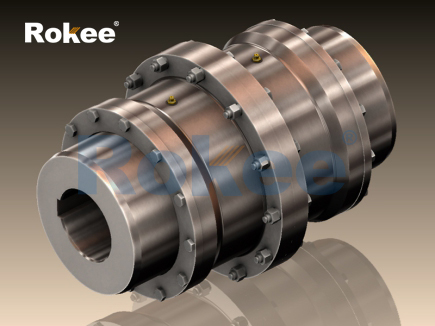
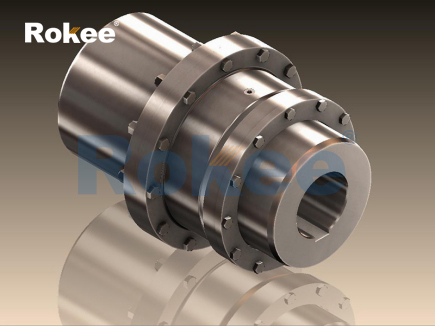
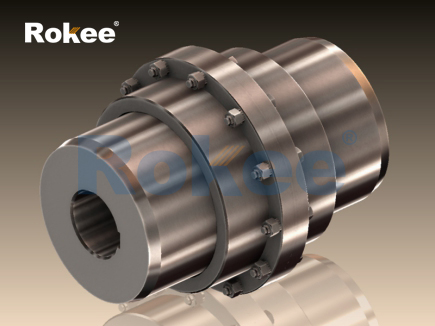
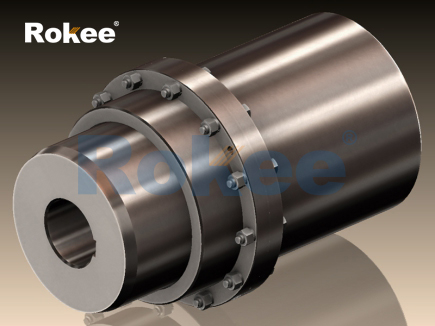
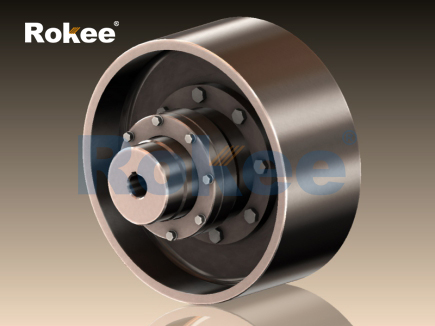
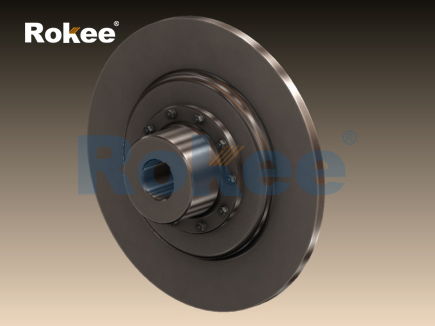
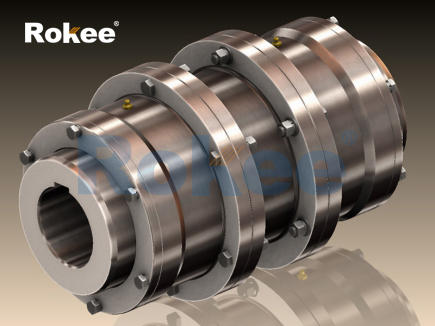
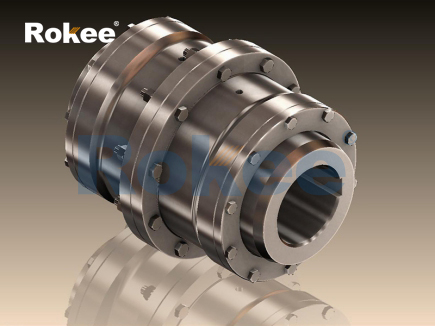
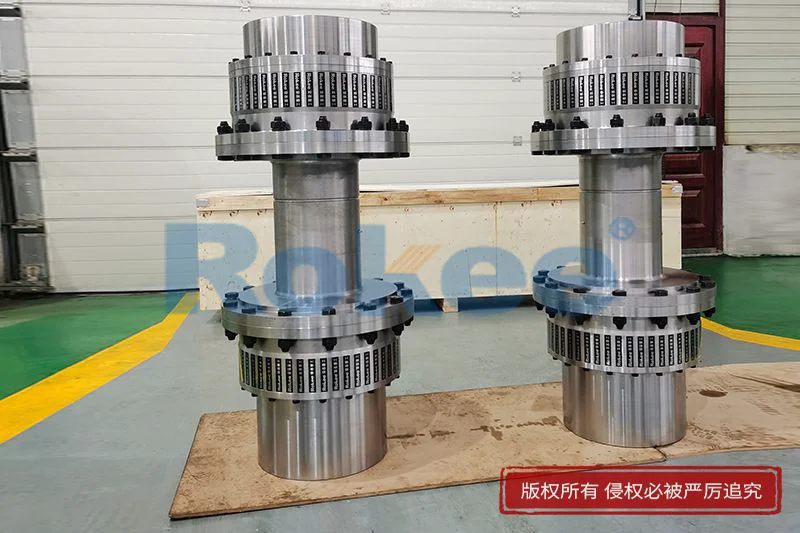
Crown Gear Coupling With Intermediate Shaft
Rokee is a well-known Crown Gear Coupling supplier from china, the page show cases of Crown Gear Coupling With Intermediate Shaft, provide customized services based on user's drawings, and supporting exports.
In the complex and interconnected mechanical transmission systems of modern industrial production, the rational selection of coupling components directly determines the operational stability, transmission efficiency and service life of mechanical equipment. As a high-performance transmission component optimized for long-distance and heavy-duty transmission scenarios, crown gear coupling with intermediate shaft has gradually become an indispensable core part in heavy industry machinery due to its unique structural design, excellent displacement compensation capability and stable load-bearing performance. This type of coupling integrates the mature meshing principle of crown gear structures and the extended transmission advantage of intermediate shafts, effectively solving the transmission difficulties of long-axis spacing, multi-dimensional axis deviation and continuous heavy-load operation that are difficult for traditional coupling structures. Compared with ordinary gear couplings without intermediate shafts and other types of rigid and flexible couplings, it shows more prominent adaptability in harsh industrial working conditions, and can maintain efficient and stable power transmission under the combined influence of mechanical vibration, temperature deformation and installation errors.
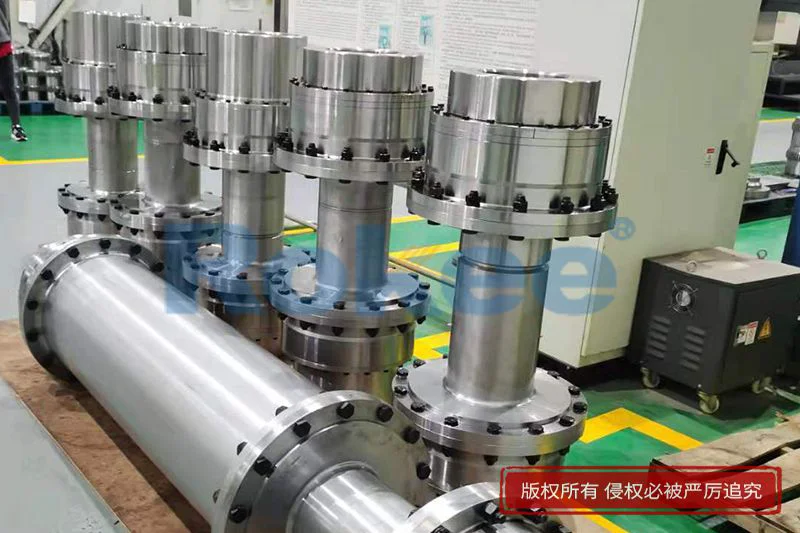
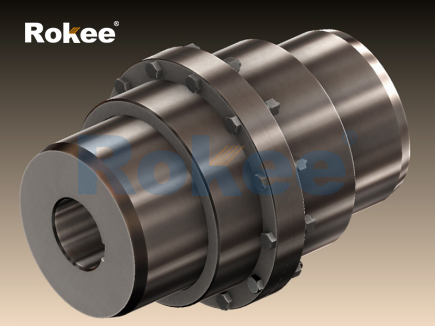
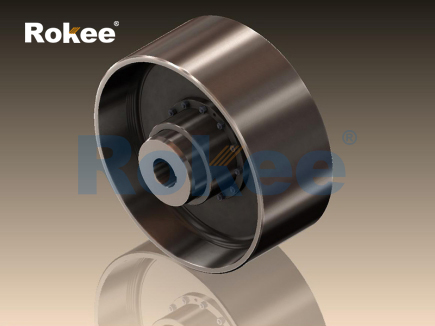
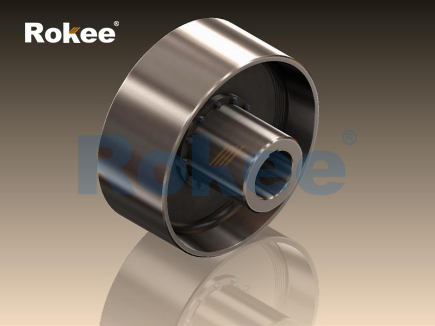
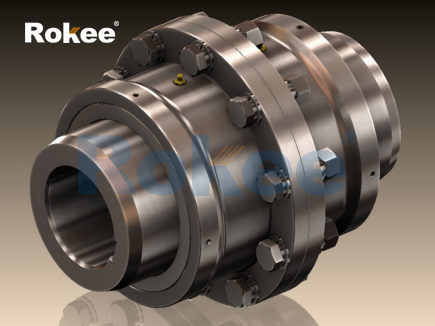
The overall structure of crown gear coupling with intermediate shaft adopts a symmetric combined layout, which is mainly composed of two crown gear half couplings arranged at both ends, an integrated intermediate transmission shaft, precision meshing gear sleeves, high-strength locking fasteners and multi-layer sealing assemblies. Different from the spliced intermediate shaft structure used in some traditional transmission couplings, the intermediate shaft of this coupling adopts integral forging processing technology, which eliminates the structural gaps and mechanical instability caused by multi-section splicing. The two ends of the intermediate shaft are firmly connected with the crown gear half couplings respectively, and the outer crown-shaped teeth of the half couplings mesh closely with the inner teeth of the outer gear sleeves to form a stable gear meshing pair. Each component is tightly matched through high-precision machining to ensure structural integrity and mechanical rigidity during high-speed and heavy-load operation. The crown-shaped tooth profile is the key optimized part of the coupling; the outer teeth of the half couplings are processed into spherical crown structures after precise modification, which makes the tooth surface contact more uniform during meshing and fundamentally improves the stress concentration problem of straight-tooth couplings in the transmission process.
In terms of material selection, the main load-bearing components of crown gear coupling with intermediate shaft are made of high-quality alloy steel with excellent mechanical properties. The commonly used alloy materials have good hardenability and mechanical strength, and undergo carburizing quenching and precise grinding processes after rough forging. The heat treatment process makes the tooth surface reach high hardness, which significantly enhances the wear resistance and extrusion resistance of the gear structure. The intermediate shaft, as the main force-transmitting component undertaking long-distance power transmission, maintains reasonable toughness while ensuring high rigidity through integral forging and tempering treatment, so as to avoid bending deformation and structural fatigue fracture under long-term alternating load. The sealing components are made of elastic and corrosion-resistant polymer materials, which can fit closely with the connecting gaps of each component to form a reliable protective barrier. The high-strength locking fasteners are processed with anti-loosening structures to prevent component displacement and connection loosening caused by mechanical vibration during continuous equipment operation.
The working principle of crown gear coupling with intermediate shaft is based on the flexible meshing of crown gear pairs and the long-distance force transmission of intermediate shafts. When the power source drives one end of the half coupling to rotate, the crown-shaped outer teeth mesh with the inner teeth of the gear sleeve to transmit torque, and the power is stably transmitted to the intermediate shaft through the meshing structure, and then transferred to the driven half coupling at the other end to realize the synchronous rotation of the driving and driven shafts. The optimized crown tooth profile can form a reasonable tooth side gap during meshing, which provides a buffer space for multi-dimensional axis displacement. In the actual operation of mechanical equipment, installation errors, equipment vibration and thermal expansion caused by temperature changes will lead to angular, radial and axial deviations between the driving shaft and the driven shaft. The crown gear structure can adaptively adjust the meshing angle of the tooth surface according to the deviation angle, evenly distribute the transmission load on each meshing tooth, and avoid local excessive stress and tooth surface abrasion. The intermediate shaft extends the transmission distance between the two shafts without reducing the transmission rigidity, realizing stable power transmission under the condition of large shaft spacing, which makes up for the distance limitation of ordinary gear couplings.
This type of coupling has outstanding comprehensive performance advantages in industrial application scenarios. In terms of displacement compensation capability, it can effectively adapt to angular deviation, radial deviation and axial displacement generated during equipment operation. The flexible meshing state of the crown gear greatly reduces the rigid collision between teeth, weakens the vibration and noise generated in the power transmission process, and improves the running smoothness of the entire transmission system. In terms of load-bearing performance, the crown tooth structure increases the contact area of the meshing surface, so that the coupling can withstand larger torque transmission. Under the same external dimension specification, its load-bearing capacity is significantly higher than that of ordinary straight-tooth gear couplings, and it can stably cope with impact load and alternating load generated by frequent start-stop and forward-reverse rotation of equipment. The integral intermediate shaft structure has strong deformation resistance, no shaking and eccentricity during high-speed operation, and maintains high transmission efficiency for a long time. The overall transmission efficiency of the coupling remains at an excellent level, and the power loss in the transmission process is extremely low, which conforms to the energy-saving and efficient operation requirements of modern industrial equipment.
The reliable sealing structure is another important feature of crown gear coupling with intermediate shaft. The multi-layer sealing assembly is installed at the matching gap between the gear sleeve and the half coupling, which can effectively isolate external dust, moisture and corrosive impurities from entering the internal meshing area of the gears. In harsh working environments such as industrial dust, humid air and chemical gas corrosion, the sealing structure can keep the internal lubrication state stable for a long time, prevent the tooth surface from dry friction and corrosion damage, and reduce the wear rate of key transmission components. The internal cavity of the coupling can store an appropriate amount of lubricating grease. During the rotation process, the lubricant can evenly cover each meshing tooth surface with the help of centrifugal force, forming a continuous lubricating oil film to reduce meshing friction resistance and prolong the fatigue service life of the gear structure. This sealing and lubrication integrated design lowers the requirement for external auxiliary protection of the equipment and expands the applicable environmental range of the coupling.
In the industrial field, crown gear coupling with intermediate shaft has a wide range of application coverage, mainly involved in heavy-load and long-distance transmission working conditions in various industrial sectors. In the metallurgical industry, it is applied to the roll transmission system of rolling mills and the continuous casting mechanism of metallurgical equipment. These equipment need to maintain stable torque output under high-temperature and heavy-load conditions, and the coupling can resist thermal deformation and mechanical impact to ensure the continuous operation of the production line. In the mining industry, it is matched with crushing equipment, ball mills and mine hoists. The complex working conditions of mining machinery such as uneven load and strong vibration put forward high requirements for the impact resistance of couplings, and the excellent load-bearing and vibration-damping performance of crown gear coupling can meet the operation demands. In the building materials industry, it is used for the transmission connection of cement rotary kilns and large industrial fans. The long shaft spacing of such equipment requires extended transmission components, and the intermediate shaft structure perfectly solves the problem of long-distance power transmission.
In the port and hoisting industry, the coupling is installed on the walking and lifting mechanism of port cranes and gantry cranes. The large-span operation and frequent start-stop actions of hoisting machinery require couplings to have stable torque transmission and instant load adaptation capabilities, and the crown gear structure can buffer the instantaneous impact force generated during equipment switching. In the petrochemical industry, it is applied to large compressors and pump units. The long-term continuous operation characteristics of chemical equipment require components to have long service life and low failure rate. The good sealing performance and wear resistance of the coupling ensure the stable operation of fluid transmission equipment. In addition, it also has good application effects in general heavy-duty machinery such as large mixing equipment and conveyor transmission systems, providing reliable basic support for the stable operation of various mechanical equipment.
The standardized installation and scientific daily maintenance are essential prerequisites to give full play to the performance of crown gear coupling with intermediate shaft. In the installation stage, the coaxiality of the driving shaft and the driven shaft should be strictly controlled, and the installation deviation should be kept within the allowable compensation range of the coupling to avoid excessive displacement causing abnormal wear of the tooth surface. The locking fasteners need to be tightened evenly in a fixed sequence to ensure consistent fastening force of each connecting part and prevent component loosening. After the installation is completed, it is necessary to conduct no-load trial operation to check whether there is abnormal vibration and noise, and adjust the installation state in time to eliminate potential hidden dangers. In the daily maintenance process, the sealing performance of the coupling should be checked regularly to observe whether there is grease leakage and impurity infiltration; the lubricant should be replaced periodically according to the working frequency and environmental conditions to keep the internal lubrication system unobstructed.
It is necessary to regularly detect the wear degree of the gear meshing part and the deformation state of the intermediate shaft during equipment downtime. Once abnormal tooth surface wear, shaft body bending or fastener aging are found, the damaged components should be replaced in a timely manner to avoid secondary damage to the transmission system caused by component failure. In addition, the operating load of the coupling should be controlled within the rated range to avoid long-term overload operation which will accelerate the fatigue aging of metal materials and shorten the service life. Reasonable maintenance measures can not only maintain the excellent transmission performance of the coupling, but also reduce the failure rate of mechanical equipment, lower the later operation and maintenance cost, and improve the comprehensive economic benefit of industrial production.
With the continuous upgrading of modern industrial manufacturing technology and the gradual improvement of heavy-duty mechanical performance requirements, the technical optimization direction of crown gear coupling with intermediate shaft is more inclined to high precision, lightweight and strong environmental adaptability. On the basis of maintaining the original excellent mechanical properties, the industry continuously optimizes the tooth profile curve and structural size of the coupling to reduce the overall weight and rotational inertia while improving the torque density, so as to adapt to the lightweight development trend of modern mechanical equipment. The application of new alloy materials and surface strengthening processes further enhances the corrosion resistance and high-temperature resistance of the coupling, enabling it to operate stably in more extreme working environments. At the same time, with the help of digital processing technology, the machining accuracy of each component is continuously improved, the assembly gap is optimized, and the operation vibration and noise are further reduced, realizing low-consumption and quiet transmission.
In the future industrial transmission field, crown gear coupling with intermediate shaft will still rely on its unique structural advantages to occupy an important position in heavy-load and long-distance transmission scenarios. Its flexible displacement compensation, efficient torque transmission, strong environmental adaptability and long service life make it have irreplaceable application value compared with other types of couplings. With the continuous progress of industrial technology and the upgrading of mechanical equipment, the structural design, material performance and processing technology of this coupling will be further optimized, and the application scope will continue to expand to more professional industrial fields. As a key basic transmission component, it will continuously provide stable and reliable power connection guarantee for the safe and efficient operation of various mechanical equipment, and make important contributions to the stable development of modern heavy industry.
With excellent quality, we have been continuously providing many coupling products of various categories and uses complying with multiple standards and a full range of services, from the product selection to final installation and operation, for the industry fields of ferrous metallurgy, nuclear power, gas turbine, wind power, ropeway construction, lifting transportation, general equipment, etc.
pu sandwich panel line,pu sandwich panel machine,sandwich panel machine
« Crown Gear Coupling With Intermediate Shaft » Latest Update Date: May 9, 2026
https://www.rokeecoupling.net/cases/crown-gear-coupling-with-intermediate-shaft.html
Products
![GICL Crown Gear Coupling]() GICL Crown Gear Coupling
GICL Crown Gear Coupling![GICLZ Crown Gear Coupling]() GICLZ Crown Gear Coupling
GICLZ Crown Gear Coupling![GIICL Crown Gear Coupling]() GIICL Crown Gear Coupling
GIICL Crown Gear Coupling![GIICLZ Crown Gear Coupling]() GIICLZ Crown Gear Coupling
GIICLZ Crown Gear Coupling![GCLD Crown Gear Coupling]() GCLD Crown Gear Coupling
GCLD Crown Gear Coupling![NGCL Crown Gear Coupling]() NGCL Crown Gear Coupling
NGCL Crown Gear Coupling![NGCLZ Crown Gear Coupling]() NGCLZ Crown Gear Coupling
NGCLZ Crown Gear Coupling![WG Crown Gear Coupling]() WG Crown Gear Coupling
WG Crown Gear Coupling![WGZ Crown Gear Coupling]() WGZ Crown Gear Coupling
WGZ Crown Gear Coupling![WGP Crown Gear Coupling]() WGP Crown Gear Coupling
WGP Crown Gear Coupling![WGT Crown Gear Coupling]() WGT Crown Gear Coupling
WGT Crown Gear Coupling![WGC Crown Gear Coupling]() WGC Crown Gear Coupling
WGC Crown Gear Coupling![WGJ Crown Gear Coupling]() WGJ Crown Gear Coupling
WGJ Crown Gear Coupling