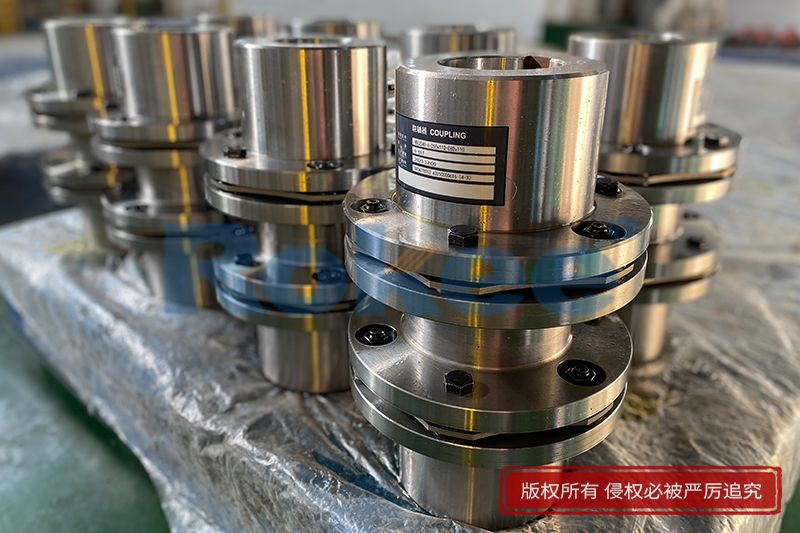
Steel Laminae Couplings
Steel Laminae Coupling is a kind of high-performance metal flexible coupling, which compensates axial and angular displacements by the deformation of elastic diaphragm while transferring torque. Diaphragm Coupling features with compact structure, large transmission torque, long service life, maintenance-free, high temperature resistance, acid and alkali resistance, and corrosion resistance, suitable for shafting transmission in high temperature, high speed and corrosive environment.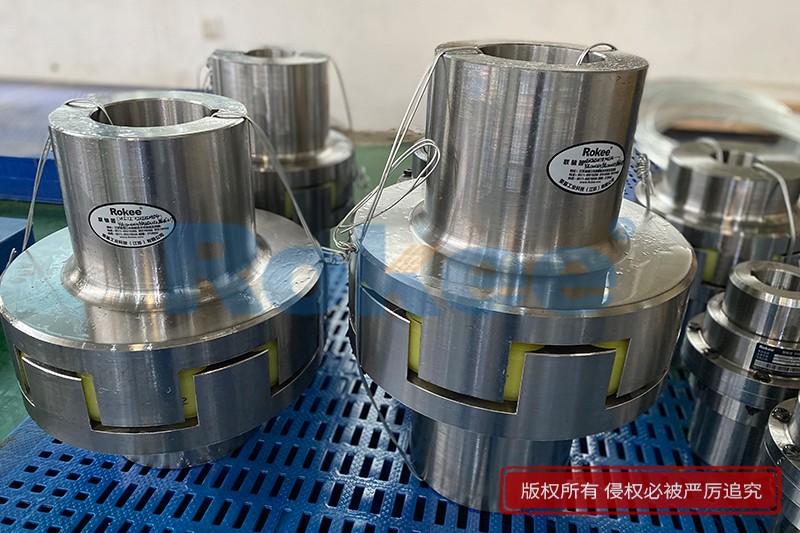
Plum Blossom Couplings
The plum blossom coupling is composed of two semi-couplings with convex claws and a plum-shaped flexible non-metallic element whose hardness can be adjusted. By embedding the plum-shaped flexible element into the two semi-couplings to realize the connection, plum coupling has the characteristics of compensating the relative displacement of the two axes, reducing vibration and buffering, simple structure and easy maintenance without lubrication.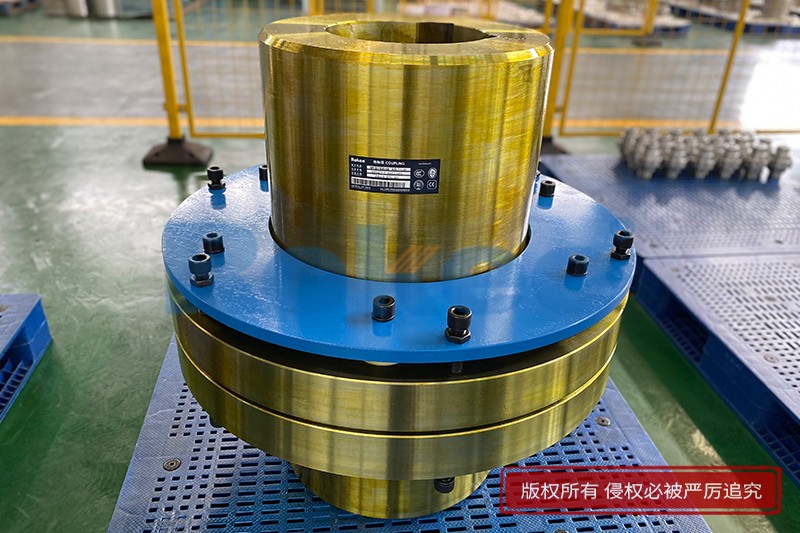
Pin & Bush Couplings
The flexible pin gear coupling is designed with non-metallic flexible pin, two toothed semi-couplings and a toothed sleeve ring with an outer ring. It uses non-metallic flexible deformation to transfer torque and cushion shock and compensate angular displacement. The flexible pin coupling is a basic transmission parts that has simple structure, needs no lubrication, and is easy to manufacture, install and disassemble the flexible pin. It uses two semi-couplings with flange holes and a non-metallic flexible pin for crane to transmit torque, suitable for low-to-medium speed and low-to-medium torque occasions. The design of the pin bush coupling is simple and clever in design and has wide applicability. It uses the pin with elastic sleeve to connect two semi-couplings with pin holes to realize torque transmission and larger angular compensation. At the same time, it has good shock absorption and buffering performance, which can be used in high-speed occasions without lubrication and requiring easy pin sleeve replacement.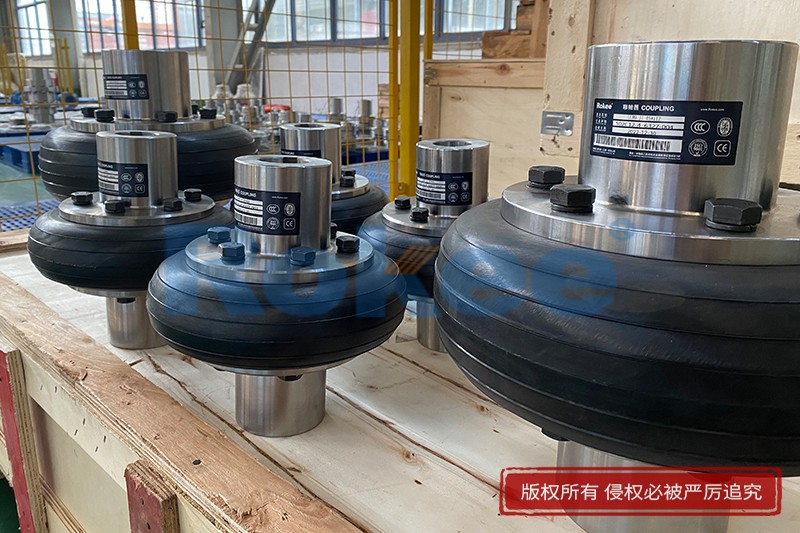
Tyre Couplings
The tyre coupling adopts tyre body-shaped rubber elements, which are connected with two semi-couplings through bolts to realize torque transmission and displacement compensation. Tyre coupling has high elastic performance, small torsional rigidity, strong damping capacity, large axial compensation capacity, and good damping performance.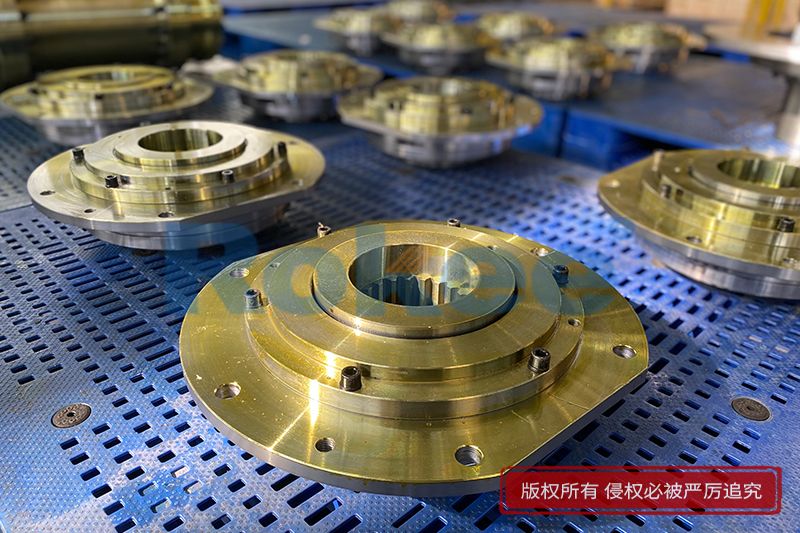
Drum Couplings
The drum coupling is an important part in the transmission system of crane equipment. It connects the power input shaft of the reducer with the drum, transmits torque and restricts the axial movement of the drum at the same time. It also has mechanical or electronic wear alarm, and is one of the core parts of the drum crane mechanism.
Flexible coupling is a key component widely used in mechanical transmission systems, mainly used to connect two shafts to transmit motion and power, while also having the functions of compensating for relative displacement between shafts, buffering and reducing vibration, and reducing noise. Compared with traditional rigid couplings, elastic couplings can effectively absorb and buffer vibrations and impacts generated in the transmission system through the deformation ability of elastic elements, protecting connected equipment from damage.
The main types of elastic couplings
- Rubber elastic coupling
Structural features: Using elastic materials such as rubber or polyurethane as cushioning elements
Advantages: Excellent vibration damping performance, low noise, moderate compensation capability
Application: Low to medium power transmission for fans, pumps, light machinery, etc - Metal spring coupling
Structural features: using coil springs, spiral springs or diaphragms as elastic elements
Advantages: High torque transmission, long lifespan, high temperature resistance
Application: Heavy Machinery, Ship Propulsion Systems, High Speed Transmission - Serpentine spring coupling
Structural features: Composed of multiple arc-shaped spring plates arranged in a serpentine pattern
Advantages: High torque density, excellent angle compensation capability
Applications: Generator sets, compressors, mining machinery - Universal joint type elastic coupling
Structural features: Combining universal joints and elastic elements
Advantage: Large angle compensation capability, suitable for complex working conditions
Application: Construction machinery, vehicle transmission system
The core function of flexible coupling
- Displacement compensation capability: capable of compensating for axial, radial, and angular displacements simultaneously
- Vibration damping: effectively reducing the vibration and noise of the transmission system
- Overload protection: In extreme cases, equipment damage can be prevented by deformation of elastic elements
- Electrical insulation: Some types can provide electrical insulation between shafts
- Simplified maintenance: No lubrication required, reducing maintenance workload
Key parameters for selection
- Rated torque: The maximum torque that the coupling can continuously transmit
- Maximum speed: allowable maximum operating speed
- Compensation capability: compensation amount for axial, radial, and angular displacement
- Environmental adaptability: temperature range, corrosion resistance, etc
- Moment of inertia: influence on system dynamic response
- Stiffness characteristics: determine the vibration characteristics of the system
Key points for installation and maintenance
- Alignment requirement: Although elastic couplings can compensate for certain deviations, good alignment can extend the service life
- Pre tension control: Some types require appropriate pre tension to ensure performance
- Regular inspection: monitor the aging and wear of elastic components
- Replacement standard: When the vibration increases or the compensation ability significantly decreases, replacement should be considered
- Environmental protection: Avoid contact of elastic components with corrosive substances or extreme temperatures
Flexible couplings are widely used in:
- Industrial manufacturing: machine tools, production line equipment
- Energy sector: wind power generation, hydropower generation
- Transportation: ships, rail transit
- Construction Engineering: Cranes, Elevator Systems
As an important component of modern mechanical transmission systems, the correct selection and use of elastic couplings have a decisive impact on the reliability, efficiency, and lifespan of equipment. With the advancement of industrial technology, new types of flexible couplings continue to emerge, providing more comprehensive solutions for various complex working conditions.
Cases of Flexible Couplings
 TL Column Pin Flexible Coupling
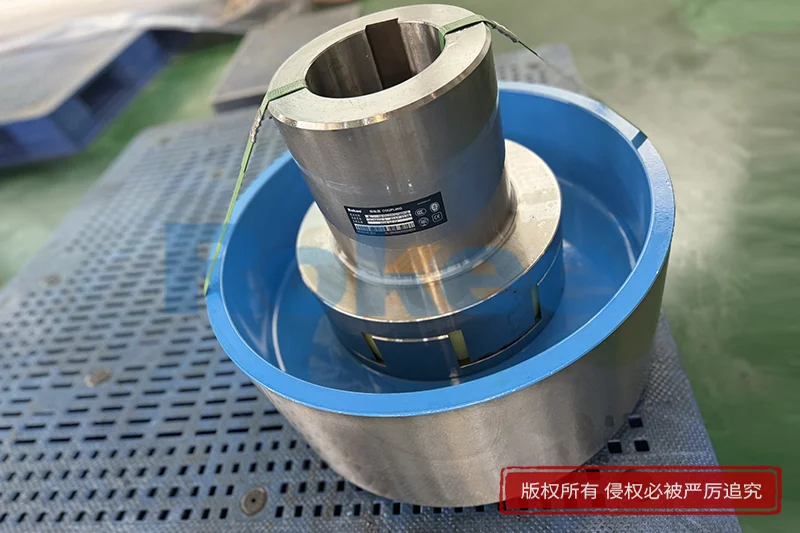 ML Flexible Coupling
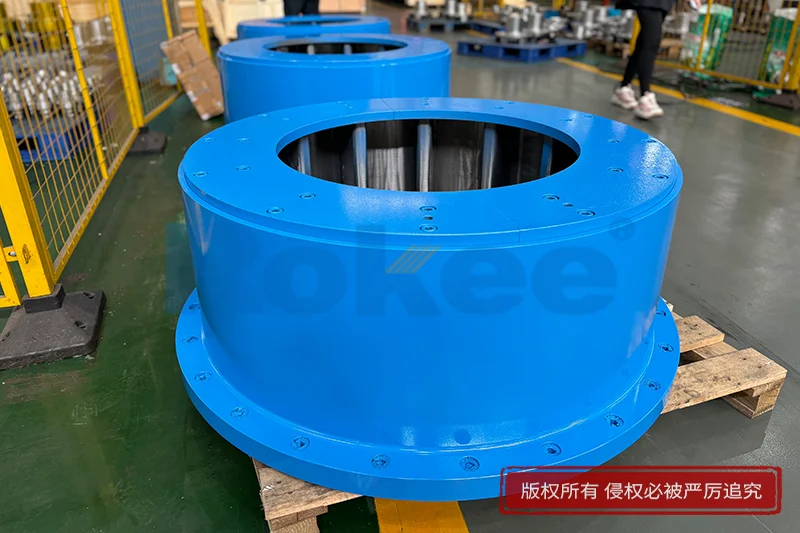 Tooth Shaped Elastic Block Coupling
 Elastic Block Toothed Coupling
 LX Pin Flexible Coupling
 Metal Laminated Flexible Coupling
Related Articles
- 2025-12-01Tagging of Bushed Pin Flexible Coupling
- 2025-12-01Lubrication of Pin Type Flexible Coupling
- 2025-12-01Custom Bush Pin Type Flexible Coupling
- 2025-09-05Bush Pin Type Flexible Couplings Drawing
- 2025-09-05Parts of Pin Type Flexible Coupling
- 2025-09-05Working Principle of Bushed Pin Flexible Couplings
- 2025-09-05Bushed Pin Type Flexible Coupling Assembly Drawing
- 2025-09-05Direct Sale Flexible Drive Gear Couplings
- 2025-09-05High-speed Flexible Gear Coupling
- 2025-07-07Torque of Pin Type Flexible Coupling
- 2025-05-29Bush Pin Type Flexible Coupling Types
- 2025-05-29Installation of Pin Type Flexible Coupling
- 2025-05-29Bushed Pin Flexible Couplings Company
- 2025-05-29Bushed Pin Type Flexible Couplings Supplier
- 2025-03-31Flexible Diaphragm Coupling For Air Compressor
- 2025-03-19Bushed Pin Type Flexible Coupling Brands
- 2025-03-19Bushed Pin Flexible Coupling Types
- 2025-03-19Uses of Pin Type Flexible Coupling
- 2025-03-19Bush Pin Type Flexible Couplings Company
- 2025-02-27Flexible Membrane Coupling For Reducer