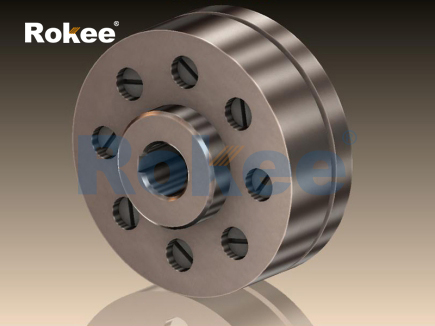
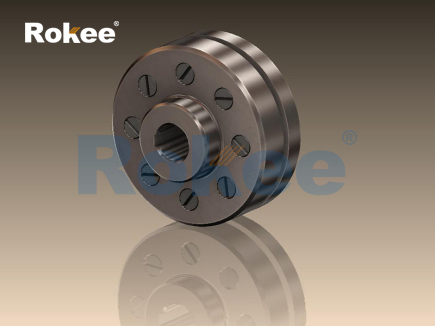
Bush coupling stands as a fundamental mechanical transmission component widely applied in general industrial machinery to connect two rotating shafts for stable torque transmission. Featuring a simple and compact structural design, it mainly consists of rigid metal shells and flexible inner bushings, which are crafted from durable elastic materials to deliver reliable buffering performance during continuous operation. This coupling works by fastening two shaft ends to its internal structure, and the embedded bushing can effectively offset minor axial, radial and angular misalignments generated during mechanical operation. Such compensation capability helps reduce friction and mechanical abrasion between connected shafts, avoiding excessive shaft deflection that may cause premature wear of adjacent mechanical parts. During the power transmission process, the elastic bushing can efficiently absorb vibration and weaken mechanical impact generated by fluctuating loads, thus smoothing the overall operation of transmission systems. Its straightforward assembly and disassembly procedures lower daily maintenance difficulty, while the robust structural adaptability enables it to fit various moderate-speed and medium-load working conditions. Compared with intricate transmission connectors, this coupling boasts lower structural complexity and stable operating performance, requiring minimal routine upkeep to maintain long-term working efficiency. Thanks to these practical merits, it has become a prevalent choice for conventional mechanical equipment, supporting steady power output and extending the overall service life of mechanical transmission systems in diverse industrial scenarios.

A bush coupling is a vital mechanical component widely utilized in power transmission systems to connect two rotating shafts at their ends, enabling the efficient transfer of torque while accommodating various forms of misalignment and mitigating vibrations. Unlike rigid couplings that require precise shaft alignment to function properly, bush couplings incorporate flexible elements that allow for a degree of movement between the connected shafts, making them indispensable in numerous industrial and mechanical applications where perfect alignment is difficult to achieve or maintain. The design of a bush coupling is relatively simple yet highly effective, combining metallic and non-metallic components to balance strength, flexibility, and durability, ensuring reliable performance even in demanding operating conditions.
The basic structure of a bush coupling consists of several core components that work together to facilitate torque transmission and accommodate misalignment. At the heart of the coupling are two metallic hubs, which are typically made from high-strength materials such as cast iron, steel, or aluminum alloy. These hubs are designed to be mounted on the ends of the two shafts that need to be connected, with keyways or set screws used to secure them firmly to the shaft surfaces, preventing slippage during operation. The choice of hub material depends on the specific application requirements, such as torque capacity, operating temperature, and environmental conditions; for example, steel hubs are preferred for heavy-duty applications due to their high strength and durability, while aluminum hubs are used in lighter applications where weight reduction is a priority. Between the two hubs lies the flexible element, known as the bush, which is the defining component of this type of coupling. The bush is usually made from non-metallic materials with excellent elastic properties, such as rubber, polyurethane, neoprene, or natural rubber, although some heavy-duty designs may use metallic bushes with resilient properties. The bush is inserted into holes drilled in one of the hubs and is secured in place by pins or bolts that pass through both the bush and the opposing hub, creating a flexible connection that allows for relative movement between the two shafts. In some designs, the bush may have a barrel-shaped or curved profile to enhance its flexibility and ability to accommodate misalignment in multiple directions, while others feature a simple cylindrical shape for basic applications. Additionally, some bush couplings may include supplementary components such as washers, lock nuts, or spacer sleeves to improve stability, adjust the distance between the shafts, or prevent the bush from wearing prematurely. The overall structure is designed to be simple to assemble and disassemble, allowing for easy maintenance and replacement of worn components without the need for complex tools or extensive downtime.
The performance of a bush coupling is determined by a combination of its structural design, material selection, and the properties of its flexible elements, and it is characterized by several key attributes that make it suitable for a wide range of applications. One of the most important performance characteristics is its ability to accommodate shaft misalignment, which is a common issue in mechanical systems due to factors such as manufacturing tolerances, thermal expansion, installation errors, or structural deflection during operation. Bush couplings can effectively compensate for three types of misalignment: angular misalignment, where the two shafts are not collinear and form an angle with each other; parallel misalignment, where the shafts are parallel but offset from each other; and axial misalignment, where the shafts move along their axial direction relative to each other. The flexible bush absorbs the forces generated by these misalignments, preventing them from being transmitted to the connected equipment, which helps to reduce wear and tear on bearings, shafts, and other components, thereby extending the service life of the entire system. Another critical performance attribute is vibration damping, which is achieved through the elastic properties of the bush material. As the shafts rotate, any vibrations generated by the driving equipment (such as electric motors, internal combustion engines, or pumps) are absorbed by the bush, which acts as a shock absorber, reducing the transmission of vibrations to the driven equipment. This not only improves the stability and smoothness of operation but also reduces noise levels, creating a more comfortable and safe working environment. Torque transmission capacity is also a key performance factor, with bush couplings available in a range of sizes and designs to handle different torque requirements, from low-torque applications such as small electric motors to high-torque applications such as heavy-duty industrial machinery. The torque capacity is determined by the size of the hubs, the number and diameter of the pins or bolts, and the strength of the bush material; for example, polyurethane bushes offer higher torque capacity than rubber bushes, making them suitable for more demanding applications. Additionally, bush couplings exhibit good wear resistance, with the non-metallic bushes being resistant to abrasion, corrosion, and chemical damage in many environments, although their service life can be affected by factors such as operating temperature, load intensity, and exposure to harsh substances. Most bush couplings also require minimal maintenance, as they do not need lubrication (unlike some other types of couplings such as gear couplings), which reduces operational costs and simplifies maintenance routines. However, it is important to note that the flexible bushes will eventually wear out over time and need to be replaced, which is a simple and cost-effective process due to the coupling’s modular design.
There are several types of bush couplings, each designed to meet specific application requirements based on factors such as torque capacity, misalignment tolerance, operating environment, and installation needs. The classification of bush couplings is typically based on the design of the flexible bush, the type of hub connection, or the presence of additional components such as brake wheels. One of the most common types is the elastomeric bush coupling, which uses an elastomeric material (such as rubber or polyurethane) for the bush. Elastomeric bush couplings are known for their excellent vibration damping and misalignment compensation capabilities, making them ideal for applications where smooth operation is critical, such as electric motors, pumps, fans, and compressors. They are available in two main sub-types: single-element and double-element designs. Single-element elastomeric bush couplings feature a single flexible bush that provides torsional flexibility and accommodates misalignment in one plane, while double-element designs use two elastomeric bushes, allowing for misalignment in two planes and absorbing axial thrust loads. Another popular type is the pin gear bush coupling, which incorporates a non-metallic flexible pin (similar to a bush) along with two toothed semi-couplings and a toothed sleeve ring. This type of coupling uses the flexible deformation of the pin to transfer torque, cushion shocks, and compensate for angular displacement, and it is often used in applications where moderate torque and misalignment tolerance are required. Pin gear bush couplings may also be available with different hub configurations, such as conical shaft holes for easier shaft end fixing or brake wheels for applications that require braking functionality. Flexible pin bush couplings are another variant, featuring two semi-couplings with flange holes and non-metallic flexible pins to transmit torque. These couplings have a simple structure, require no lubrication, and are easy to manufacture, install, and disassemble, making them suitable for low-to-medium speed and low-to-medium torque applications, such as conveyor systems, agricultural machinery, and light-duty industrial equipment. Elastic sleeve pin bush couplings are similar to flexible pin couplings but use pins with elastic sleeves (the bush) to connect the two semi-couplings. The elastic sleeve provides additional flexibility, allowing for larger angular compensation and better shock absorption, making this type suitable for high-speed applications where easy replacement of the pin sleeve is required. Tapered bush couplings are designed with a tapered elastomeric element that allows for easy installation and removal, making them ideal for applications where frequent maintenance or component replacement is necessary. Metal bush couplings are another type, designed for high-strength and durability in extreme conditions. These couplings use metallic bushes (often made from steel or bronze) that can withstand high temperatures, heavy mechanical loads, and harsh environments, although they offer less vibration damping than elastomeric bush couplings and may require supplementary components to reduce vibration transmission. They are commonly used in heavy-duty machinery, automotive applications, and industrial equipment operating in extreme temperatures or high-wear environments. Additionally, some bush couplings are designed with spacer sleeves, which allow for a larger distance between the two connected shafts, making them suitable for applications where the shafts are separated by a significant gap, such as in pump and motor assemblies where additional components need to be installed between the two shafts.
The versatility of bush couplings makes them suitable for a wide range of applications across various industries, where they play a critical role in ensuring reliable power transmission, reducing equipment wear, and improving operational efficiency. One of the most common applications is in the industrial machinery sector, where bush couplings are used to connect electric motors to pumps, compressors, fans, blowers, and conveyors. In these applications, the coupling’s ability to accommodate misalignment and dampen vibrations is essential, as it prevents damage to the motor and the driven equipment, ensuring continuous and efficient operation. For example, in pump systems, both horizontal and vertical applications benefit from the use of bush couplings, as they can compensate for the misalignment that often occurs between the pump and motor shafts due to installation errors or thermal expansion, while also absorbing the vibrations generated by the pump’s operation. In the manufacturing industry, bush couplings are used in a variety of equipment, including textile machines, printing machines, packaging machines, and machine tools. Textile machines, for instance, require precise torque transmission and smooth operation to ensure consistent product quality, and bush couplings provide the necessary flexibility to accommodate the slight misalignments that can occur during operation, while also reducing vibrations that could affect the fabric production process. In the agricultural sector, bush couplings are used in farm machinery such as tractors, harvesters, and irrigation pumps. These applications often involve harsh operating conditions, including dust, dirt, and varying temperatures, and bush couplings with durable materials (such as polyurethane or metal bushes) are able to withstand these conditions while providing reliable power transmission. The flexibility of bush couplings is also beneficial in agricultural machinery, as it can accommodate the misalignments caused by the uneven terrain and the movement of the equipment during operation. The automotive industry also utilizes bush couplings in various components, such as drive shafts, transmissions, and auxiliary systems. In automotive applications, bush couplings help to transmit torque between different components while absorbing vibrations and accommodating misalignments, improving the overall performance and comfort of the vehicle. For example, in drive shaft assemblies, bush couplings can compensate for the angular misalignment between the transmission and the rear axle, reducing vibration and noise in the vehicle cabin. The marine industry is another important application area for bush couplings, where they are used in ship propulsion systems, pumps, and auxiliary machinery. Marine environments are characterized by high humidity, saltwater corrosion, and varying temperatures, so bush couplings used in these applications are typically made from corrosion-resistant materials such as stainless steel or aluminum, with bushes made from materials that can withstand saltwater exposure. The ability of bush couplings to accommodate misalignment is also critical in marine applications, as the movement of the ship can cause shifts in the alignment of the shafts. Additionally, bush couplings are used in power generation systems, such as generators connected to turbines or diesel engines. In these applications, the coupling must transmit high torque reliably while dampening the vibrations generated by the engine or turbine, ensuring stable power output and protecting the generator from damage. Other applications include mining equipment, where bush couplings are used in conveyors, crushers, and pumps operating in harsh, dusty environments; construction machinery, such as excavators, loaders, and concrete mixers, where they provide reliable power transmission in heavy-duty conditions; and household appliances, such as washing machines and air conditioners, where they help to reduce vibration and noise during operation.
When selecting a bush coupling for a specific application, several factors must be considered to ensure optimal performance and longevity. The first factor is the torque requirement, as the coupling must be capable of handling the maximum torque generated by the driving equipment without exceeding its design limits. Undersized couplings will lead to premature failure, while oversized couplings may be unnecessarily expensive and can affect the responsiveness of the system. The second factor is the type and amount of misalignment expected in the system, as different types of bush couplings have varying misalignment tolerances. For example, elastomeric bush couplings are better suited for applications with significant misalignment, while metal bush couplings are more suitable for applications with minimal misalignment but high torque requirements. Operating temperature is another important factor, as the bush material’s performance can be affected by extreme temperatures; for example, rubber bushes may degrade at high temperatures, while polyurethane bushes offer better temperature resistance. The operating environment should also be considered, including exposure to dust, dirt, moisture, chemicals, or saltwater, as these factors can affect the durability of the coupling components. For harsh environments, corrosion-resistant materials and sealed designs may be necessary to prevent damage. Additionally, the installation space and shaft dimensions must be taken into account to ensure that the coupling fits properly and can be installed without modifying the existing equipment. Maintenance requirements are also a consideration, with some bush couplings requiring more frequent replacement of the bush than others, depending on the application and operating conditions. By carefully evaluating these factors, it is possible to select the most suitable bush coupling for a given application, ensuring reliable performance, extended equipment life, and reduced operational costs.
In conclusion, bush couplings are essential mechanical components that play a critical role in power transmission systems across a wide range of industries. Their simple yet effective design, combining metallic hubs and flexible bushes, allows them to transmit torque efficiently while accommodating misalignment, dampening vibrations, and reducing equipment wear. The various types of bush couplings, including elastomeric, pin gear, flexible pin, elastic sleeve, tapered, and metal bush couplings, are each tailored to meet specific application requirements, from light-duty household appliances to heavy-duty industrial machinery. Their versatility and reliability make them indispensable in applications such as industrial machinery, manufacturing, agriculture, automotive, marine, and power generation, where they contribute to the smooth and efficient operation of equipment. By understanding the structure, performance characteristics, types, and applications of bush couplings, engineers and maintenance professionals can make informed decisions when selecting and installing these components, ensuring optimal performance and longevity of the mechanical systems they support. As technology advances, the design and materials used in bush couplings continue to evolve, with ongoing improvements in durability, torque capacity, and vibration damping capabilities, further expanding their range of applications and enhancing their importance in modern mechanical systems.
pu sandwich panel line,pu sandwich panel machine,sandwich panel machine
« Bush Couplings » Latest Update Date: May 9, 2026
https://www.rokeecoupling.net/tags/bush-couplings.html