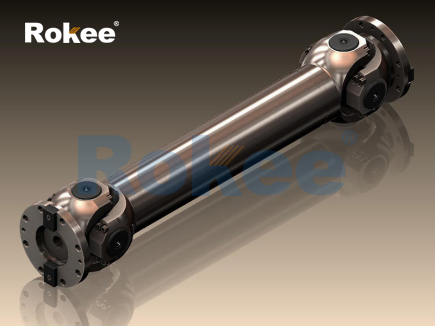
As a fundamental power transmission component in mechanical engineering, the cardan drive shaft serves as an indispensable connecting medium for transmitting rotational torque between two mechanical components with non-coaxial, angularly offset, and spatially displaced axes. Its unique mechanical structure enables stable power delivery under complex motion conditions, making it widely applied in mobile machinery, industrial transmission systems, and transportation equipment. Different from rigid transmission shafts that require strict coaxial alignment, the cardan drive shaft adopts a flexible connection structure composed of universal joints and intermediate shaft bodies, which can adapt to dynamic changes in installation angles and spacing between driving and driven parts. This article comprehensively elaborates on the internal structural composition, core mechanical performance, mainstream classification standards, and diverse application scenarios of the cardan drive shaft, revealing its inherent mechanical logic and engineering application value in modern mechanical systems.
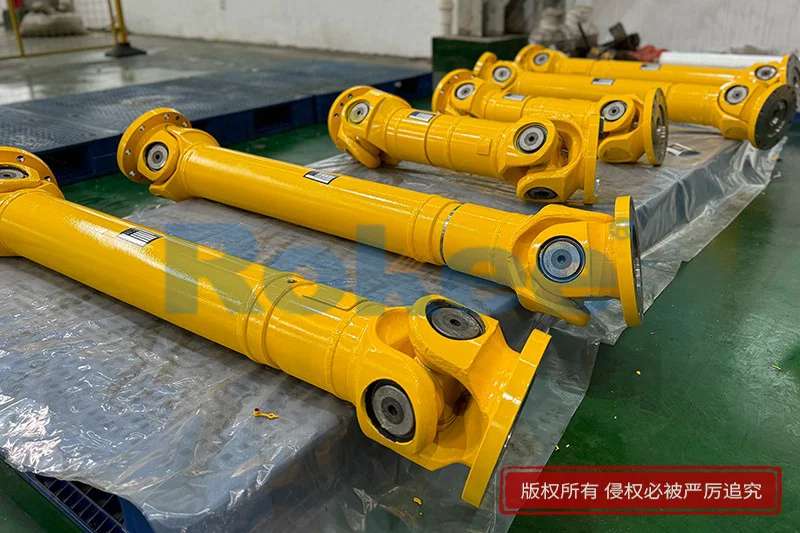
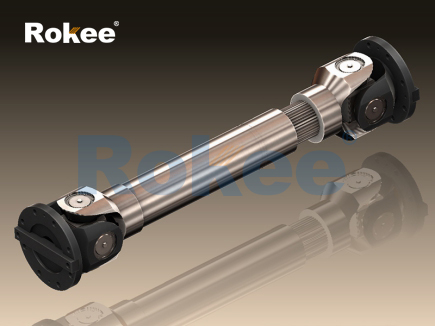
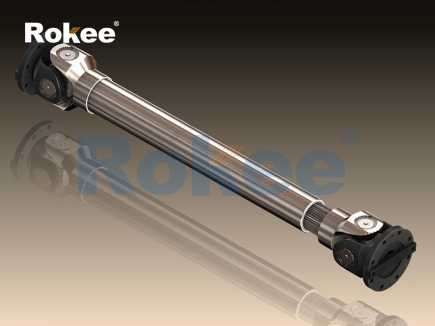
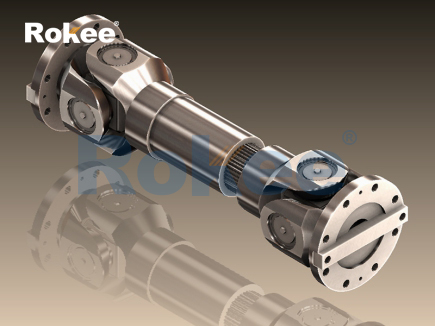
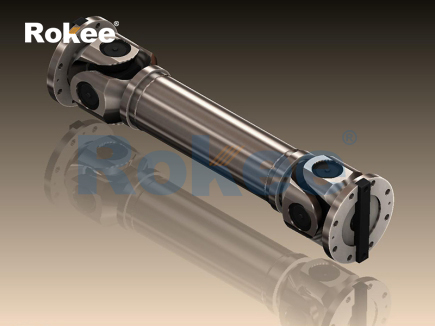
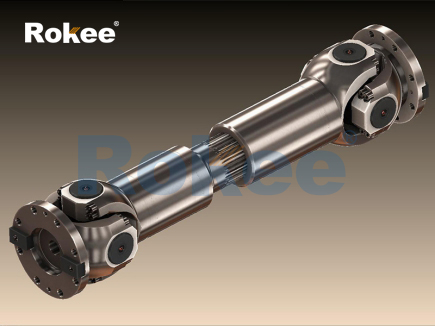
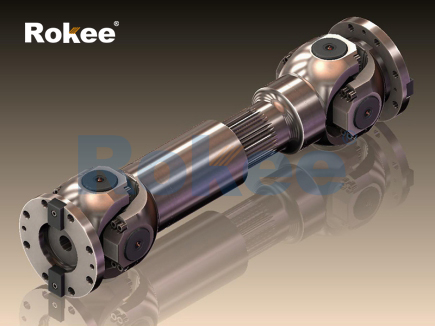
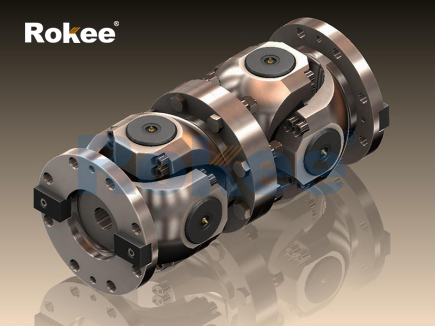
The basic structure of a cardan drive shaft follows a modular mechanical design, mainly consisting of universal joints, hollow shaft tubes, spline transmission pairs, and connecting flanges, with each component undertaking independent mechanical functions and cooperating to complete power transmission. The universal joint is the core functional unit of the entire shaft assembly, and the most commonly adopted cross-shaft universal joint features a symmetric cross-shaped shaft pin, with four sets of rolling bearings installed at the end positions of the cross shaft. These bearings are tightly fitted inside the yoke lugs of adjacent shaft forks, forming a rotatable hinged connection. This structural design allows the two connected shaft forks to generate a certain deflection angle in multiple spatial directions, effectively compensating for angular displacement during equipment operation. The intermediate shaft tube is usually made of high-strength low-alloy steel and processed into a hollow cylindrical structure. Compared with solid shafts of the same torque resistance level, the hollow structure reduces overall weight and rotational inertia while maintaining sufficient torsional rigidity, which helps lower energy consumption during high-speed rotation and improve transmission responsiveness.
The spline pair composed of internal and external splines is arranged at the splicing position of the shaft body, realizing the telescopic adjustment function of the drive shaft. In the working state, the meshing of spline teeth can transmit continuous torque while allowing axial displacement between shaft sections. This adaptive telescopic characteristic effectively offsets the linear distance variation between the power source and the executing component caused by mechanical vibration, structural deformation, or working stroke changes. Connecting flanges are distributed at both ends of the drive shaft, with evenly distributed bolt holes on the flange plates for detachable fixed connection with mechanical components such as engines, gearboxes, and drive axles. The flange surface adopts a flat sealing structure to ensure connection stability and avoid torque loss caused by assembly gaps. In addition, auxiliary structures such as dust covers and lubrication nozzles are installed on the outer side of the universal joint. The dust cover can block external dust, moisture, and abrasive particles to prevent bearing wear and corrosion, while the lubrication nozzle facilitates regular grease injection to reduce friction coefficient between moving pairs and extend the service life of rotating parts.
The mechanical performance of cardan drive shafts is determined by structural design, manufacturing materials, and processing technology, and its core performance indicators cover torsional resistance, motion adaptability, vibration stability, and environmental durability. Torsional performance is the most critical technical parameter, which refers to the maximum torque that the drive shaft can bear without plastic deformation or structural fracture. High-quality cardan drive shafts undergo integral forging and heat treatment processes to optimize the internal metal grain structure, achieving high tensile strength and shear resistance. This enables the drive shaft to withstand instantaneous torque impact generated by equipment startup, load mutation, and sudden braking, avoiding structural damage under variable load conditions. Motion adaptability is another prominent performance advantage. A single cross universal joint can stably transmit power within a maximum deflection angle range, and the combined structure of double universal joints can further eliminate uneven speed transmission defects, realizing approximately constant-speed power transmission between spatially staggered shafts.
Vibration stability directly affects the operating smoothness of mechanical equipment. The hollow shaft body adopts dynamic balance calibration technology during production to reduce mass eccentricity, thereby suppressing radial vibration and noise during high-speed rotation. Reasonable bearing clearance design and lubrication optimization further reduce friction vibration between kinematic pairs, ensuring stable transmission of the drive shaft within the rated speed range. Environmental durability reflects the environmental adaptability of the drive shaft in complex working conditions. The surface of the shaft body is treated with anti-oxidation and anti-corrosion coatings, and internal bearing components are made of wear-resistant alloy materials. These treatments enable the drive shaft to maintain stable mechanical performance in high-temperature, low-temperature, humid, and dusty working environments, reducing performance attenuation caused by environmental erosion. Moreover, the integrated structural design simplifies stress concentration points, enhancing the fatigue resistance of the drive shaft and enabling long-term cyclic operation under alternating load conditions.
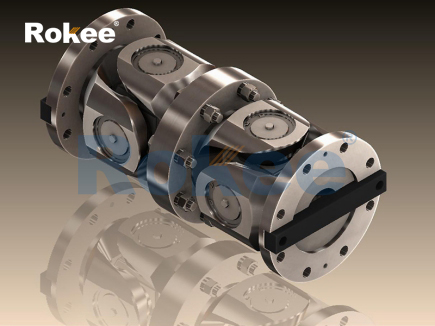
Cardan drive shafts can be classified into multiple types based on structural form, transmission angle, and load-bearing capacity, and each type has exclusive structural characteristics and applicable working conditions. According to the number of universal joints, they are divided into single-joint type, double-joint type, and multi-joint type cardan drive shafts. The single-joint drive shaft has a simple structure with only one cross universal joint, featuring low manufacturing cost and compact overall size. However, it has an obvious uneven speed transmission characteristic, so it is only suitable for low-speed, low-load, and small-angle deflection transmission scenarios. The double-joint drive shaft is assembled with two symmetrically arranged universal joints, which can offset the speed fluctuation generated by a single joint through structural coordination. It achieves constant-speed transmission under the condition of parallel or intersecting axes, making it the most widely used structural type in medium and conventional mechanical equipment. The multi-joint drive shaft is composed of three or more universal joints with multiple intermediate shaft sections, which can realize long-distance and multi-angle spatial power transmission, and is mostly applied in large mechanical equipment with complex spatial layouts.
Based on load-bearing strength, cardan drive shafts are categorized into light-duty, medium-duty, and heavy-duty types. Light-duty drive shafts adopt thin-walled shaft tubes and small-sized universal joint structures, with low overall mass and flexible rotation performance. They are suitable for light-load transmission scenarios with low torque demand, such as small walking machinery and miniature transmission devices. Medium-duty drive shafts optimize the shaft tube thickness and universal joint size, balancing transmission efficiency and structural strength, and can adapt to most conventional industrial and transportation mechanical working conditions. Heavy-duty drive shafts use thickened seamless steel tubes and oversized reinforced universal joints, with quenched and tempered treatment on key components to enhance impact resistance. They can bear ultra-high torque loads and are commonly used in heavy engineering machinery and large transportation equipment. In addition, according to the telescopic form of the shaft body, they can be divided into spline telescopic type and fixed-length type. The spline telescopic type has adjustable axial length and strong displacement adaptability, while the fixed-length type has higher overall rigidity and is suitable for mechanical systems with fixed installation spacing.
With excellent spatial adaptability and reliable transmission performance, cardan drive shafts are widely used in multiple industrial fields, covering transportation, engineering machinery, agricultural equipment, and general industrial transmission systems. In the transportation industry, they serve as core transmission components for wheeled transportation tools. In commercial vehicles and special engineering vehicles, the drive shaft connects the gearbox and the drive axle, transmitting engine power to the driving wheels. It compensates for the axis offset caused by body jitter and suspension deformation during driving, ensuring continuous and stable power output. In addition, some tracked transportation equipment also adopts short-section cardan drive shafts to complete power transmission between walking components, improving the flexibility of walking motion.
In the field of engineering machinery, cardan drive shafts are applied to heavy-load equipment such as excavators, loaders, and road rollers. These devices often work on rough roads with severe vibration and complex stress conditions. The flexible connection structure of the drive shaft can buffer mechanical vibration and impact load, avoiding rigid damage to internal transmission components. The high torsional strength of heavy-duty drive shafts can meet the high-torque power demand during equipment excavation, pushing, and compaction operations, ensuring that the power system maintains stable output under extreme working conditions. In agricultural production equipment, agricultural machinery such as tractors, harvesters, and rotary tillers are equipped with cardan drive shafts to transmit power to working components like tillage cutters and walking wheels. The drive shafts are resistant to mud corrosion and dust abrasion, adapting to harsh outdoor farming environments, and their telescopic and angular adjustment characteristics meet the power transmission requirements of agricultural machinery during walking and operating posture changes.
In general industrial transmission systems, cardan drive shafts are used for power connection between discrete transmission components in automated production lines, conveying equipment, and rotating machinery. For some mechanical equipment with inconsistent installation axes and variable working spacing, the drive shaft can realize efficient power transmission without precise coaxial calibration, reducing equipment installation difficulty and layout restrictions. In addition, in special mechanical fields such as metallurgical rolling equipment and mining machinery, high-strength cardan drive shafts undertake the transmission task of heavy-load rotational power. Their excellent fatigue resistance and environmental durability ensure the long-term stable operation of equipment in high-intensity working environments, reducing maintenance frequency and comprehensive operating costs.
In the process of mechanical system design and application, the reasonable selection of cardan drive shafts needs to comprehensively consider multiple factors such as transmission torque, deflection angle, operating speed, and working environment. It is necessary to match the corresponding structural type and strength grade according to the actual load demand, and optimize the installation angle and assembly spacing to avoid transmission efficiency reduction and component wear acceleration caused by excessive deflection angle. Daily maintenance should focus on the lubrication status of universal joint bearings and the tightness of connecting bolts, regularly supplementing lubricating grease and cleaning surface attachments to reduce friction loss and corrosion damage. With the continuous progress of material science and mechanical processing technology, the structural optimization of cardan drive shafts is moving towards lightweight, high strength, and low energy consumption. New alloy materials and precision forging processes are continuously applied to production, further improving transmission efficiency and service life, and expanding their application boundaries in emerging mechanical fields.
In conclusion, the cardan drive shaft has become an irreplaceable basic transmission component by virtue of its unique flexible connection structure, excellent motion adaptability, and diverse performance types. Its simple and reliable structural form meets the power transmission needs of various complex working conditions, and the clear classification system enables it to accurately match the application requirements of different industries. From light-duty miniature mechanical transmission to heavy-duty engineering power output, the cardan drive shaft always maintains stable working performance, providing important technical support for the normal operation of modern mechanical equipment. In the future, with the iterative upgrading of mechanical equipment towards high efficiency and intelligence, cardan drive shafts will continue to realize structural optimization and performance improvement, and play a more important role in the field of mechanical power transmission.
pu sandwich panel line,pu sandwich panel machine,sandwich panel machine
« Cardan Drive Shafts » Latest Update Date: May 8, 2026
https://www.rokeecoupling.net/tags/cardan-drive-shafts.html