
Rokee is a well-known high-quality supplier of Bush Pin Type Flexible Couplings and technical services in China, customize bush pin type flexible couplings according to user drawings, alternatively, if the user provides bush pin type flexible couplings parameters, we can select the model and design drawings for you, support wholesale and export.
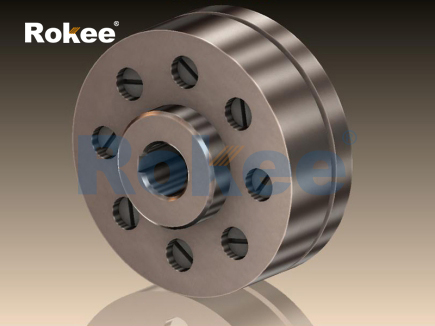
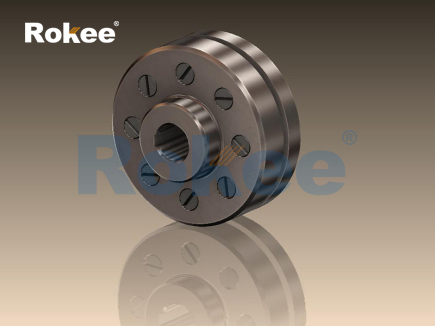

Bush Pin Type Flexible Coupling is a common mechanical transmission connection device widely used in various industrial equipment. This type of coupling connects two shafts through a combination of elastic bushings and pin shafts, combining the transmission efficiency of a rigid coupling with the cushioning and vibration reduction characteristics of an elastic coupling. Especially popular in the field of small and medium power transmission.
The bushing pin coupling mainly consists of the following components:
Coupling half body: usually made of cast iron, cast steel, or aluminum alloy, with the drive shaft and driven shaft connected at both ends respectively
Pin shaft: a high-strength steel component responsible for transmitting torque
Elastic lining: made of rubber, polyurethane or other elastic materials, providing cushioning and compensation functions
Fasteners: including nuts, washers, etc., used to fix various components
When the driving shaft rotates, the torque is transmitted to the pin shaft through the coupling half body, and the pin shaft then transmits the force to the elastic bushing, and finally outputs it to the driven shaft through the coupling half body at the other end. The elastic lining plays the following key roles in this process:
Absorbing and buffering impact loads
Compensate for axial, radial, and angular deviations
Reduce vibration and noise transmission
Protect equipment from sudden overload damage
The bushing pin coupling has the following significant characteristics:
Good compensation capability: can compensate for radial deviation of 0.5-3mm and angular deviation of 1-5 °
Medium torque transmission capacity: suitable for a torque range of 0.1-5000N · m
Maintenance free design: Most models do not require lubrication and are easy to maintain
Easy to install: usually does not require special tools to complete the installation
Good economy: Compared to other types of couplings, the cost is lower
Modern Bush Pin Type Flexible Couplings have developed various variants to meet different application needs:
Classified by lining material
Rubber lining type: universal type, with good comprehensive performance
Polyurethane lining type: better wear resistance and longer service life
Composite lining type: used in special working conditions, such as high temperature or corrosive environments
Classified by structural form
Standard type: Two end flange structure, the most common
Flange shaft sleeve type: one end flange, one end shaft sleeve
Double axis sleeve type: both ends are connected by shaft sleeves
Brake wheel type: integrated braking function
Special design type
Explosion proof type: used in flammable and explosive environments
High precision type: used for precision transmission systems
High speed type: optimized design to reduce the influence of centrifugal force
Selection considerations
When choosing a bushing pin coupling, comprehensive consideration should be given to:
Transmission power and speed
Shaft diameter size
Installation space restrictions
Environmental conditions (temperature, humidity, corrosiveness, etc.)
Deviation compensation demand
Maintenance requirements
cost budget
Selection steps
Determine the required torque value to be transmitted
Calculate and select appropriate coupling specifications
Check if the speed is within the allowable range
Evaluate the demand for deviation compensation
Consider environmental factors and choose suitable materials
Confirm installation method (flange, shaft sleeve, etc.)
Check for other special requirements (such as explosion-proof, insulation, etc.)
Installation key points
Proper installation is crucial for the performance and lifespan of bushing pin couplings
Clean all contact surfaces, remove burrs and dirt
Check the alignment of the shaft and minimize the deviation as much as possible
Install each component in order to avoid forced tapping
Uniformly tighten all bolts using a cross tightening method
Check the flexibility of rotation without any jamming phenomenon
Conduct a trial run and observe for any abnormal vibrations or noise
Maintenance Recommendations
Although most bushing pin couplings are designed to be maintenance free, regular inspections are still important:
Check the coupling status every 3-6 months
Observe the lining for cracks, deformation, or wear
Check if the fasteners are loose
Pay attention to the occurrence of abnormal vibrations or noise
Clean the surface of the coupling as necessary according to the usage environment
Typical Failure Modes
Common faults of bushing pin couplings include:
Wear or rupture of lining
Deformation or fracture of the pin shaft
Half body crack of coupling
Loose or broken bolts
Abnormal vibration and noise
Fault cause analysis
Faults are usually caused by the following reasons:
Overload operation
Long term misalignment
Environmental factors (temperature, corrosion, etc.) have an impact
Improper installation
Material fatigue
Lack of maintenance
Solution
Corresponding measures should be taken for different faults:
Replace damaged bushings or pins
Re align the central axis system
Choose a model that is more suitable for environmental conditions
Improve installation process
Regular maintenance and inspection
Consider upgrading to a higher specification coupling
Bush Pin Type Flexible Couplings are widely used in the following fields:
General industrial equipment
Pump equipment
fan system
compressor
conveying machinery
mixing equipment
Special industrial applications
Food processing machinery
Pharmaceutical equipment
Ship propulsion system
construction machinery
power generation equipment
Emerging application areas
With the advancement of technology, Bush Pin Type Flexible Couplings have also begun to be applied in:
New energy equipment (wind power, solar energy, etc.)
Electric vehicle transmission system
Robot Joint Transmission
Precision instruments and equipment
As a mature and reliable transmission component, the bushing pin coupling continues to play an important role in various industrial fields through continuous innovation and development. Proper selection, installation, and maintenance of bushing pin couplings can effectively improve the overall performance and lifespan of the transmission system, providing a stable and reliable power transmission solution for industrial production.
« Bush Pin Type Flexible Couplings » Post Date: 2024/4/25 , https://www.rokeecoupling.net/tags/bush-pin-type-flexible-couplings.html