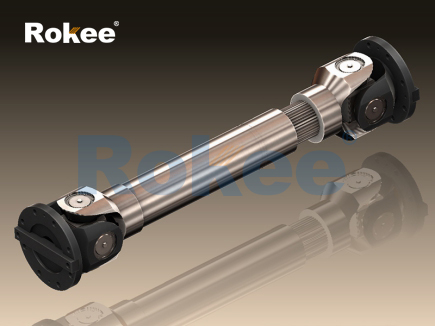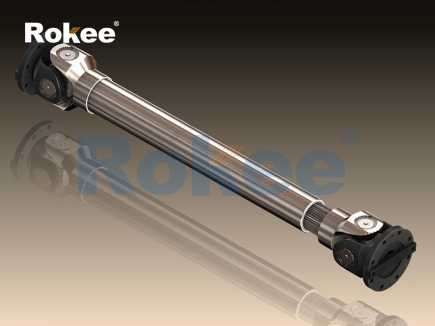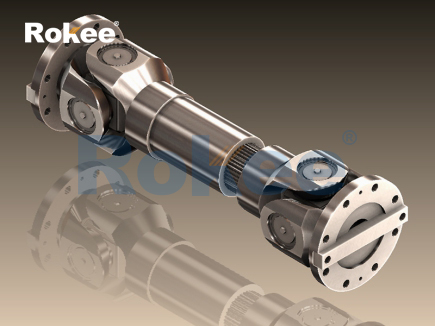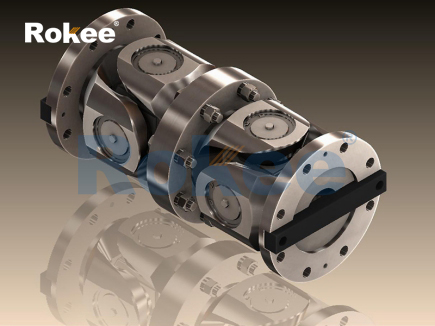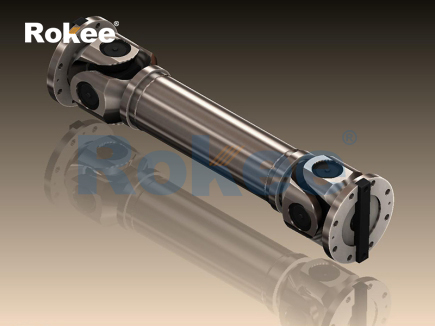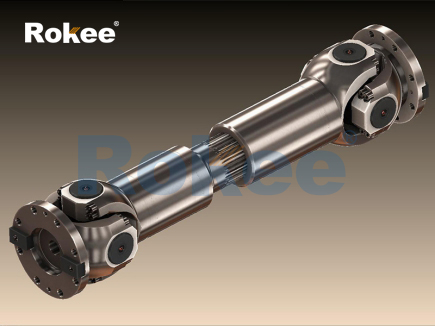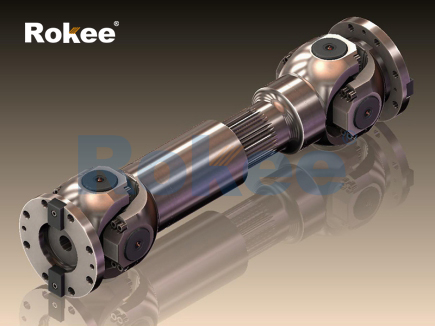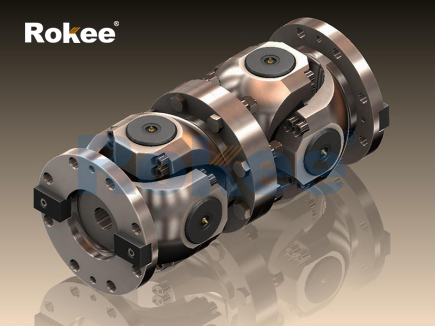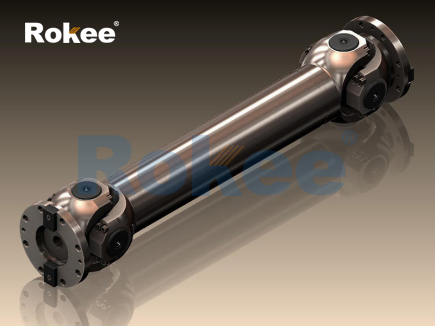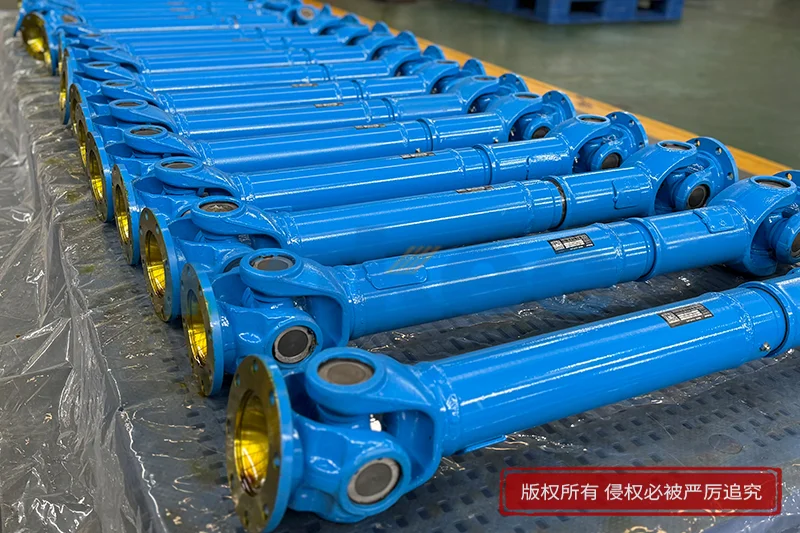
Cardan Joint is a mechanical transmission device used to transmit rotational motion and torque between two shafts, while allowing for a certain degree of angular deviation between the two shafts. This flexible connection method enables the transmission system to adapt to various complex installation conditions and working environments.
The working principle of Cardan Joints is based on the principle of spherical kinematics. When the driving shaft rotates, the motion is transmitted to the driven shaft through a cross axis or cage structure, and the continuity of motion can be maintained even if there is an angular deviation between the two shafts. Its core feature is the ability to transmit rotational motion between two intersecting axes, typically allowing a working angle of 0 ° -45 °.
The main types of Cardan Joints
Cross axis Cardan Joint
The cross axis Cardan Joint is the most traditional and common type, consisting of two fork shaped joints and a cross axis. This structure is simple and reliable, with low cost, but there is a problem of speed fluctuation. When the working angle increases, the output speed will experience periodic fluctuations.
Constant velocity Cardan Joint
The constant velocity Cardan Joint solves the speed fluctuation problem of traditional cross axis Cardan Joints, and common types include:
Cage type Cardan Joint: designed with steel balls and special tracks
Three pin Cardan Joint: using three rollers to roll on a special track
Double offset Cardan Joint: used for large angle transmission
Flexible Cardan Joint
The use of elastic materials such as rubber and polyurethane as transmission media is suitable for small torque and small angle transmission scenarios, and has the advantages of shock absorption and absorption.
Structural composition of Cardan Joints
The main components of a typical Cardan Joint include:
Outer ring/shell: protects the internal structure and provides installation interfaces
Inner ring/star sleeve: connecting the drive shaft
Holder: Fixing rolling elements
Rolling elements (steel balls or rollers): transmitting torque and motion
Dust cover: prevents contaminants from entering and maintains lubrication
Lubricating grease: reduces friction and extends service life
Application areas of Cardan Joints
Cardan Joints are widely used in multiple industrial fields:
Automotive industry: driveshaft connections, half axles for front wheel drive vehicles
Construction machinery: power transmission of excavators, loaders and other equipment
Steel metallurgy: heavy equipment such as rolling mills and continuous casting machines
Shipbuilding industry: connection of propulsion shaft system
Aerospace: Aircraft Control Systems and Engine Transmission
Robot technology: flexible transmission of robotic arm joints
Selection and maintenance of Cardan Joints
Selection considerations:
Working environment (temperature, humidity, corrosiveness)
Load characteristics (constant load, impact load)
Space limitations and installation requirements
Maintain convenience and cost
Maintenance points:
Regularly check whether the dust cover is damaged
Supplement or replace lubricating grease periodically
Pay attention to abnormal noise and vibration
Check if the working angle exceeds the design range
Observe whether there is any oil leakage phenomenon
As a key component of mechanical transmission systems, the performance of Cardan Joints directly affects the efficiency and reliability of the entire equipment. Choosing and using Cardan Joints correctly is of great significance for extending equipment life and improving transmission efficiency. With the development of industrial automation and intelligence, Cardan Joint technology will continue to evolve to meet more demanding industrial application requirements.
pu sandwich panel line,pu sandwich panel machine,sandwich panel machine
« Cardan Joints » Latest Update Date: May 8, 2026
https://www.rokeecoupling.net/tags/cardan-joints.html