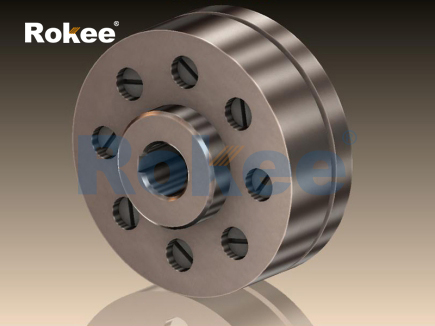
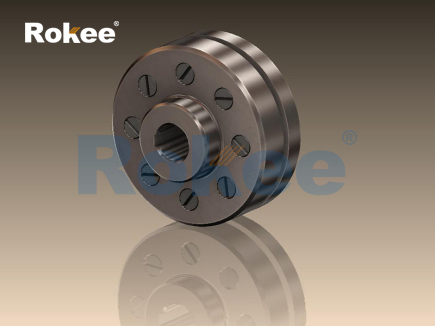
Bush pin coupling is a common mechanical transmission component widely adopted in general industrial transmission systems for its simple structure and stable operating performance. This coupling mainly consists of two symmetrical flange halves, cylindrical pins and elastic rubber bushes, with straightforward assembly structures that require no complex auxiliary parts. During operation, torque is transmitted through the pins fixed on one flange, which press against the elastic bushes embedded in the opposite flange. The elastic bushes serve as vital buffer components, effectively mitigating mechanical vibration and reducing friction noise generated during shaft rotation. One prominent feature of this coupling is its excellent tolerance for minor axial, radial and angular misalignment between two connected shafts, which compensates for installation deviations and slight mechanical deformation caused by long-term operation. Made of durable metal and high-elasticity polymer materials, it maintains stable mechanical properties under continuous rotation and moderate load conditions, resisting abrasion and aging to extend service life. Its easy disassembly structure facilitates daily maintenance and component replacement without cumbersome operational steps. It is commonly applied in medium and low-speed transmission equipment such as water pumps, fans and light-duty processing machinery. Despite not being suitable for extreme high-speed or heavy-impact working environments, it delivers reliable transmission efficiency with low operation failure rates. With compact overall dimensions and convenient installation procedures, this economical mechanical coupling remains a practical choice for conventional industrial transmission scenarios, balancing basic transmission demands and long-term operational stability for general mechanical equipment.

A bush pin coupling is a type of flexible mechanical coupling widely used in industrial power transmission systems to connect two rotating shafts at their ends, enabling the efficient transfer of torque while accommodating minor misalignments, absorbing vibrations, and buffering shock loads. Unlike rigid couplings that require precise alignment and offer no flexibility, bush pin couplings are designed with a combination of metallic and non-metallic components that work together to balance power transmission efficiency with adaptability, making them suitable for a wide range of industrial applications. The design and functionality of bush pin couplings are rooted in their unique structural composition, which directly influences their performance characteristics, determines their various types, and dictates their suitability for different operational environments.
The basic structure of a bush pin coupling consists of several key components that work in harmony to facilitate torque transmission and provide flexibility. At the core of the coupling are two flanged hubs, typically made of durable metallic materials such as cast iron, steel, or aluminum alloy. These hubs are designed to be mounted on the driving and driven shafts, respectively, and are secured in place using keys, set screws, or taper sleeves to ensure a tight, slip-free connection. The flanges of the hubs are equipped with evenly spaced holes that align when the coupling is assembled, creating a path for the pins and bushes that form the flexible connection between the two shafts. The pins, usually made of high-strength steel or stainless steel, are inserted through the aligned holes of the two flanges, serving as the primary medium for torque transmission. Each pin is paired with a bush, a non-metallic component that fits around the pin and sits within the flange holes, acting as a flexible buffer between the metallic pins and hubs. The bushes are typically made of elastomeric materials such as polyurethane, neoprene, or rubber, which possess excellent elasticity, wear resistance, and shock absorption properties. In some designs, the bushes may have a cylindrical or barrel shape, with a metal lining embedded within to enhance their structural integrity and wear resistance, ensuring they can withstand the forces generated during torque transmission. Additionally, some bush pin couplings may include a spacer between the two flanges, which provides a gap between the shafts and allows for greater axial misalignment, while others may feature a brake wheel integrated into one of the hubs to facilitate braking in applications where stopping power is required. The simplicity of this structural design means that bush pin couplings are easy to manufacture, assemble, and disassemble, requiring no complex tools or specialized expertise, which contributes to their widespread use in industrial settings.
The performance characteristics of bush pin couplings are directly shaped by their structural components and design, making them well-suited for applications that require a balance of flexibility, torque capacity, and reliability. One of the key performance features of bush pin couplings is their ability to accommodate various types of shaft misalignment, including angular, parallel, and axial misalignment. Angular misalignment occurs when the two shafts are not perfectly collinear, while parallel misalignment happens when the shafts are offset from each other but remain parallel. Axial misalignment refers to the linear displacement of one shaft relative to the other along the axis of rotation. The elastomeric bushes in the coupling absorb the forces generated by these misalignments through elastic deformation, reducing the stress on the connected shafts, bearings, and other mechanical components. This flexibility not only prevents premature wear and failure of machinery but also simplifies the installation process, as precise alignment is not required, saving time and labor costs. Another important performance characteristic is shock absorption and vibration damping. Industrial machinery often generates vibrations and shock loads during operation, which can be transmitted through the shafts and cause damage to equipment or affect operational stability. The elastomeric bushes act as shock absorbers, compressing and expanding in response to vibrations and shock, thereby reducing the amplitude of these forces and preventing them from being transferred to the connected components. This results in smoother, quieter operation and extends the service life of both the coupling and the associated machinery. Bush pin couplings also exhibit good torque transmission efficiency, capable of transmitting high levels of torque without slippage when properly sized and installed. The metallic pins and hubs ensure that the torque generated by the driving shaft is efficiently transferred to the driven shaft, while the bushes maintain the integrity of the connection even under varying load conditions. Additionally, bush pin couplings are maintenance-free in most cases, as they do not require lubrication. The non-metallic bushes are self-lubricating and resistant to wear, eliminating the need for regular lubrication checks and reducing operational costs. They also have a long service life, with the bushes being the only wearing component, which can be easily replaced without disassembling the entire coupling or moving the connected shafts, further reducing maintenance downtime.
There are several types of bush pin couplings, each designed with specific structural modifications to suit different operational requirements, load conditions, and misalignment needs. The classification of these couplings is primarily based on their structural design, the type of bush used, and the presence of additional components such as spacers or brake wheels. One of the most common types is the basic elastic sleeve pin coupling, which features a simple design consisting of two flanged hubs, steel pins, and elastic sleeves (bushes) that fit over the pins. This type of coupling is suitable for low to medium speed and low to medium torque applications, offering good flexibility and shock absorption. The elastic sleeves are typically made of rubber or polyurethane, and their design allows for a certain degree of angular and parallel misalignment, making them ideal for general industrial machinery such as pumps, fans, and small motors. Another type is the elastic pin gear coupling, which incorporates toothed semi-couplings and a toothed sleeve ring in addition to the pins and bushes. This design uses non-metallic flexible pins and the meshing of teeth to transmit torque, providing greater torque capacity and improved misalignment compensation compared to the basic elastic sleeve pin coupling. Elastic pin gear couplings are often used in applications with higher torque requirements, such as in ferrous metallurgy, wind power, and gas turbine systems. A variation of the elastic pin gear coupling is the conical shaft hole type, which has one end of the hub designed with a conical shaft hole and increased clearance between the semi-couplings to facilitate the fixing space at the shaft end, making it suitable for applications where shaft end space is limited. Bush pin couplings with brake wheels are another common type, featuring a brake wheel integrated into one of the hubs, which allows for easy braking of the connected machinery. This type is widely used in applications that require frequent stopping, such as cranes, escalators, and lifting transportation equipment. Spacer type bush pin couplings are designed with a spacer between the two flanges, which provides a larger gap between the shafts and allows for greater axial misalignment. This design is particularly useful in applications where the two shafts are separated by a longer distance, such as in pump drives, where the spacer can be quickly removed radially without dismantling the hubs from the shafts, simplifying maintenance. Additionally, there are flexible pin couplings, which use non-metallic flexible pins to connect the two semi-couplings, offering a simple structure that requires no lubrication and is easy to manufacture and install. These couplings are suitable for low to medium speed and torque applications, such as in general equipment and light industrial machinery. Each type of bush pin coupling has its own unique features and advantages, allowing for selection based on the specific requirements of the application, including torque capacity, speed, misalignment tolerance, and maintenance needs.
The wide range of applications of bush pin couplings is a testament to their versatility, reliability, and adaptability to various industrial environments. These couplings are used in numerous industries, ranging from light manufacturing to heavy industrial processes, where they play a crucial role in ensuring the efficient and reliable operation of machinery. One of the primary application areas is the general industrial sector, where bush pin couplings are used in a variety of equipment such as pumps, compressors, fans, mixers, and conveyors. In pump systems, for example, bush pin couplings connect the motor to the pump shaft, accommodating minor misalignments that may occur during installation or operation, while absorbing vibrations and shock loads to prevent damage to the pump and motor bearings. Similarly, in conveyor systems, these couplings transmit torque from the drive motor to the conveyor rollers, ensuring smooth and consistent movement of materials, even under varying load conditions. The construction industry also relies heavily on bush pin couplings, particularly in equipment such as cranes, ropeway construction machinery, and lifting transportation systems. In cranes, for instance, couplings with brake wheels are used to connect the motor to the lifting mechanism, allowing for precise control and braking, while the flexible design accommodates the misalignments that may occur during the crane’s operation. The energy sector, including wind power, nuclear power, and gas turbine systems, also uses bush pin couplings for power transmission. In wind turbines, these couplings connect the rotor to the generator, transmitting the torque generated by the wind while accommodating the misalignments caused by wind loads and structural movement, ensuring efficient power generation. The ferrous metallurgy industry uses bush pin couplings in equipment such as rolling mills and smelting machinery, where they withstand high torque loads and harsh operating conditions, including high temperatures and vibrations. Additionally, bush pin couplings are used in the automotive industry, particularly in auxiliary equipment such as air compressors and power steering pumps, as well as in leisure rides, escalators, lifts, and washers, where their simplicity, reliability, and low maintenance requirements make them an ideal choice. The key reason for the widespread use of bush pin couplings across these industries is their ability to balance torque transmission efficiency with flexibility, their ease of installation and maintenance, and their durability under a wide range of operating conditions. Whether in low-speed, low-torque applications or high-speed, high-torque industrial processes, bush pin couplings provide a cost-effective and reliable solution for power transmission.
In addition to their primary applications, bush pin couplings offer several advantages that make them a preferred choice over other types of couplings. Their simple structural design not only reduces manufacturing costs but also makes them easy to assemble and disassemble, which is particularly beneficial during maintenance or equipment replacement. The absence of the need for lubrication eliminates the risk of lubricant leakage, which can cause contamination in sensitive industrial processes, and reduces the overall operational costs associated with lubricant purchase and maintenance. The elastomeric bushes used in these couplings are resistant to wear, corrosion, and aging, ensuring a long service life, while their replaceability means that the coupling can be easily repaired without the need to replace the entire unit. Furthermore, bush pin couplings are capable of operating in a wide range of temperatures, making them suitable for both high-temperature and low-temperature environments, from industrial furnaces to cold storage facilities. Their ability to accommodate misalignments also reduces the need for precise installation, saving time and labor costs, and prevents premature wear of shafts and bearings. Another advantage is their quiet operation, as the elastomeric bushes dampen vibrations and reduce noise, creating a more comfortable and safe working environment for industrial personnel.
When selecting a bush pin coupling for a specific application, several factors need to be considered to ensure optimal performance and reliability. The first factor is the torque capacity required, which depends on the power of the driving motor and the load requirements of the driven machinery. It is essential to select a coupling with a torque capacity that exceeds the maximum torque generated by the system to prevent coupling failure. The operating speed is another important factor, as different types of bush pin couplings are designed for different speed ranges. High-speed applications require couplings with balanced designs and high-quality bushes that can withstand the centrifugal forces generated at high speeds. The type and magnitude of shaft misalignment should also be considered, as some couplings are better suited for angular misalignment, while others are designed to accommodate parallel or axial misalignment. The operating environment, including temperature, humidity, and the presence of corrosive substances, should also be taken into account when selecting the material of the hubs and bushes. For example, in corrosive environments, stainless steel hubs and chemical-resistant bushes may be required to ensure durability. Additionally, the maintenance requirements and the availability of replacement parts should be considered, as this can affect the overall operational costs and downtime of the equipment.
In conclusion, bush pin couplings are essential components in industrial power transmission systems, offering a unique combination of flexibility, reliability, and efficiency. Their simple yet effective structural design, consisting of metallic hubs, steel pins, and elastomeric bushes, enables them to transmit torque efficiently while accommodating misalignments, absorbing vibrations, and buffering shock loads. The various types of bush pin couplings, including elastic sleeve pin couplings, elastic pin gear couplings, spacer type couplings, and those with brake wheels, are designed to suit different operational requirements, making them versatile enough to be used in a wide range of industries. From general industrial machinery to heavy-duty equipment in the energy and metallurgy sectors, bush pin couplings play a crucial role in ensuring the smooth and reliable operation of machinery, reducing maintenance costs, and extending service life. Their advantages, including ease of installation, maintenance-free operation, durability, and quiet performance, make them a preferred choice over other types of couplings for many industrial applications. As industrial technology continues to advance, the design and materials of bush pin couplings are likely to evolve, further enhancing their performance and expanding their range of applications, ensuring they remain a vital component in power transmission systems for years to come.
pu sandwich panel line,pu sandwich panel machine,sandwich panel machine
« Bush Pin Couplings » Latest Update Date: May 9, 2026
https://www.rokeecoupling.net/tags/bush-pin-couplings.html