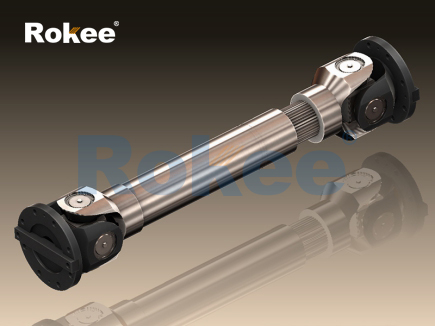
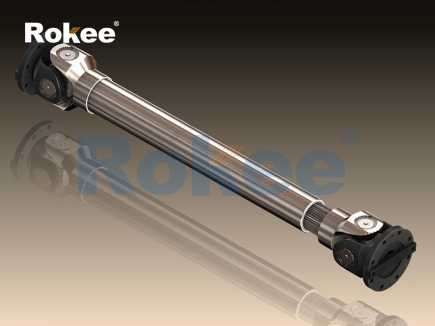
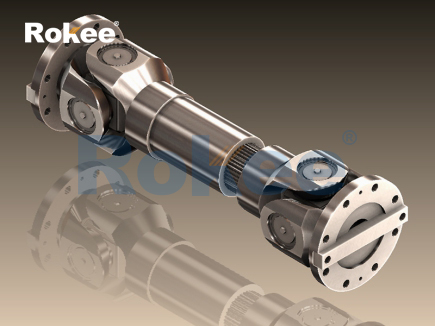
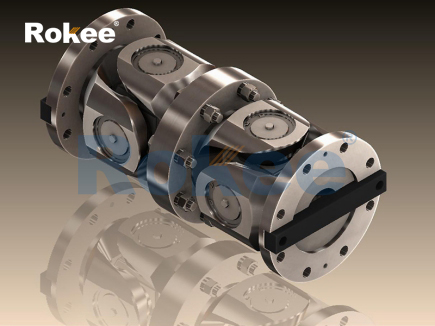
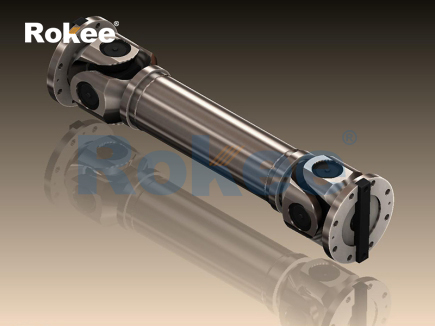
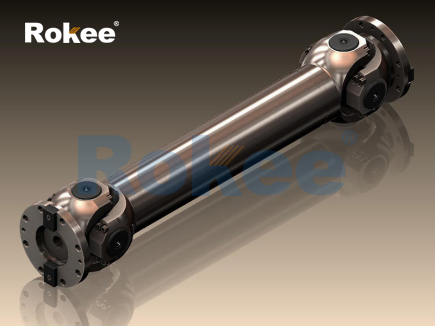
As a fundamental mechanical transmission component, the cross cardan shaft occupies an irreplaceable position in modern mechanical transmission systems. It is specially designed to transmit rotational power between two shafts with spatial offset, angular deflection and axial displacement, breaking through the transmission limitations of rigid shaft parts. With unique hinged connection structure and excellent adaptive transmission characteristics, this mechanical part can maintain stable power output under complex working conditions such as variable transmission angles and irregular spatial layouts. It has gradually become a core connecting component widely used in transportation, industrial manufacturing, agricultural machinery and heavy engineering equipment. The inherent mechanical advantages of cross cardan shafts stem from their exquisite structural design, reasonable material matching and flexible assembly mode, which enable them to adapt to diverse working environments ranging from low-speed heavy-load operation to high-speed stable rotation. In the long-term application and iteration process, different structural variants have been derived to meet differentiated transmission demands, and the continuous optimization of production processes further enhances its comprehensive mechanical performance and service stability. An in-depth exploration of the structural composition, core performance characteristics, common classification forms and diverse application scenarios of cross cardan shafts can help clarify its operating mechanism and application value in mechanical transmission systems, providing effective reference for reasonable selection and standardized application in mechanical design and equipment manufacturing.
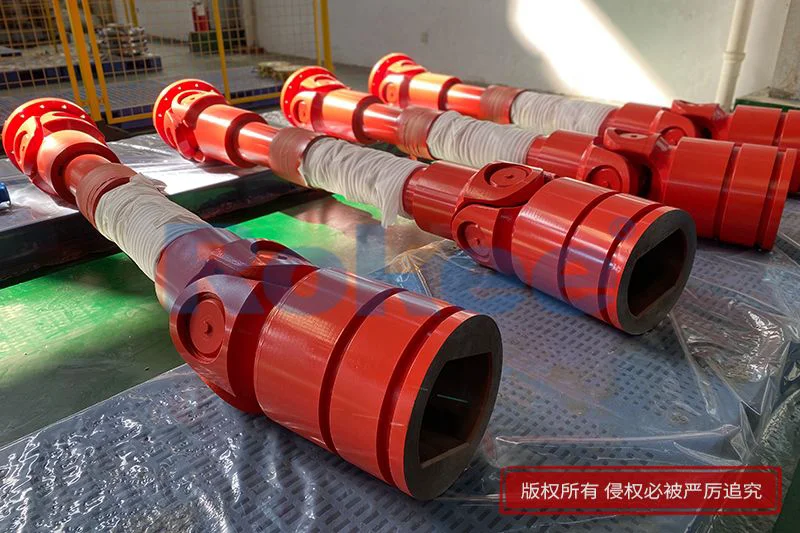
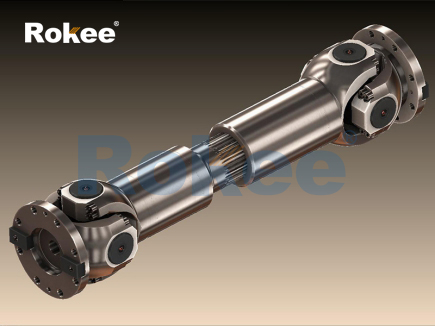
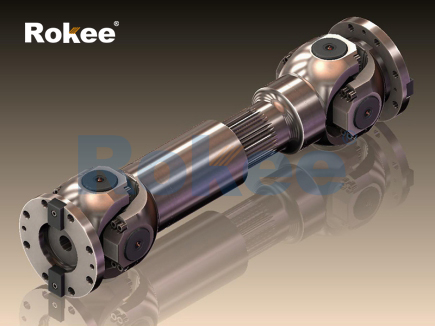
The basic structure of a cross cardan shaft follows a simple and rigorous mechanical logic, mainly composed of universal joint yokes, cross shafts, rolling bearing components and intermediate transmission shafts. Each component has clear functional positioning and closely cooperates to complete the power transmission process. The universal joint yokes are distributed at both ends of the transmission shaft, presenting a fork-shaped structure. The inner part of the fork body is provided with precision machining holes for installing bearing components, which can be stably connected with the cross shaft. The cross shaft, as the core hinge component of the entire structure, adopts an integrated forging structure in most cases. Four mutually perpendicular shaft necks are evenly distributed on its surface, and each shaft neck is matched with an independent rolling bearing assembly. This structural design enables the cross shaft to realize multi-directional rotational deflection between the two sets of universal joint yokes, thereby achieving angular compensation during power transmission. The rolling bearing components are usually composed of needle rollers, bearing sleeves and sealing parts. The compact structural layout of needle rollers can effectively reduce the friction resistance during relative rotation, while the sealing structure can isolate external dust, moisture and corrosive substances to avoid abnormal wear of internal moving parts. The intermediate transmission shaft connects two groups of universal joint structures, and its shaft body thickness and structural length are adjusted according to the torque bearing capacity and installation space requirements. Some transmission shafts are designed with telescopic structures, which can freely change the axial length within a certain range to adapt to the axial displacement generated by equipment vibration and component deformation during operation. All structural components are processed with high-precision machining technology, and the matching gap between parts is strictly controlled to ensure the smoothness of rotation and the stability of power transmission in the working process.
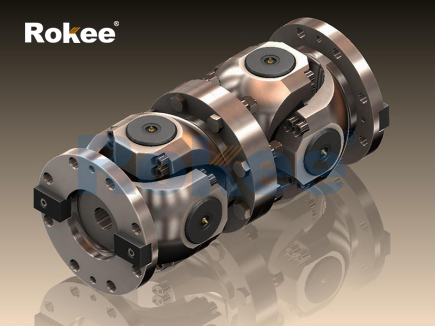
The excellent comprehensive performance of cross cardan shafts is the key reason for their wide application in various mechanical equipment, and its core performance indicators cover mechanical transmission efficiency, deformation compensation capability, load resistance and environmental adaptability. In terms of transmission efficiency, the rolling friction formed by the internal bearing structure effectively reduces the mechanical energy loss caused by sliding friction. Under standard working conditions, the power transmission efficiency can remain at a high level, and the efficiency attenuation amplitude is extremely small even during long-term continuous operation. This efficient transmission characteristic avoids excessive energy consumption in the power transmission link and improves the overall energy utilization rate of mechanical equipment. In terms of displacement compensation performance, the cross hinge structure can simultaneously adapt to angular displacement, axial displacement and radial displacement. It can maintain continuous and stable power transmission when the included angle of two connected shafts changes dynamically. The single-section cardan shaft can meet the transmission requirements of small-angle deflection, while the combined structure can realize larger-angle spatial transmission, which effectively solves the transmission difficulty caused by installation deviation and component vibration displacement of mechanical equipment. In terms of load resistance, most cross cardan shafts are made of high-strength alloy steel through integral forging and heat treatment. The optimized metallographic structure improves the tensile strength, torsional rigidity and fatigue resistance of the material. It can withstand instantaneous impact load and long-term alternating load without permanent deformation of the shaft body, and the structural stability is excellent under heavy-load working conditions. In addition, the sealed protection structure enables the shaft parts to adapt to harsh working environments such as high dust, high humidity and low temperature. The surface anti-corrosion and wear-resistant treatment further prolongs the service life, reducing the frequency of equipment maintenance and replacement cost in the whole life cycle.
According to structural forms, combination modes and functional characteristics, cross cardan shafts can be divided into multiple classification types, and each type has unique structural advantages and applicable working conditions. The most common classification is based on the number of universal joint sections, including single-section cross cardan shafts and double-section cross cardan shafts. The single-section structure consists of one group of cross shaft hinge components, with a compact overall structure and small installation space occupation. It is suitable for mechanical systems with small shaft spacing and low deflection angle requirements, and is often used in light-load and medium-speed transmission scenarios. The double-section structure connects two single-section universal joints through an intermediate shaft. The ingenious angle compensation principle offsets the speed fluctuation generated by a single universal joint, realizing constant-speed and stable power transmission. This type has a larger allowable deflection angle and stronger load-bearing capacity, which is suitable for medium and heavy mechanical equipment with large spatial displacement. According to the axial adjustment function, it can be divided into telescopic cross cardan shafts and fixed-length cross cardan shafts. The telescopic type is equipped with a sliding matching structure inside the intermediate shaft, which can realize free expansion and contraction of the shaft body. It is mostly used in equipment with frequent axial position changes of transmission parts. The fixed-length type has an integrated welded or forged shaft body with high overall rigidity, which is not easy to deform under heavy load and is suitable for fixed installation layouts with stable shaft spacing. In addition, according to the bearing capacity and structural reinforcement mode, it can be divided into ordinary type and reinforced type. The reinforced cross cardan shaft optimizes the shaft body diameter and cross shaft structure, and adopts integrated forging molding technology. The internal stress distribution is uniform, which can bear ultra-high torque and is widely used in heavy industrial transmission scenarios.
Cross cardan shafts have extremely diverse application scenarios, covering multiple industries such as transportation machinery, industrial manufacturing, agricultural production and heavy engineering. In the transportation machinery industry, they are widely applied in the power transmission systems of various vehicles. They connect the transmission and drive axle of vehicles to complete the power transmission between spatially staggered shafts. When the vehicle is driving on uneven roads, the jitter and displacement of the axle can be adaptively compensated through the deflection of the cardan shaft, ensuring the continuity of power output. In addition, this component is also used in the steering transmission mechanism of special vehicles to improve the flexibility of steering motion. In the field of industrial manufacturing, cross cardan shafts are applied to various processing equipment such as machine tools, printing machinery and packaging machinery. In the complex internal transmission layout of mechanical equipment, multiple transmission shafts need to realize spatial cross connection. The displacement compensation capability of the cardan shaft can eliminate the transmission jitter caused by installation errors and mechanical vibration, ensuring the processing accuracy and operation stability of the equipment. In the metallurgical industry, it undertakes the power transmission task of rolling equipment. It maintains stable operation under high-temperature environment and heavy rolling load, and its excellent torsional resistance effectively avoids shaft body deformation during metal processing. In agricultural production scenarios, agricultural machinery such as tractors and harvesters often work in complex terrain with large vibration amplitude. The rugged structural characteristics of cross cardan shafts can adapt to dusty and muddy working environments, stably transmitting power to functional components such as tillage and harvesting devices. In heavy engineering and mining machinery, reinforced cross cardan shafts are used for large-scale crushing equipment and conveying machinery. Their ultra-high load-bearing capacity meets the power transmission requirements of heavy-duty operation, improving the operation efficiency of engineering equipment.
In the actual application process, the service state and service life of cross cardan shafts are affected by multiple external factors, so standardized selection and maintenance measures need to be adopted to ensure operating performance. In the selection stage, parameters such as equipment transmission power, operating speed, shaft deflection angle and working environment should be comprehensively considered. For high-speed light-load equipment, priority should be given to lightweight cardan shafts with high transmission precision and low friction loss. For heavy-load low-speed mechanical systems, reinforced structural products with high torsional rigidity need to be selected to avoid structural damage caused by overload. During the installation process, the coaxiality and installation angle of the connecting shafts should be strictly controlled to prevent excessive deflection from causing accelerated wear of internal bearings. In daily maintenance, the sealing state of the shaft body should be regularly checked to prevent lubricant leakage and external impurity infiltration. Timely replacement of aging sealing parts and supplementary lubricating grease can reduce the friction loss of internal moving parts. At the same time, the vibration amplitude and operating noise of the cardan shaft during operation should be monitored. Abnormal vibration and noise often indicate excessive wear of bearings or loose connecting parts, which need to be inspected and maintained in a timely manner to avoid equipment failure caused by component damage. With the continuous progress of mechanical manufacturing technology, the production process of cross cardan shafts is also constantly optimized. The application of new high-strength wear-resistant materials and precision heat treatment technology further improves the mechanical performance of products. The lightweight and integrated structural design effectively reduces the self-weight of components, which is conducive to improving the energy-saving effect of mechanical equipment.
To sum up, the cross cardan shaft relies on its simple and reliable structural design, excellent displacement compensation ability and stable load-bearing performance to become an indispensable basic component in the field of mechanical transmission. Its diversified classification forms can accurately match the transmission needs of different industries and different working conditions, and the wide application scope fully reflects the strong practicability and structural universality of this mechanical part. From the perspective of mechanical development, with the continuous upgrading of intelligent manufacturing and high-end mechanical equipment, the performance requirements for transmission components such as cross cardan shafts will continue to improve. Future optimization directions will focus on lightweight structure, intelligent wear monitoring and extreme environment adaptation. Through material innovation, structural optimization and process upgrading, the comprehensive performance of cross cardan shafts will be further improved to adapt to more complex and extreme working conditions. As a traditional and constantly evolving mechanical component, the cross cardan shaft will continue to play an important role in modern industrial production, transportation operations and engineering construction, providing stable and reliable power transmission guarantee for the safe and efficient operation of various mechanical equipment.
pu sandwich panel line,pu sandwich panel machine,sandwich panel machine
« Cross Cardan Shafts » Latest Update Date: May 9, 2026
https://www.rokeecoupling.net/tags/cross-cardan-shafts.html