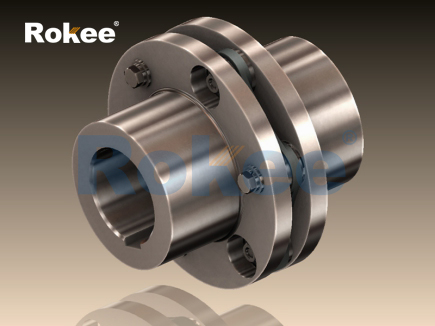
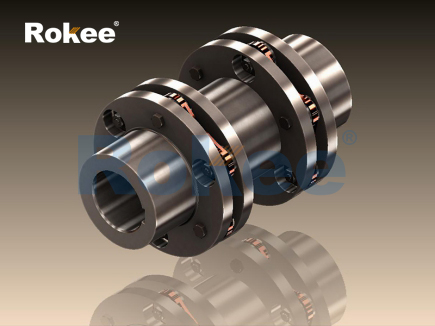
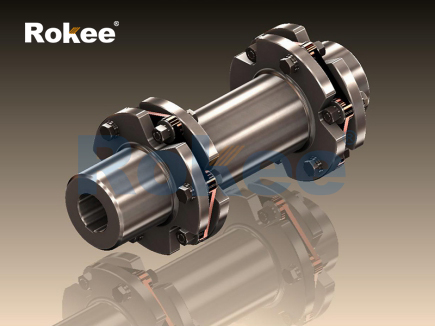
Metal membrane coupling is a sophisticated mechanical transmission component designed to connect rotating shafts and transmit torque steadily within mechanical systems. It mainly consists of metal membrane packs and shaft connecting structures, relying on the subtle elastic deformation of stacked metal membranes to realize power transmission between driving and driven ends. Unlike traditional flexible transmission parts, this mechanical component features zero backlash during operation, delivering consistent and precise torque transmission without intermittent mechanical clearance. The excellent material toughness and structural rigidity enable it to effectively compensate for minor axial, radial and angular misalignments between connected shafts, which commonly occur in daily mechanical operation due to installation deviations and mechanical vibration. Furthermore, it requires no lubrication throughout its service cycle, eliminating the need for frequent maintenance and reducing external interference to mechanical operation. Its outstanding dynamic performance allows it to suppress mechanical resonance and absorb subtle vibration generated during high-speed rotation, stabilizing the overall operation of transmission systems. Made of high-strength metal materials, the coupling boasts remarkable fatigue resistance and structural durability, adapting to long-term continuous operation under alternating stress. It is widely applied in high-precision industrial equipment including digital control machinery, rotating power facilities and automated production devices. With the growing demand for high-efficiency and low-maintenance transmission components, metal membrane coupling has become an indispensable part of modern mechanical transmission systems by virtue of its reliable stability, compact structure and superior environmental adaptability in complex working conditions.
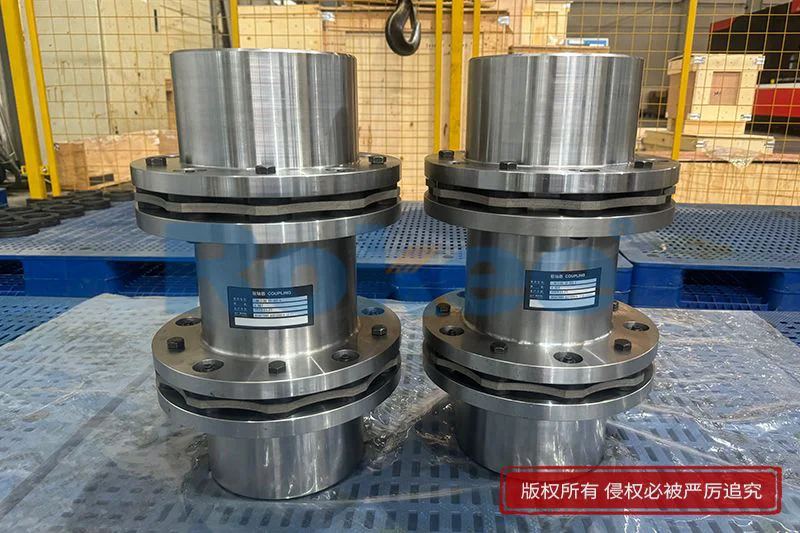
In the realm of industrial power transmission, couplings serve as critical components that bridge rotating shafts, enabling the transfer of torque while accommodating misalignments and mitigating operational stresses. Among the diverse range of coupling technologies available, metal membrane couplings have emerged as a preferred solution for high-performance, demanding applications due to their exceptional durability, precision, and resistance to harsh operating conditions. Unlike elastic couplings that rely on rubber or polymer elements, metal membrane couplings utilize thin, flexible metal diaphragms to compensate for misalignments, making them ideal for scenarios where reliability, high torque capacity, and minimal maintenance are paramount. This article delves into the design principles, working mechanisms, material considerations, key advantages, and industrial applications of metal membrane couplings, shedding light on their role in enhancing the efficiency and longevity of modern mechanical systems.
Design Principles of Metal Membrane Couplings
The fundamental design of a metal membrane coupling revolves around the integration of flexible metal diaphragms into a shaft connection system. A typical metal membrane coupling consists of three core components: two hub assemblies that attach to the driving and driven shafts, and one or more metal diaphragms that connect these hubs. The hubs are precision-machined to ensure a secure fit with the shafts, often utilizing keyways, splines, or interference fits to transmit torque without slippage. The metal diaphragms, which are the defining feature of this coupling type, are thin, disc-shaped or bellows-like components fabricated from high-strength metallic materials. These diaphragms are designed with specific geometric configurations—such as radial slots, waves, or a series of concentric rings—to optimize their flexibility while maintaining structural integrity under torque loads.
One of the key design considerations for metal membrane couplings is the number and arrangement of diaphragms. Single-diaphragm designs are simpler and more compact, suitable for applications with moderate misalignment requirements. In contrast, double-diaphragm configurations, which incorporate two diaphragms separated by a spacer, offer enhanced misalignment compensation and greater torsional stiffness. The spacer in double-diaphragm couplings also allows for increased shaft separation, making them suitable for applications where the driving and driven shafts are not closely positioned. Additionally, the thickness and diameter of the diaphragms are carefully calibrated based on the application’s torque requirements and misalignment tolerance. Thicker diaphragms provide higher torque capacity but reduced flexibility, while thinner diaphragms offer superior misalignment compensation but lower torque ratings. This balance between flexibility and strength is a critical aspect of the design process, ensuring that the coupling can perform optimally under the specific operating conditions of the application.
Another important design feature of metal membrane couplings is the method of attaching the diaphragms to the hubs. Common attachment methods include bolted connections, welding, or integral machining. Bolted connections are widely used due to their ease of assembly and disassembly, allowing for maintenance or replacement of diaphragms without removing the entire coupling. Welded connections, on the other hand, offer a more robust and compact design, eliminating the need for bolts and reducing the risk of component failure due to loose fasteners. Integral machining, where the diaphragms are machined as a single piece with the hubs, provides the highest level of structural integrity but is more complex and costly to manufacture, making it suitable for specialized high-performance applications.
Working Mechanisms of Metal Membrane Couplings
The primary function of a metal membrane coupling is to transmit torque from the driving shaft to the driven shaft while accommodating three types of misalignments: angular misalignment (where the shafts are inclined relative to each other), parallel misalignment (where the shafts are offset axially), and axial displacement (where the shafts move toward or away from each other). The flexible metal diaphragms are responsible for compensating for these misalignments through elastic deformation. When torque is applied, the diaphragms twist slightly, transferring the rotational force from one hub to the other. Simultaneously, any misalignment between the shafts causes the diaphragms to bend elastically, absorbing the misalignment without transmitting excessive stresses to the shafts or other components.
Unlike rigid couplings, which require precise alignment and can transmit significant axial and radial forces to the shafts and bearings, metal membrane couplings isolate these forces through the elastic deformation of the diaphragms. This isolation helps to reduce wear and tear on bearings, seals, and other rotating components, extending the overall lifespan of the mechanical system. Additionally, metal membrane couplings operate with minimal backlash, making them suitable for applications that require precise positioning and synchronization, such as in robotics, machine tools, and precision conveyors. The absence of backlash is attributed to the rigid connection between the diaphragms and the hubs, which eliminates any play or movement between the components.
Another key aspect of the working mechanism is the ability of metal membrane couplings to dampen torsional vibrations. Torsional vibrations, which are common in rotating machinery, can cause noise, reduce efficiency, and lead to premature component failure. The metal diaphragms, due to their inherent flexibility, act as a torsional spring, absorbing and dissipating vibrational energy. This vibration damping capability is particularly beneficial in applications such as reciprocating engines, pumps, and compressors, where torsional vibrations are prevalent. Unlike elastic couplings that use rubber elements, which can degrade over time and lose their damping properties, metal diaphragms maintain consistent performance over a wide range of operating conditions, ensuring long-term reliability.
Material Considerations for Metal Membrane Couplings
The selection of materials for metal membrane couplings is critical to their performance, durability, and suitability for specific applications. The diaphragms, being the most critical component, are typically fabricated from high-strength, corrosion-resistant metallic alloys that can withstand repeated elastic deformation without fatigue failure. The most commonly used materials for diaphragms include stainless steel, titanium, and nickel-based alloys. Each material offers distinct properties that make it suitable for different operating environments and performance requirements.
Stainless steel is the most widely used material for metal membrane diaphragms due to its excellent combination of strength, flexibility, and corrosion resistance. Austenitic stainless steels, such as 316L and 304, are particularly popular as they offer high ductility and resistance to oxidation and chemical corrosion, making them suitable for applications in harsh environments such as chemical processing plants, marine equipment, and food processing facilities. Ferritic stainless steels, on the other hand, offer higher thermal conductivity and lower cost but are less corrosion-resistant than austenitic grades, making them suitable for dry, moderate-temperature applications.
Titanium is another material used for diaphragms in high-performance applications. Titanium offers an exceptional strength-to-weight ratio, making it ideal for applications where weight reduction is critical, such as aerospace and automotive racing. Additionally, titanium exhibits excellent corrosion resistance, even in highly aggressive environments, and can withstand high temperatures, making it suitable for use in jet engines, gas turbines, and other high-temperature applications. However, the high cost of titanium limits its use to specialized applications where its unique properties are essential.
Nickel-based alloys, such as Inconel and Hastelloy, are used in applications that require extreme temperature and corrosion resistance. These alloys can withstand temperatures exceeding 1000°C and are highly resistant to corrosion from acids, alkalis, and other aggressive chemicals, making them suitable for use in petrochemical plants, nuclear power facilities, and high-temperature industrial furnaces. Nickel-based alloys also offer excellent fatigue resistance, ensuring long-term reliability in applications with high cyclic loads.
The hubs of metal membrane couplings are typically fabricated from carbon steel, alloy steel, or aluminum. Carbon steel is widely used for general-purpose applications due to its high strength and low cost. Alloy steel, which contains additional elements such as chromium, molybdenum, and nickel, offers enhanced strength and durability, making it suitable for high-torque applications. Aluminum is used in applications where weight reduction is a priority, such as in aerospace and lightweight industrial machinery, due to its low density and good thermal conductivity.
Key Advantages of Metal Membrane Couplings
Metal membrane couplings offer a range of advantages over other types of couplings, making them a preferred choice for many industrial applications. One of the most significant advantages is their exceptional durability and long service life. Unlike elastic couplings that rely on rubber or polymer elements, which can degrade over time due to heat, chemicals, or mechanical stress, metal diaphragms are resistant to wear, tear, and environmental degradation. This results in a longer service life and reduced maintenance requirements, lowering the overall cost of ownership for the end user.
Another key advantage is their high torque capacity. Metal diaphragms, being fabricated from high-strength metallic materials, can transmit significantly higher torques than elastic couplings of the same size. This makes metal membrane couplings suitable for heavy-duty applications such as industrial motors, pumps, compressors, and conveyors, where high torque transmission is essential. Additionally, metal membrane couplings operate with high efficiency, as there is minimal energy loss during torque transmission. The rigid connection between the components and the absence of sliding or rolling elements ensure that nearly all of the torque from the driving shaft is transferred to the driven shaft, resulting in improved energy efficiency.
Metal membrane couplings also offer superior misalignment compensation capabilities. The flexible diaphragms can accommodate angular misalignments up to 5 degrees, parallel misalignments up to several millimeters, and axial displacements up to tens of millimeters, depending on the design. This flexibility eliminates the need for precise shaft alignment, reducing installation time and costs. Additionally, the ability to accommodate misalignments reduces stress on bearings, seals, and other components, extending their service life and reducing the risk of unexpected downtime.
Another advantage is their resistance to harsh operating conditions. Metal diaphragms are unaffected by extreme temperatures, chemicals, oils, and solvents, making them suitable for use in a wide range of environments, from high-temperature industrial furnaces to corrosive chemical processing plants. Unlike elastic couplings that can melt, harden, or degrade in extreme conditions, metal membrane couplings maintain consistent performance, ensuring reliability even in the most challenging environments. Additionally, metal membrane couplings are non-lubricated, eliminating the need for regular lubrication and reducing the risk of contamination in applications such as food processing, pharmaceuticals, and cleanroom environments.
Finally, metal membrane couplings offer precise torque transmission with minimal backlash. This makes them suitable for applications that require accurate positioning and synchronization, such as robotics, machine tools, and automated production lines. The absence of backlash ensures that the driven shaft responds immediately to changes in the driving shaft’s rotation, improving the precision and repeatability of the mechanical system.
Industrial Applications of Metal Membrane Couplings
Due to their exceptional performance characteristics, metal membrane couplings find applications across a wide range of industries. One of the primary applications is in the power generation industry, where they are used in gas turbines, steam turbines, and generators. In these applications, metal membrane couplings transmit high torques while accommodating misalignments and dampening torsional vibrations, ensuring the reliable operation of power generation equipment. The resistance to high temperatures and corrosion also makes them suitable for use in nuclear power plants, where they operate in harsh, radioactive environments.
The aerospace industry is another major user of metal membrane couplings. In aircraft engines and auxiliary power units (APUs), metal membrane couplings are used to transmit torque between rotating components while minimizing weight and accommodating misalignments. The high strength-to-weight ratio of titanium diaphragms makes them ideal for aerospace applications, where weight reduction is critical for improving fuel efficiency and performance. Additionally, the resistance to extreme temperatures and vibration damping capabilities ensure the reliability of aircraft systems during flight.
In the chemical and petrochemical industry, metal membrane couplings are used in pumps, compressors, and agitators. These applications require couplings that can withstand corrosive chemicals, high temperatures, and high pressures. The corrosion-resistant properties of stainless steel and nickel-based diaphragms make them suitable for use in these harsh environments, ensuring long-term reliability and reducing the risk of contamination. Additionally, the non-lubricated design of metal membrane couplings eliminates the risk of lubricant contamination in chemical processing applications.
The automotive industry uses metal membrane couplings in high-performance vehicles, such as racing cars and electric vehicles. In racing cars, the lightweight and high torque capacity of metal membrane couplings make them ideal for transmitting power from the engine to the transmission, improving acceleration and performance. In electric vehicles, metal membrane couplings are used in the drivetrain to transmit torque from the electric motor to the wheels, ensuring efficient power transmission and reliable operation. The vibration damping capabilities also help to reduce noise and improve the comfort of the vehicle.
Other industrial applications of metal membrane couplings include machine tools, robotics, material handling equipment, and marine propulsion systems. In machine tools, the precise torque transmission and minimal backlash of metal membrane couplings ensure accurate cutting and machining operations. In robotics, the flexibility and precision of these couplings enable the smooth movement of robotic arms, improving the accuracy and repeatability of robotic tasks. In material handling equipment, such as conveyors and lifts, metal membrane couplings transmit high torques while accommodating misalignments, ensuring reliable operation in harsh industrial environments. In marine propulsion systems, the corrosion-resistant properties of metal diaphragms make them suitable for use in saltwater environments, ensuring the reliable operation of ships and boats.
Conclusion
Metal membrane couplings have established themselves as a reliable and high-performance solution for power transmission in a wide range of industrial applications. Their unique design, which utilizes flexible metal diaphragms to transmit torque and accommodate misalignments, offers a range of advantages over other coupling types, including exceptional durability, high torque capacity, superior misalignment compensation, resistance to harsh operating conditions, and precise torque transmission with minimal backlash. The careful selection of materials, such as stainless steel, titanium, and nickel-based alloys, ensures that these couplings can perform optimally in diverse environments, from high-temperature power plants to corrosive chemical processing facilities.
As industrial machinery becomes increasingly complex and demanding, the role of metal membrane couplings in enhancing efficiency, reliability, and longevity will continue to grow. Their ability to operate in harsh conditions, reduce maintenance requirements, and improve energy efficiency makes them a cost-effective solution for a wide range of applications, from aerospace and automotive to power generation and chemical processing. With ongoing advancements in material science and manufacturing technology, metal membrane couplings are likely to become even more versatile and efficient, further expanding their use in modern industrial systems. Whether in high-performance racing cars, precision robotics, or large-scale power plants, metal membrane couplings play a critical role in ensuring the smooth and reliable operation of rotating machinery, making them an indispensable component of the industrial landscape.
pu sandwich panel line,pu sandwich panel machine,sandwich panel machine
« Metal Membrane Couplings » Latest Update Date: May 9, 2026
https://www.rokeecoupling.net/tags/metal-membrane-couplings.html