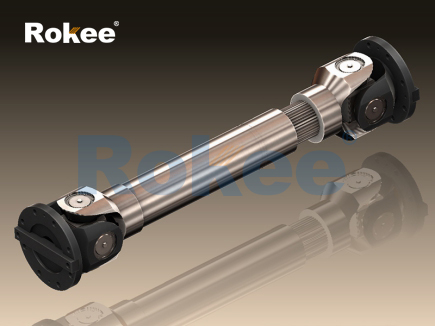
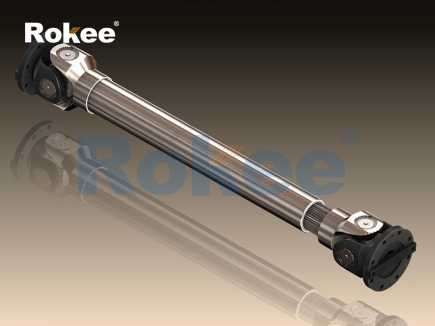
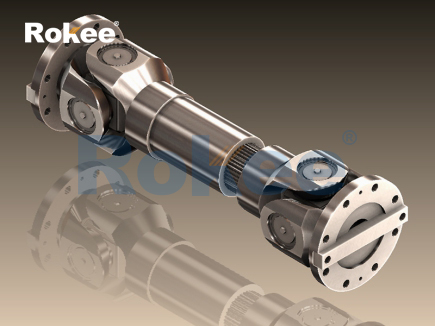
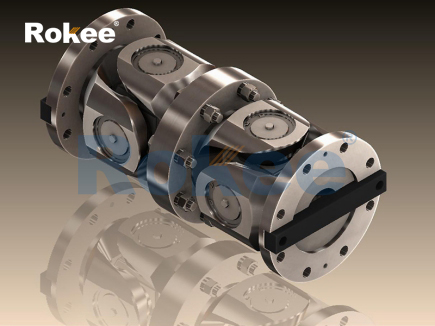
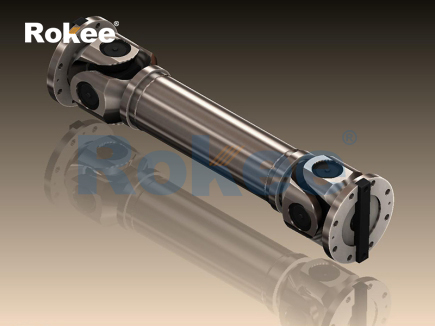
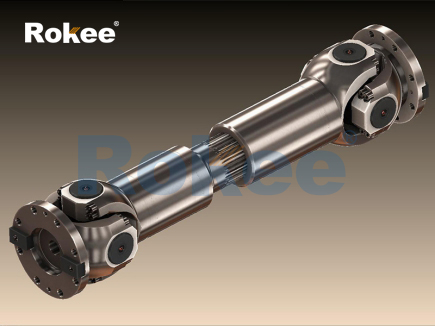
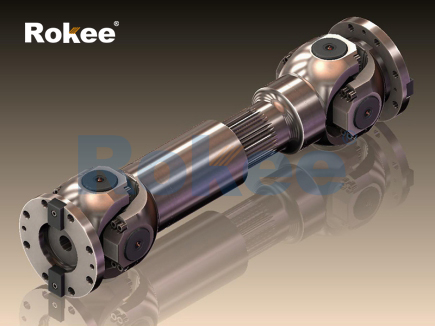
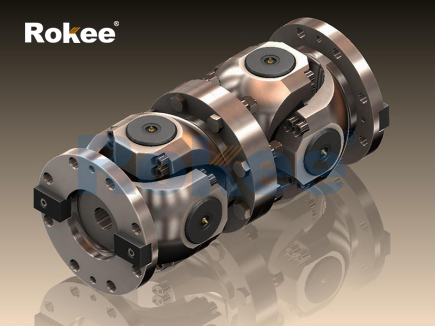
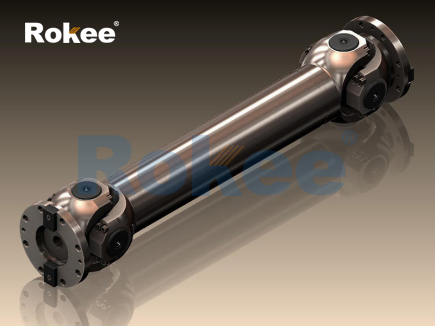
Cross Joint Shaft is a key connecting component widely used in mechanical transmission systems, mainly used to connect two transmission shafts whose axes are not on the same straight line or whose relative positions may change during operation. This type of coupling, with its unique structural design, can compensate for axial angular deviation, radial displacement, and axial displacement, ensuring the continuity and stability of power transmission.
The core working principle of the Cross Joint Shaft is based on the "cross hinge" mechanism, which achieves multi angle transmission through the combination of two mutually perpendicular hinges. Typical structures include:
Cross shaft: As a core component, it is usually forged from alloy steel and heat-treated, with high strength and wear resistance
Universal joint fork: a key component that connects the transmission shaft and the cross shaft, usually made of cast steel or forged steel material
Bearing components: including needle roller bearings, sealing rings, etc., to ensure flexible rotation and prevent lubricant leakage
Lubrication system: oil nozzle or grease channel, ensuring the lubrication needs for long-term operation
When the driving shaft rotates, through the special structure of the cross joint, even if there is an angle deviation between the two shafts (generally ranging from 15 ° to 45 °, depending on the specific model), the rotational motion can be transmitted to the driven shaft, while absorbing vibration and impact.
The common types of Cross Joint Shafts in modern industry are as follows:
Standard cross coupling
Simple structure and easy maintenance
Suitable for medium torque transmission
The allowable angle deviation is generally ≤ 15 °
Heavy duty Cross Joint Shaft
Enhanced design with high load-bearing capacity
Suitable for heavy-duty applications such as mining machinery and metallurgical equipment
Special sealing design suitable for harsh environments
Compact cross coupling
Small size, light weight
Suitable for situations with limited space
Commonly used in automotive transmission systems
High speed precision Cross Joint Shaft
Special dynamic balancing treatment
Suitable for high-speed operating conditions
Precision bearings reduce vibration and noise
When choosing a Cross Joint Shaft, the following key parameters should be considered:
Torque capacity: It is necessary to calculate the actual working torque and consider the safety factor
Speed range: shall not exceed the rated maximum speed of the coupling
Allowable deviation:
Angle deviation: usually 5 ° -45 °
Radial deviation: generally 0.5-5mm
Axial displacement: approximately ± 1-3mm
Working environment: temperature range, corrosiveness, dust and other conditions
Service life: closely related to lubrication conditions and load characteristics
Application field
Cross Joint Shafts are widely used in:
Automotive Industry: Transmission Shaft Connections
Construction machinery: excavators, cranes, etc
Metallurgical equipment: rolling mill, continuous casting machine
Shipbuilding Industry: Propulsion Systems
Power generation equipment: Hydroelectric generator set
Petroleum Machinery: Drilling Equipment
Installation precautions:
Ensure that the two shaft end faces maintain an appropriate gap (usually 2-5mm)
Avoid excessive pre tightening force caused by forced installation
Check the flexibility of each moving component
Perform initial lubrication according to the instructions
Maintenance suggestions:
Regularly check the lubrication condition, replenish or replace lubricating grease
Monitor the wear of bearings and replace damaged parts in a timely manner
Regularly check the integrity of the seals
Pay attention to abnormal vibrations or noise and promptly troubleshoot the problem
As a key component in the field of mechanical transmission, the performance of the cross coupling directly affects the reliability and efficiency of the entire transmission system. The correct selection, installation, and maintenance of Cross Joint Shafts are of great significance for ensuring the long-term stable operation of equipment.
pu sandwich panel line,pu sandwich panel machine,sandwich panel machine
« Cross Joint Shafts » Latest Update Date: May 8, 2026
https://www.rokeecoupling.net/tags/cross-joint-shafts.html