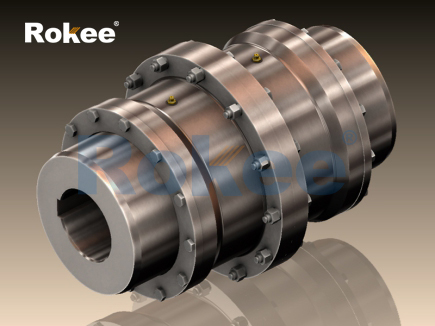
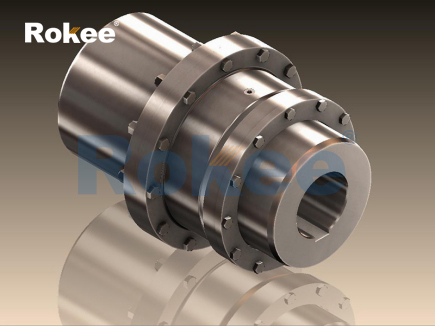
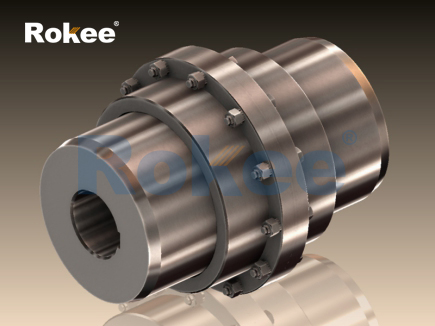
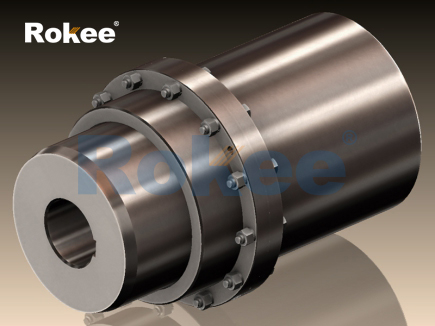
In the modern mechanical transmission industry, coupling components serve as indispensable connecting units for transmitting torque between adjacent rotating shafts, ensuring the coordinated operation of diverse mechanical equipment. Among numerous coupling types, curved tooth gear coupling stands out prominently due to its superior mechanical adaptability, exceptional load-bearing capacity and reliable operational stability. As an upgraded derivative of straight tooth gear coupling, it abandons the traditional linear tooth profile and adopts an optimized curved tooth structure, which effectively compensates for the inherent defects of excessive local stress and poor displacement adaptability in conventional gear couplings. This type of coupling has gradually become a core connecting component in heavy-duty, high-speed and complex working condition mechanical systems, widely covering industrial production fields such as metallurgy, mining, energy and transportation. The unique structural design endows it with incomparable comprehensive performance advantages over ordinary couplings, and different structural classifications further expand its application boundaries to meet the differentiated connection demands of various mechanical equipment.
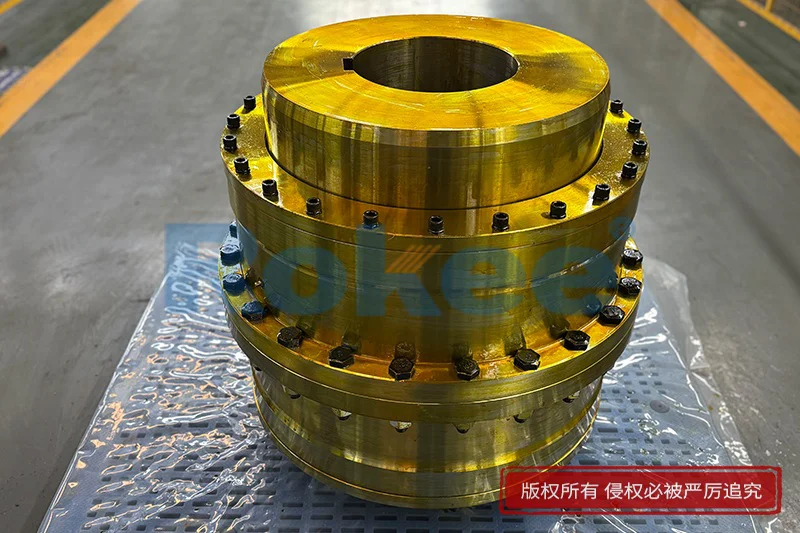
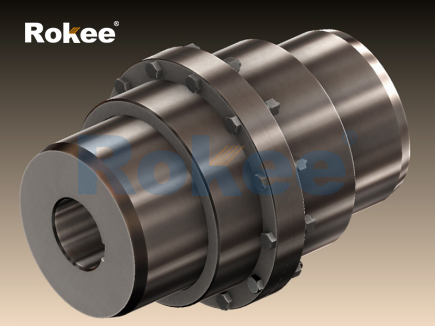
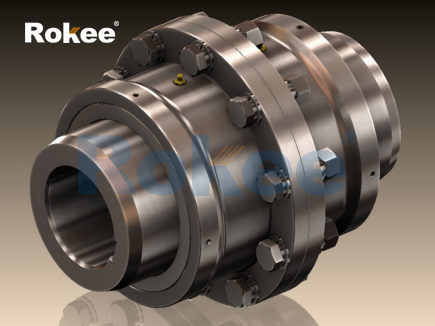
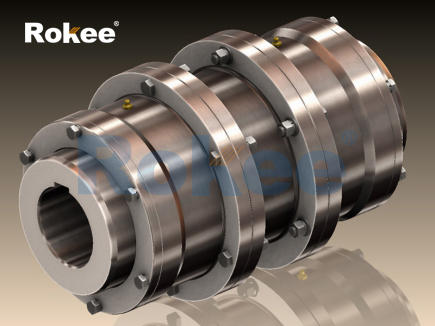
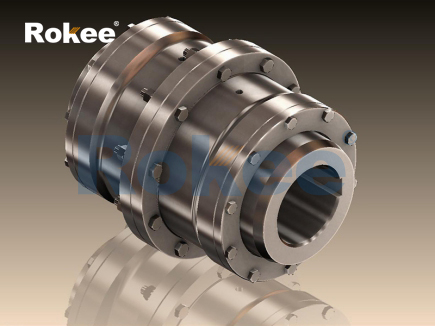
The basic structural composition of curved tooth gear coupling follows the mature assembly logic of gear transmission, with a compact and reasonable overall mechanical layout, and each component bears clear functional responsibilities to jointly complete torque transmission and shaft displacement compensation. The main constituent parts include outer tooth half couplings, inner tooth sleeves, sealing assemblies and fastening connecting parts. The outer tooth processed into a curved spherical shape is the most distinctive structural feature of this coupling. Different from the flat tooth surface of straight teeth, the curved outer tooth adopts an arc-shaped tooth profile processed by precise modification, and the spherical center of the curved tooth surface coincides with the axis of the gear shaft. This structural design enables the tooth contact surface to maintain a uniform fitting state during meshing movement. The inner tooth sleeve is equipped with standard involute inner teeth, which mesh with the outer curved teeth to form a stable gear pair transmission structure. The internal tooth spacing is reasonably optimized to reserve sufficient meshing clearance, which creates favorable conditions for displacement compensation during equipment operation. In terms of material configuration, most curved tooth gear couplings are made of high-strength alloy steel. After carburizing, quenching and precision grinding processes, the tooth surface achieves high hardness and excellent structural toughness, effectively resisting extrusion deformation and abrasion under long-term load conditions. The sealing assembly is composed of integrated end covers and flexible sealing accessories, which are tightly installed at the connection gap between the inner tooth sleeve and the half coupling. This structure can effectively isolate external dust, moisture and corrosive impurities, while preventing the internal lubricating grease from leaking outward, so as to maintain a stable lubrication state of the meshing tooth surface for a long time. Fastening parts such as bolts and retaining rings fix each component as a complete whole, avoiding component loosening and position deviation caused by mechanical vibration during high-speed operation.
The unique structural characteristics lay a solid foundation for the excellent comprehensive performance of curved tooth gear coupling, and its performance advantages are prominently reflected in displacement compensation, load bearing, transmission efficiency and operational stability. In terms of displacement compensation capability, the optimized tooth side clearance and curved tooth meshing structure enable the coupling to efficiently adapt to angular, radial and axial composite displacements between connecting shafts. The allowable angular displacement deviation is significantly higher than that of ordinary straight tooth gear couplings, which can effectively offset the installation deviation and mechanical vibration displacement generated during the operation of mechanical equipment. This compensation performance avoids additional bending stress on the shaft body caused by misalignment, and protects the transmission shaft and matching bearings from fatigue damage. In terms of load-bearing performance, the arc-shaped tooth profile makes the contact area between meshing teeth larger and the stress distribution more uniform. There is no concentrated stress at the local tooth tip or tooth root, so the coupling can withstand large continuous torque and instantaneous impact load. Even under harsh working conditions such as frequent start-stop and alternating load changes, the tooth structure is not easy to crack or deform, showing excellent fatigue resistance. The transmission efficiency of curved tooth gear coupling remains at a high level within the conventional speed range. The smooth meshing state of curved teeth reduces meshing friction and mechanical vibration, and the power loss in the torque transmission process is extremely low. Meanwhile, the improved sealing structure prolongs the service cycle of internal lubricating oil, reduces the frequency of daily refueling and maintenance, and lowers the operational maintenance cost of mechanical equipment. In terms of environmental adaptability, the high-hardness tooth surface and dense sealing structure enable the coupling to operate stably in dusty, humid and moderately corrosive working environments, without obvious performance attenuation caused by external environmental interference. Although the overall manufacturing precision and processing cost of curved tooth gear coupling are higher than those of simple couplings, its long service life and low failure rate make it have outstanding comprehensive economic benefits in long-term industrial application.
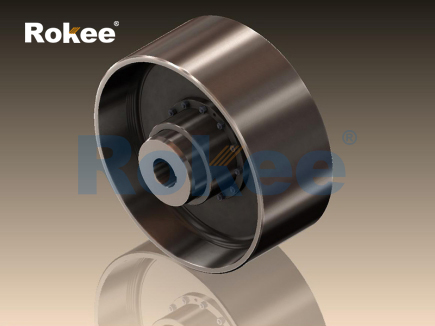
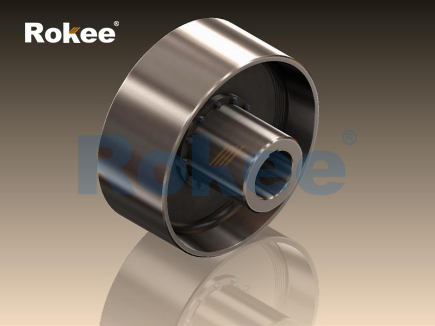
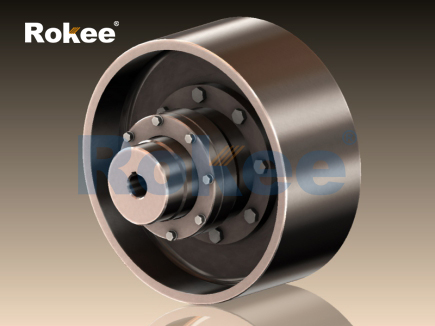
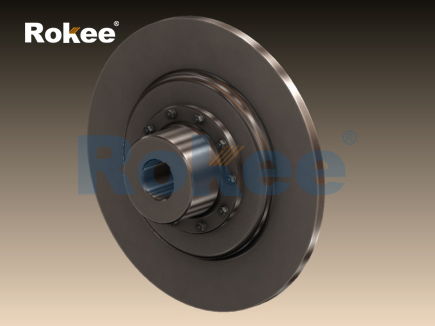
According to different structural forms, assembly modes and functional characteristics, curved tooth gear couplings can be divided into multiple types to adapt to diverse industrial application scenarios. The most common classification is based on the intermediate connection structure, including direct connection type and intermediate shaft connection type. The direct connection type curved tooth gear coupling has a compact overall structure without an intermediate transmission shaft. Two half couplings are directly meshed and connected through an inner tooth sleeve, which is suitable for mechanical equipment with short shaft spacing and limited installation space. This type of coupling is simple to assemble and convenient to disassemble, and is mostly used for conventional transmission connection of medium and low torque mechanical systems. The intermediate shaft connection type is equipped with an extended intermediate transmission shaft between two groups of curved tooth meshing pairs. The intermediate shaft can adapt to long-distance shaft connection requirements, and further improves the displacement compensation range of the coupling. It is widely applied to long-distance power transmission equipment such as conveyor production lines. In addition, according to the functional matching design, there is a brake wheel type curved tooth gear coupling. A brake wheel structure is integrated on the outer side of the half coupling, which combines the torque transmission function with the equipment braking function. This integrated design simplifies the overall mechanical structure of the equipment and saves installation space, and is very suitable for mechanical equipment that needs frequent braking and speed regulation. Based on the sealing structure difference, it can also be divided into integrated sealing type and split sealing type. The integrated sealing structure has better tightness, which is suitable for harsh working environments with serious dust and corrosion; the split sealing structure is convenient for rapid disassembly and maintenance, and is more applicable for conventional indoor mechanical transmission systems. Different types of curved tooth gear couplings retain the basic performance advantages of curved tooth meshing, and realize functional differentiation through structural optimization to meet the personalized connection needs of different industrial equipment.
With its diversified types and superior comprehensive performance, curved tooth gear couplings have been widely used in various heavy industry and mechanical manufacturing fields, becoming an important basic component to ensure the stable operation of mechanical systems. In the metallurgical industry, this coupling is applied to rolling mills, smelting transmission equipment and continuous casting machinery. Metallurgical equipment often operates under high temperature, heavy load and continuous working conditions, and the impact load generated during material processing is large. The high load-bearing capacity and vibration damping performance of curved tooth gear couplings can buffer mechanical impact, maintain stable torque transmission, and reduce the wear failure rate of transmission components. In the mining industry, it is matched with crushers, excavators and mine conveying machinery. The complex working environment of mines is accompanied by dust, vibration and variable load changes, and the good environmental adaptability and displacement compensation performance of the coupling can cope with harsh working conditions, ensuring the continuous and efficient operation of mining equipment. In the energy industry, curved tooth gear couplings are used for the transmission connection of power generation equipment, water conservancy pumping units and fan machinery. These types of equipment require long-term stable operation with low vibration and low failure rate. The high transmission efficiency and long service life of the coupling can reduce energy consumption and maintenance downtime, improving the overall operational efficiency of energy equipment.
In the field of transportation and engineering machinery, curved tooth gear couplings are applied to large engineering vehicles, port handling machinery and bulk material transportation equipment. Port machinery needs to frequently complete lifting and handling actions, with frequent load changes and obvious instantaneous impact. The excellent impact resistance of the coupling can protect the internal transmission structure of the equipment and extend the service life of engineering machinery. In the chemical industry, it is matched with stirring reactors, chemical delivery pumps and compression machinery. The dense sealing structure can prevent external corrosive gas and liquid from eroding the internal meshing teeth, adapting to the corrosive working environment of chemical production. In addition, in the field of heavy machinery manufacturing such as large machine tools and forging equipment, curved tooth gear couplings also undertake the core torque transmission work, providing stable power connection guarantee for high-precision and heavy-duty processing equipment.
In the current context of continuous upgrading of industrial manufacturing technology, the iteration speed of mechanical transmission components is accelerating, and curved tooth gear couplings are also developing towards higher precision, lighter structure and stronger environmental adaptability. With the continuous optimization of alloy material proportion and heat treatment process, the mechanical strength and wear resistance of coupling tooth parts will be further improved. The refined curved tooth profile design can reduce meshing friction noise and realize low-noise and smooth transmission under high-speed working conditions. At the same time, the integrated and modular structural design will simplify the installation and maintenance process of the coupling, and reduce the technical threshold of industrial application. In the future, with the continuous expansion of heavy industry, new energy and intelligent manufacturing fields, the market demand for high-performance curved tooth gear couplings will continue to grow. Relying on its unique structural advantages and reliable performance, this type of coupling will always occupy an important position in the field of mechanical transmission, and continuously provide stable and efficient connection guarantees for various industrial mechanical equipment. It is an essential basic mechanical component to promote the stable operation and technological upgrading of modern industrial systems.
pu sandwich panel line,pu sandwich panel machine,sandwich panel machine
« Curved Tooth Gear Couplings » Latest Update Date: May 9, 2026
https://www.rokeecoupling.net/tags/curved-tooth-gear-couplings.html