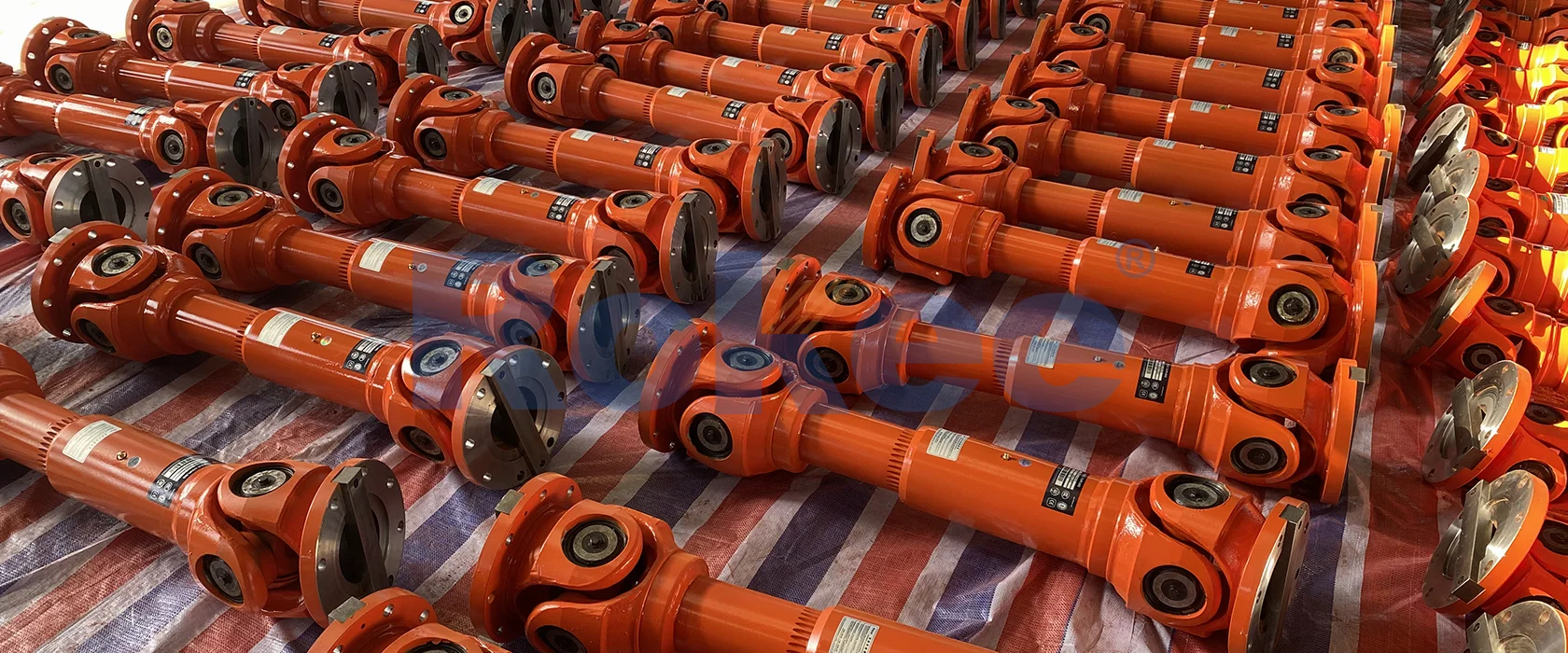
Rokee is a well-known high-quality supplier of Cross Type Universal Joints and technical services in China, customize cross type universal joints according to user drawings, alternatively, if the user provides cross type universal joints parameters, we can select the model and design drawings for you, support wholesale and export.
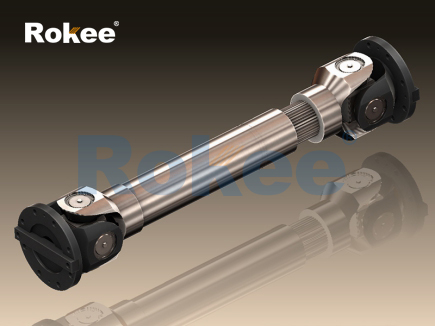
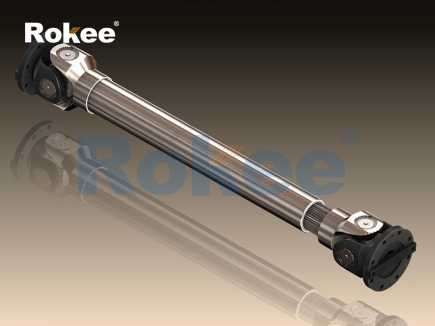
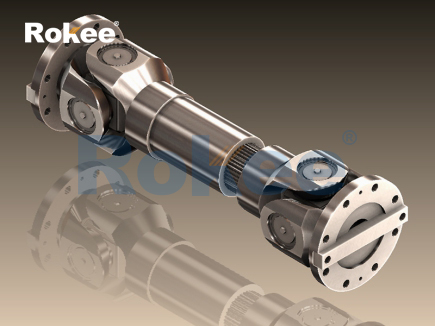
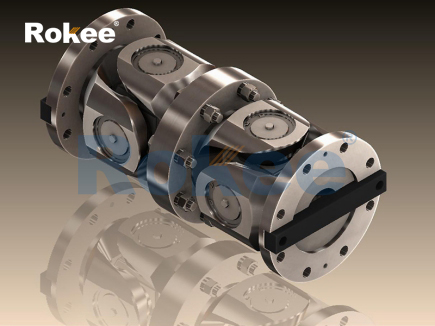
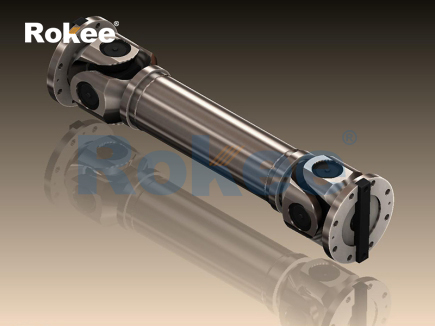
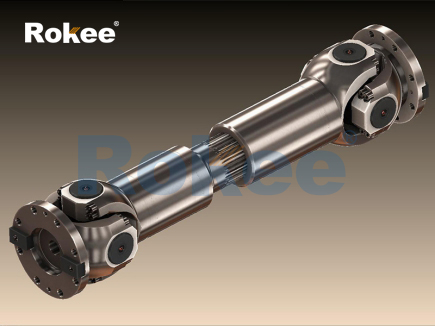
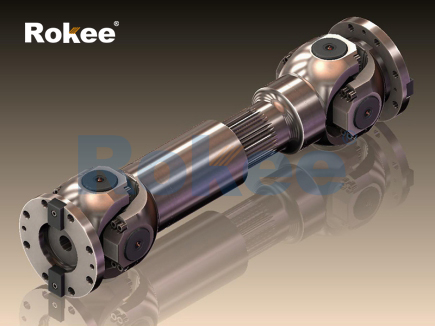
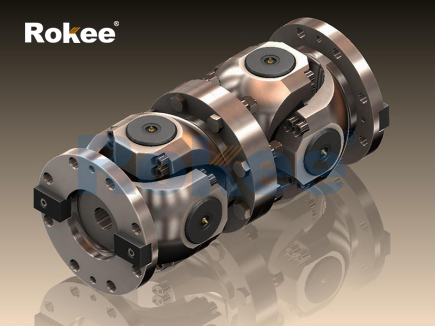
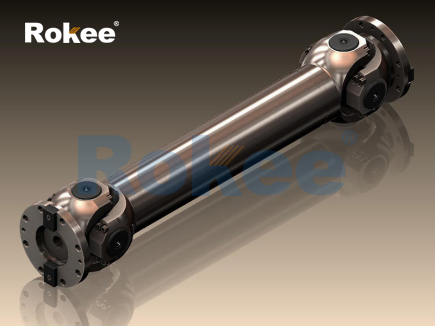

Cross type universal joint (also known as universal joint or Hooke joint) is a key component widely used in mechanical transmission systems, which can transmit torque and rotational motion in the case of changes in the angle between two axes. This type of coupling was invented by British scientist Robert Hooke in the 17th century and later improved to become an indispensable mechanical component in modern industry.
The main feature of a cross type universal joint is its ability to compensate for angular deviations between two shafts (usually up to 15 ° -45 °), while allowing for a certain degree of axial and radial displacement. It is particularly suitable for connecting two shafts that intersect but are not on the same straight line, or for transmission systems where the relative position changes during operation.
The cross type universal joint consists of the following core components:
Cross shaft (cross head): The core component is in a cross shape, with bearings installed at all four ends
Universal joint fork (universal joint fork head): usually there are two, connected to the driving shaft and the driven shaft respectively
Needle roller bearing: installed at the end of the cross shaft to reduce friction
Bearing seat: the outer shell that fixes the bearing
Sealing device: prevents lubricant leakage and contamination from entering
Lubrication system: including oil nozzles and oil passages to ensure bearing lubrication
Modern cross type universal couplings are usually made of alloy steel materials and undergo heat treatment to improve strength and wear resistance. Depending on the application scenario, its size can range from a few centimeters to several meters, and its load-bearing capacity can also vary from a few Newton meters to tens of thousands of Newton meters.
The working principle of the cross type universal joint is based on the principle of spatial linkage mechanism. The two universal joint forks connected by the cross shaft can swing around the two axes of the cross shaft. When the driving shaft rotates, the motion is transmitted to the driven shaft through the cross shaft, and the motion transmission can be maintained even if there is a certain angle between the two shafts.
However, the standard cross type universal joint has an important motion characteristic: unequal velocity. When there is an angle between the two axes, the angular velocity of the driven axis will periodically change, even if the driving axis rotates at a constant speed. This inequality is directly proportional to the angle between the two axes, and the larger the angle, the more pronounced the phenomenon of inequality.
In order to eliminate this unequal speed, double universal joint arrangements are often used in engineering, that is, two cross type universal joints are used, and the following conditions are met:
The fork heads at both ends of the intermediate shaft between two universal joints are in the same plane
The working angles of two universal joints are equal
When choosing a cross type universal joint, the following key parameters need to be considered:
Rated torque: The maximum torque that the coupling can continuously transmit
Maximum speed: allowable maximum operating speed
Working angle: maximum allowable angle between two axes
Compensation amount: allowable axial and radial displacement
Efficiency: typically between 98% and 99.5%
Lifespan: generally expressed in working hours
When selecting, it is also necessary to consider:
Working environment (temperature, humidity, corrosiveness, etc.)
Vibration and impact loads
Installation space restrictions
Maintenance requirements
cost factor
According to the structure and application characteristics, cross type universal couplings can be divided into:
Ordinary cross axis universal joint: basic type, used for general transmission
Heavy duty universal joint: reinforced design for high torque applications
Micro universal joint: Small precision applications
Scalable universal joint: with axial compensation function
Flange universal joint: connected by flange
Bearing cover universal joint: easy to maintain design
Special types include:
Maintenance free universal joint: adopting special sealing and lubrication design
High speed universal joint: optimized design for high-speed applications
Corrosion resistant universal joint: special material and surface treatment
Cross type universal couplings are widely used in:
Automotive Industry: Transmission Shaft, Steering System
Construction machinery: excavators, cranes, loaders
Steel metallurgy: rolling mill, roller conveyor transmission
Shipbuilding industry: propulsion systems, deck machinery
Petrochemical industry: pump and compressor transmission
Wind power industry: yaw and pitch systems
Military equipment: transmission systems for tanks and armored vehicles
Agricultural machinery: tractors, harvesters
Installation points:
Ensure that the alignment error of the two axes is within the allowable range
Align the universal joint fork according to the markings
Use appropriate tools and avoid hitting
Ensure smooth lubrication system
Check all fasteners
Maintenance suggestion:
Regularly check the lubrication condition and add lubricating grease on time
Monitoring abnormal working temperature
Pay attention to abnormal vibrations and noise
Regularly check the condition of the seals
Develop replacement cycles based on usage conditions
Common faults and solutions:
Abnormal noise: Check bearing wear and lubrication condition
Excessive vibration: Check the alignment and balance
Severe fever: Check lubrication and load condition
Oil leakage: replace the seal
Compared to other types of couplings, the advantages of cross type universal couplings include:
Allow large angle deviation
High carrying capacity
Relatively simple structure
high reliability
deficiencies:
Existence of unequal speed (when used in a single section)
Regular maintenance is required
Vibration may occur at high speeds
Compared with gear couplings, diaphragm couplings, elastic couplings, etc., cross type universal couplings have significant advantages in allowing angular deviation, but may be slightly inferior in accuracy and maintenance free aspects.
As a fundamental component in the field of mechanical transmission, the cross type universal joint has been designed for over a hundred years, but it is still constantly developing and improving. With the advancement of materials science, manufacturing technology, and intelligent monitoring technology, future cross type universal couplings will achieve greater breakthroughs in performance, reliability, and functionality. Correctly selecting, installing, and maintaining cross type universal couplings is crucial for ensuring efficient and reliable operation of mechanical systems, and it is also a basic skill that every mechanical engineer should master.
« Cross Type Universal Joints » Post Date: 2024/4/25 , https://www.rokeecoupling.net/tags/cross-type-universal-joints.html