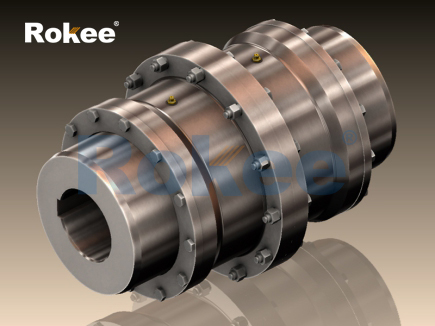
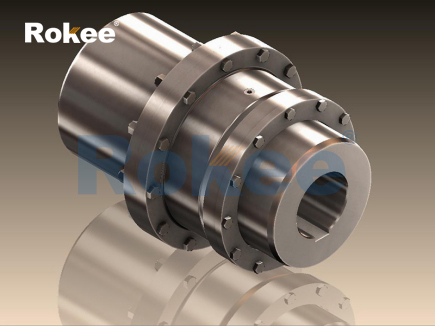
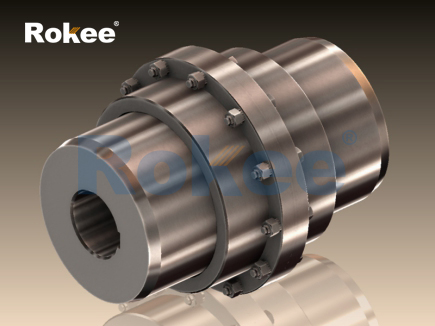
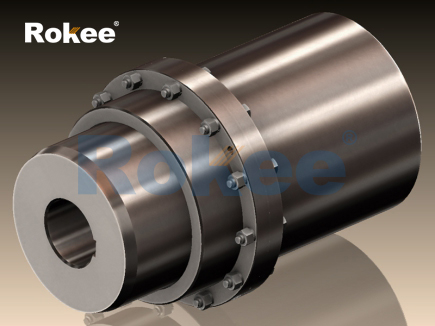
Face gear coupling stands as one of the most reliable and robust mechanical transmission components widely adopted in modern industrial transmission systems, serving the fundamental function of connecting two rotating shafts to transmit torque and rotational motion between driving and driven mechanical equipment. Distinguished from conventional gear coupling structures with cylindrical gear meshing layouts, this type of coupling utilizes a unique face-to-face gear meshing mechanism, which effectively optimizes force distribution during operation and enhances the overall stability of shaft system transmission. With its distinctive structural design, excellent load-bearing capacity and superior displacement compensation performance, face gear coupling has become an indispensable connecting part in heavy-duty mechanical equipment, rotating power devices and long-distance transmission shaft systems. This paper comprehensively elaborates on the structural composition, core working principles, key performance characteristics, mainstream classification types and diverse industrial applications of face gear coupling, aiming to provide systematic and in-depth technical reference for mechanical transmission design and industrial equipment configuration.
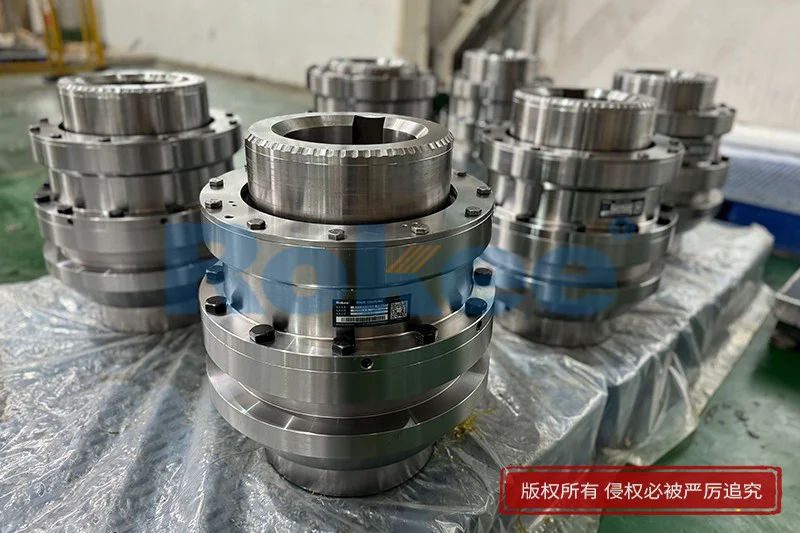
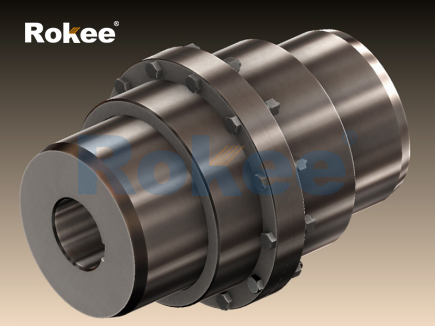
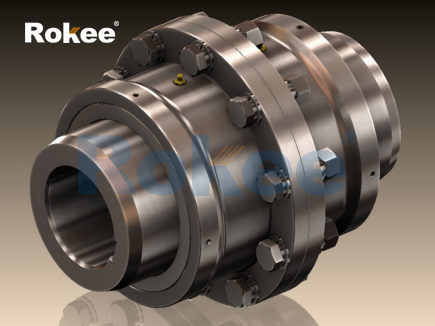
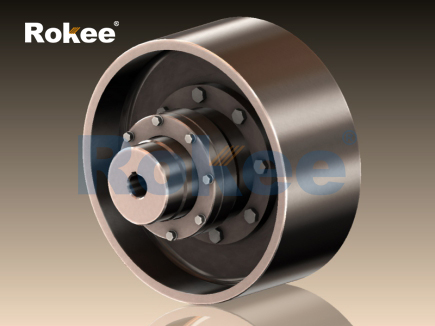
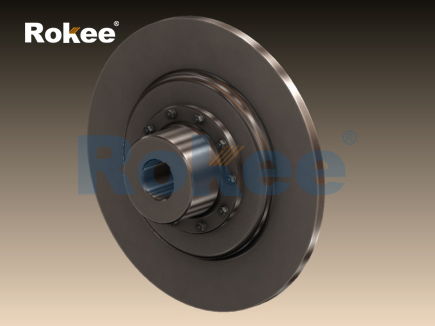
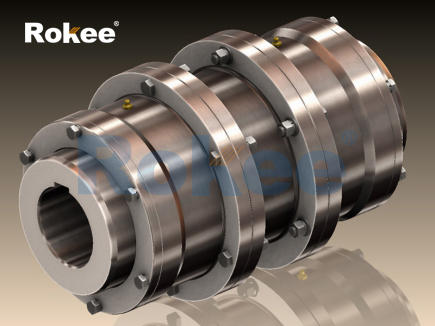
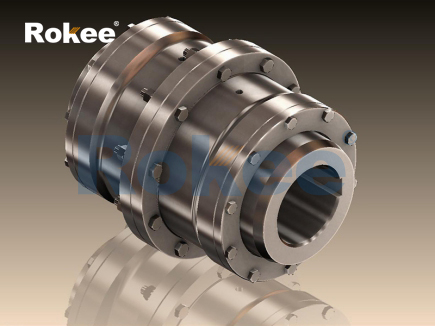
The overall structure of face gear coupling features compact layout and high structural rigidity, mainly composed of two flange half-couplings with face gears, intermediate connecting components, fastening locking parts and sealing protection assemblies. Different from straight-tooth cylindrical gear couplings that rely on circumferential tooth meshing, the gear teeth of face gear coupling are distributed on the end face of the flange disc, and the tooth surfaces are precisely processed into curved profiles to achieve tight fitting meshing between the driving flange and the driven flange. The main body of the coupling is usually made of high-strength alloy steel, which undergoes carburizing quenching and precision grinding treatments to ensure that the tooth surface maintains high hardness and wear resistance under long-term operating conditions. The internal structure retains a reasonable tooth side clearance, which reserves sufficient deformation space for meshing teeth during torque transmission and effectively avoids tooth surface jamming caused by thermal expansion and mechanical extrusion. Most face gear couplings are equipped with integrated sealing end covers and elastic sealing gaskets, forming a closed lubrication cavity inside the coupling. This structural design can isolate external dust, moisture and corrosive substances, while preventing internal lubricating grease from overflowing, so as to maintain stable lubrication conditions between meshing teeth for a long time. Fastening components such as high-strength bolts and locking rings are adopted for assembly, which can firmly connect the two half-couplings and avoid relative circumferential sliding under high torque loads. In some improved structural designs, auxiliary positioning structures are added at the joint of the flanges to further improve the coaxiality of shaft connection and reduce assembly errors generated during installation.
The working principle of face gear coupling is based on the precise meshing of end face gear teeth and elastic deformation of tooth surfaces to realize torque transmission and displacement compensation. During the operation of mechanical equipment, the driving shaft drives the active flange half-coupling to rotate, and the torque is stably transmitted to the driven flange half-coupling through the mutual extrusion of meshing face gear teeth, thereby realizing the synchronous rotation of the driven shaft. When the connected two shafts produce relative displacement due to installation errors, mechanical vibration or equipment operation deformation, the curved tooth profile of face gear can produce tiny elastic sliding and angular deflection at the meshing contact position. This subtle motion characteristic enables the coupling to automatically compensate for axial, radial and angular comprehensive displacements without generating additional restraint stress on the shaft system. Under complex working conditions with alternating loads and impact vibration, the contact area between the meshing teeth of face gear coupling can be adaptively adjusted. The uniform stress distribution on the tooth surfaces effectively disperses local pressure concentration, prevents tooth surface fatigue damage caused by long-term concentrated load, and ensures the continuity and stability of power transmission. In addition, the closed lubrication structure inside the coupling enables the lubricating medium to continuously cover the tooth contact surfaces. The lubricating oil film formed between the teeth can reduce friction resistance during relative sliding, lower operating friction loss, and simultaneously absorb part of vibration and impact energy to achieve vibration damping and noise reduction effects.
Face gear coupling possesses outstanding comprehensive mechanical performances, which make it adaptable to various harsh industrial working conditions. In terms of load-bearing performance, this coupling has excellent torque transmission capacity, with a wide adaptable torque range, and can maintain stable operation under long-term heavy-load and overload working states. The optimized curved tooth profile greatly improves the contact strength and bending strength of gear teeth, effectively resisting extrusion deformation and fatigue wear caused by high torque. Its transmission efficiency remains at a high level under rated working conditions, and the low-friction meshing structure minimizes power loss during transmission, which is conducive to reducing the energy consumption of mechanical equipment. In terms of displacement compensation performance, face gear coupling can tolerate multiple types of shaft displacement. The reasonable tooth side clearance and flexible meshing state endow it with good axial displacement adaptability, allowing tiny axial stretching and contraction of the shaft system during operation. For radial displacement caused by shaft vibration and installation offset, the meshing gap between face teeth can buffer the radial offset amplitude, and the allowable angular displacement is significantly higher than that of ordinary straight-tooth couplings, which can adapt to the deflection angle generated by the shaft under complex stress. In terms of environmental adaptability, the integrated sealing structure can effectively resist the erosion of dust, humidity and chemical corrosives in the external working environment. The high-hardness alloy steel material maintains stable mechanical properties in high-temperature and low-temperature working scenes, without obvious structural deformation or performance attenuation. Moreover, the overall structural rigidity of the coupling is high, the torsional deformation generated during torque transmission is extremely small, and the rotation synchronization of the driving and driven shafts is excellent, which can meet the high-precision transmission requirements of rotating machinery. In terms of maintenance performance, the compact integrated structure simplifies the disassembly and assembly process, and the long-life lubrication design reduces the frequency of daily grease replacement, lowering the overall operation and maintenance cost of the equipment.
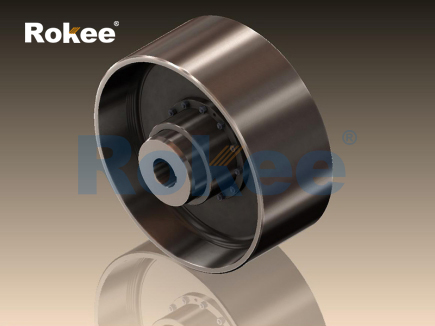
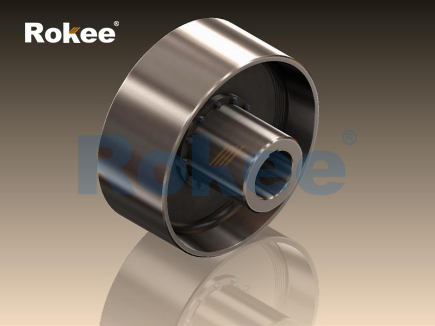
According to structural differences, connection forms and functional characteristics, face gear couplings can be divided into multiple classification types to meet the differentiated use demands of different mechanical equipment. Based on the integral structural form, it can be classified into basic flange type and intermediate shaft type. The basic flange type face gear coupling has a simple structure, consisting of two direct-connected flange half-couplings, which is suitable for short-distance rigid shaft connection occasions. It features small installation space and convenient assembly, and is mostly applied to compact mechanical transmission structures. The intermediate shaft type is added with an intermediate transmission shaft between the two half-couplings, which is specially designed for long-distance shaft connection. The intermediate shaft can balance the torsional vibration of the shaft system and improve the stability of long-span power transmission, making it suitable for large mechanical equipment with long transmission distances. According to the tooth surface processing shape, it can be divided into straight face gear type and crowned face gear type. The straight face gear coupling has a flat tooth surface with simple processing technology and low manufacturing cost, which is suitable for low-speed, medium-load and stable working conditions. The crowned face gear coupling adopts an optimized curved tooth surface design, with the tooth crown arranged along the tooth width direction. This structure further improves the stress uniformity of the tooth surface, enhances the angular displacement compensation ability, and can withstand frequent impact loads and alternating vibration, being widely used in high-load and high-vibration working scenes. In accordance with the sealing protection form, it can be categorized into open type and fully enclosed type. The open type has no closed sealing shell, with a simple structure and good heat dissipation performance, suitable for indoor dry working environments with low dust concentration. The fully enclosed type is equipped with integral sealing end covers and multi-layer sealing gaskets, which can realize dust-proof, waterproof and anti-corrosion protection, adapting to harsh working conditions such as outdoor exposure, mine dust and industrial sewage erosion. In addition, according to the auxiliary functional configuration, there are common type and brake matching type. The brake-matched face gear coupling is integrated with brake positioning structures on the flange end face, which can be combined with brake components to realize rapid braking and static positioning of the shaft system, and is mostly used in hoisting and rotating mechanical equipment that requires frequent start-stop and braking actions.
Benefiting from its superior structural performance and diversified classification types, face gear coupling has been widely applied in multiple industrial fields, covering heavy machinery, energy power, transportation and chemical industry. In the metallurgical industry, this coupling is applied to the roll transmission system of rolling mills and the tension adjusting mechanism of continuous casting machines. The metallurgical production environment is characterized by high temperature, heavy load and frequent equipment start-stop. The high temperature resistance and impact resistance of face gear coupling can ensure continuous and stable power transmission of the rolling production line, avoiding equipment shutdown caused by coupling failure. In the mining industry, it is commonly installed on core equipment such as ball mills, crushers and mine hoists. Mining equipment usually operates in harsh environments with severe vibration and heavy impact loads. The excellent displacement compensation performance and fatigue resistance of face gear coupling can buffer the vibration impact generated during the operation of mining machinery and reduce the wear failure rate of the shaft connection part. In the hoisting and transportation industry, face gear coupling serves port cranes, gantry cranes and bulk material conveyors. Its high transmission synchronization and structural stability ensure the accurate operation of hoisting equipment, and the reliable locking structure prevents shaft slipping during heavy-load hoisting, improving the safety of material transportation. In the energy industry, it is matched with large water pumps, ventilation fans and power generation rotating equipment. The high transmission efficiency effectively reduces energy consumption during equipment operation, and the closed sealing structure adapts to outdoor and humid working environments, extending the service life of power transmission components. In addition, face gear coupling is also applied to chemical processing equipment, rotary drying devices and building material production machinery. For rotating equipment that runs continuously for a long time, its low maintenance requirement and stable operating performance can effectively reduce equipment downtime and improve industrial production efficiency.
In the actual application process, the service life and operating state of face gear coupling are affected by multiple factors, and standardized use and maintenance measures are required to maintain its long-term working performance. During the equipment installation stage, it is necessary to strictly control the coaxiality of the two connected shafts to avoid excessive initial offset increasing the abrasion of meshing teeth. Reasonable lubricating grease should be selected according to the operating speed and ambient temperature. High-viscosity and anti-oxidation lubricants are preferred for high-speed and high-temperature working conditions to prevent lubricant failure caused by centrifugal force and high temperature. Daily maintenance should regularly check the sealing state of the coupling, replace aging sealing gaskets in time to prevent lubricant leakage and dust ingress, and observe the operating vibration and noise changes to judge the meshing state of internal gear teeth. For equipment operating under heavy loads for a long time, regular disassembly and inspection of tooth surface wear degree and bolt fastening tightness are required to eliminate potential safety hazards such as tooth surface fatigue peeling and bolt loosening. With the continuous progress of mechanical processing technology, the manufacturing precision of face gear coupling is constantly improved, and optimized designs in terms of material modification and structural lightweight are being carried out continuously. In the future, this type of coupling will develop towards higher load resistance, lower energy consumption and stronger environmental adaptability, and will be more widely used in intelligent manufacturing and large-scale industrial complete equipment.
To sum up, face gear coupling has a unique end face meshing structure, compact overall layout and excellent comprehensive mechanical properties. It not only has high torque transmission capacity and efficient power transmission efficiency, but also possesses multi-dimensional displacement compensation ability and harsh environment adaptability. Various classified types derived from structural differences can accurately meet the connection demands of different working conditions and mechanical equipment. With irreplaceable application advantages in metallurgy, mining, hoisting, energy and other industrial fields, it provides reliable technical guarantee for the stable operation of mechanical transmission systems. In the field of modern mechanical design, rational selection and standardized application of face gear coupling can effectively optimize the structural stability of the shaft system, reduce equipment operation failure rate, and create higher economic benefits for industrial production. Along with the continuous upgrading of industrial manufacturing technology, face gear coupling will further realize performance optimization and structural innovation, and become a more core basic component in the field of mechanical power transmission.
pu sandwich panel line,pu sandwich panel machine,sandwich panel machine
« Face Gear Couplings » Latest Update Date: May 9, 2026
https://www.rokeecoupling.net/tags/face-gear-couplings.html