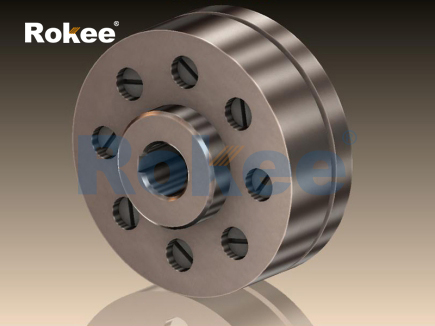
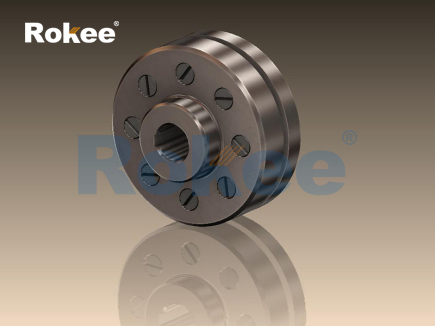
Flexible Bush Coupling is a widely used type of elastic coupling in mechanical transmission systems, which achieves flexible connection between shafts by introducing elastic elements into the coupling structure. Compared with rigid couplings, Flexible Bush Couplings can effectively compensate for radial, axial, and angular deviations between two shafts, while also having advantages such as buffering, vibration absorption, and noise reduction.
The main structural components of the Flexible Bush Coupling
Half coupling: usually made of steel or cast iron, divided into two parts: the active end and the passive end, connected to the equipment shaft by bolts or other means.
Elastic sleeve: a core component made of rubber, polyurethane or other elastic materials, with different hardness levels to adapt to different working conditions.
Connecting components: including bolts, pins, etc., used to fix the elastic sleeve and transmit torque.
Protective cover (some models): used to protect internal components, prevent dust from entering and grease leakage.
Working principle of Flexible Bush Coupling
The Flexible Bush Coupling achieves the following functions through the deformation of the elastic sleeve:
Torque transmission: Power is transmitted from the drive shaft to the driven shaft through an elastic sleeve
Deviation compensation: The flexibility of the elastic sleeve allows for a certain degree of axial, radial, and angular deviation
Vibration absorption: Elastic materials can absorb and buffer impacts and vibrations in transmission systems
The main types of Flexible Bush Couplings
Standard type Flexible Bush Coupling: the most common type, suitable for general industrial applications
Flange type Flexible Bush Coupling: with a larger contact area, suitable for high torque applications
Flexible Bush Coupling with brake wheel: integrated braking function, used for equipment that requires rapid braking
Maintenance free type: using special materials and design, no need for regular lubrication
Technical parameters of Flexible Bush Coupling
Rated torque: ranging from a few Newton meters to tens of thousands of Newton meters
Allowable deviation:
Radial deviation: usually 0.1-0.3mm
Axial deviation: 1-5mm
Angular deviation: 0.5 ° -1.5 °
Maximum speed: Depending on the model, it can reach over 10000rpm
Working temperature range: -40 ℃ to+100 ℃ (depending on the elastic material)
Key points for selecting Flexible Bush Couplings
Determine the application scenario: consider load characteristics, environmental conditions, etc
Calculate required torque: Consider working torque and peak torque
Determine shaft diameter and spacing: match equipment interface
Consider the need for deviation compensation: choose the appropriate model based on installation accuracy
Environmental factors: the impact of temperature, humidity, corrosiveness, etc. on materials
Installation and Maintenance Guide
Installation steps:
Clean the contact surface between the shaft and coupling
Use hot installation or hydraulic method to avoid hammering
Use specialized tools to ensure alignment accuracy
Gradually and evenly tighten the connecting bolts
Daily maintenance:
Regularly check the wear of the elastic sleeve
Check the tightening status of bolts
Clean the surface of the coupling
Supplement lubricating grease according to the prescribed cycle (non maintenance free type)
Common troubleshooting:
Abnormal vibration: check the alignment and elastic sleeve status
Overheating: Check lubrication and load status
Abnormal noise: Check for loose or damaged components
Application fields of Flexible Bush Couplings
General mechanical equipment: pumps, fans, compressors, etc
Material conveying equipment: conveyors, elevators, etc
Power generation equipment: generators, turbines, etc
Construction machinery: excavators, cranes, etc
Shipbuilding industry: propulsion systems, auxiliary equipment, etc
Advantages and limitations of Flexible Bush Couplings
Advantages:
Simple structure and low cost
Easy to maintain (especially maintenance free models)
Good buffering and vibration reduction performance
Can compensate for multiple types of deviations
Limitations:
Limited compensation capability, not suitable for large deviation situations
Elastic materials will age and need to be replaced regularly
Performance may decrease in high temperature or corrosive environments
Flexible Bush Couplings play an important role in the industrial transmission field due to their excellent cost-effectiveness and reliable performance. Proper selection, installation, and maintenance of Flexible Bush Couplings can significantly improve the efficiency and service life of the transmission system.
pu sandwich panel line,pu sandwich panel machine,sandwich panel machine
« Flexible Bush Couplings » Latest Update Date: May 8, 2026
https://www.rokeecoupling.net/tags/flexible-bush-couplings.html