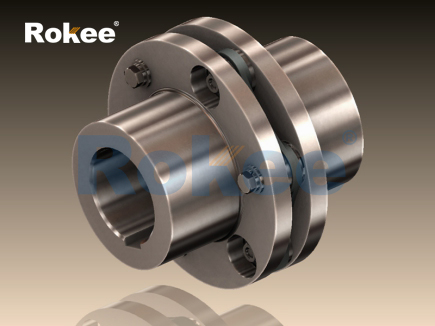
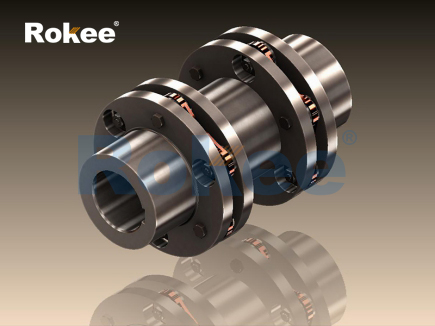
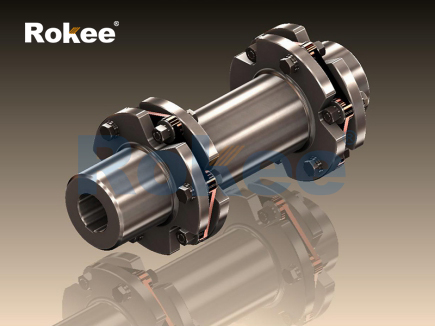
In modern mechanical transmission systems, the rational connection between rotating shafts serves as a fundamental guarantee for stable power transmission and efficient equipment operation. As a crucial type of all-metal flexible transmission component, flexible diaphragm coupling has gradually become an indispensable core part in high-precision and high-speed mechanical equipment by virtue of its unique mechanical structure and excellent comprehensive performance. Unlike traditional flexible couplings that rely on polymer elastic materials for deformation compensation, this coupling adopts metal diaphragm groups as the elastic deformation element, realizing torque transmission and displacement compensation through the elastic deformation of metal components. With the continuous upgrading of industrial manufacturing technology, the operating conditions of mechanical equipment are becoming increasingly complex, featuring high rotating speed, alternating load, extreme temperature and strict installation accuracy requirements. Traditional coupling products are gradually unable to adapt to such harsh working conditions due to material aging, poor high-temperature resistance and low transmission accuracy. In contrast, flexible diaphragm coupling shows outstanding environmental adaptability and structural stability, which makes it widely applied in numerous industrial fields such as precision machining, energy power, chemical engineering and transportation machinery. This paper comprehensively elaborates on the structural composition, working mechanism, core performance characteristics, common classification forms and diverse industrial uses of flexible diaphragm coupling, conducting an in-depth analysis on the internal correlation between its structural design, performance advantages and application scenarios, so as to provide clear theoretical reference for reasonable type selection and practical application of this coupling in mechanical transmission systems.
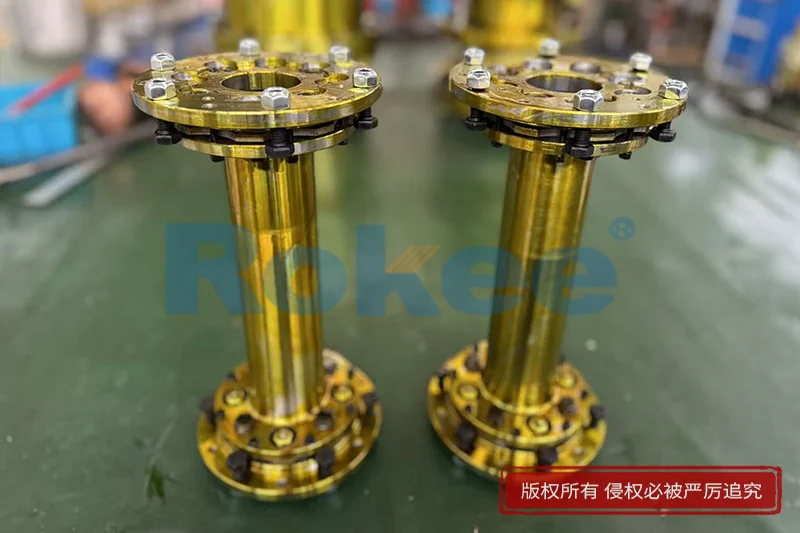
The basic structure of flexible diaphragm coupling presents a compact and highly integrated design logic, which is mainly composed of metal diaphragm groups, connecting flanges, high-strength fasteners and intermediate sleeves. Each component has clear functional positioning and closely cooperates with each other to complete the power transmission process. The diaphragm group is the most critical functional component of the coupling, and it is usually made of high-strength stainless steel alloy materials with excellent fatigue resistance and tensile properties. The diaphragm is processed into a thin plate structure with special geometric shapes, and multiple thin diaphragms are stacked together to form a combined diaphragm group. This stacked structural design effectively improves the overall bearing capacity and deformation uniformity of the diaphragm, avoiding the problem of local stress concentration caused by single-layer structural deformation. The connecting flanges are symmetrically distributed on both sides of the diaphragm group, and they are integrally forged with high-rigidity alloy steel. The inner hole of the flange can adopt various connection structures such as smooth shaft hole and keyway shaft hole to meet the assembly requirements of different transmission shafts. The high-strength fasteners include precision bolts and matching nuts, which are evenly arranged along the circumferential direction of the flange. The fasteners firmly fix the diaphragm group between the two flanges, ensuring that there is no relative sliding between the diaphragm and the flanges during the high-speed rotation process, thereby realizing zero-backlash torque transmission. For the double-diaphragm coupling structure, an independent intermediate sleeve is added between the two groups of diaphragm groups. The intermediate sleeve is made of high-rigidity metal materials, which can separate the two diaphragm groups by a certain distance. This structural optimization significantly enhances the radial displacement compensation capability of the coupling and improves the overall structural stability during high-speed operation. In the overall assembly structure, all metal components are precisely processed and tightly matched, eliminating the need for any lubricating medium and auxiliary elastic accessories. The fully metal structure also avoids the aging, deformation and failure problems of non-metal materials in complex working environments, laying a solid structural foundation for the long-term stable operation of the coupling.
The working principle of flexible diaphragm coupling is based on the elastic deformation characteristics of metal diaphragms. When the driving shaft rotates and outputs torque, the torque is transmitted to the driven shaft through the flanges, fasteners and diaphragm groups in sequence. In the power transmission process, various installation deviations and operating deformations inevitably occur between the driving shaft and the driven shaft, including axial displacement, radial displacement and angular displacement. These displacements will cause additional mechanical stress on the transmission shaft system, which may lead to shaft vibration, component wear and transmission accuracy reduction if not eliminated in time. The metal diaphragm group can generate tiny elastic deformation under the action of displacement deviation. The uniform deformation of the diaphragm offsets the misalignment between the two shafts, realizing flexible compensation of multiple displacement errors. When the equipment operates under alternating loads, the diaphragm can absorb part of the vibration energy through micro-deformation, reducing the vibration amplitude of the transmission system and suppressing the resonance phenomenon of mechanical components. Moreover, the metal diaphragm has stable torsional rigidity. During the torque transmission process, the torsional deformation of the diaphragm is extremely small, which ensures that the coupling can maintain high transmission accuracy while completing displacement compensation. Compared with elastic couplings using rubber and polymer materials, the elastic deformation of metal diaphragms belongs to reversible elastic deformation. It will not produce plastic deformation after long-term cyclic deformation, and there is no material aging and fatigue failure in a short time. This unique working mechanism enables flexible diaphragm coupling to balance the two core performances of displacement compensation and precise torque transmission, adapting to continuous and stable operating requirements of various high-precision mechanical equipment.
Flexible diaphragm coupling possesses multiple excellent performance advantages, which are the core reasons for its wide popularity in the industrial field. First of all, it has extremely high transmission accuracy and zero-backlash performance. The tight connection between metal components eliminates the assembly gap of the coupling. There is no relative sliding between all parts during the torque transmission process, and no torsional hysteresis occurs during forward and reverse rotation. This performance feature makes it highly suitable for precision transmission equipment that requires strict positioning accuracy. Secondly, the coupling has outstanding anti-fatigue and durable performance. The stainless steel diaphragm has excellent tensile strength and fatigue resistance, and it can withstand millions of cyclic deformations without structural failure. The fully metal structure is not affected by temperature changes and chemical corrosion, and it can maintain stable working performance in low-temperature, high-temperature and corrosive working environments. In terms of dynamic performance, the flexible diaphragm coupling has low rotational inertia and excellent dynamic balance. After precision processing and assembly, it can adapt to high-speed rotation conditions up to tens of thousands of revolutions per minute, and there is no obvious vibration and noise during high-speed operation. In addition, the coupling has reasonable rigidity and damping characteristics. Its torsional rigidity is high enough to ensure the stability of torque transmission, and the micro-deformation of the diaphragm can absorb vibration and impact loads, reducing the dynamic load of the transmission system on bearings and other components. It is worth noting that the coupling does not need regular lubrication and maintenance in the use process. The smooth metal contact surface has low friction loss, which effectively reduces the later operation and maintenance cost of the equipment. However, the coupling also has certain performance limitations. Its radial displacement compensation capacity is restricted by the diaphragm structure, and the installation accuracy requirement of the equipment is relatively high. Excessive installation deviation will cause excessive stress on the diaphragm and shorten the service life. Meanwhile, the impact resistance of the single-diaphragm structure is weak, and it is not suitable for working conditions with severe instantaneous impact loads.
According to the structural differences and functional characteristics, flexible diaphragm couplings can be divided into multiple classification forms, among which single-diaphragm coupling and double-diaphragm coupling are the most common classification methods based on the number of diaphragm groups. The single-diaphragm coupling adopts a single-group diaphragm structure, with a simple and compact overall structure, small axial size and light weight. This type of coupling has excellent angular displacement compensation capability, and it can effectively offset the angular misalignment between two rotating shafts. Its torsional rigidity is high, and the response speed of torque transmission is fast. It is mostly suitable for small and medium-sized precision transmission equipment with small radial displacement deviation and compact installation space. Due to the limitation of single-layer diaphragm structure, its radial compensation range is narrow, so higher requirements are put forward for the installation alignment accuracy of the equipment. The double-diaphragm coupling is composed of two groups of diaphragm groups and an intermediate sleeve. The intermediate sleeve separates the two diaphragms by a certain distance. The combined deformation of the two groups of diaphragms greatly improves the radial displacement compensation capability. This structural design makes up for the performance defect of single-diaphragm coupling in radial compensation. The overall structural stability of the double-diaphragm coupling is stronger, and it can bear larger torque loads. It is widely applied in medium and large mechanical equipment with large installation deviation and heavy load operation requirements. In addition to the above two main types, flexible diaphragm couplings can also be classified according to the connection mode into keyway connection type and keyless locking connection type. The keyway connection type relies on flat keys to realize the torque transmission between the shaft and the flange, which has simple processing technology and low assembly cost, suitable for general industrial mechanical equipment. The keyless locking connection type uses the locking force generated by the interference fit to realize shaft-flange fixation. It has no assembly gap, higher connection precision and uniform stress distribution on the shaft body, avoiding the stress concentration problem caused by keyway processing. This connection type is more suitable for high-precision and high-speed transmission equipment that requires shaft surface integrity. According to the diaphragm structure shape, it can also be divided into circular diaphragm, waist-shaped diaphragm and special-shaped diaphragm. Different geometric shapes correspond to different deformation ranges and stress distribution characteristics, which can meet the personalized performance requirements of different working conditions.
With its diversified structural forms and excellent comprehensive performance, flexible diaphragm coupling covers a wide range of industrial application scenarios, involving multiple fields such as manufacturing, energy, chemical industry and transportation. In the field of precision machining and automated production equipment, this coupling is applied to numerical control machine tools, precision manipulators and automated transmission mechanisms. The zero-backlash and high-precision transmission characteristics ensure the accurate positioning of mechanical motion components, effectively reducing the positioning error caused by transmission clearance. The low vibration and low noise performance can improve the processing stability of precision workpieces and optimize the production accuracy of mechanical processing equipment. In the energy and power industry, flexible diaphragm coupling is used for the connection of generator sets, wind power transmission mechanisms and high-speed compressor equipment. The high-temperature resistance and fatigue resistance of the all-metal structure enable it to operate stably for a long time in high-temperature and high-load working environments. It can offset the displacement deviation caused by thermal expansion of equipment components and reduce the vibration impact during the operation of power equipment. In the petrochemical industry, various pumping equipment, reaction stirring equipment and fluid transmission pipelines need stable shaft connection components. The metal diaphragm coupling can resist the corrosion of chemical media such as acid and alkali, avoiding the aging and damage of non-metal couplings in corrosive environments, and ensuring the continuous operation of chemical production equipment. In the field of heavy industry and metallurgical machinery, medium and large double-diaphragm couplings are used for transmission connection of rolling mills, crushing equipment and conveyor devices. Their large torque bearing capacity and excellent displacement compensation performance adapt to the heavy-load and alternating-load operating characteristics of heavy industrial equipment. In addition, in the transportation industry such as ship propulsion systems and railway auxiliary transmission equipment, flexible diaphragm coupling relies on its high structural stability and environmental adaptability to cope with complex working conditions such as humidity and vibration, ensuring the safety and reliability of transportation power transmission.
In the actual application process, the reasonable selection and standardized installation of flexible diaphragm coupling are crucial to give full play to its performance advantages. When selecting the coupling type, it is necessary to comprehensively consider key parameters such as equipment rotating speed, transmitted torque magnitude, installation space size and working environment characteristics. For high-speed and light-load precision equipment, single-diaphragm coupling with compact structure and low rotational inertia should be preferred. For heavy-load equipment with large installation deviation, double-diaphragm coupling with strong comprehensive compensation capability is more suitable. During the installation process, the alignment accuracy of the driving shaft and the driven shaft must be strictly controlled to avoid excessive displacement deviation from causing irreversible fatigue damage to the diaphragm. In terms of daily maintenance, although the fully metal structure has low maintenance requirements, regular inspection of fastener tightness and diaphragm surface integrity is still needed to eliminate potential safety hazards such as loose connection and diaphragm fatigue cracks. With the continuous progress of material science and mechanical processing technology, the production process of flexible diaphragm coupling is constantly optimized. The application of high-strength alloy materials and precision processing technology further improves the fatigue resistance and structural stability of the coupling. In the future, with the continuous development of intelligent manufacturing and high-end mechanical equipment, the market demand for high-precision and long-life flexible diaphragm couplings will continue to grow, and this type of coupling will be further optimized in structural design, material application and personalized customization to adapt to more complex industrial working conditions.
To sum up, flexible diaphragm coupling takes the metal diaphragm group as the core deformation component, and realizes efficient and stable power transmission through the elastic deformation of metal materials. Its compact structural design, diverse classification forms and excellent comprehensive performance enable it to have irreplaceable application value in the field of mechanical transmission. The all-metal structure gives it outstanding advantages such as corrosion resistance, high temperature resistance, zero backlash and maintenance-free operation, while different structural classifications meet the differentiated use requirements of various equipment. From precision small-scale mechanical equipment to heavy industrial production devices, flexible diaphragm couplings provide reliable connection guarantees for the stable operation of various mechanical systems. In the context of the continuous upgrading of modern industrial manufacturing standards, in-depth research on the structural performance and application characteristics of flexible diaphragm couplings, and continuous optimization of type selection, installation and maintenance methods will help to further improve the operating efficiency and service life of mechanical transmission systems, and provide strong technical support for the high-quality development of the mechanical manufacturing industry.
pu sandwich panel line,pu sandwich panel machine,sandwich panel machine
« Flexible Diaphragm Couplings » Latest Update Date: May 8, 2026
https://www.rokeecoupling.net/tags/flexible-diaphragm-couplings.html