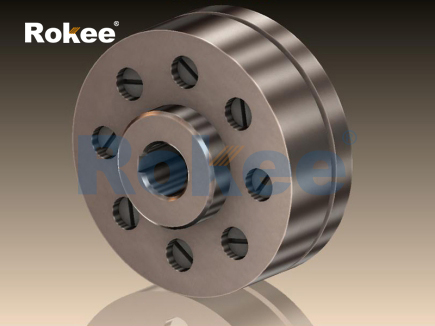
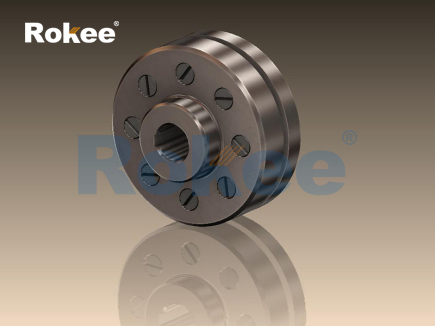
Flexible Pin Bush Coupling is a flexible coupling device widely used in industrial transmission systems. It connects two shafts through special elastic elements and can compensate for axial, radial, and angular deviations while transmitting torque. This type of coupling has become a key component in modern mechanical transmission systems due to its advantages of simple structure, low cost, and easy maintenance.
Compared with traditional rigid couplings, Flexible Pin Bush Couplings have significant buffering and shock absorption performance, which can effectively absorb and alleviate vibrations and impacts during system operation, and protect connected equipment from damage. Its working principle is based on the deformation ability of elastic materials, compensating for axial deviation through the elastic deformation of elastic sleeves such as rubber or polyurethane, while transmitting torque through column pins.
Structure and components
The Flexible Pin Bush Coupling is mainly composed of the following core components:
Half coupling: usually made of cast iron or steel, divided into two parts: the driving end and the driven end, which are respectively connected to the driving shaft and the driven shaft.
Column pins: generally made of high-strength steel, cylindrical or conical in shape, usually 6-12 in number, evenly distributed on the circumference of the coupling, and are the main carrier for transmitting torque.
Elastic sleeve: Made of rubber, polyurethane, or other elastic materials, it is fitted onto the column pin to provide cushioning, shock absorption, and compensation for deviations.
Retaining ring: used to fix the position of the elastic sleeve and prevent it from falling off or shifting during operation.
Nut and washer: used to secure the column pin, ensuring the stability and safety of the entire component.
Modern Flexible Pin Bush Couplings constantly innovate in material selection, and the use of high-performance engineering plastics and composite materials greatly enhances their durability and load-bearing capacity. Couplings used under special working conditions will also use special elastic materials that are resistant to high temperatures, oil, or corrosion.
Working principle and characteristics
The working principle of the Flexible Pin Bush Coupling is based on the combination of elastic deformation and friction transmission. When the driving shaft rotates, the torque is transmitted to the elastic sleeve through the column pin, and the elastic sleeve then transmits the torque to the column pin at the driven end through friction and deformation, ultimately driving the driven shaft to rotate. During this process, the deformation ability of the elastic sleeve enables the coupling to:
Compensation deviation: It can absorb radial deviation of 0.5-3mm, angular deviation of 1-5 °, and a small amount of axial displacement.
Buffer and shock absorption: Elastic materials can effectively absorb and attenuate system vibrations, reducing peak loads.
Overload protection: When the torque exceeds the rated value, the elastic sleeve will first deform or be damaged, which serves to protect the equipment.
The significant features of the Flexible Pin Bush Coupling include:
Simple structure, easy to assemble and disassemble
No lubrication required, low maintenance cost
Has good electrical insulation performance
Economical price and high cost-effectiveness
Capable of absorbing and reducing vibrations and impacts
Main technical parameters and selection points
When choosing an Flexible Pin Bush Coupling, the following key parameters need to be considered:
Nominal torque Tn: The maximum torque that a coupling can stably transmit over a long period of time, usually measured in N · m.
Permissible speed [n]: The maximum working speed allowed by the coupling, measured in r/min.
Shaft hole diameter range: The shaft diameter size range suitable for the coupling needs to match the equipment shaft diameter.
Compensation capability: including radial, axial, and angular deviation compensation.
Working temperature range: depends on the temperature resistance of the elastic sleeve material.
The main factors to consider when selecting:
Transferred power and torque
The rotational speed of the shaft
Diameter and shape of the connecting shaft
Installation space restrictions
Working environment conditions (temperature, humidity, corrosiveness, etc.)
Required deviation compensation capability
System vibration characteristics
Modern coupling models are usually formulated according to national or industry standards, such as GB/T 4323-2002 "Flexible Pin Bush Coupling" which specifies the standard models and parameters of such products in China.
Installation and Maintenance Guide
Proper installation and maintenance are crucial for the performance and lifespan of Flexible Pin Bush Couplings
Installation steps:
Check if all components of the coupling are intact, clean the shaft and coupling holes
Install the half couplings onto the two shafts separately, using either hot or press fitting methods
Preliminary alignment of the two halves of the coupling, leaving appropriate clearance
Install the elastic sleeve and column pin, and tighten the fixing nut evenly
Conduct final alignment adjustment, and control the radial deviation within 0.2mm
Check if all fasteners are secure
Maintenance points:
Regularly check the wear of the elastic sleeve, and replace it when the rubber ages, cracks, or wears more than 1mm
Check for bent, worn or loose pins
Keep the coupling clean and avoid oil and dust accumulation
Pay attention to abnormal noise or vibration during operation and promptly investigate the cause
Avoid long-term overload operation
Common faults and solutions:
Abnormal vibration: check the alignment, wear degree of elastic sleeve, and status of fasteners
High temperature: Check for overload or improper lubrication (some models require lubrication)
Increased noise: It may be due to damaged elastic sleeve or loose column pin
Decreased transmission efficiency: Check if the elastic sleeve has aged and failed
Application Fields and Development Trends
Flexible Pin Bush Couplings are widely used in various industrial fields, including:
General machinery: pumps, fans, compressors, mixing equipment, etc
Conveyor equipment: conveyor belts, elevators, screw conveyors, etc
Construction machinery: excavators, cranes, concrete machinery, etc
Power generation equipment: hydroelectric generator sets, diesel generator sets, etc
Metallurgical equipment: rolling mills, crushers, rotary kilns, etc
Shipbuilding Industry: Ship Power Transmission System
In the vast landscape of mechanical power transmission systems, flexible couplings serve as indispensable connecting components that bridge driving and driven shafts, enabling efficient torque transfer while addressing common operational challenges such as shaft misalignment, vibration, and shock loads. Among the diverse range of flexible couplings available, the flexible pin bush coupling stands out as a widely adopted, cost-effective, and highly versatile solution, favored across countless industrial sectors for its balanced combination of simplicity, durability, and functional efficiency. Unlike rigid couplings that demand perfect shaft alignment and offer no tolerance for positional errors, this type of coupling integrates flexible elements into a robust mechanical framework, creating a dynamic connection that protects adjacent machinery, reduces wear and tear, and extends the service life of entire transmission assemblies. To fully grasp its value in modern engineering, it is essential to examine its fundamental structure, core performance attributes, distinct structural variations, and the broad spectrum of practical applications that define its industrial relevance.
At its core, the flexible pin bush coupling features a straightforward yet meticulously engineered structure, composed of a small number of key components that work in seamless coordination to deliver reliable power transmission. The primary building blocks include two rigid hub flanges, a set of precision-machined metal pins, and elastic bushings made from high-performance non-metallic materials, typically rubber, polyurethane, or reinforced nylon compounds. Each hub flange is designed to mount securely onto the end of a respective shaft—one attached to the driving unit such as an electric motor, engine, or gearbox, and the other connected to the driven equipment like pumps, fans, compressors, or conveyors. The hub flanges are precision machined with evenly spaced radial holes around their outer circumference, aligned perfectly to accommodate the metal pins that pass through both flanges. The elastic bushings are fitted tightly onto each metal pin, positioned between the pin surface and the inner walls of the flange holes, acting as the critical flexible interface between the two rigid flanges. This design eliminates direct metal-to-metal contact between the driving and driven flanges during operation, a key feature that sets the pin bush coupling apart from many other coupling types. The metal pins are typically constructed from high-strength alloy steel or carbon steel, chosen for their exceptional tensile strength and resistance to bending fatigue, ensuring they can withstand repeated torsional forces without deformation or failure. The elastic bushings, meanwhile, are formulated to offer optimal flexibility, shock absorption, and wear resistance, with material properties tailored to balance softness for vibration damping and rigidity for consistent torque transmission. Most standard flexible pin bush couplings do not require additional lubrication for their flexible components, as the non-metallic bushings possess inherent self-lubricating properties, simplifying long-term maintenance and reducing operational downtime. The overall assembly process is equally uncomplicated: the two hub flanges are mounted onto their respective shafts, the pins with pre-installed bushings are inserted into the aligned flange holes, and minimal fastening is required to secure the assembly, making installation and disassembly straightforward even in confined industrial spaces.
The performance characteristics of the flexible pin bush coupling are directly derived from its structural design, making it uniquely suited to handle the demands of moderate-speed, moderate-torque power transmission systems while addressing common mechanical inefficiencies. One of its most prominent performance advantages is its ability to compensate for multiple forms of shaft misalignment, a pervasive issue in industrial machinery that arises from manufacturing tolerances, installation errors, thermal expansion, or operational wear. This coupling effectively accommodates angular misalignment, where the two shafts intersect at a small angle; parallel misalignment, where the shafts run parallel but are offset radially; and limited axial misalignment, where slight endwise movement of the shafts occurs during operation. The elastic bushings deform gently to absorb these positional deviations, preventing the transfer of excessive stress to the shafts, bearings, and gear systems of connected equipment, which would otherwise lead to premature failure, increased noise, and costly repairs. Beyond misalignment compensation, the coupling excels in vibration and shock load damping, a critical function in systems that experience frequent start-stop cycles, sudden load fluctuations, or impact-driven operation. The non-metallic bushings act as a natural shock absorber, dissipating vibrational energy and reducing torsional vibrations that can resonate throughout the transmission chain, creating a smoother and more stable operational environment. This damping effect also minimizes noise generation, contributing to a safer and more comfortable workplace in industrial settings. In terms of torque transmission efficiency, the flexible pin bush coupling delivers consistent performance with minimal power loss, even under continuous operating conditions. The rigid metal pins ensure direct and reliable torque transfer from the driving flange to the driven flange, while the elastic bushings maintain a firm grip without slippage, preserving the rotational speed ratio between the two shafts. Unlike some highly flexible couplings that sacrifice torsional stiffness for misalignment tolerance, this design strikes an optimal balance, offering sufficient flexibility for practical misalignment scenarios while retaining the rigidity needed for precise power delivery. Additionally, the coupling exhibits strong resistance to environmental factors, with the elastic bushings formulated to withstand moderate temperature fluctuations, exposure to oil, moisture, and mild chemical contaminants commonly found in industrial facilities. The metal components are often finished with protective coatings to resist corrosion, further enhancing the coupling’s durability in harsh working conditions. Long-term reliability is another key performance marker; the simple design with few moving parts reduces the risk of mechanical failure, and the elastic bushings, as the primary wear component, are easily replaceable, allowing for cost-effective maintenance without full coupling replacement.
While the fundamental working principle of flexible pin bush couplings remains consistent across variants, several distinct structural types have evolved to cater to specific operational requirements, shaft configurations, and industrial application needs, each with unique design modifications that enhance its suitability for specialized tasks. The most common and widely used variant is the standard full-flange flexible pin bush coupling, which features two solid, circular flanges of equal diameter connected by a uniform set of pins and bushings. This standard model is designed for general-purpose power transmission, ideal for applications where shaft ends are in close proximity, and moderate misalignment compensation is sufficient. It is the default choice for most light to medium-duty industrial systems, valued for its compact size, balanced performance, and ease of installation. A second prominent variant is the spacer-type flexible pin bush coupling, which incorporates a rigid central spacer between the two hub flanges, increasing the distance between the connected shafts. This design is specifically engineered for applications where a greater axial gap between the driving and driven units is necessary, such as in systems with gearboxes, bearings, or other intermediate components that require clearance, or in scenarios where routine maintenance access to adjacent parts is essential. The spacer maintains the coupling’s torsional rigidity and misalignment compensation capabilities while extending the overall length, making it a practical solution for complex transmission layouts. A third specialized variant is the brake wheel-integrated flexible pin bush coupling, which features one of the hub flanges modified to serve as a brake drum or brake wheel, combining the functions of power transmission and braking into a single compact component. This design eliminates the need for a separate brake assembly, saving space and simplifying the overall mechanical setup, making it highly suitable for material handling equipment, lifting machinery, and conveyor systems where controlled stopping and holding torque are critical operational requirements. Additionally, there are tapered bore and straight bore variants, tailored to accommodate different shaft end configurations; tapered bore models use a conical clamping mechanism to secure the coupling to the shaft, providing a tighter, more secure fit for high-torque applications, while straight bore models use keyway and set screw connections for standard shaft mounting, offering simplicity and cost-effectiveness. Another niche variation is the heavy-duty reinforced pin bush coupling, featuring thicker flanges, larger-diameter pins, and denser, more durable elastic bushings, designed to handle higher torque loads and more severe shock conditions in heavy industrial settings such as mining, metallurgy, and large-scale manufacturing. Each variant retains the core pin-and-bush flexible mechanism but adapts the structural details to address specific operational constraints, ensuring versatility across a wide range of mechanical setups.
The combination of straightforward structure, reliable performance, and adaptable design makes the flexible pin bush coupling one of the most widely utilized flexible couplings in industrial and commercial mechanical systems, with applications spanning nearly every sector that relies on rotary power transmission. Its most prevalent use is in general industrial machinery, where it connects electric motors to a vast array of driven equipment, including centrifugal pumps, axial fans, blowers, and air compressors. In these applications, the coupling’s ability to dampen motor vibration and compensate for minor shaft misalignment ensures smooth and efficient fluid and air transfer, reducing maintenance needs and enhancing equipment longevity in water treatment plants, HVAC systems, and manufacturing facilities. In the material handling and logistics sector, the coupling is a staple component in conveyor systems, elevators, hoists, and automated assembly lines, where its shock absorption properties protect against the sudden load changes that occur during the movement of heavy goods, and its durable construction withstands continuous, repetitive operation. The brake wheel-integrated variant is particularly valuable here, providing reliable braking functionality alongside power transmission for safe and controlled material movement. The agricultural industry also relies heavily on flexible pin bush couplings, integrating them into irrigation pumps, grain processing machinery, harvesting equipment, and feed mixers, where they perform reliably in dusty, outdoor environments and tolerate the moderate misalignment common in agricultural machinery setups. In the manufacturing and processing sector, the coupling is used in machine tools, textile manufacturing equipment, packaging machinery, and food processing lines, offering clean, low-maintenance operation that aligns with the precision and hygiene requirements of these industries. For light to medium-duty industrial gearboxes and speed reducers, the coupling serves as an ideal connection between the gearbox output shaft and the driven equipment, protecting the delicate gear mechanisms from excessive stress caused by shaft misalignment and operational vibration. It is also widely employed in marine auxiliary equipment, small-scale power generation units, and construction machinery, where its compact design and resistance to environmental stressors make it suitable for mobile and outdoor applications. Beyond these core sectors, the flexible pin bush coupling is favored in educational and research institutions for test rigs and experimental mechanical setups, due to its low cost, ease of use, and ability to demonstrate fundamental power transmission principles. Its broad applicability stems not from specialized, niche capabilities, but from its ability to meet the everyday needs of most standard power transmission systems, providing a reliable, low-maintenance solution that avoids the overengineering and higher costs associated with more complex flexible couplings like gear couplings or membrane couplings.
Despite the emergence of advanced coupling designs with enhanced capabilities for extreme operating conditions, the flexible pin bush coupling remains a cornerstone of mechanical power transmission, thanks to its timeless design and unwavering practicality. Its enduring popularity is a testament to the value of engineering simplicity: a minimal number of components, easy installation and maintenance, and a balanced mix of flexibility and rigidity that addresses the most common challenges in shaft connection. While it may not be suitable for ultra-high-speed, ultra-high-torque, or extreme misalignment scenarios that demand specialized couplings, it excels in the vast majority of industrial applications that fall within moderate operational parameters. The ongoing development of high-performance elastic materials has further improved its performance, with modern bushings offering greater temperature resistance, longer wear life, and enhanced damping properties, expanding its operational range and extending its service life even further. As industrial machinery continues to evolve toward greater efficiency and reliability, the flexible pin bush coupling will remain a go-to choice for engineers and maintenance professionals, valued for its ability to deliver consistent performance, reduce operational costs, and minimize downtime. In summary, the flexible pin bush coupling’s well-engineered structure, versatile performance characteristics, diverse structural variants, and wide-ranging industrial applications solidify its position as an essential component in modern mechanical engineering, proving that effective power transmission solutions do not require complexity, but rather thoughtful design that prioritizes functionality, durability, and practicality.
When selecting a flexible pin bush coupling for a specific application, engineers typically evaluate key factors including required torque capacity, shaft diameter and configuration, expected level of misalignment, operating speed, environmental conditions, and maintenance accessibility. Matching the coupling variant and size to these operational parameters ensures optimal performance, prevents premature wear, and maximizes the overall efficiency of the power transmission system. Proper installation, including accurate initial shaft alignment and secure mounting of hub flanges, further enhances the coupling’s performance and longevity, while routine inspection of the elastic bushings for signs of wear, cracking, or deformation allows for timely replacement and prevents unexpected equipment failure. This combination of careful selection, correct installation, and basic maintenance ensures that the flexible pin bush coupling continues to deliver reliable service, making it an indispensable and cost-effective solution for countless mechanical power transmission systems worldwide.
pu sandwich panel line,pu sandwich panel machine,sandwich panel machine
« Flexible Pin Bush Couplings » Latest Update Date: May 8, 2026
https://www.rokeecoupling.net/tags/flexible-pin-bush-couplings.html